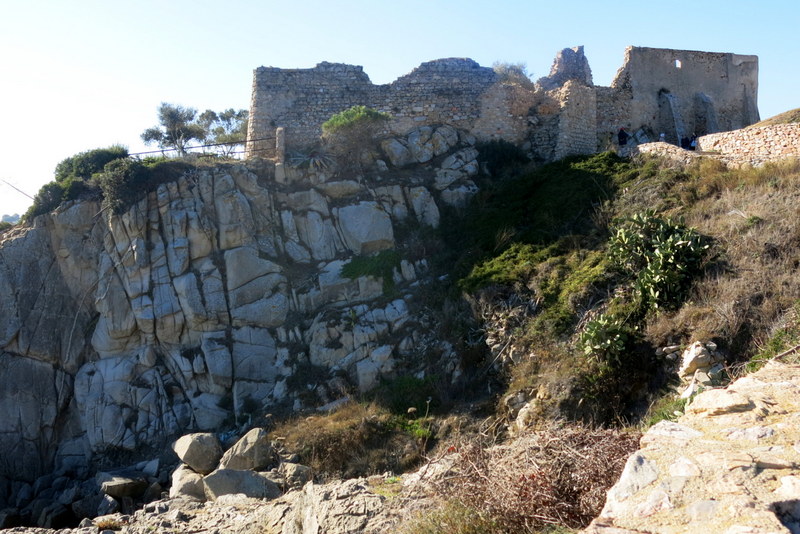
Calonge Castle
Calonge Castle stands as a remarkable example of a medieval hill castle in the municipality of Calonge, within the Catalonia region of Spain. Originating in the early 12th century, this fortress has witnessed centuries of political, military, and social change, reflecting the evolving nature of feudal power and defense strategies in the Iberian Peninsula. Its strategic location atop a hill provided commanding views and control over the surrounding territory, underscoring its importance as a stronghold for local lords and royal authorities.
The castle's history is deeply intertwined with the region's medieval past. The first references to Calonge date back to the late 9th century, when the area was part of the northern border of the Vall d’Aro, granted to the bishop of Girona by Carloman in 881. By the late 10th century, the monastery of Sant Feliu de Guíxols held lands here, as confirmed by a royal diploma from King Lothair I in 968. The fortress itself emerges in documents from the early 1100s, initially under the direct control of the counts-kings before being granted as a fief to Ramon de Solius in the late 12th century. This transition illustrates the feudal system's workings and the castle's role as a seat of lordship.
Historical significance and feudal lineage
Throughout the 12th to 14th centuries, Calonge Castle was a focal point of noble power in the region. The castle passed into the hands of the noble house of Cruïlles in the 13th century, beginning with Gastó I de Cruïlles. Members of this family were active in regional politics and military campaigns, including the notable participation of Gilabert III of Cruïlles in the conquest of Mallorca. The Cruïlles family managed the castle's income and maintained control through much of the medieval period, although the crown temporarily reclaimed jurisdiction in 1371 before it was returned to the family in 1393.
The 15th century brought turmoil, with the castle enduring damage during the remensa revolts—peasant uprisings against feudal abuses. The fortress suffered destructive fires in 1477 and again in 1485 but was rebuilt promptly, reflecting its continued strategic and symbolic importance. Ownership shifted to the Requesens family by the late 1400s and subsequently passed to the Cardona-Anglesola family and the dukes of Sessa through marriage alliances. By the 18th century, the Osorio de Moscoso lineage held the castle, demonstrating its ongoing noble associations.
Architectural evolution and fortifications
The castle's architecture reveals a complex history of construction and adaptation. The oldest surviving structure is a nearly square keep tower in the southwestern corner, dating from the 12th century or shortly thereafter. Measuring approximately 11.60 by 11.15 meters with walls about 1.10 meters thick, the tower rises to about 10 meters in height. Its interior was divided into multiple floors supported by wooden beams resting in stone recesses. Defensive features include numerous arrow slits on the northern, eastern, and southern walls, allowing archers to defend the castle while remaining protected. The tower's entrance is elevated about 6 meters above ground level and framed by a semicircular arch of carefully cut voussoirs, likely accessed originally by a ladder or rope for added security.
The masonry combines roughly hewn stones with larger, smoothly finished cornerstones and finely cut blocks framing the arrow slits, blending strength with defensive functionality. In the 14th century, the castle was expanded with a larger trapezoidal enclosure surrounding the original tower. This enclosure included battlements with crenellations and several rounded towers at three corners, while the original square tower occupied the fourth. A semicircular tower was added on the eastern wall, enhancing defense in that sector.
Following the fires of the late 15th century, a late Gothic palace wing was constructed along the south and east sides of the enclosure, reflecting a shift toward residential comfort and noble status. In the 16th and 17th centuries, a Renaissance-style wing was added, bearing the coat of arms of the dukes of Sessa, illustrating the castle's adaptation to changing architectural tastes and functions.
Defensive features and layout
The castle's layout is characterized by its combination of a strong central keep, surrounded by a fortified trapezoidal curtain wall with rounded towers and battlements. The presence of multiple arrow slits and crenellations highlights its primary role as a defensive structure during the medieval period. The elevated entrance of the keep tower and the incorporation of semicircular towers demonstrate advanced military architectural techniques aimed at maximizing protection against attackers.
Modern history and preservation
In the 19th century, Calonge Castle transitioned from a noble residence to a social venue when it was sold in 1899 to the Casellas family, who adapted parts of the castle for use as a casino and theater. This period marks a significant change in the castle's function from military and residential to cultural and recreational.
Today, the castle is under the ownership of the Generalitat de Catalunya, which has undertaken restoration and adaptation efforts to preserve its historical and architectural heritage. Since 1968, the castle has served as a venue for a music festival, reinforcing its role as a cultural landmark in the region. The castle is protected as a cultural heritage monument under both Catalan and Spanish heritage laws, ensuring its conservation for future generations.
Archaeological and architectural research
Extensive studies of Calonge Castle have been conducted, including work by the scholar Lluís Vilar i Subirana, whose house within the castle courtyard was demolished in the 20th century. Archaeological research has helped clarify the castle's construction phases and historical transformations, contributing to a deeper understanding of medieval fortification practices in Catalonia.
Visiting Calonge castle
Visitors to Calonge Castle can explore its well-preserved defensive walls, towers, and palace wings, gaining insight into the architectural evolution from the 12th century through the Renaissance. The castle's elevated position offers panoramic views of the surrounding landscape, enhancing the visitor experience. Its use as a cultural venue continues to attract tourists and locals alike, combining historical education with contemporary cultural events.
Efforts to maintain and restore Calonge Castle ensure that it remains a vital link to Catalonia's medieval past and a testament to the region's rich architectural and feudal history.
Frequently asked questions (FAQ)
- How do I get to Calonge Castle?
- Calonge Castle is located in the town of Calonge, Spain, and can be easily reached by car or public transport. The nearest major city is Girona, from which you can take a bus or drive to Calonge. Parking is available near the castle for visitors.
- What is the historical significance of Calonge Castle?
- Calonge Castle dates back to the 13th century and played a vital role in the defense of the region during the Middle Ages. It has witnessed numerous historical events and changes in ownership, reflecting the rich history of the area. The castle's preservation allows visitors to connect with the past and understand its importance in local heritage.
- When was Calonge Castle built?
- Calonge Castle was constructed in the 13th century, specifically around the year 1200. Its architecture showcases the medieval style prevalent during that time, with defensive features designed to protect against invasions. The castle has undergone several renovations over the centuries, enhancing its historical value.
- Can I enter Calonge Castle?
- Yes, visitors can enter Calonge Castle during its opening hours. Once inside, you can explore the castle's fascinating architecture and enjoy panoramic views of the surrounding landscape. Guided tours may be available to provide deeper insights into the castle's history and significance.
- Is it possible to visit Calonge Castle year-round?
- Calonge Castle is generally open to visitors year-round, although specific hours may vary by season. It's advisable to check the official website or contact local tourist information for the most current visiting hours. Be sure to plan your visit accordingly to enjoy the full experience.
- What are the ticket prices for Calonge Castle?
- Ticket prices for Calonge Castle are quite reasonable, typically ranging from €5 to €10 for adults. Discounts may be available for students, seniors, and children, so it's worth checking at the entrance. Special family packages or guided tour prices might also be offered.
- What is the best time to visit Calonge Castle?
- The best time to visit Calonge Castle is during the spring and early fall when the weather is mild and pleasant. These seasons also provide beautiful scenery, enhancing your experience of the castle and its surroundings. Summer can be hot and crowded, while winter might limit accessibility due to weather conditions.
- Are there any nearby attractions to visit along with Calonge Castle?
- Yes, there are several nearby attractions worth visiting, including the picturesque beaches of Calonge and the charming town center with its local shops and restaurants. The beautiful natural landscape of the Costa Brava also offers opportunities for hiking and outdoor activities. Consider exploring the nearby towns of Palamós and Platja d'Aro for additional cultural experiences.
- Is Calonge Castle accessible for visitors with disabilities?
- Calonge Castle strives to be accessible for all visitors, but due to its historical nature, some areas may have limited accessibility. It's recommended to contact the castle in advance to inquire about specific accommodations for visitors with disabilities. Staff are usually available to assist and provide information on accessible routes.
Information
Loading map...
Visitor reviews
No reviews yet. Been here? Write the first review and help other travelers!
Write the first reviewVisited this castle? Share your experience
Your review helps other travelers and adds first-hand knowledge to our encyclopedia.