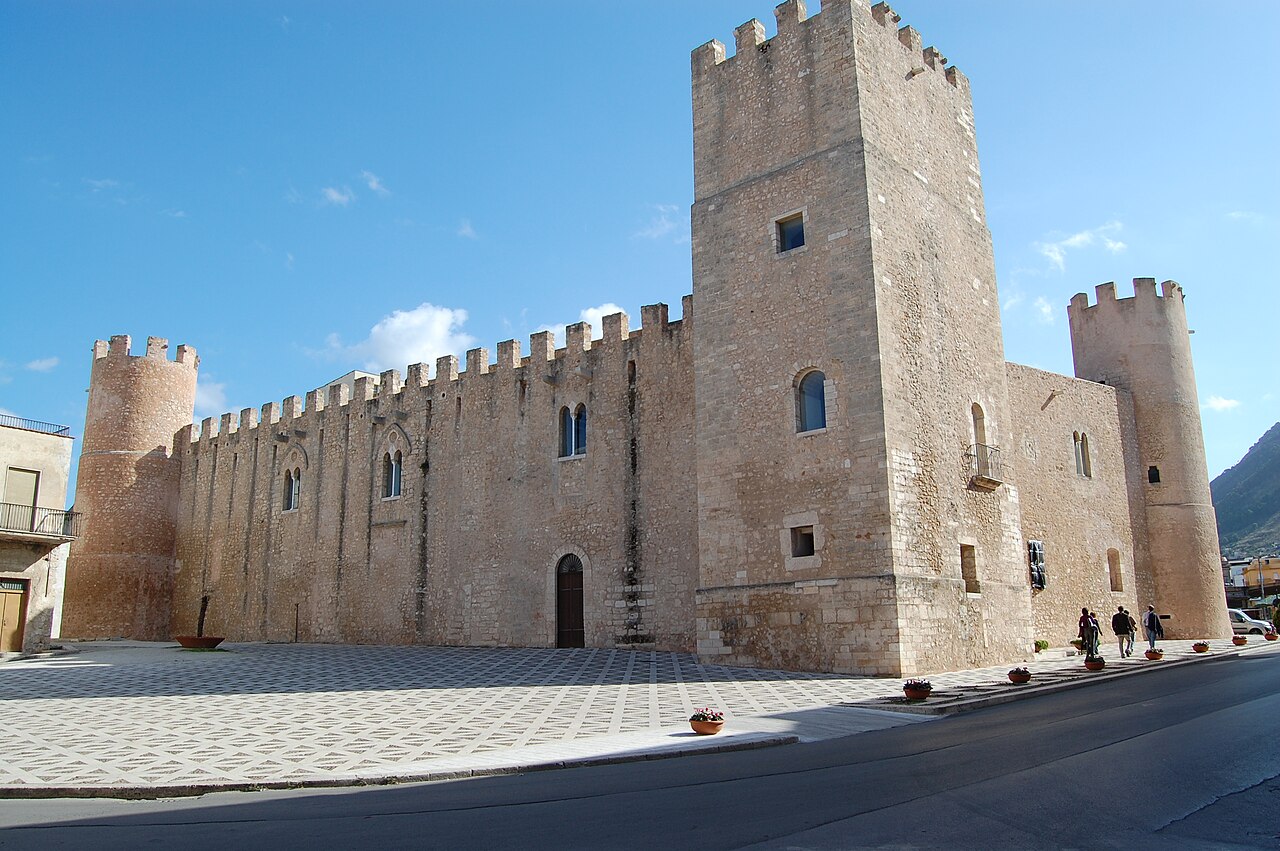
Calatubo Castle is a historic fortress located near the town of Alcamo in the Free Municipal Consortium of Trapani, Sicily, southern Italy. Its origins date back to the 11th century, during the High Medieval period, with the earliest documented reference in 1093 when Roger I of Sicily defined the boundaries of the diocese of Mazara, which included Calatubo and its dependencies. The castle's site reveals a much deeper history, with archaeological remains of an Elymian settlement and a necropolis dating to the 7th century BCE, underscoring its long-standing strategic and cultural significance.
Historical significance and medieval role
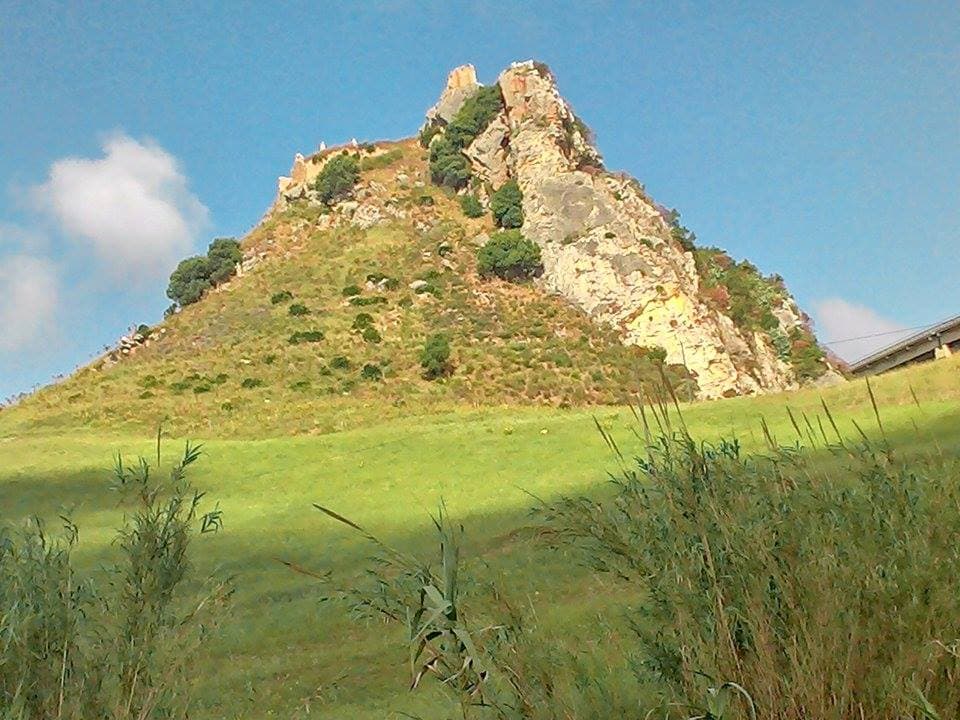
During the medieval era, Calatubo Castle was part of a vital coastal defense system that extended from Palermo to Trapani. This network of fortifications was designed to provide early warning of Saracen raids through a system of light signals transmitted between outposts at Carini, Partinico, and Castellammare del Golfo. The castle's elevated position on a limestone outcrop, approximately 152 meters above sea level, allowed it to command extensive views of the surrounding landscape, including Mount Bonifato and the Gulf of Castellammare, making it a critical point in regional security and communication.
Following the conquest of Sicily by Emperor Frederick II, the nearby village of Calatubo, which had prospered through cereal trade and the extraction of millstones from local quarries, was abandoned. Consequently, the castle lost its original military function and was converted into a farmstead or baglio. During this transformation, agricultural buildings such as warehouses and stables were added to the complex to support the administration of the surrounding agricultural estate.
Architectural features and layout
The castle complex extends roughly 150 meters east to west and 35 meters north to south, built atop a prominent limestone rock formation. The natural steep rock walls provide protection on three sides, leaving only the western side accessible via a stepped ramp leading to the first line of defense. This initial defensive area contains a well, a church hall, and several other rooms, indicating the castle's multifunctional use over time.
From the first courtyard, a portal leads to a second ring of walls, which further connects to a third circle of fortifications featuring an oblong tower. The core of the castle is a rectangular structure measuring approximately 7 by 21.5 meters, situated in the southern part of the fortress. Over the centuries, the castle underwent various modifications reflecting its changing roles from military fortress to agricultural center and later, commercial use.
Defensive elements and strategic positioning
The castle's location on a limestone outcrop with steep cliffs on three sides made it naturally defensible. The western entrance was fortified with multiple defensive walls, creating concentric layers of protection. The oblong tower in the third defensive ring likely served as a lookout and last refuge during attacks. These features illustrate typical High Medieval military architecture adapted to the site's topography.
Later history and decline
In the late 19th century, parts of Calatubo Castle were repurposed for the production and storage of the local "Calatubo" wine, marking a shift toward commercial agricultural use. The castle remained in relatively good condition until the 1968 Belice earthquake, which caused significant structural damage.
Subsequent deterioration was exacerbated by its use as a sheepfold, unauthorized excavations targeting the ancient necropolis beneath the site, and a fire in July 2013 that damaged both the interior and exterior walls, including the chapel. Despite these challenges, the castle retains some original features, such as the chapel entrance door bearing the De Ballis family coat of arms.
Preservation efforts and cultural importance
In 2007, the municipality of Alcamo acquired the castle, initiating efforts to preserve and protect this historically layered site. The castle has been recognized multiple times in the Italian Environmental Fund's "I Luoghi del Cuore" initiative, ranking third in 2014-2015, which has helped raise awareness and support for its conservation.
Since 2017, a partnership between the municipality and the volunteer group "Salviamo il Castello di Calatubo" has focused on safeguarding the castle, the surrounding limestone outcrop, the archaeological area, and the nearby Cuba delle Rose. Local tradition speaks of underground tunnels connecting Calatubo Castle with the Castle of the Counts of Modica and the Ventimiglia tower on Mount Bonifato, though these remain unconfirmed legends.
Today, the castle is generally closed to the public, with limited access through occasional guided tours organized by volunteers. Its preservation continues to face challenges due to past earthquakes, fire damage, and illicit excavations, but ongoing efforts aim to study and protect this significant monument that embodies Sicily's complex medieval and ancient heritage.
Frequently asked questions (FAQ)
- When was Calatubo Castle originally built?
- Calatubo Castle was built in the 11th century during the High Medieval period, with documented references dating back to 1093.
- What was the strategic role of Calatubo Castle in medieval times?
- The castle was part of a coastal defense system from Palermo to Trapani, transmitting light signals to warn of Saracen attacks between outposts like Carini and Castellammare del Golfo.
- Is Calatubo Castle open to visitors?
- The castle is generally closed to the public due to its poor condition but is occasionally accessible through guided tours organized by volunteers.
- What caused the decline of Calatubo Castle?
- The 1968 Belice earthquake, subsequent use as a sheepfold, unauthorized excavations, and a fire in 2013 caused significant damage and deterioration.
- What efforts are underway to preserve Calatubo Castle?
- Since 2007, the municipality of Alcamo owns the castle and works with volunteer groups to protect and restore the site, supported by recognition from the Italian Environmental Fund's heritage initiatives.
Photo gallery

Information
Current owner
Municipality of Alcamo
Loading map...
Visitor reviews
No reviews yet. Been here? Write the first review and help other travelers!
Write the first reviewVisited this castle? Share your experience
Your review helps other travelers and adds first-hand knowledge to our encyclopedia.