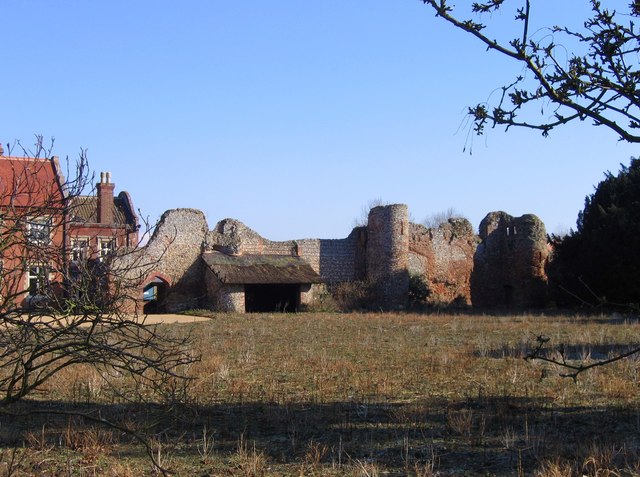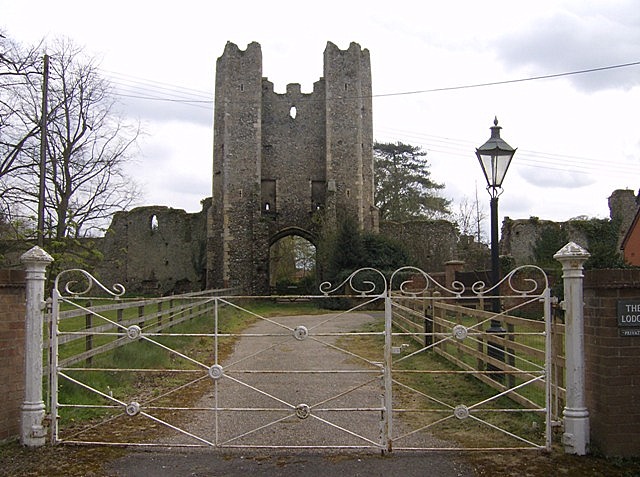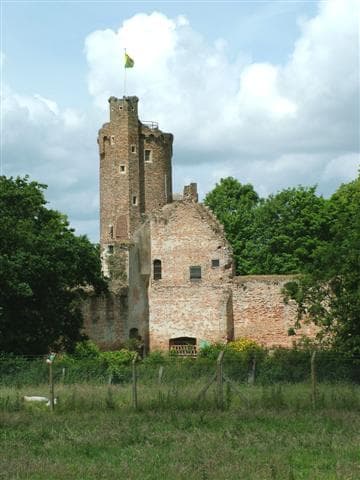
Caister Castle
Caister Castle stands as a remarkable example of mid-15th-century English military architecture, located in the coastal village of Caister-on-Sea near Great Yarmouth in Norfolk, United Kingdom. Constructed between 1432 and 1446 by the English knight Sir John Fastolf, the castle is notable for its early use of brick in England and its imposing five-storey tower, which rises to between 90 and 100 feet. This tower remains one of the tallest surviving brick towers from the medieval period in England, showcasing the transition in building materials and defensive design during the Late Medieval era.
Historical background and significance
Sir John Fastolf, a veteran of the Hundred Years’ War, financed the castle largely through the ransom he received after his captivity. His intention was to create not only a defensive stronghold but also a chantry to ensure prayers for his soul, reflecting the religious and social customs of the time. However, following his death in 1459, disputes over his will prevented the establishment of the chantry, and ownership of the castle passed to the influential Paston family.
The Pastons are historically significant for their extensive correspondence, the Paston Letters, which provide invaluable insight into the social, political, and domestic life of 15th-century England. Their possession of Caister Castle highlights the family's rising status and influence in Norfolk during the turbulent period of the Wars of the Roses.
Siege of 1469 and military importance
In 1469, Caister Castle became a focal point of conflict during regional power struggles when the Duke of Norfolk laid siege to the fortress, asserting a claim of ownership. The castle's defense, led by John Paston junior and a small garrison of about thirty men, was notable for its resilience despite being outnumbered. After a prolonged two-month siege, the castle was captured, suffering significant damage in the process. Despite this, the Paston family regained control shortly afterward and maintained residence until the late 16th century.
Architectural features and layout
Caister Castle was designed as a hill castle with a rectangular plan centered on its dominant five-storey brick tower. This tower is a pioneering example of brick construction in England, a material choice that was innovative at the time and contributed both to the castle's durability and its imposing appearance. The tower originally housed a now-lost newell staircase with 122 stone steps, which was removed in the late 18th century and reused elsewhere.
The castle was originally surrounded by a moat, enhancing its defensive capabilities. However, during the 19th century, the inner moat was filled in, and part of the water defenses was transformed into a lake, reflecting changing landscape and usage priorities. The castle's walls and other fortifications have largely succumbed to time, demolition, and the repurposing of materials, but the tower remains a significant relic of medieval fortification.
Construction materials and techniques
The use of brick at Caister Castle was unusual for its time in England, where stone was the predominant material for castles. This choice reflects both the availability of materials and the influence of continental building styles. The brickwork is robust, contributing to the tower's survival through sieges and centuries of neglect.
Associated structures and landscape
The castle was built on the site of an earlier manor and chapel, indicating the location's long-standing importance. Nearby, Caister Hall, a 15th-century building constructed by the Paston family after they abandoned the castle, stands as a testament to the family's continued prominence in the region. Today, Caister Hall houses a private motor museum, linking the historical heritage of the site with modern cultural interests.
Decline and preservation
After the Paston family vacated Caister Castle around 1599 in favor of more comfortable accommodations, the castle fell into gradual decline. Over the following centuries, it suffered from deliberate demolition to reuse building materials, especially in the 18th century. The removal of the staircase and filling in of the moat in the 19th century further altered the original medieval character of the site.
Despite these changes, the surviving tower is well preserved and remains an important monument to the Late Medieval period's architectural and military history. The castle ruins and surrounding grounds continue to attract interest for their historical and archaeological value, providing insight into the evolution of English castles and the social history of Norfolk.
Cultural and heritage importance
Caister Castle is a key heritage site that illustrates the intersection of military innovation, noble ambition, and regional power dynamics in 15th-century England. Its connection to Sir John Fastolf and the Paston family enriches its historical narrative, linking it to broader national events such as the Hundred Years’ War and the Wars of the Roses.
The castle’s brick tower stands as a rare example of early English brickwork in a defensive structure, marking a transitional moment in castle construction techniques. The site’s layered history, from its medieval origins to its later adaptations and decline, offers valuable perspectives for historians, archaeologists, and visitors interested in England’s feudal past and architectural heritage.
Visiting today
While much of the castle is in ruins, the prominent tower remains accessible to visitors, offering a tangible connection to England’s medieval past. The surrounding landscape, including the lake formed from the former moat, enhances the site's atmospheric setting. Nearby attractions such as Caister Hall and the Great Yarmouth area provide additional cultural and historical experiences for visitors.
Frequently asked questions (FAQ)
- When was Caister Castle built and by whom?
- Caister Castle was built between 1432 and 1446 by Sir John Fastolf, an English knight who used ransom money from the Hundred Years’ War to finance its construction.
- What is the architectural significance of Caister Castle?
- Caister Castle is notable for its early use of brick in England, especially its five-storey tower, which is one of the tallest surviving medieval brick towers in the country.
- What happened during the 1469 siege of Caister Castle?
- The castle was besieged by the Duke of Norfolk in 1469 due to ownership disputes. Despite a determined defense by John Paston junior and his men, the castle was captured after two months and suffered significant damage.
- Can visitors see the original moat at Caister Castle?
- The original inner moat was filled in during the 19th century, but a lake was created on the southeastern side, reflecting changes in the landscape. Visitors can still see remnants of the castle’s water defenses.
- Is Caister Castle open to the public and what can be seen?
- While much of the castle is in ruins, the well-preserved brick tower remains accessible to visitors and offers insight into medieval architecture and local history.
Photo gallery

Information
Website
Visit websiteSources & official resources
Verify the information above using these authoritative references.
Loading map...
Visitor reviews
No reviews yet. Been here? Write the first review and help other travelers!
Write the first reviewVisited this castle? Share your experience
Your review helps other travelers and adds first-hand knowledge to our encyclopedia.