Caerleon Roman Fortress and Baths
The Caerleon Roman fortress and baths represent one of the most significant archaeological sites from Roman Britain, located in the town of Caerleon, Newport, South Wales. Built around AD 75, this fortress was established as a strategic military base at the far western frontier of the Roman Empire in Britain. It served as the headquarters for the Legio II Augusta, a legion that played a pivotal role in the Roman invasion of Britain under Emperor Claudius in AD 43. The fortress was occupied and operational for just over 200 years, marking it as one of only three permanent legionary fortresses in Roman Britain, alongside Chester (Deva Victrix) and York (Eboracum).
Historical significance of Isca Augusta
The Roman name for Caerleon was Isca Augusta or sometimes Isca Silurum, reflecting its position near the territory of the Silures tribe. This fortress was vital for the Roman military strategy in Wales, acting as a base for operations to pacify and control the region. Unlike the other legionary fortresses, the remains at Caerleon have remained relatively undisturbed beneath the modern town and surrounding fields, offering a unique window into Roman military life and urban development in Britain.
Architectural features of the fortress
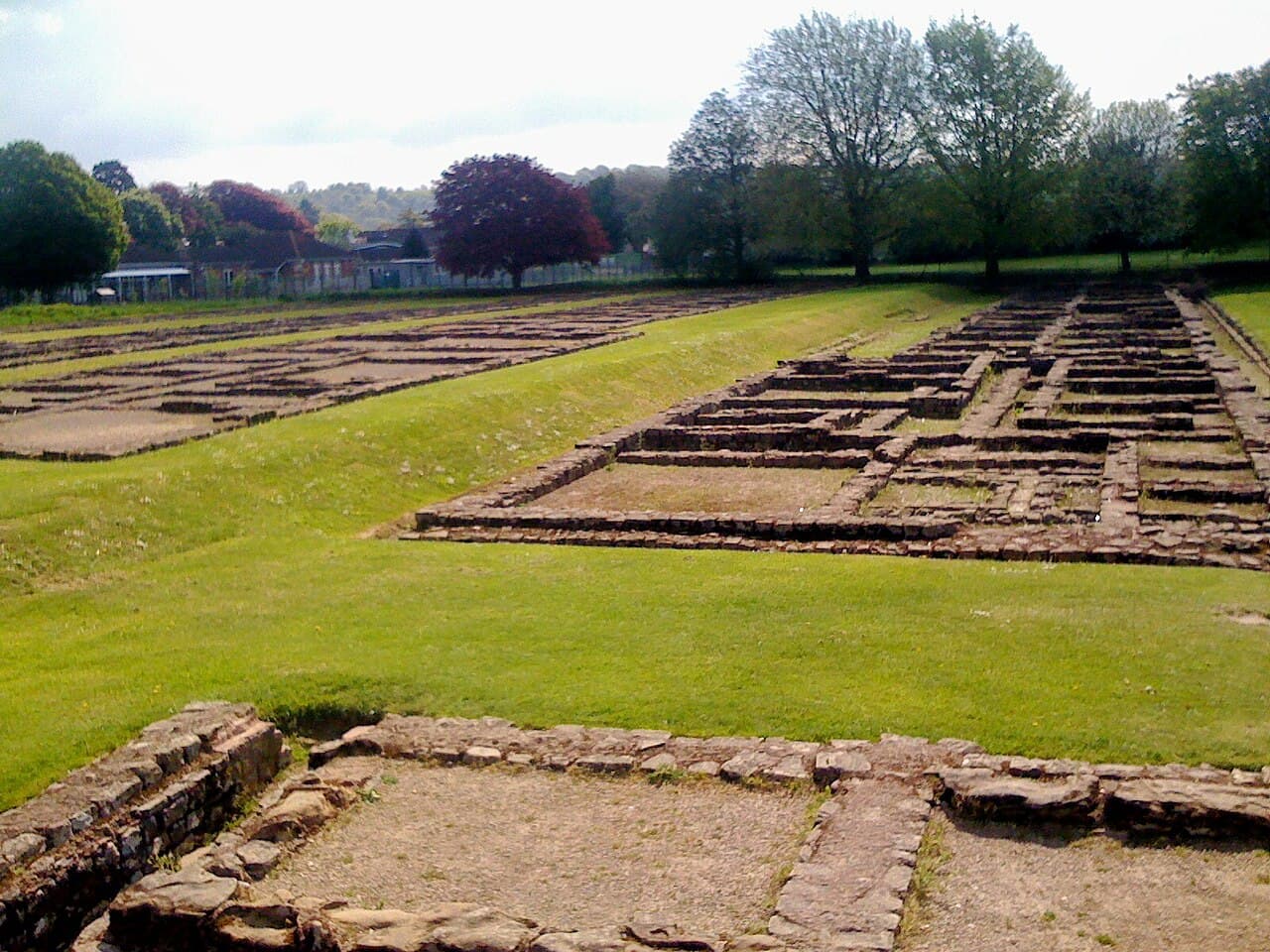
The fortress was constructed following the standard Roman military design, featuring a rectangular layout enclosed by defensive walls and ditches. Within these fortifications were barracks, headquarters buildings (principia), granaries, workshops, and other essential military structures. The site also included a Roman amphitheatre, one of the best-preserved in Britain, which was used for training exercises and public spectacles.
The military bath complex
One of the most remarkable features of the Caerleon site is the remains of the military bathhouse, which was excavated in the late 1970s. The baths were an integral part of Roman military life, providing hygiene, relaxation, and socializing opportunities for the legionaries. The complex includes a frigidarium (cold room), tepidarium (warm room), and caldarium (hot room), as well as an open-air swimming pool. Visitors today can walk along a covered walkway that protects and showcases these well-preserved remains.
The canabae and civilian settlement
Beyond the fortress walls, a civilian settlement known as the canabae developed, housing the families of soldiers, traders, and other inhabitants. Excavations in the late 20th century revealed a large complex of monumental buildings between the River Usk and the amphitheatre, expanding knowledge of the settlement's size and importance. This area was previously unknown and provides valuable insight into the urban and social life surrounding the military base.
Preservation and public access
The entire site is protected by Cadw, the Welsh government's historic environment service, ensuring its conservation for future generations. The Roman Baths Museum and the nearby National Roman Legion Museum offer visitors detailed exhibitions and access to the archaeological remains. The site is a major educational resource and tourist attraction, illustrating the scale and sophistication of Roman military engineering and daily life in Roman Britain.
Ongoing archaeological research
Excavations continue to uncover new findings, deepening understanding of the fortress's layout and the legion's activities. The relatively undisturbed nature of the site allows archaeologists to study Roman military architecture and urban planning in unprecedented detail, contributing to the broader narrative of Roman imperial expansion and control in Britain.
Frequently asked questions (FAQ)
- How do I get to Caerleon Roman Fortress and Baths?
- You can reach Caerleon Roman Fortress and Baths via public transport or by car. The site is located just a short distance from Newport, and there are regular bus services from the city center. If driving, ample parking is available nearby.
- What is the historical significance of Caerleon Roman Fortress and Baths?
- Caerleon Roman Fortress and Baths is one of the best-preserved Roman sites in the UK, showcasing the military and civilian life of Roman Britain. It served as a key military base for the Roman army and features impressive remains of amphitheaters, barracks, and bathhouses. This site illustrates the architectural prowess of the Romans and their influence on British history.
- When was Caerleon Roman Fortress and Baths built?
- The fortress was established around AD 75 and continued to be developed over the following decades. The bathhouse, an essential part of Roman life, showcases the advanced engineering skills of the time, and many of its features can still be seen today. The site remained in use until the end of Roman rule in Britain around the 5th century.
- Can I visit the fortress and baths year-round?
- Yes, Caerleon Roman Fortress and Baths is open to visitors throughout the year. However, it's advisable to check specific opening times as they may vary by season or for special events. The site is particularly busy during the summer months when many tourists explore its rich history.
- Why is the architecture at Caerleon noteworthy?
- The architecture of Caerleon Roman Fortress and Baths is noteworthy due to its scale and preservation. The remains include a large amphitheater, barracks, and the intricate bathhouse complex, which exemplify Roman engineering and urban planning. Visitors can witness firsthand the sophisticated layout and construction techniques used by the Romans.
- Is it possible to access Caerleon Roman Fortress and Baths for those with disabilities?
- Yes, the site is committed to accessibility and provides facilities for visitors with disabilities. Ramps and designated pathways ensure that everyone can enjoy the historical features. It's advisable to contact the site in advance for specific accessibility needs or arrangements.
- What are the ticket prices for Caerleon Roman Fortress and Baths?
- Ticket prices for Caerleon Roman Fortress and Baths are generally affordable, with discounts available for children, seniors, and families. Admission fees help support the preservation of this historic site. Check the official website for current pricing and any special deals or free entry days.
- What is the best time to visit Caerleon Roman Fortress and Baths?
- The best time to visit Caerleon Roman Fortress and Baths is during the spring and early autumn when the weather is mild and pleasant. These seasons also tend to have fewer crowds compared to the peak summer months, allowing for a more enjoyable experience. Special events and guided tours may also be offered during these times.
- Are there any nearby attractions to explore after visiting the fortress?
- Yes, there are several nearby attractions to explore, including the Roman Legion Museum and the picturesque River Usk. You can also take a short trip to the historic town of Newport or enjoy a walk along the scenic paths of the surrounding countryside. Caerleon offers a rich blend of history and natural beauty for visitors to enjoy.
Photo gallery

Photo by Pwimageglow (talk)•Public domain
Information
Loading map...
Visitor reviews
No reviews yet. Been here? Write the first review and help other travelers!
Write the first reviewVisited this castle? Share your experience
Your review helps other travelers and adds first-hand knowledge to our encyclopedia.