Historical context and significance
The site of Timgad, originally a Roman colonial town founded by Emperor Trajan in the early 2nd century, later became a strategic military location during the Byzantine period. The fortification was built as part of the Byzantine efforts to consolidate control over the region after the decline of Roman authority in North Africa. The 6th century marked a time when the Byzantine Empire sought to defend its remaining territories against various threats, including Berber tribes and the expanding influence of other powers in the Maghreb.
This fort is an important relic illustrating the transition from Roman to Byzantine military architecture, demonstrating adaptations to new warfare techniques and the need for stronger defensive structures. It also reflects the broader historical narrative of the Byzantine presence in North Africa, which lasted until the Arab conquests in the 7th century.
Architectural features and design
The fort is classified as a bastioned fortress, a style characterized by angular bastions projecting from the main walls, designed to improve defensive capabilities by allowing defenders to cover adjacent walls with gunfire or archery. Although the widespread use of gunpowder artillery came later, the bastion concept was an early adaptation to improve fields of fire and fortification strength.
The fortress walls are constructed from local stone and mortar, featuring thick ramparts that would have been topped with battlements for protection. The bastions are positioned at key points along the perimeter, enabling defenders to monitor and repel assaults effectively. The design likely included a main gate with defensive towers, internal courtyards, and possibly living quarters for the garrison stationed there.
While detailed plans of the fort are limited, the surviving ruins indicate a well-planned military installation tailored to the rugged terrain around Timgad. The fort's location would have provided a commanding view of the surrounding landscape, essential for early warning and defense.
Preservation and current condition
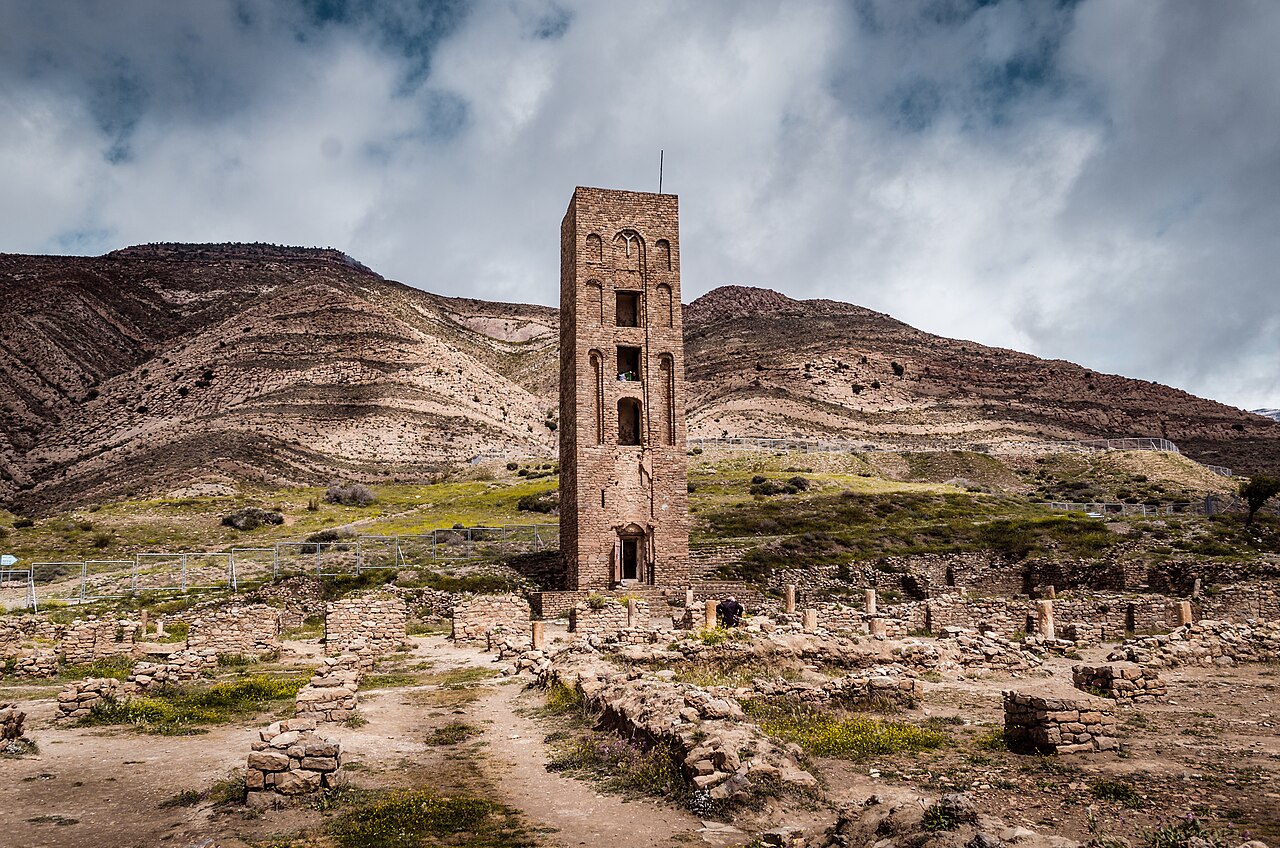
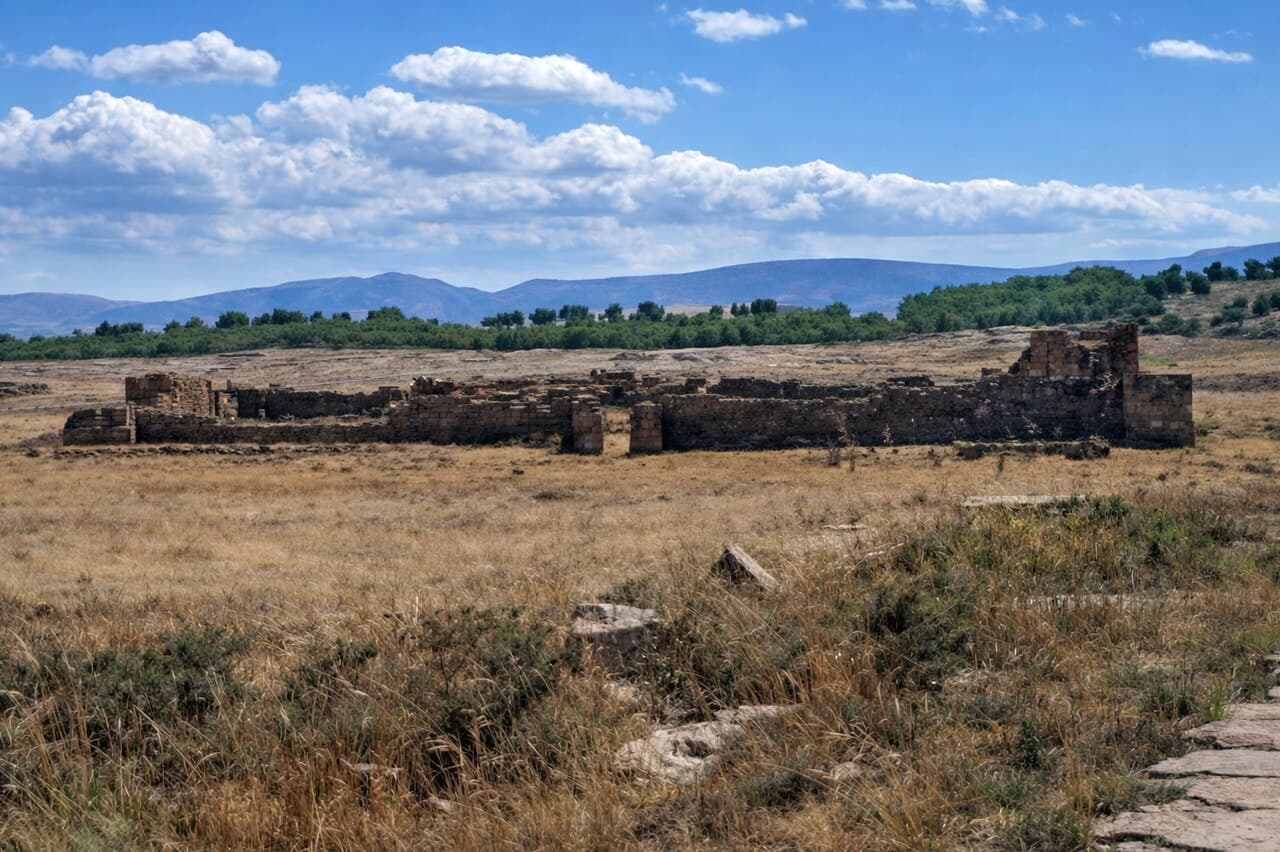
Today, the Byzantine fort in Timgad remains in a state of ruins, with portions of the walls and bastions still visible. The site is an archaeological treasure that offers insight into Byzantine military strategy and architectural innovation in North Africa. Preservation efforts focus on stabilizing the remaining structures and facilitating archaeological study.
Visitors to the site can observe the remnants of the fort's layout and appreciate its historical importance within the broader context of Timgad's Roman and Byzantine heritage. The fort complements the extensive Roman ruins of Timgad, which is a UNESCO World Heritage site, highlighting the layered history of this ancient city.
Legacy and cultural importance
The fort stands as a testament to the Byzantine Empire's reach and military ingenuity during the early medieval period. It also serves as a cultural landmark that connects modern Algeria with its complex past, spanning Roman, Byzantine, and later Islamic influences. The site contributes valuable knowledge to historians and archaeologists studying the evolution of fortifications and the geopolitical dynamics of North Africa in late antiquity and the early Middle Ages.
Frequently asked questions (FAQ)
- What is the historical significance of the Byzantine fort in Timgad?
- The fort represents the Byzantine Empire's military presence in North Africa during the 6th century, illustrating the transition from Roman to Byzantine fortification styles and their efforts to control the region.
- Can visitors explore the ruins of the fort?
- Yes, visitors can explore the ruins of the Byzantine fort in Timgad, which are accessible alongside the extensive Roman archaeological site of Timgad.
- What architectural features define the fort?
- The fort features bastioned walls with thick ramparts and angular bastions designed for enhanced defense, typical of early medieval military architecture.
- When was the fort built?
- The fort was constructed in the 6th century during the Byzantine period as part of regional defense strategies.
- Is the fort part of the UNESCO World Heritage site of Timgad?
- Yes, the fort is located within the area of Timgad, which is recognized as a UNESCO World Heritage site due to its outstanding Roman and Byzantine archaeological remains.
Photo gallery

Information
Loading map...
Visitor reviews
No reviews yet. Been here? Write the first review and help other travelers!
Write the first reviewVisited this castle? Share your experience
Your review helps other travelers and adds first-hand knowledge to our encyclopedia.