Büyükkale Castle

Büyükkale Castle in Izmir, Turkey
Next to Büyükkale, Izmir, Turkey
Early Medieval (5th–10th c.)
Ruins

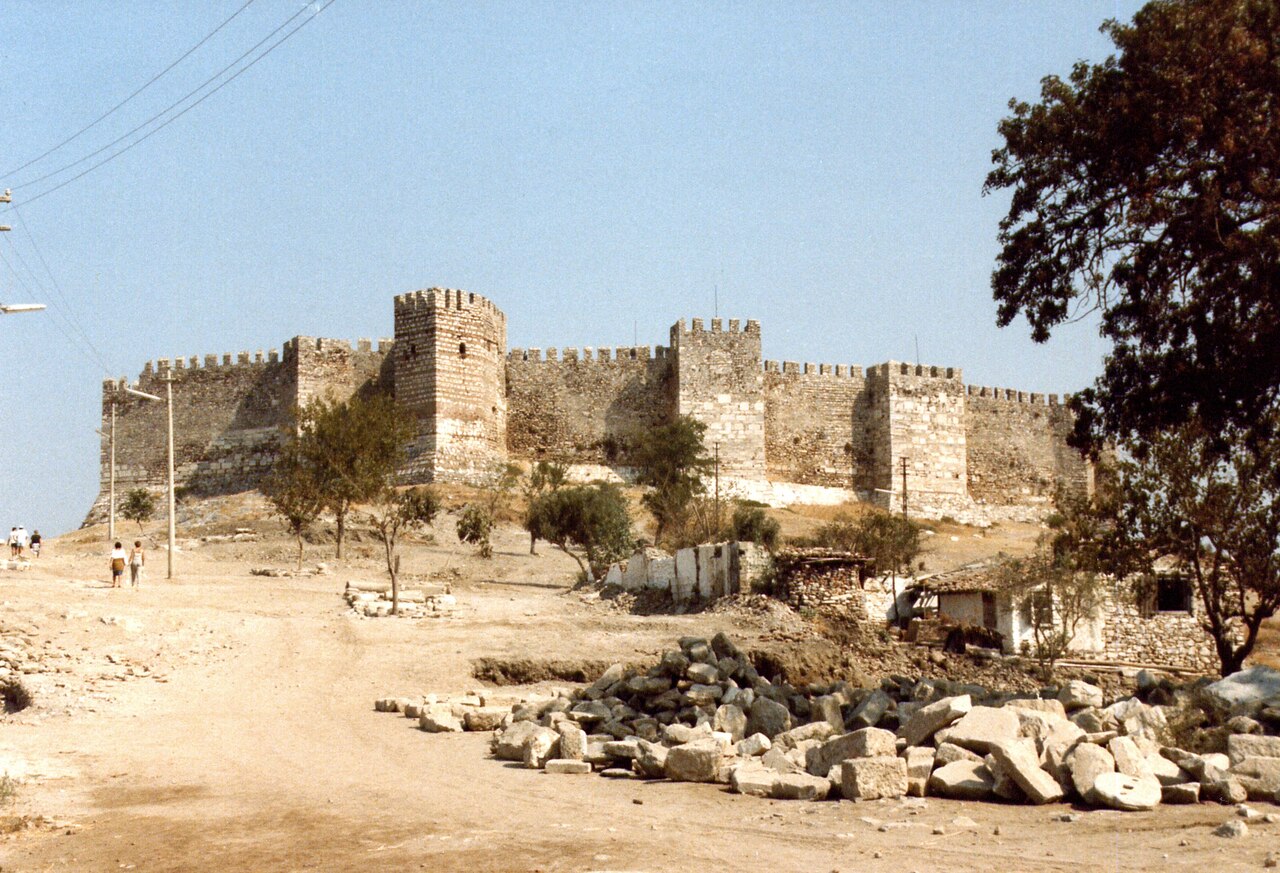
Büyükkale Castle, locally known as Büyükkale Kalesi, is situated on a prominent hill overlooking the village of Büyükkale in the Izmir province of Turkey. This strategic location atop a hill provided natural defensive advantages, a common feature for fortifications in this region. The castle's remains today are modest, consisting mainly of scattered low walls that have become overgrown with vegetation, reflecting its long period of abandonment and the passage of time.

Historical context and architectural origins

While detailed historical records about Büyükkale Castle are scarce, the visible masonry techniques suggest that its initial construction likely dates back to a period before the Byzantine Empire exerted control over the area. This implies the castle could have origins in the Late Classical or Early Medieval periods, possibly serving as a local stronghold or watchtower.

During the Byzantine era, the castle appears to have been maintained, rebuilt, or modified, indicating its continued strategic importance in controlling the surrounding territory. Such reuse of earlier fortifications was common in the region, where successive empires adapted existing structures to suit evolving military needs.

Architectural features and current condition

The remaining structures at Büyükkale Castle are limited to low sections of defensive walls, which are heavily overgrown, making detailed architectural analysis difficult. The castle was likely a hill castle, utilizing the natural elevation for defense rather than extensive man-made fortifications. The lack of significant standing structures such as towers, gates, or keeps suggests that the castle was either modest in scale or that much of its superstructure has been lost over time.

The masonry style, characterized by roughly hewn stones and simple construction methods, aligns with early medieval fortification techniques rather than the more refined stonework seen in later periods. This supports the hypothesis of an early origin with subsequent Byzantine renovations.

Accessibility and visitor information

The site of Büyükkale Castle is freely accessible to visitors and does not have formal tourist facilities or signage. Due to the minimal remains and overgrown nature of the site, it is not considered a major tourist attraction. Visitors interested in early medieval fortifications or the Byzantine period may find the castle's location and ruins of interest as part of a broader exploration of the Izmir region's historical landscape.

Given the lack of developed infrastructure, visitors should prepare accordingly, ensuring they have appropriate footwear and supplies for exploring a lightly maintained archaeological site.

Significance and preservation

Although Büyükkale Castle does not feature prominently in historical texts or attract large numbers of visitors, it represents an example of the many small fortifications that dotted the landscape of western Anatolia. These castles played a role in local defense and control during periods of shifting political power, including the Byzantine era.

Preservation efforts appear minimal, and the castle remains are in a state best described as ruins. The site offers potential for archaeological study to better understand the region's early medieval fortifications and settlement patterns.

Frequently asked questions (FAQ)

How do I get to Büyükkale Castle?
Büyükkale Castle is located on a hill near the village of Büyükkale in Izmir province, Turkey. Visitors typically reach the site by car or local transport to the village, followed by a short hike uphill to the ruins.
What is the historical significance of Büyükkale Castle?
The castle likely dates back to before Byzantine rule and was used and rebuilt during the Byzantine period, serving as a local defensive stronghold in western Anatolia.
Is Büyükkale Castle accessible to visitors?
Yes, the site is freely accessible with no entrance fee, but it has minimal facilities and the remains are limited to low, overgrown walls, so visitors should be prepared for a modest visit.
What remains can I expect to see at Büyükkale Castle?
Visitors will find scattered low walls and foundations overgrown with vegetation. There are no significant standing structures like towers or gates visible today.
When was Büyükkale Castle built?
The exact construction date is unknown, but the masonry suggests it was built before the Byzantine era and later used by Byzantine forces.

Information

Hill Castle

Loading map...

Visitor reviews

No reviews yet. Been here? Write the first review and help other travelers!

Write the first review

Visited this castle? Share your experience

Your review helps other travelers and adds first-hand knowledge to our encyclopedia.
Write a review

(5/5)

0/2000 characters

Your review will be visible after admin approval

Nearby castles

18.5 km
Ayasuluk Castle — Turkey castle

Ayasuluk Castle

Selçuk, Turkey

Ayasuluk Castle, also known locally as Ayasuluk Kalesi or Selçuk Kalesi, is a significant historical fortress located on a prominent hill in the town of Selçuk, within the Izmir province of Turkey. The castle overlooks the ruins of the ancient city of Ephesus, situated just about a mile away. This strategic position highlights the castle’s historical importance as a defensive stronghold and a center of settlement through various eras. The origins of Ayasuluk Castle date back to the 6th century during the Byzantine period, a time when the ancient city of Ephesus was undergoing significant decline. Originally, Ephesus was a thriving harbor city, but the gradual silting of its harbor transformed it into an inland site, now approximately 5 kilometers from the sea. As the harbor became unusable and health issues like malaria increased, the population shifted from the harbor area to the more defensible hill of Ayasuluk. Construction and architectural features The castle was constructed using repurposed stones from disused Greek and Roman buildings, a common practice in Byzantine fortifications to economize materials and incorporate durable elements. The walls of the castle and the encompassing citadel were built with a combination of marble façades and mortared rubble, resulting in formidable walls approximately 4 meters thick. The defensive perimeter of the citadel extended about 1.5 kilometers and was fortified with 17 towers, enhancing its defensive capabilities. The entrance to the citadel from the south was through the Gate of Persecution, a gateway that uniquely led directly into the Basilica of St. John. This basilica was constructed on the slope of Ayasuluk hill, within the protective walls of the castle complex. The defensive walls extended down the hill to enclose the basilica, effectively creating a two-tiered fortress system. The upper castle served as a stronghold while the lower castle area housed the basilica and its associated structures. In the 8th century, the square towers flanking the Gate of Persecution were remodeled into pentagonal towers, a design modification that improved their defensive strength against siege tactics. This architectural evolution reflects the Byzantine emphasis on fortification improvements in response to emerging military threats. Historical significance and changes over time Over the centuries, as the harbor of Ephesus continued to silt up and became less viable for trade and transport, the population increasingly concentrated around the fortified hill of Ayasuluk. By the end of the Byzantine era, the original harbor city was largely abandoned, and the focus of settlement shifted entirely to the citadel on Ayasuluk hill. In 1090, the region was conquered by the Seljuk Turks under the leadership of Tengribirmish. However, the settlement was reduced to a small village at that time. The Byzantines briefly regained control in 1097, renaming the village Agios Theologus. Byzantine rule persisted until the early 14th century, when the Seljuks once again took control and renamed the site Ayasuluk. They undertook repairs of the castle walls and dredged the harbor, leading to a period of renewed prosperity. By the early 15th century, Ayasuluk came under Ottoman rule. However, the harbor had silted up once more and transformed into a swamp, causing the town to decline back into a village. Despite this decline, the Ottomans maintained a garrison within the castle, which numbered around 40 soldiers by the mid-17th century. The castle was eventually abandoned during the 18th century as the population dwindled further. Notable structures within the castle complex Within the castle grounds, visitors can find the remains of several significant structures from different periods. A small, ruined Ottoman mosque stands as evidence of the castle’s use during Ottoman times. There is also a part of a former church that was later converted into a cistern, illustrating the adaptive reuse of religious buildings over time. Additionally, several Ottoman cisterns are present within the castle, highlighting the importance of water storage for sustaining the garrison and inhabitants. Archaeological remains include the ground plans of several houses, which provide insight into the domestic life within the citadel. The castle and basilica site together offer a rich tapestry of Byzantine, Seljuk, and Ottoman history. Visiting ayasuluk castle today Today, Ayasuluk Castle is accessible to visitors as part of the larger archaeological and historical complex that includes the Basilica of St. John. Visitors must pay an entrance fee to access the site, which allows exploration of both the castle ruins and the basilica. The castle’s elevated position offers panoramic views of the surrounding landscape and the ancient city of Ephesus. The castle’s well-preserved defensive walls and towers provide a tangible connection to the military architecture of the early medieval Byzantine period. The site is a valuable destination for those interested in medieval fortifications, Byzantine history, and the layered cultural heritage of western Anatolia.

Early Medieval (5th–10th c.)
Details
22.8 km

Metropolis Castle

Yeniköy Köyü, Turkey

Metropolis Castle, locally known as Metropolis Kalesi, is a historic fortress located on a hillside between the villages of Özbey and Yeniköy in the province of Izmir, Turkey. This castle is notable for its unique position atop the ruins of the ancient Greek city of Metropolis, blending Byzantine military architecture with the remnants of classical antiquity. Historical context and strategic importance The castle was constructed during the late medieval period, specifically in the 14th century, by the Byzantines as a defensive measure against frequent Arab raids into Byzantine territory. The location was strategically chosen on the old acropolis of the ancient city, which provided a natural defensive advantage. This site was part of a broader network of fortifications aimed at securing the western Anatolian coast and inland regions during a time of political fragmentation and external threats. Architectural features and construction Metropolis Castle was built primarily using rubble work masonry, a common technique in Byzantine fortifications, which involved the use of rough stones set in mortar. Importantly, the builders incorporated spolia—building materials quarried from the ruins of the ancient Greek city below—into the castle's walls. This reuse of materials not only provided structural resources but also connected the medieval fortress with the classical heritage of the site. The castle's layout includes an upper bailey formed by the fortified acropolis of the ancient city. From this elevated position, two curtain walls descend the hillside, terminating in two square towers that flank a lower bailey. These towers were integral to the castle's defense, although today they are inaccessible to visitors. The entrance gate is uniquely situated on the remains of the ancient city's bouleuterion (council house), highlighting the integration of ancient civic structures into the medieval fortress design. Reuse of ancient elements The reuse of ancient architectural elements is a defining characteristic of Metropolis Castle. Notably, a nearly complete marble statue was discovered embedded within the southern curtain wall, illustrating the practice of spolia and the blending of cultural layers at the site. This statue was carefully removed for preservation, emphasizing the archaeological significance of the castle's fabric. Transition to Beylik of Aydın control In the 14th century, the castle and its surrounding area came under the control of Gazi Mehmed Bey, the founder of the Beylik of Aydın, a Turkish principality that emerged in western Anatolia following the decline of Byzantine authority. This political shift led to the depopulation of Metropolis, with the remaining inhabitants relocating to the nearby town of Torbalı. The castle's military role diminished as the region's political landscape evolved. Current condition and archaeological significance Today, the physical remains of Metropolis Castle are modest and may not impress those expecting grand medieval fortifications. The two square corner towers remain standing but are not accessible to visitors. However, the true value of the site lies in the visible integration of the castle with the underlying ancient city ruins, which form an archaeological park open to the public during daylight hours without an entrance fee. The archaeological park surrounding the castle includes significant remains of the ancient Greek city, such as public buildings, streets, and other urban structures, offering a rare glimpse into the continuous occupation and adaptation of this site from antiquity through the medieval era. Visiting Metropolis Castle and archaeological park Visitors to Metropolis Castle can explore the hillside site, appreciating both the medieval fortifications and the ancient Greek ruins. The site is accessible during the daytime and entry is free, making it an attractive destination for those interested in Byzantine military architecture, ancient Greek urbanism, and the layered history of western Anatolia. While the castle itself offers limited structural remains, the combined experience of the fortress and the archaeological park provides valuable insights into the region's historical transitions and architectural evolution.

Late Medieval (14th–15th c.)
Details
32.8 km

Güvercinada Castle

Kuşadası, Turkey

Güvercinada Castle, also known locally as Güvercinada Kalesi or Kuşadası Kale, is a historic fortress situated on a small island in the harbor of the town of Kuşadası in the Aydın province of Turkey. This castle occupies a strategic position at the mouth of the Gulf of Kuşadası, guarding the harbor and controlling maritime access to the town. The island is connected to the mainland by a narrow causeway, making the castle accessible while maintaining its defensive isolation. Historical background and origins The town of Kuşadası has roots extending back to Antiquity, originally known as Ephesus Neopolis. It is likely that some form of fortification or buildings existed on the island of Güvercinada during ancient times, although no definitive archaeological evidence confirms this. The earliest confirmed structure on the island is a square Byzantine keep dating from the year 1242, as indicated by an inscription above the castle gate. This keep represents the medieval defensive core around which later fortifications were developed. The castle in its current form was primarily constructed in the 16th century during the Renaissance period, under the direction of the famed Ottoman naval admiral Hayreddin Barbarossa. Barbarossa was instrumental in strengthening Ottoman naval power in the eastern Mediterranean and commissioned the castle to protect the harbor of Kuşadası from naval threats and piracy. The fortress served as a key defensive installation for the Ottoman Empire, securing this important coastal region. Architectural features and layout Güvercinada Castle has an irregular shape that conforms to the natural contours of the island on which it stands. The castle walls follow the rocky shoreline, creating a defensive perimeter adapted to the island's topography. The fortification includes thick stone walls with battlements, designed to withstand artillery and naval assaults common in the 16th century. The castle's defensive structures include the original Byzantine keep, which forms the central stronghold. Surrounding this core are later Ottoman-built walls and bastions that extend around the island's perimeter. The walls are punctuated by towers and embrasures for cannon placements, reflecting the military architectural advancements of the Renaissance era. The causeway connecting the island to the mainland allows controlled access to the fortress, which would have been a critical feature for defense and supply. This narrow land bridge also helped isolate the castle from direct land attacks, making it more difficult for enemies to besiege the fortress effectively. Historical significance and military role During the 16th century, the eastern Mediterranean was a contested zone between the Ottoman Empire and various European powers. Güvercinada Castle played a vital role in securing the Ottoman naval dominance in the area by protecting the harbor of Kuşadası, a key port for trade and military operations. The castle's strategic location at the entrance to the Gulf of Kuşadası allowed it to monitor and control maritime traffic, preventing enemy fleets and pirates from threatening the town and its hinterland. Its robust fortifications and artillery positions made it a formidable obstacle to any naval assault. Later history and preservation status Over the centuries, the castle has undergone various phases of repair and restoration, though its core structure remains largely intact. In recent years, Güvercinada Castle has been closed to the public for restoration work, which began around 2013. However, progress on these restorations has been slow, and visitors have often found the site inaccessible. Despite its partial closure, the castle remains a prominent historical landmark and a symbol of Kuşadası's rich maritime heritage. Its well-preserved walls and unique island location continue to attract interest from historians, architects, and tourists alike. Visiting Güvercinada Castle While the castle is currently undergoing restoration and may not be fully accessible, the surrounding area offers scenic views of the fortress and the harbor. The causeway provides a striking approach to the island, and the castle's silhouette against the sea is a popular subject for photography. Visitors to Kuşadası can explore the town's other historical sites and enjoy its coastal attractions while keeping an eye on restoration updates for future opportunities to tour the castle's interior and ramparts.

Renaissance (15th–17th c.)
Details

