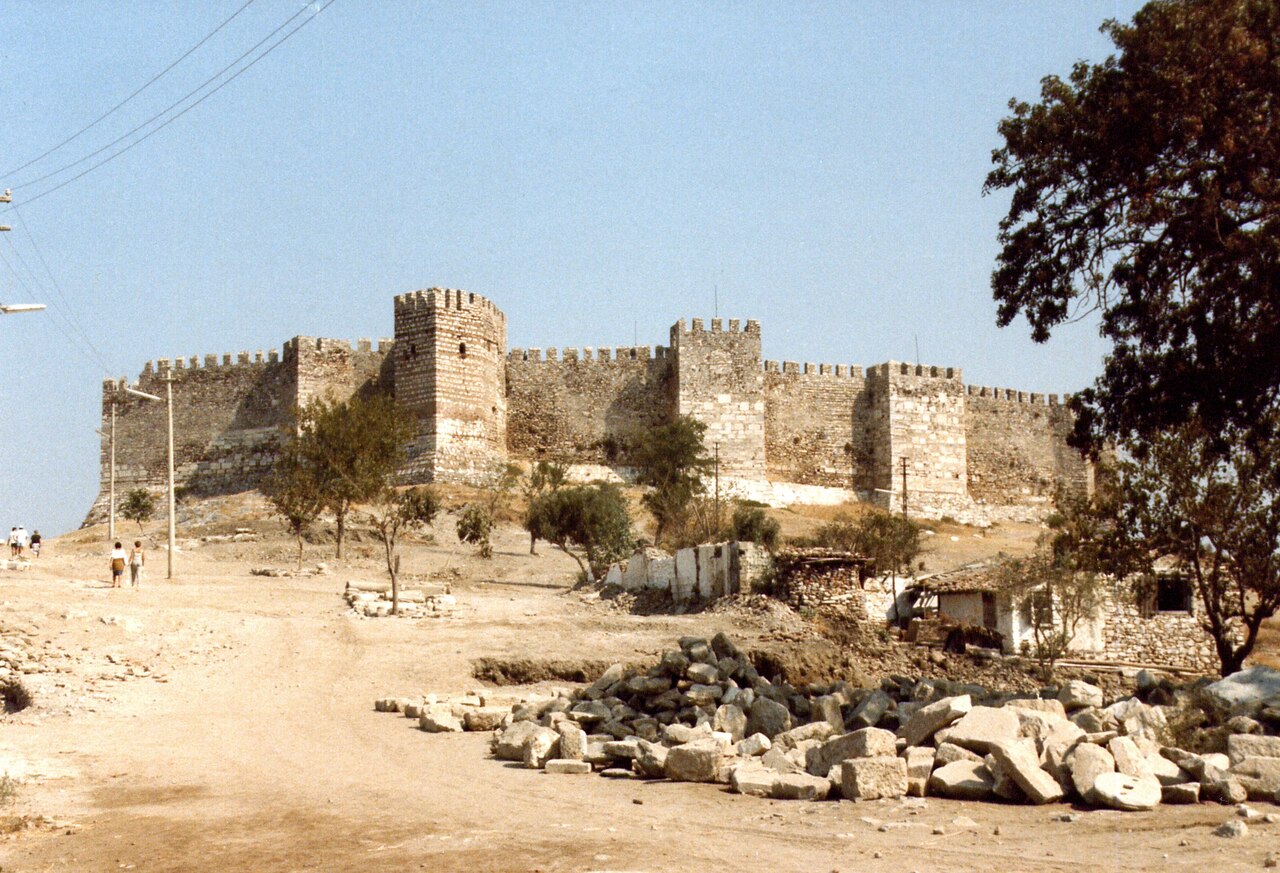
Güvercinada Castle
Güvercinada Castle, also known locally as Güvercinada Kalesi or Kuşadası Kale, is a historic fortress situated on a small island in the harbor of the town of Kuşadası in the Aydın province of Turkey. This castle occupies a strategic position at the mouth of the Gulf of Kuşadası, guarding the harbor and controlling maritime access to the town. The island is connected to the mainland by a narrow causeway, making the castle accessible while maintaining its defensive isolation.
Historical background and origins
The town of Kuşadası has roots extending back to Antiquity, originally known as Ephesus Neopolis. It is likely that some form of fortification or buildings existed on the island of Güvercinada during ancient times, although no definitive archaeological evidence confirms this. The earliest confirmed structure on the island is a square Byzantine keep dating from the year 1242, as indicated by an inscription above the castle gate. This keep represents the medieval defensive core around which later fortifications were developed.
The castle in its current form was primarily constructed in the 16th century during the Renaissance period, under the direction of the famed Ottoman naval admiral Hayreddin Barbarossa. Barbarossa was instrumental in strengthening Ottoman naval power in the eastern Mediterranean and commissioned the castle to protect the harbor of Kuşadası from naval threats and piracy. The fortress served as a key defensive installation for the Ottoman Empire, securing this important coastal region.
Architectural features and layout
Güvercinada Castle has an irregular shape that conforms to the natural contours of the island on which it stands. The castle walls follow the rocky shoreline, creating a defensive perimeter adapted to the island's topography. The fortification includes thick stone walls with battlements, designed to withstand artillery and naval assaults common in the 16th century.
The castle's defensive structures include the original Byzantine keep, which forms the central stronghold. Surrounding this core are later Ottoman-built walls and bastions that extend around the island's perimeter. The walls are punctuated by towers and embrasures for cannon placements, reflecting the military architectural advancements of the Renaissance era.
The causeway connecting the island to the mainland allows controlled access to the fortress, which would have been a critical feature for defense and supply. This narrow land bridge also helped isolate the castle from direct land attacks, making it more difficult for enemies to besiege the fortress effectively.
Historical significance and military role
During the 16th century, the eastern Mediterranean was a contested zone between the Ottoman Empire and various European powers. Güvercinada Castle played a vital role in securing the Ottoman naval dominance in the area by protecting the harbor of Kuşadası, a key port for trade and military operations.
The castle's strategic location at the entrance to the Gulf of Kuşadası allowed it to monitor and control maritime traffic, preventing enemy fleets and pirates from threatening the town and its hinterland. Its robust fortifications and artillery positions made it a formidable obstacle to any naval assault.
Later history and preservation status
Over the centuries, the castle has undergone various phases of repair and restoration, though its core structure remains largely intact. In recent years, Güvercinada Castle has been closed to the public for restoration work, which began around 2013. However, progress on these restorations has been slow, and visitors have often found the site inaccessible.
Despite its partial closure, the castle remains a prominent historical landmark and a symbol of Kuşadası's rich maritime heritage. Its well-preserved walls and unique island location continue to attract interest from historians, architects, and tourists alike.
Visiting Güvercinada Castle
While the castle is currently undergoing restoration and may not be fully accessible, the surrounding area offers scenic views of the fortress and the harbor. The causeway provides a striking approach to the island, and the castle's silhouette against the sea is a popular subject for photography.
Visitors to Kuşadası can explore the town's other historical sites and enjoy its coastal attractions while keeping an eye on restoration updates for future opportunities to tour the castle's interior and ramparts.
Frequently asked questions (FAQ)
- When was Güvercinada Castle built and by whom?
- Güvercinada Castle was primarily built in the 16th century by the Ottoman admiral Hayreddin Barbarossa to protect Kuşadası's harbor.
- What is the architectural style of Güvercinada Castle?
- The castle features Renaissance military architecture with thick stone walls, battlements, and cannon embrasures adapted to the island's irregular shape.
- Is Güvercinada Castle open to visitors?
- As of recent years, the castle has been closed for restoration since 2013, and public access is limited or unavailable during this period.
- How is the castle connected to the mainland?
- Güvercinada Castle is linked to the mainland by a narrow causeway, allowing controlled access while maintaining its defensive position on the island.
- What was the strategic importance of Güvercinada Castle?
- The castle guarded the entrance to the Gulf of Kuşadası, protecting the harbor from naval attacks and piracy during the Ottoman period.
Information
Loading map...
Visitor reviews
No reviews yet. Been here? Write the first review and help other travelers!
Write the first reviewVisited this castle? Share your experience
Your review helps other travelers and adds first-hand knowledge to our encyclopedia.