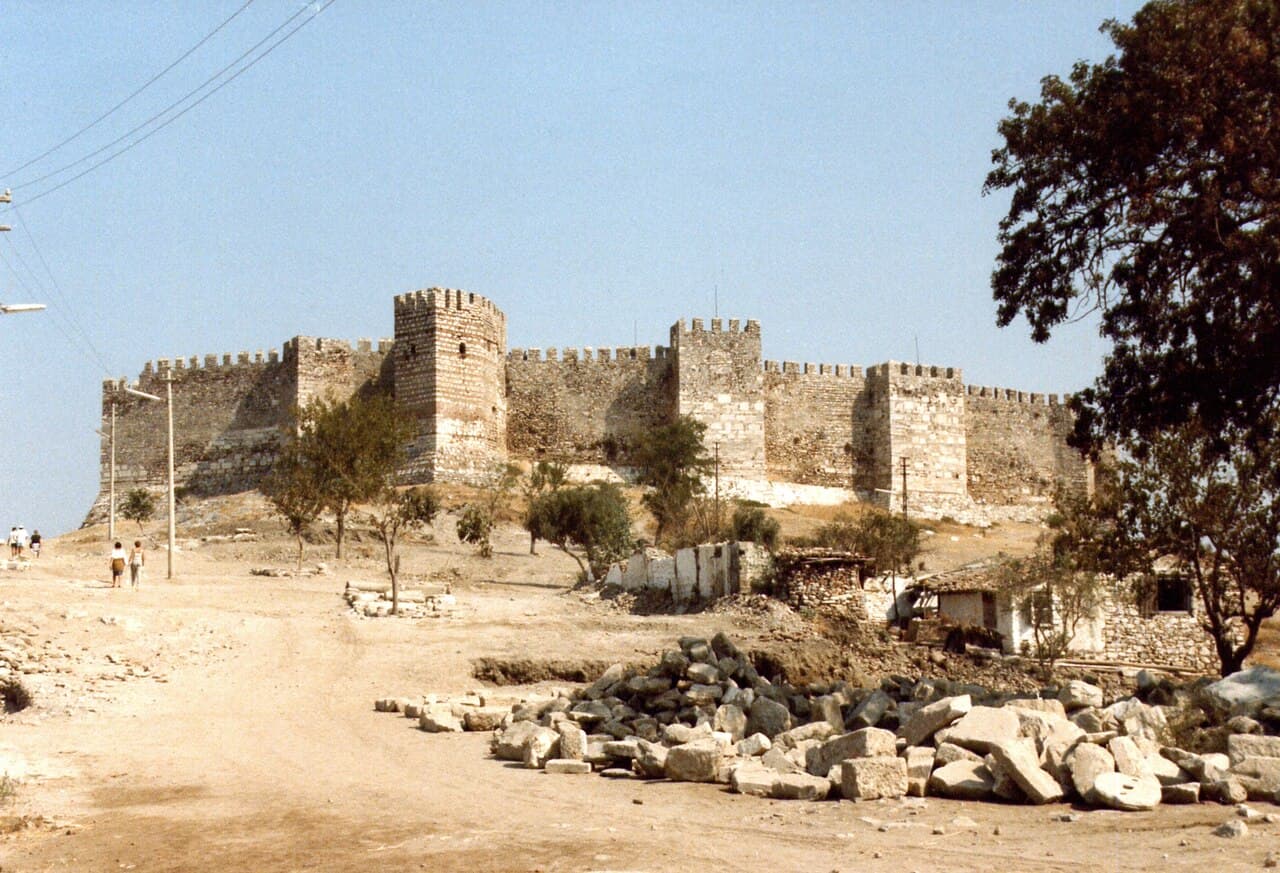
Ayasuluk Castle
Ayasuluk Castle, also known locally as Ayasuluk Kalesi or Selçuk Kalesi, is a significant historical fortress located on a prominent hill in the town of Selçuk, within the Izmir province of Turkey. The castle overlooks the ruins of the ancient city of Ephesus, situated just about a mile away. This strategic position highlights the castle’s historical importance as a defensive stronghold and a center of settlement through various eras.
The origins of Ayasuluk Castle date back to the 6th century during the Byzantine period, a time when the ancient city of Ephesus was undergoing significant decline. Originally, Ephesus was a thriving harbor city, but the gradual silting of its harbor transformed it into an inland site, now approximately 5 kilometers from the sea. As the harbor became unusable and health issues like malaria increased, the population shifted from the harbor area to the more defensible hill of Ayasuluk.
Construction and architectural features
The castle was constructed using repurposed stones from disused Greek and Roman buildings, a common practice in Byzantine fortifications to economize materials and incorporate durable elements. The walls of the castle and the encompassing citadel were built with a combination of marble façades and mortared rubble, resulting in formidable walls approximately 4 meters thick. The defensive perimeter of the citadel extended about 1.5 kilometers and was fortified with 17 towers, enhancing its defensive capabilities.
The entrance to the citadel from the south was through the Gate of Persecution, a gateway that uniquely led directly into the Basilica of St. John. This basilica was constructed on the slope of Ayasuluk hill, within the protective walls of the castle complex. The defensive walls extended down the hill to enclose the basilica, effectively creating a two-tiered fortress system. The upper castle served as a stronghold while the lower castle area housed the basilica and its associated structures.
In the 8th century, the square towers flanking the Gate of Persecution were remodeled into pentagonal towers, a design modification that improved their defensive strength against siege tactics. This architectural evolution reflects the Byzantine emphasis on fortification improvements in response to emerging military threats.
Historical significance and changes over time
Over the centuries, as the harbor of Ephesus continued to silt up and became less viable for trade and transport, the population increasingly concentrated around the fortified hill of Ayasuluk. By the end of the Byzantine era, the original harbor city was largely abandoned, and the focus of settlement shifted entirely to the citadel on Ayasuluk hill.
In 1090, the region was conquered by the Seljuk Turks under the leadership of Tengribirmish. However, the settlement was reduced to a small village at that time. The Byzantines briefly regained control in 1097, renaming the village Agios Theologus. Byzantine rule persisted until the early 14th century, when the Seljuks once again took control and renamed the site Ayasuluk. They undertook repairs of the castle walls and dredged the harbor, leading to a period of renewed prosperity.
By the early 15th century, Ayasuluk came under Ottoman rule. However, the harbor had silted up once more and transformed into a swamp, causing the town to decline back into a village. Despite this decline, the Ottomans maintained a garrison within the castle, which numbered around 40 soldiers by the mid-17th century. The castle was eventually abandoned during the 18th century as the population dwindled further.
Notable structures within the castle complex
Within the castle grounds, visitors can find the remains of several significant structures from different periods. A small, ruined Ottoman mosque stands as evidence of the castle’s use during Ottoman times. There is also a part of a former church that was later converted into a cistern, illustrating the adaptive reuse of religious buildings over time.
Additionally, several Ottoman cisterns are present within the castle, highlighting the importance of water storage for sustaining the garrison and inhabitants. Archaeological remains include the ground plans of several houses, which provide insight into the domestic life within the citadel. The castle and basilica site together offer a rich tapestry of Byzantine, Seljuk, and Ottoman history.
Visiting ayasuluk castle today
Today, Ayasuluk Castle is accessible to visitors as part of the larger archaeological and historical complex that includes the Basilica of St. John. Visitors must pay an entrance fee to access the site, which allows exploration of both the castle ruins and the basilica. The castle’s elevated position offers panoramic views of the surrounding landscape and the ancient city of Ephesus.
The castle’s well-preserved defensive walls and towers provide a tangible connection to the military architecture of the early medieval Byzantine period. The site is a valuable destination for those interested in medieval fortifications, Byzantine history, and the layered cultural heritage of western Anatolia.
Frequently asked questions (FAQ)
- How do I get to Ayasuluk Castle?
- Ayasuluk Castle is located in Selçuk, Turkey, and is easily accessible by foot from the town center. If you're traveling from nearby cities, you can take a bus or hire a taxi to reach the castle, which is situated on a hill offering stunning views of the surrounding landscape.
- What is the historical significance of Ayasuluk Castle?
- Ayasuluk Castle dates back to the Byzantine period and has been an important defensive fortress throughout history. It played a crucial role during the Roman and Ottoman eras, making it a significant landmark that reflects the rich cultural heritage of the region.
- When was Ayasuluk Castle built?
- The construction of Ayasuluk Castle began in the 6th century AD during the Byzantine Empire. Over the centuries, it was expanded and renovated by various rulers, including the Seljuks and Ottomans, making it an architectural testament to the area's tumultuous history.
- Can I visit Ayasuluk Castle year-round?
- Yes, Ayasuluk Castle is open to visitors year-round, allowing you to explore its historical grounds at any time. However, the best time to visit is during the spring and fall when the weather is mild, making your experience more enjoyable.
- Why is Ayasuluk Castle a popular tourist attraction?
- Ayasuluk Castle is popular due to its fascinating history, impressive architecture, and panoramic views of Selçuk and the nearby Ephesus ruins. Visitors are drawn to its unique blend of historical significance and natural beauty, making it a must-see when in the area.
- Is it possible to enter the castle grounds?
- Yes, visitors can enter the castle grounds and explore its various structures, including towers and walls. Walking through the castle provides a tangible connection to the past, and you can enjoy breathtaking views from its elevated position.
- What are the opening hours of Ayasuluk Castle?
- Ayasuluk Castle is generally open to visitors from 8:00 AM to 7:00 PM during the spring and summer months, and from 8:00 AM to 5:00 PM in the fall and winter. It is advisable to check for any seasonal changes or public holidays that may affect these hours before your visit.
- What are the ticket prices for Ayasuluk Castle?
- The entrance fee for Ayasuluk Castle is quite affordable, typically around 20 Turkish Lira. This nominal fee provides access to the castle's grounds, allowing you to explore its historical features and enjoy the scenic views without breaking the bank.
- Are there any nearby attractions to Ayasuluk Castle?
- Yes, Ayasuluk Castle is in close proximity to several attractions, including the ancient city of Ephesus and the Basilica of St. John. Visitors can easily combine their trip to the castle with these historical sites to enrich their experience of the region.
Photo gallery

Information
Loading map...
Visitor reviews
No reviews yet. Been here? Write the first review and help other travelers!
Write the first reviewVisited this castle? Share your experience
Your review helps other travelers and adds first-hand knowledge to our encyclopedia.


