Burry Holms
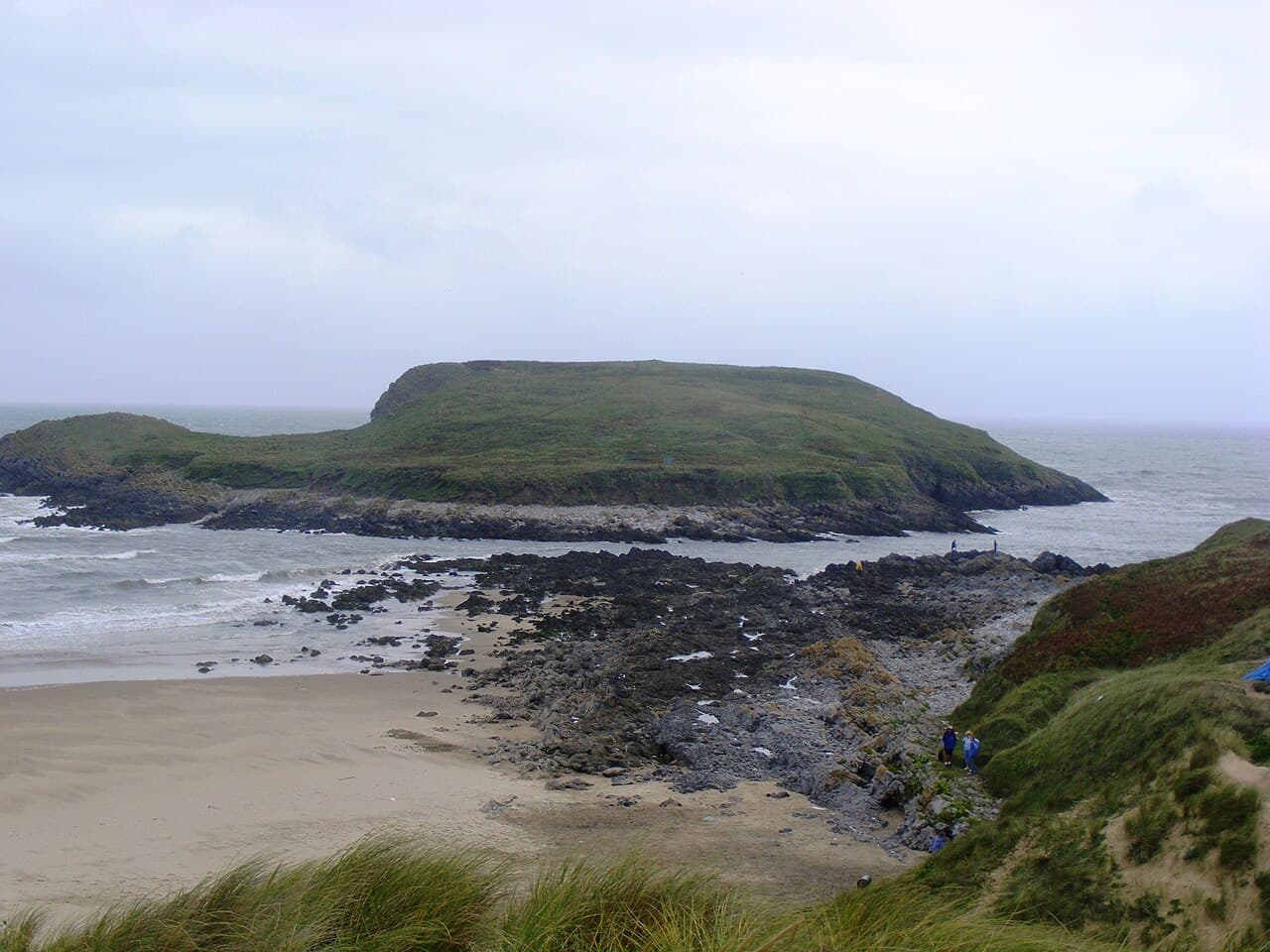
Burry Holms, also known by its Welsh name Ynys Lanwol, is a small tidal island located at the northern end of Rhossili Bay on the Gower Peninsula in Wales. Rising to a height of approximately 98 feet (30 meters), this island is notable both for its natural environment and its archaeological significance. The island’s landscape is characterized by a rich display of coastal flora, including abundant thrift and sea campion flowers during the spring and summer months, adding to its scenic appeal.
Geographical and natural features
Burry Holms is a tidal island, meaning it is connected to the mainland at low tide and isolated at high tide. This unique geographical feature has influenced its historical use and accessibility. The island’s rocky terrain and elevation provide commanding views over Rhossili Bay and the surrounding coastline, which would have been strategically advantageous in past centuries.
Historical significance and archaeological findings
Archaeological evidence indicates that Burry Holms was inhabited during the Iron Age and later periods. Excavations have revealed remains of ancient fortifications and settlements, suggesting the island served as a defensive site and possibly a refuge. The presence of earthworks and stone structures points to its use as a fortified enclosure, although it does not fit the typical profile of a bastioned fortress as seen in later medieval military architecture.
The island’s historical occupation is linked to the broader prehistoric and early historic landscape of the Gower Peninsula, an area rich in archaeological sites ranging from prehistoric burial mounds to medieval castles. Burry Holms contributes to this heritage as a site illustrating early coastal defense and settlement patterns.
Architectural features and fortifications
While Burry Holms does not possess large standing structures typical of medieval castles, it features remnants of defensive earthworks and stone ramparts. These fortifications were likely constructed to take advantage of the island’s natural defensibility, with steep cliffs and limited access points. The fortifications are modest compared to later stone castles, reflecting the technological and social conditions of the Iron Age and early medieval periods.
Defensive earthworks
The island contains visible ditches and banks that would have served as barriers against invaders. These earthworks form a roughly circular enclosure near the summit, indicating a ringwork style of fortification, common in early medieval Britain.
Stone ramparts
Fragments of stone walls suggest attempts to reinforce the earthworks, providing additional protection. These walls are now mostly ruins but demonstrate the strategic intent to fortify the site.
Ecological and cultural importance
Beyond its archaeological value, Burry Holms is important for its natural environment. The island supports diverse coastal plant species and serves as a habitat for seabirds and other wildlife. Its floral displays during warmer months attract visitors interested in both nature and history.
The island’s cultural significance is also reflected in local traditions and its Welsh name, which means "tidal island," highlighting its connection to the sea and the rhythms of the tides.
Access and visitor information
Access to Burry Holms is dependent on tidal conditions, and visitors should consult tide tables before planning a visit. The island is reachable on foot from the mainland during low tide, but care must be taken due to slippery rocks and changing tides.
There are no formal visitor facilities on the island, and its preservation is managed as part of the wider natural and archaeological heritage of the Gower Peninsula. Visitors are encouraged to respect the site’s ecological and historical sensitivity.
Frequently asked questions (FAQ)
- How do I access Burry Holms?
- Burry Holms is accessible on foot from the mainland at low tide. Visitors should check tide times carefully to ensure safe crossing and avoid being stranded by the rising tide.
- What historical period does Burry Holms date back to?
- Archaeological evidence shows that Burry Holms was inhabited during the Iron Age and early medieval periods, with fortifications typical of those times.
- What type of fortifications are found on Burry Holms?
- The island features earthwork defenses and stone ramparts forming a ringwork-style enclosure, common in early medieval Britain.
- Is Burry Holms suitable for casual visitors?
- While the island is accessible during low tide, there are no visitor facilities, and the terrain can be challenging. Visitors should be prepared for a natural, rugged environment.
- Why is Burry Holms ecologically important?
- Burry Holms supports diverse coastal plants and seabirds, with notable floral displays in spring and summer, contributing to its ecological significance.
Photo gallery

Photo by Rodw•Public domain
Information
Loading map...
Visitor reviews
No reviews yet. Been here? Write the first review and help other travelers!
Write the first reviewVisited this castle? Share your experience
Your review helps other travelers and adds first-hand knowledge to our encyclopedia.