Burnchurch Castle
Burnchurch Castle stands as a remarkable example of 15th-century Norman tower house architecture in the region near Farmley, within the municipality of Kilkenny, Ireland. Built during a period marked by Norman consolidation in Ireland, the castle reflects the defensive needs and residential status of its owners, the Fitzgerald family of the Desmond branch. This family occupied the castle for several centuries, maintaining control until the early 19th century, with documented presence as late as 1817.
Historical context and significance
The castle's construction in the 15th century places it within the late medieval period, a time when tower houses were a prevalent form of fortified residence across Ireland. These structures were typically built by Anglo-Norman settlers and Gaelic lords alike, serving both as defensive strongholds and symbols of local power. The Fitzgeralds, a prominent Norman-Irish dynasty, used Burnchurch Castle as a strategic and residential site, embedding their influence in the Kilkenny area.
Burnchurch Castle's proximity to significant religious and defensive landmarks, such as Kells Priory and the nearby Church of Ireland church, situates it within a network of medieval sites that collectively illustrate the region's historical landscape. The castle's recognition as a National Monument in 1993 underscores its cultural and architectural importance within Irish heritage.
Architectural features and design
Structure and layout
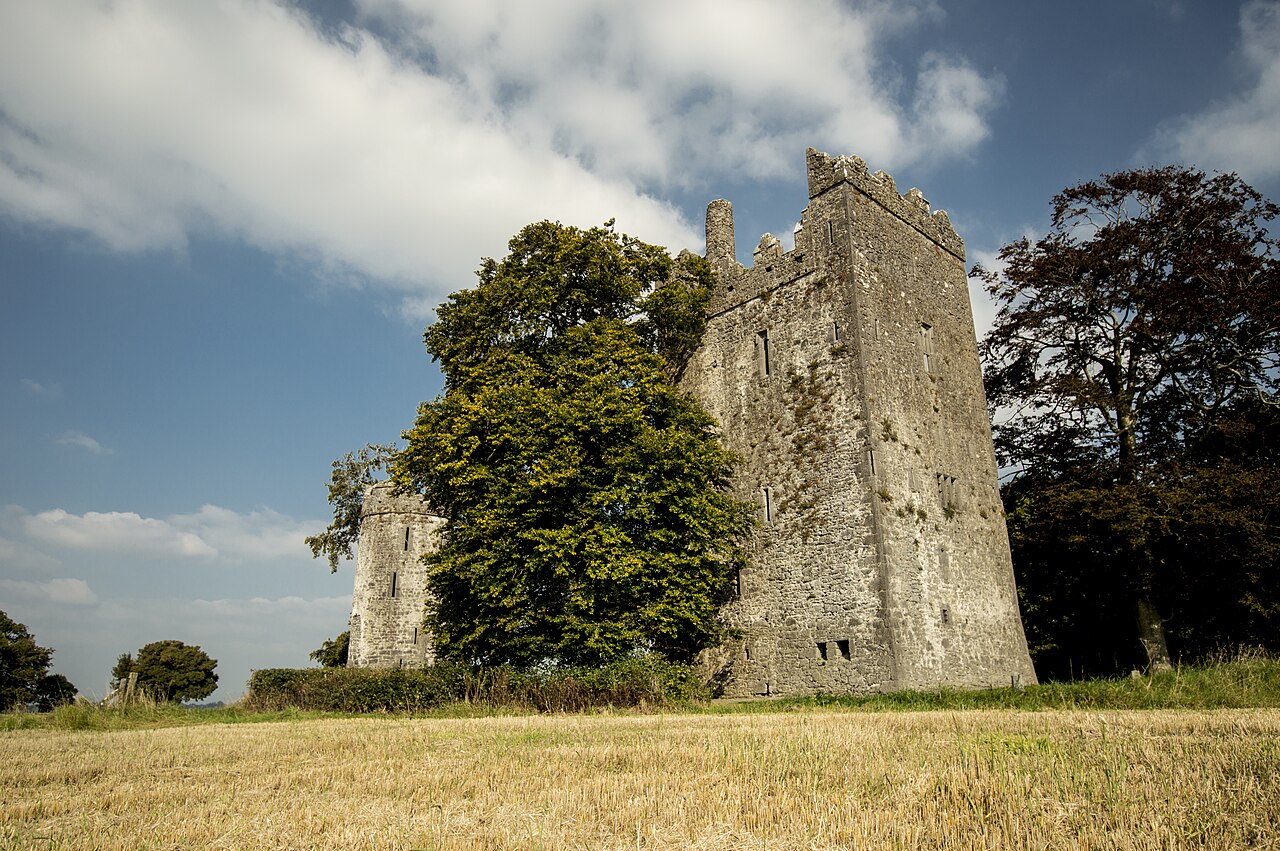
The surviving edifice of Burnchurch Castle is a towering six-story stone tower house, exemplifying the defensive architectural style of its era. The main tower is distinguished by its considerable height and the presence of a circular turret approximately 12.5 meters tall, which functioned as a gate tower. This turret remains remarkably well-preserved, offering valuable insight into the castle's original fortifications.
Inside, the castle features an intricate network of narrow passages and chambers, a complexity that is somewhat uncommon among similar structures from the period. Notably, a secret room on the fourth floor highlights the architectural ingenuity employed to conceal spaces within the thick stone walls. Below the principal chamber, situated just beneath a gabled roof, lies a vaulted space that adds to the layered interior design.
Access and defensive elements
Access to the upper floors is facilitated by a distinctive curved external staircase, which allows entry to the tower's highest levels while maintaining defensive advantages. The castle's windows are mullioned, divided by vertical stone bars that were both decorative and functional, providing light while maintaining security.
One of the castle's striking interior features is a finely carved fireplace framed by a joggled voussoir arch. This type of interlocking stone arch demonstrates advanced masonry techniques of the time. Rising from the roofline is a tall round chimney, which may represent a later addition or modification, reflecting evolving architectural needs.
Original complex and defensive strategy
Historical illustrations reveal that Burnchurch Castle was once part of a larger fortified complex, including a great hall and an enclosed courtyard or bawn. These elements, now lost, would have provided additional living and defensive spaces. The castle's design shares similarities with nearby Clara Castle but distinguishes itself by extending its gable-end walls one story higher than the rest of the structure. This extension creates elongated turrets topped with their own defensive ramparts.
The castle's stepped battlement style is a hallmark of Irish medieval architecture. This design features the narrower sides of the tower rising to form two turrets equal in width to the main tower, enhancing the defensive capabilities and aesthetic presence of the building.
Preservation and current status
Today, Burnchurch Castle remains a well-preserved example of a Norman tower house, with many of its key architectural features intact. The six-story tower, the circular gate turret, and the curved external staircase continue to illustrate the castle's original form and defensive purpose. The preservation of interior elements such as the secret room and the joggled voussoir arch fireplace further enriches our understanding of medieval Irish castle architecture.
Its designation as a National Monument ensures ongoing protection and recognition, allowing visitors and scholars alike to appreciate its historical and architectural significance. Burnchurch Castle stands not only as a monument to the Norman influence in Ireland but also as a testament to the enduring legacy of medieval defensive residences.
Frequently asked questions (FAQ)
- What is the historical significance of Burnchurch Castle?
- Burnchurch Castle is a 15th-century Norman tower house associated with the Fitzgerald family, reflecting the Norman influence and local power dynamics in medieval Ireland.
- Can visitors explore the interior of Burnchurch Castle?
- While the castle is well preserved externally, access to the interior may be limited. Visitors should check local guidelines or heritage site information for current access details.
- How does Burnchurch Castle compare architecturally to other Irish tower houses?
- Burnchurch Castle features a unique design with extended gable-end walls forming turrets and a stepped battlement style, distinguishing it from other tower houses like Clara Castle.
- When was Burnchurch Castle designated a National Monument?
- Burnchurch Castle was officially recognized as a National Monument in 1993, highlighting its cultural and architectural importance in Ireland.
- What defensive features are notable at Burnchurch Castle?
- Notable defensive features include a six-story stone tower, a circular gate turret, a curved external staircase for upper floor access, and stepped battlements typical of Irish medieval castles.
Information
Loading map...
Visitor reviews
No reviews yet. Been here? Write the first review and help other travelers!
Write the first reviewVisited this castle? Share your experience
Your review helps other travelers and adds first-hand knowledge to our encyclopedia.