Burgruine Ras — Austria castle

Burgruine Ras

Burgruine Ras castle ruins in Carinthia, Austria
High Medieval (11th–13th c.)
Ruins

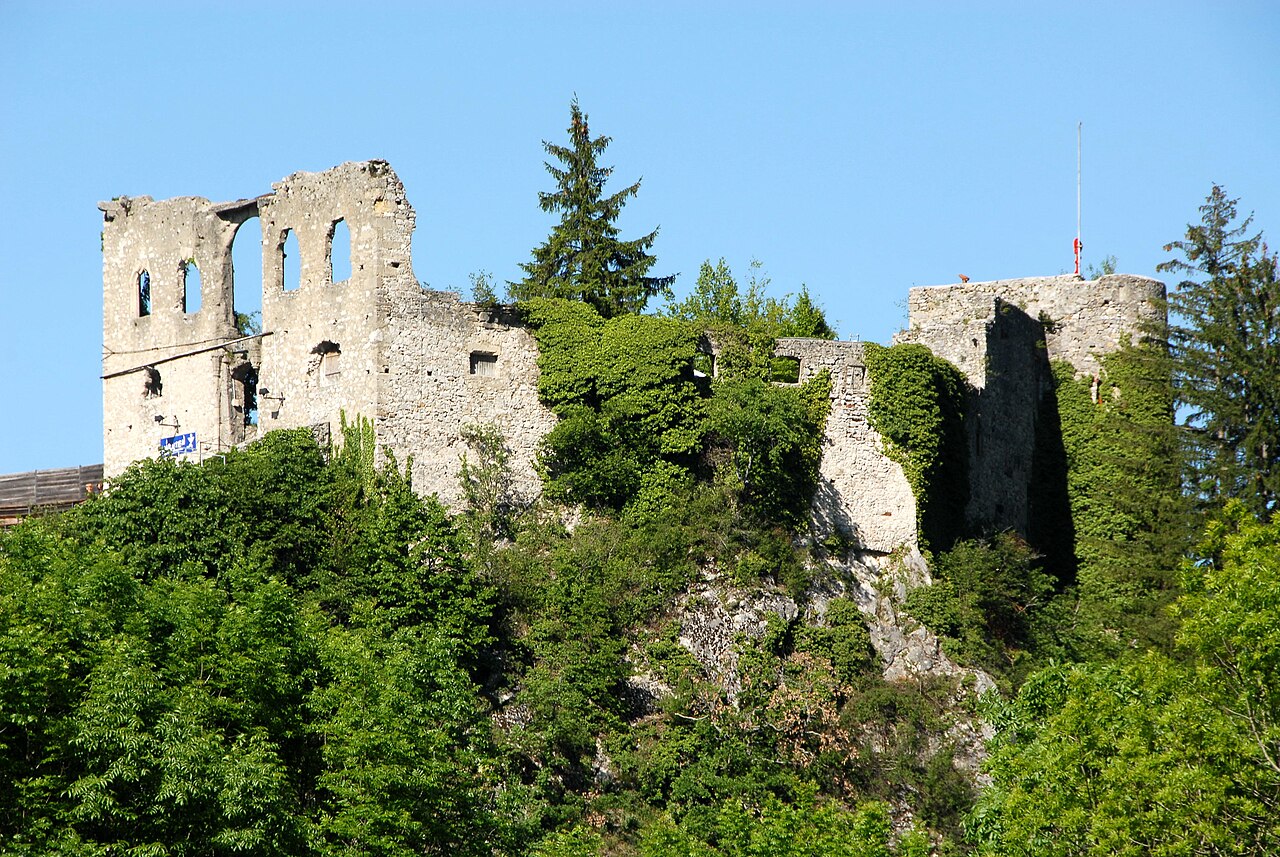
Burgruine Ras is a notable example of a high medieval castle ruin located in the region of Carinthia, Austria. First documented in 1171, this castle reflects the architectural and defensive characteristics typical of the 12th century. Today, the site is recognized primarily for the remains of its encompassing defensive wall and two distinctive round towers, which stand as silent witnesses to its former strategic importance.

Historical context and significance

The castle was constructed during the high medieval period, a time when fortifications were crucial for regional control and defense. Burgruine Ras likely served as a stronghold for local nobility or military forces overseeing the surrounding territory. Its first recorded mention in 1171 places it within a period of considerable castle-building activity across Austria, reflecting the political and military complexities of the era.

While detailed records of the castle's ownership and specific historical events are limited, the presence of robust fortifications such as thick curtain walls and round towers suggests it was built to withstand sieges and provide a secure refuge. The castle's location in Carinthia, a region with a turbulent medieval history marked by territorial disputes, underscores its strategic value.

Architectural features and layout

The surviving elements of Burgruine Ras include parts of the encircling curtain wall and two round towers. These towers are characteristic of medieval military architecture, designed to provide defenders with a wide field of view and angles for archery or other projectile defenses. The round shape helped deflect projectiles and reduced blind spots compared to square towers.

The curtain wall remnants indicate the castle was enclosed by a fortified perimeter, which would have included a gatehouse and possibly additional towers or defensive structures. The construction techniques visible in the ruins align with 12th-century masonry practices, using locally sourced stone and mortar.

Defensive design considerations

The design of Burgruine Ras reflects typical high medieval defensive strategies. The round towers and thick walls were intended to resist battering and scaling attempts. The castle's elevated position, common for hill castles in the region, would have further enhanced its defensive capabilities by providing natural barriers and vantage points over the surrounding landscape.

Current condition and archaeological importance

Today, Burgruine Ras is classified as an archaeological ruin. The site has not been fully restored, leaving visitors to explore the remains of the walls and towers that hint at the castle's original scale and function. The ruins offer valuable insights into medieval fortification techniques and regional history.

Archaeological efforts at the site have focused on documenting and preserving the existing structures, as well as investigating the castle's layout and historical context. These studies contribute to understanding the development of medieval castles in Carinthia and their role in local power dynamics.

Visiting Burgruine Ras

Although the castle is in ruins, it remains accessible to visitors interested in medieval architecture and history. The site provides a tangible connection to Austria's medieval past and offers scenic views of the surrounding Carinthian landscape. Visitors should be prepared for uneven terrain and limited facilities, as the site is primarily an open-air archaeological ruin.

Exploration of Burgruine Ras is best suited for those with an interest in historical fortifications and the evolution of castle architecture during the high medieval period. The castle's remains serve as a poignant reminder of the region's strategic importance in medieval times.

Frequently asked questions (FAQ)

How do I get to Burgruine Ras?
Burgruine Ras is located in Austria, easily accessible by car or public transport. If you're driving, you can find parking near the castle. For public transport, check local bus schedules that connect to nearby towns.
What is the historical significance of Burgruine Ras?
Burgruine Ras is a medieval castle that dates back to the 12th century, showcasing the architectural styles of its time. It played a crucial role in regional defense and local governance during the Middle Ages. Today, it stands as a testament to Austria's rich history.
When was Burgruine Ras built?
Burgruine Ras was constructed in the early 12th century, making it one of the oldest castles in the region. Over the centuries, it underwent various renovations and expansions, reflecting the changing architectural styles of different eras.
Can I explore the castle grounds?
Yes, visitors are welcome to explore the castle grounds and enjoy the stunning views from its vantage points. While some areas may be restricted, the open spaces allow for a leisurely stroll through the historical site. Be sure to wear comfortable shoes for walking.
Why is Burgruine Ras a popular tourist destination?
Burgruine Ras attracts visitors for its rich history, picturesque ruins, and breathtaking views of the surrounding landscape. It offers a glimpse into medieval life and architecture, making it a fascinating spot for history enthusiasts. Additionally, its serene setting provides a tranquil escape from urban life.
Is it possible to visit Burgruine Ras year-round?
Yes, Burgruine Ras is open to visitors year-round, though access may vary depending on weather conditions, especially in winter. It's advisable to check local guidelines before planning your visit to ensure a smooth experience. The castle's beauty in different seasons offers unique photo opportunities.
What are the opening hours for Burgruine Ras?
The opening hours for Burgruine Ras vary by season. Typically, the castle is open from 9 AM to 5 PM during the summer months, with reduced hours in the winter. It's best to consult the official website or local tourist information for the most current hours before your visit.
Are there any ticket prices to enter Burgruine Ras?
Entry to Burgruine Ras is usually free, allowing visitors to explore the grounds without a ticket fee. However, there may be charges for guided tours or special events. Always check local listings for any applicable fees before your visit to plan accordingly.
What nearby attractions can I visit when at Burgruine Ras?
When visiting Burgruine Ras, you can also explore nearby attractions such as the charming towns of St. Veit and Friesach, known for their historical architecture. Additionally, the beautiful landscapes of the Austrian countryside offer numerous hiking trails and nature walks. Make it a day trip to enjoy the full experience!

Photo gallery

Burgruine Ras
Click to view

Photo by Naturpuur•CC BY-SA 4.0

1 photo • Click any image to view in full screen

Information

Archaeological Site / Ruins

Loading map...

Visitor reviews

No reviews yet. Been here? Write the first review and help other travelers!

Write the first review

Visited this castle? Share your experience

Your review helps other travelers and adds first-hand knowledge to our encyclopedia.

Write a review

(5/5)

0/2000 characters

Your review will be visible after admin approval

Nearby castles

4.5 km

Burgruine Altrosegg

Rosegg, Austria

Burgruine Altrosegg stands as a significant medieval hill castle ruin located above the municipality of Rosegg in Austria. Its origins date back to the late 12th or early 13th century, a period marked by the widespread construction of fortified hilltop residences across Europe. The castle was originally built by the Lords of Rož, a noble family closely connected to the Carinthian region, who played a prominent role in the feudal landscape of the time. The castle first appears in written records in 1239, indicating its established presence and importance during the High Medieval period. It likely served as the third main residence for the Lords of Rož (also known in German as Herren von Ras), who were ministeriales—unfree knights or officials—serving the neighboring duchy of Styria. Through their service and strategic alliances, the family amassed considerable feudal lands and judicial authority over the surrounding district, establishing a local lordship centered around Altrosegg. Historical significance and ownership transitions Following the extinction of the male Rož lineage in 1318, Burgruine Altrosegg underwent multiple ownership changes, passing through the hands of various noble families including the Wallsee, Pettau, Schaunberg, Perkheim, Losenstein, Raitenau, Aichelburg, and Rosenberg houses. Despite these transitions, the castle maintained its role as a local stronghold and administrative center, reflecting its enduring strategic and political importance in the region. A particularly notable event in the castle's history occurred in 1478 when it successfully withstood a Turkish assault. This defense not only protected the fortress but also provided shelter to the local population, underscoring the castle's critical role in regional defense during the period of frequent Ottoman incursions into Central Europe. Architectural evolution and defensive features The castle's architecture reflects its long history and adaptations to evolving military needs. One of the most prominent surviving elements is the Romanesque bergfried, a thick-walled main defensive tower constructed during the castle's earlier phase. This tower served as a last refuge during sieges, embodying the typical design of High Medieval hill castles. However, concerns about its structural stability led to its abandonment by the end of the 19th century. Surrounding the castle are extensive late Gothic defensive walls featuring several small semicircular towers projecting outward. These towers were designed to improve defensive coverage and firing angles, showcasing advancements in military architecture during the Late Medieval period. A distinctive wedge-shaped bastion juts out from the curtain wall, further illustrating the castle's adaptation to the era's evolving siege warfare tactics. The castle's great hall originally occupied the highest point on the hill, protected by an inner circular wall. This hall functioned as a key administrative and residential space, although today only scant traces remain. The layout of the castle, with its concentric walls and strategic positioning on a rocky hill, exemplifies the typical characteristics of a hill castle designed for both defense and lordly residence. Decline, damage, and later uses Burgruine Altrosegg suffered significant damage over the centuries. After a destructive fire, extensive repairs were carried out before 1688 to restore the structure. The Orsini-Rosenberg family, among its later owners, maintained the castle even after building a manor house in the valley below in 1772, signaling a shift in the administrative center away from the hilltop fortress. During the early 19th century, specifically around the French wars circa 1801, stones from the castle were repurposed to build a protective wall at the hill's base and later for constructing a church between 1806 and 1807. Further damage occurred in 1813 when French troops caused destruction that left most of the castle in ruins, with primarily the main tower remaining intact. In 1829, entrepreneur Peter Ritter von Bohr acquired the site and established a zoological garden within the castle grounds. Ownership later transferred to Prince Johann of Liechtenstein in 1833, whose descendants continue to hold the estate. Today, the castle ruins and the surrounding zoo coexist, offering visitors a unique blend of natural and historical heritage. Archaeological research and preservation Recent archaeological investigations conducted in 2014 and 2015 have provided valuable insights into the castle's historical layers and architectural development. These studies have helped clarify the phases of construction, defensive enhancements, and the castle's role within the broader context of Carinthian medieval fortifications. The remains of Burgruine Altrosegg are situated on the northern side of a rocky hill and are protected as a cultural monument. The site preserves elements that reflect its long history as a heavily fortified castle, including the partially surviving Romanesque bergfried and the extensive late Gothic outer defensive walls with their semicircular towers and wedge-shaped bastion. Many stones from the castle's economic buildings were quarried and reused in the 19th century, primarily to build the walls enclosing the zoo, which still stand today. These reused materials create a tangible link between the castle's medieval past and its modern adaptation as a cultural and natural attraction. Burgruine altrosegg in the cultural landscape Burgruine Altrosegg represents a compelling example of a medieval hill castle that evolved through centuries of noble ownership, military conflict, and changing social functions. Its ruins serve as a testament to the architectural ingenuity of the High and Late Medieval periods and the shifting dynamics of power in the Carinthian region. Today, the castle's integration within the Rosegg zoo grounds offers visitors a unique experience combining historical exploration with natural observation. The preservation of its defensive structures and archaeological remains ensures that Burgruine Altrosegg remains a vital link to Austria's medieval heritage and a noteworthy site for both historians and tourists alike.

High Medieval (11th–13th c.)
Details
10.5 km
Finkenstein Castle — Austria castle

Finkenstein Castle

Finkenstein am Faaker See, Austria

Finkenstein Castle, also known as Altfinkenstein, is a significant high medieval fortress located in the market town of Finkenstein am Faaker See in the Austrian state of Carinthia. Perched on a steep cliff at the southern foot of the Karawanks mountain range, the castle commands a strategic position high above Lake Faak at an elevation of 788 metres (2,585 feet). Its commanding location provided both a defensive advantage and a wide view of the surrounding landscape, a typical feature of hill castles constructed during the medieval period. Early history and ownership The first documented mention of Finkenstein Castle dates back to 1142. Initially, it was under the ownership of the Dukes of Carinthia, a powerful regional dynasty during the high medieval period. The castle was granted to their ministeriales, a class of unfree knights who managed estates and military duties for their lords. These ministeriales adopted the name von Finkenstein, directly linking their identity to the castle itself. In 1223, a notable dispute arose between Heinrich von Finkenstein and Bishop Henry of Bamberg, the owner of the nearby Federau Castle. The conflict concerned the rights to cross the Gail River, highlighting the strategic and economic importance of the region’s waterways and castle-controlled territories. This episode illustrates the typical medieval tensions between secular and ecclesiastical powers. Following the extinction of the Carinthian Finkenstein family in the early 14th century, ownership reverted to the Dukes of Carinthia. In 1335, the Habsburg dynasty assumed control of Carinthia, including Finkenstein Castle. Later, in 1493, Emperor Maximilian I, who was also Duke of Carinthia, granted the castle and its associated lands to his loyal vassal Sigismund von Dietrichstein. The Dietrichstein family maintained possession of the castle until 1861. Architectural features and development The castle’s oldest surviving elements are Romanesque in style, reflecting its initial construction phase in the 12th century. These features include thick stone walls and rounded arches typical of Romanesque military architecture. In the second half of the 16th century, the castle underwent significant reconstruction and expansion in the late Gothic style, which introduced pointed arches, ribbed vaults, and more elaborate defensive structures. At the beginning of the 17th century, four gates were constructed in the High Castle section, enhancing its fortification system. One of the most prominent remnants today is the 15-metre-high end wall of the former palace, which stands as a testament to the castle’s former grandeur and defensive capabilities. Defensive structures and layout The castle was strategically designed with multiple defensive layers, including curtain walls, towers, and gates. Its position on a steep cliff naturally protected it on several sides, while man-made fortifications secured the more accessible approaches. The castle complex included a courtyard, residential quarters, and various outbuildings necessary for sustaining its inhabitants during sieges. Decline and present condition By the end of the 18th century, Finkenstein Castle was abandoned and fell into ruin. The lack of maintenance and changing military technologies rendered many medieval castles obsolete. Today, only the ruins remain, providing valuable archaeological insights into medieval castle construction and life. Despite its ruined state, the castle remains a cultural landmark in Carinthia. The site now serves as the dramatic backdrop for the Burgarena, an amphitheatre with a seating capacity of 1,150. This venue hosts concerts and festivals, integrating the historic ruins into contemporary cultural life. Location and cultural significance Situated at the southern edge of the Karawanks mountain range, the castle overlooks the picturesque Lake Faak and the surrounding alpine landscape. Its location not only provided military advantages but also symbolized the power and prestige of its owners throughout the centuries. The castle’s ruins attract visitors interested in medieval history, architecture, and scenic views. It is an important heritage site that reflects the complex feudal history of Carinthia and the broader region influenced by the Habsburg dynasty. Visitor experience Visitors to Finkenstein Castle can explore the ruins and enjoy panoramic views of the lake and mountains. The adjacent Burgarena offers a unique cultural experience by combining historical ambiance with modern entertainment. The site is accessible by local roads and is a popular destination for tourists exploring Carinthia’s medieval heritage and natural beauty.

High Medieval (11th–13th c.)
Details
10.9 km
Burgruine Hohenwart — Austria castle

Burgruine Hohenwart

Köstenberg, Austria

Burgruine Hohenwart, also known as Črni grad and Hochwart, stands as a significant medieval hill castle ruin in the municipality of Köstenberg, Austria. Nestled atop the rocky summit of the Kleiner Sternberg at 802 meters above sea level, this fortress offers a commanding view of the surrounding Carinthian landscape. Its origins trace back to the mid-12th century, marking it as a notable stronghold during the High Medieval period in Central Europe. The castle's strategic location and complex architectural layout reflect its dual roles in military defense and religious administration. The fortress is arranged around three consecutive courtyards, a design that underscores its layered defensive capabilities and functional zoning for residential, military, and ecclesiastical purposes. This tiered setup was typical for hill castles of the era, facilitating control over the surrounding territory and protection against invaders. Historical development and ownership Historical records first mention Burgruine Hohenwart around the 1130s, with the earliest documented owner being Pilgrim of Pozzuolo, also known as Pilgrim Hohenwart. In approximately 1135, he transferred ownership to Duke Heinrich V of Carinthia, illustrating the castle's importance within the feudal hierarchy of the region. This initial transfer highlights the castle's role as a feudal asset and military stronghold. By 1162, ownership passed to Bishop Roman I of Gurk after Duke Hermann, Heinrich's brother, sold the property. The bishopric then granted the castle as a fief to various local knights, integrating religious authority with military oversight. Throughout the 14th century, the castle was managed by ministeriales, unfree knights serving the bishop, including the notable Teufenbacher family. In 1312, the castle came under the control of nobles Ditmar and Hartnid of Vivšnik. Later, in 1365, the powerful Counts of Ortenburg took stewardship, followed by the Counts of Celje after 1418. The Celje dynasty maintained control until their extinction in 1456, after which the castle fell under the influence of Emperor Frederick III. The fortress likely suffered destruction during the mid-15th or 16th century, a turbulent period marked by regional conflicts and shifting power dynamics. By 1515, Burgruine Hohenwart was recorded as a ruin. The lordship was sold to Johann Geumann, leader of the Knights of St. George, a chivalric order. Following the dissolution of this order, the castle's remains became part of the Habsburg dynasty holdings. Emperor Ferdinand I subsequently sold the estate to Bernard Khevenhüller. However, after Hans Khevenhüller adopted Protestantism, their properties were confiscated, reflecting the religious upheavals of the Reformation era. In 1639, Emperor Ferdinand III transferred ownership to the Dietrichstein family, who retained the property for nearly three centuries. The castle later passed through private hands, including the Maresch-Wittgenstein family and an individual named Josef Neff. Over these centuries, Burgruine Hohenwart remained a symbol of the region's complex political and religious transformations. Architectural features and castle layout Castle complex and courtyards The castle complex is strategically arranged around three successive courtyards, reflecting its multifaceted defensive and administrative functions. The innermost courtyard contains the oldest surviving structures, dating primarily to the 12th century, including parts of the southern enclosing walls. These remnants provide valuable insight into the castle's original medieval form and construction techniques. The outer courtyards, particularly to the northeast, feature architectural elements from the late 13th century, indicating a significant expansion and fortification phase. This period saw the strengthening of the outer defenses to adapt to evolving military technologies and threats. The bergfried and defensive structures A key architectural highlight is the former bergfried, or main tower, built in the late 13th century. This square-shaped tower was integrated into the outer defensive wall, serving as a last refuge and lookout point. Although the eastern portion of the tower is now broken, the western side retains a pointed-arch entrance on the first floor, exemplifying typical medieval military architecture. The fourth floor features a south-facing oriel window, a projecting bay window that would have provided both light and a vantage point. The tower also includes several pointed-arch windows, characteristic of the Gothic architectural style prevalent during its construction. These windows not only enhanced the tower's defensive capabilities by allowing archers to shoot while remaining protected but also contributed to the aesthetic of the fortress. Castle chapel and religious architecture The castle chapel is another significant feature, accessible from the outer courtyard. It is a double chapel with two distinct worship levels and a semicircular apse, indicative of Romanesque architectural influence. Likely constructed in the early 12th century, the chapel originally had a flat roof but was later modified with a steep gabled roof to improve weather resistance. Inside the lower chapel, remnants of a pointed triumphal arch remain visible. This arch traditionally separates the nave from the choir in ecclesiastical architecture. The upper chapel has not survived, but the vaulted choir area covered with stone arches still exists, though it is currently unstable and at risk of collapse. Two rose-shaped windows remain on the chapel's west wall, an ornamental feature that would have illuminated the interior with patterned light, enhancing the spiritual atmosphere. These windows are notable examples of medieval decorative stonework. The castle's role in regional history and legacy Throughout its history, Burgruine Hohenwart served as a focal point of military, religious, and political power in Carinthia. Its successive ownership by dukes, bishops, noble families, and imperial authorities reflects the shifting allegiances and complex feudal relationships that characterized the region from the High Middle Ages through the early modern period. The castle's decline and eventual ruination by the early 16th century correspond with broader trends of changing military technology and the centralization of power, which rendered many hill castles obsolete. Nevertheless, the ruins remain a tangible link to Carinthia's medieval past and the region's cultural heritage. Today, Burgruine Hohenwart is valued not only for its historical significance but also for its architectural remnants, which offer insights into medieval fortification techniques, religious architecture, and feudal society. Its location atop the Kleiner Sternberg continues to attract visitors interested in history, architecture, and panoramic views of the Austrian landscape. Visiting information and preservation status As a hill castle ruin, Burgruine Hohenwart is accessible to visitors who appreciate historical sites and hiking. The castle's remains are partially preserved, with ongoing concerns about the stability of some structures, particularly the chapel's vaulted choir. Preservation efforts focus on maintaining the integrity of the ruins while allowing safe public access. Visitors can explore the three courtyards, the bergfried remains, and the chapel ruins, gaining a comprehensive understanding of medieval castle life and architecture. The site offers educational opportunities for those interested in medieval history, architecture, and the evolution of feudal power in Austria.

High Medieval (11th–13th c.)
Details