Burgruine Altrosegg
Burgruine Altrosegg stands as a significant medieval hill castle ruin located above the municipality of Rosegg in Austria. Its origins date back to the late 12th or early 13th century, a period marked by the widespread construction of fortified hilltop residences across Europe. The castle was originally built by the Lords of Rož, a noble family closely connected to the Carinthian region, who played a prominent role in the feudal landscape of the time.
The castle first appears in written records in 1239, indicating its established presence and importance during the High Medieval period. It likely served as the third main residence for the Lords of Rož (also known in German as Herren von Ras), who were ministeriales—unfree knights or officials—serving the neighboring duchy of Styria. Through their service and strategic alliances, the family amassed considerable feudal lands and judicial authority over the surrounding district, establishing a local lordship centered around Altrosegg.
Historical significance and ownership transitions
Following the extinction of the male Rož lineage in 1318, Burgruine Altrosegg underwent multiple ownership changes, passing through the hands of various noble families including the Wallsee, Pettau, Schaunberg, Perkheim, Losenstein, Raitenau, Aichelburg, and Rosenberg houses. Despite these transitions, the castle maintained its role as a local stronghold and administrative center, reflecting its enduring strategic and political importance in the region.
A particularly notable event in the castle's history occurred in 1478 when it successfully withstood a Turkish assault. This defense not only protected the fortress but also provided shelter to the local population, underscoring the castle's critical role in regional defense during the period of frequent Ottoman incursions into Central Europe.
Architectural evolution and defensive features
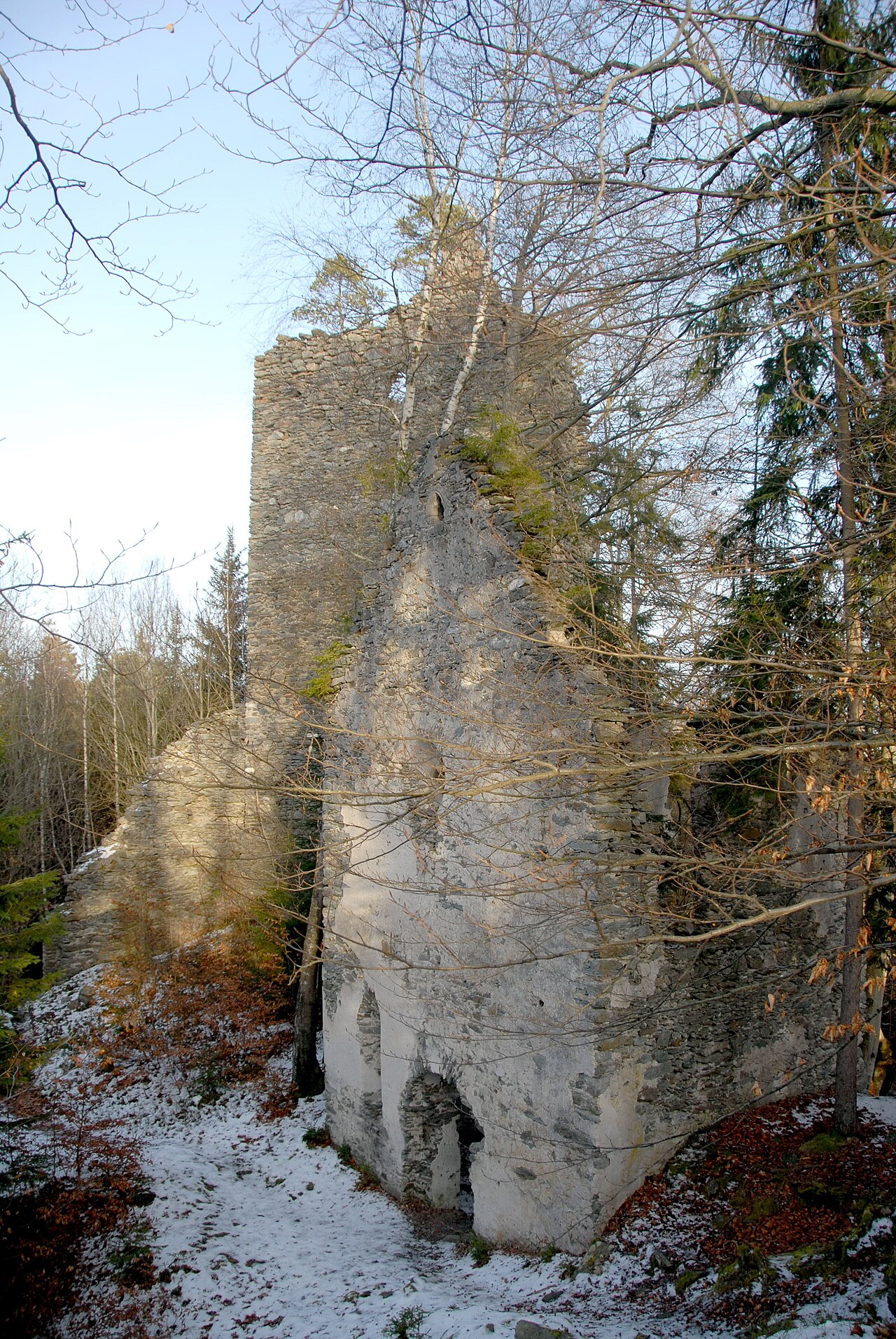
The castle's architecture reflects its long history and adaptations to evolving military needs. One of the most prominent surviving elements is the Romanesque bergfried, a thick-walled main defensive tower constructed during the castle's earlier phase. This tower served as a last refuge during sieges, embodying the typical design of High Medieval hill castles. However, concerns about its structural stability led to its abandonment by the end of the 19th century.
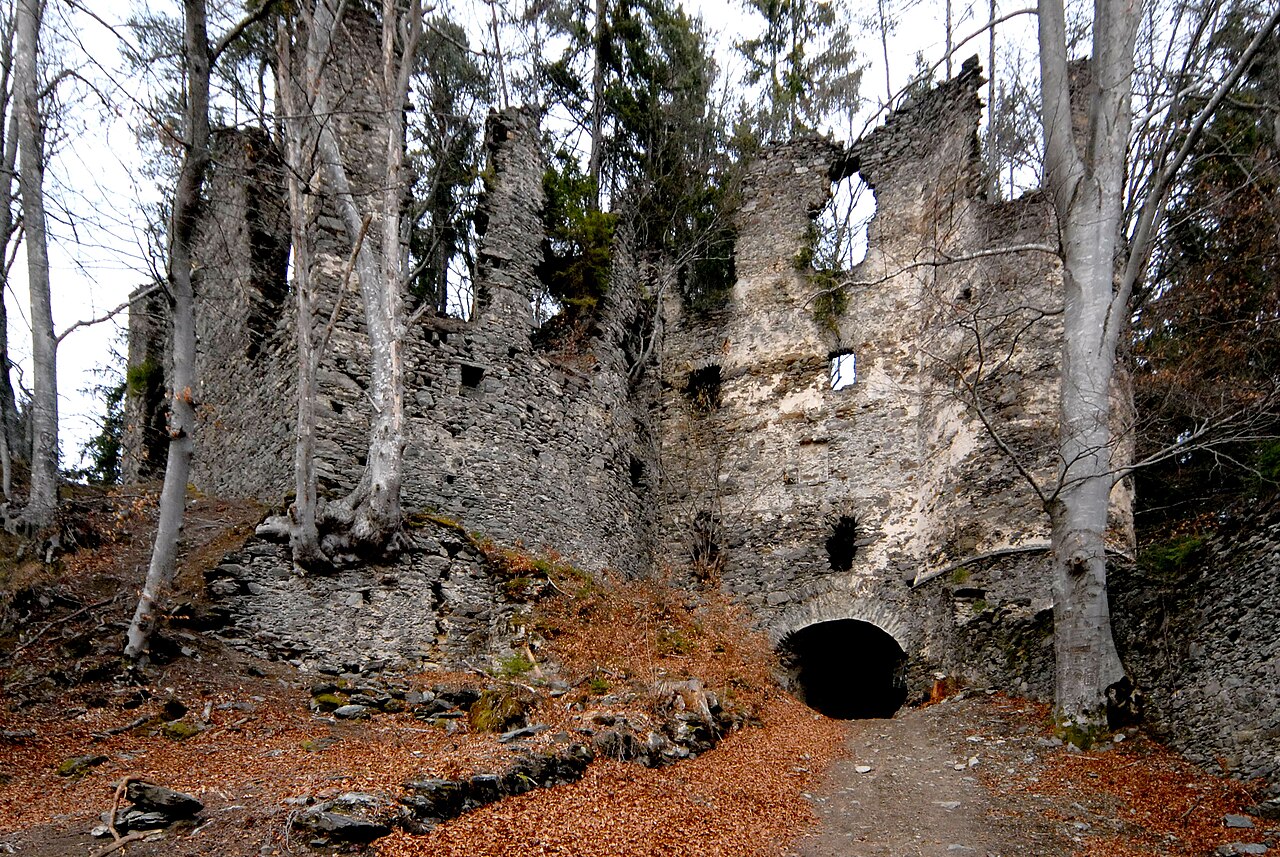
Surrounding the castle are extensive late Gothic defensive walls featuring several small semicircular towers projecting outward. These towers were designed to improve defensive coverage and firing angles, showcasing advancements in military architecture during the Late Medieval period. A distinctive wedge-shaped bastion juts out from the curtain wall, further illustrating the castle's adaptation to the era's evolving siege warfare tactics.
The castle's great hall originally occupied the highest point on the hill, protected by an inner circular wall. This hall functioned as a key administrative and residential space, although today only scant traces remain. The layout of the castle, with its concentric walls and strategic positioning on a rocky hill, exemplifies the typical characteristics of a hill castle designed for both defense and lordly residence.
Decline, damage, and later uses
Burgruine Altrosegg suffered significant damage over the centuries. After a destructive fire, extensive repairs were carried out before 1688 to restore the structure. The Orsini-Rosenberg family, among its later owners, maintained the castle even after building a manor house in the valley below in 1772, signaling a shift in the administrative center away from the hilltop fortress.
During the early 19th century, specifically around the French wars circa 1801, stones from the castle were repurposed to build a protective wall at the hill's base and later for constructing a church between 1806 and 1807. Further damage occurred in 1813 when French troops caused destruction that left most of the castle in ruins, with primarily the main tower remaining intact.
In 1829, entrepreneur Peter Ritter von Bohr acquired the site and established a zoological garden within the castle grounds. Ownership later transferred to Prince Johann of Liechtenstein in 1833, whose descendants continue to hold the estate. Today, the castle ruins and the surrounding zoo coexist, offering visitors a unique blend of natural and historical heritage.
Archaeological research and preservation
Recent archaeological investigations conducted in 2014 and 2015 have provided valuable insights into the castle's historical layers and architectural development. These studies have helped clarify the phases of construction, defensive enhancements, and the castle's role within the broader context of Carinthian medieval fortifications.
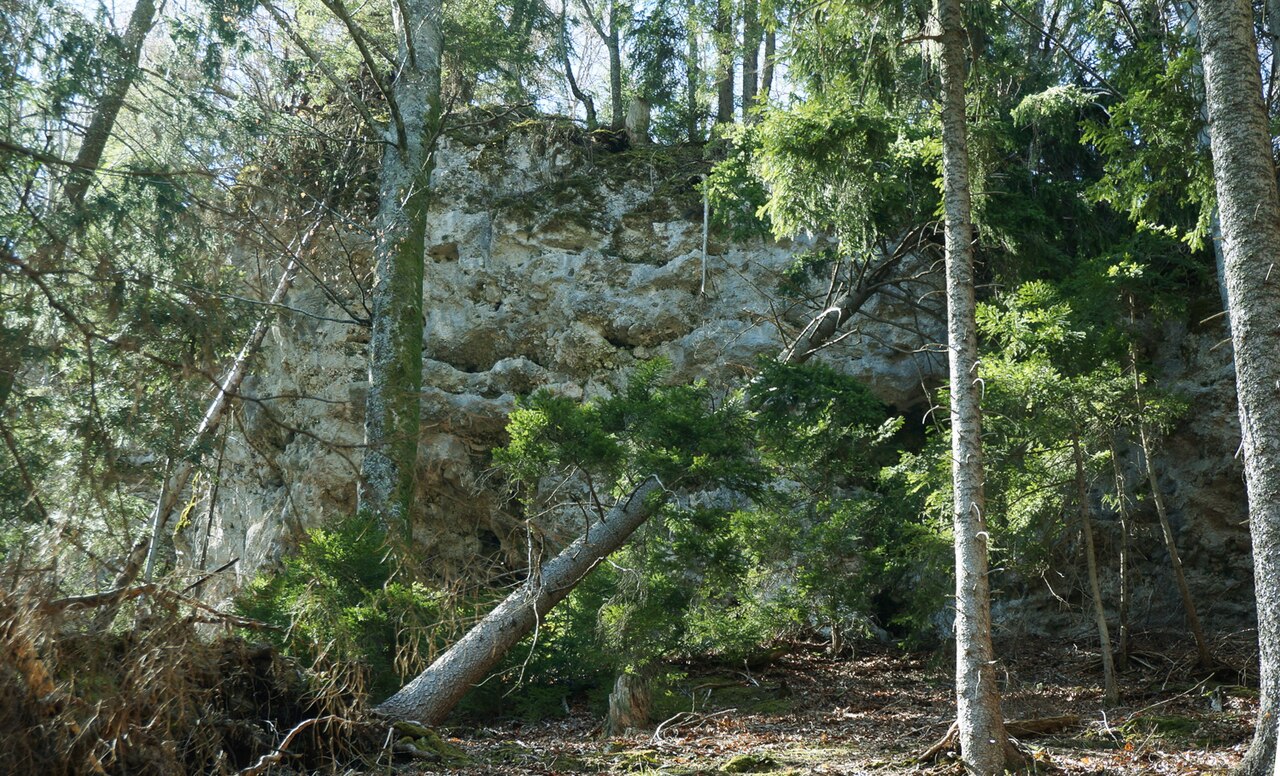
The remains of Burgruine Altrosegg are situated on the northern side of a rocky hill and are protected as a cultural monument. The site preserves elements that reflect its long history as a heavily fortified castle, including the partially surviving Romanesque bergfried and the extensive late Gothic outer defensive walls with their semicircular towers and wedge-shaped bastion.
Many stones from the castle's economic buildings were quarried and reused in the 19th century, primarily to build the walls enclosing the zoo, which still stand today. These reused materials create a tangible link between the castle's medieval past and its modern adaptation as a cultural and natural attraction.
Burgruine altrosegg in the cultural landscape
Burgruine Altrosegg represents a compelling example of a medieval hill castle that evolved through centuries of noble ownership, military conflict, and changing social functions. Its ruins serve as a testament to the architectural ingenuity of the High and Late Medieval periods and the shifting dynamics of power in the Carinthian region.
Today, the castle's integration within the Rosegg zoo grounds offers visitors a unique experience combining historical exploration with natural observation. The preservation of its defensive structures and archaeological remains ensures that Burgruine Altrosegg remains a vital link to Austria's medieval heritage and a noteworthy site for both historians and tourists alike.
Frequently asked questions (FAQ)
- How do I visit Burgruine Altrosegg and the Rosegg zoo?
- Burgruine Altrosegg is located within the Rosegg zoo grounds in Carinthia, Austria. Visitors can explore the castle ruins while enjoying the zoo, which is open seasonally. It is recommended to check the zoo's official website for current opening hours and ticket prices.
- What is the historical significance of Burgruine Altrosegg?
- Burgruine Altrosegg was built in the late 12th or early 13th century by the Lords of Rož and served as a fortified hill castle and administrative center. It played a key role in regional defense, notably resisting a Turkish assault in 1478, and reflects medieval military architecture in Carinthia.
- Can I see the Romanesque bergfried at Burgruine Altrosegg?
- Yes, the partially surviving Romanesque bergfried is one of the castle's most prominent features. While it was abandoned in the 19th century due to structural concerns, it remains a significant example of medieval defensive architecture visible to visitors.
- Is Burgruine Altrosegg accessible for visitors with limited mobility?
- The castle ruins are situated on a rocky hill, which may present challenges for visitors with limited mobility. The Rosegg zoo has accessible paths, but access to some parts of the castle site may require navigating uneven terrain.
- When is the best time to visit Burgruine Altrosegg?
- The best time to visit Burgruine Altrosegg is during the warmer months when the Rosegg zoo is open, typically from spring to early autumn. This allows visitors to enjoy both the natural and historical attractions comfortably.
Information
Loading map...
Visitor reviews
No reviews yet. Been here? Write the first review and help other travelers!
Write the first reviewVisited this castle? Share your experience
Your review helps other travelers and adds first-hand knowledge to our encyclopedia.