Burgruine Liebenfels
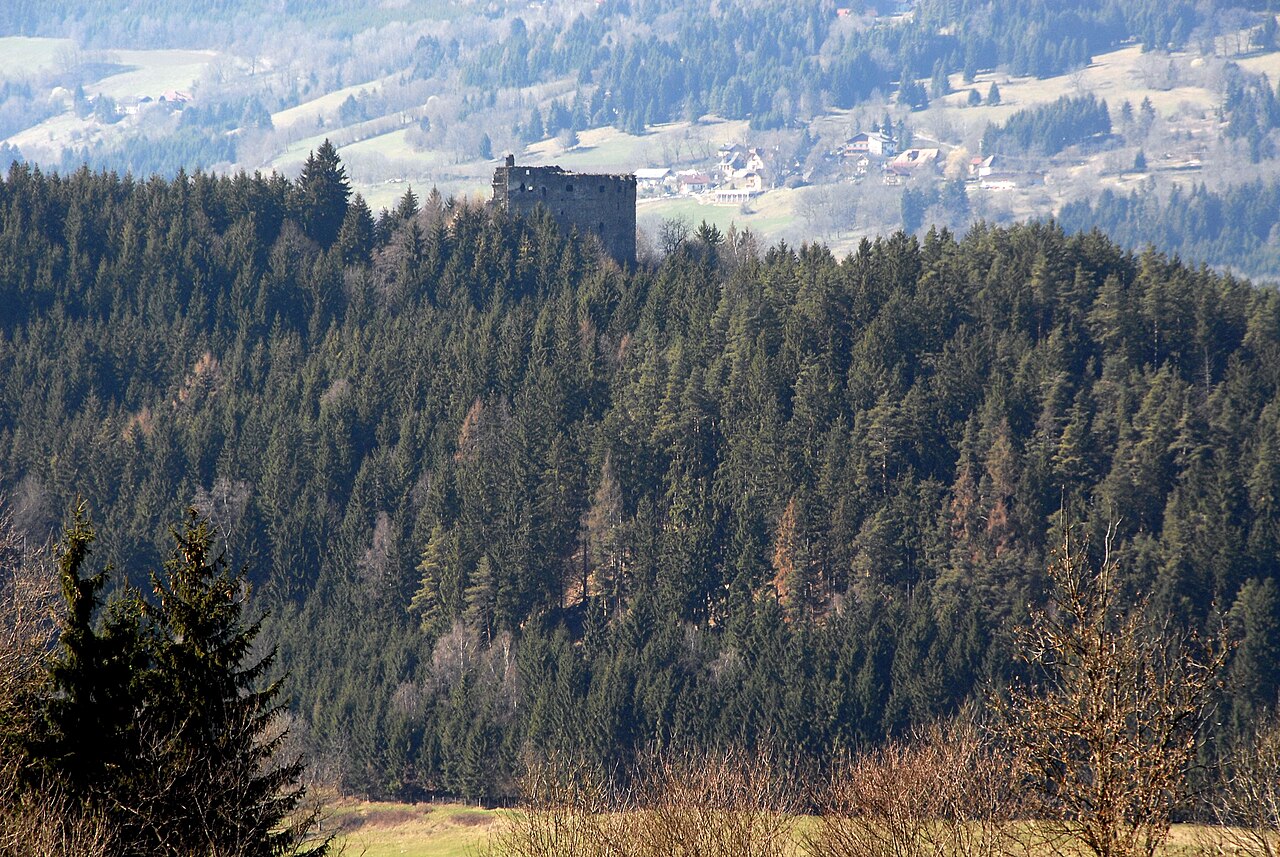
Burgruine Liebenfels stands as a significant example of medieval fortification architecture nestled in the municipality of Liebenfels, Austria. This hill castle prominently reflects the defensive and residential needs of medieval European nobility from the early 14th century onwards. First documented in 1312 as "Liewenvelse," the castle's origins align with a period of regional consolidation and feudal power assertion. Its strategic location atop a rocky hill provided commanding views and natural defense, essential for protection and control in the turbulent medieval landscape.
Historical ownership and significance
The castle's ownership history reveals the shifting dynamics of noble families in Carinthia and the broader Austrian region. From 1333, the Liebenberški family held the castle for nearly a century, until the male line ended in 1428. Subsequent transfers of ownership through inheritance and sales brought the castle under the control of notable families such as the Ostroviški, Lochner, Attems, Wildensteinski, and Seenuss. Each family contributed to the castle's maintenance and adaptation, reflecting the evolving political and social landscape from the late medieval period to early modern times.
Military conflicts and architectural adaptations
The late 15th century was marked by significant military upheaval for Burgruine Liebenfels. Between 1484 and 1490, Hungarian forces occupied the fortress amid conflicts involving Emperor Frederick III and the Archbishop of Salzburg. The castle served as a strategic base for raids, compelling local labor to enhance its defenses. The occupiers constructed two bastions, a fortified gate, and an annex, bolstering the castle's military capabilities. Despite these reinforcements, the fortress suffered partial destruction during this turbulent period, underscoring the harsh realities of regional warfare and siege tactics.
The bastion and late medieval fortifications
Approximately 200 meters north of the main fortress lie the remains of one of the bastions added during the Hungarian occupation. This late 15th-century bastion exemplifies the adaptation of medieval castles to the evolving demands of artillery and siege warfare. Its remnants provide tangible evidence of the castle's strategic importance and the efforts made to fortify it against increasingly sophisticated military threats.
Architectural features and layout
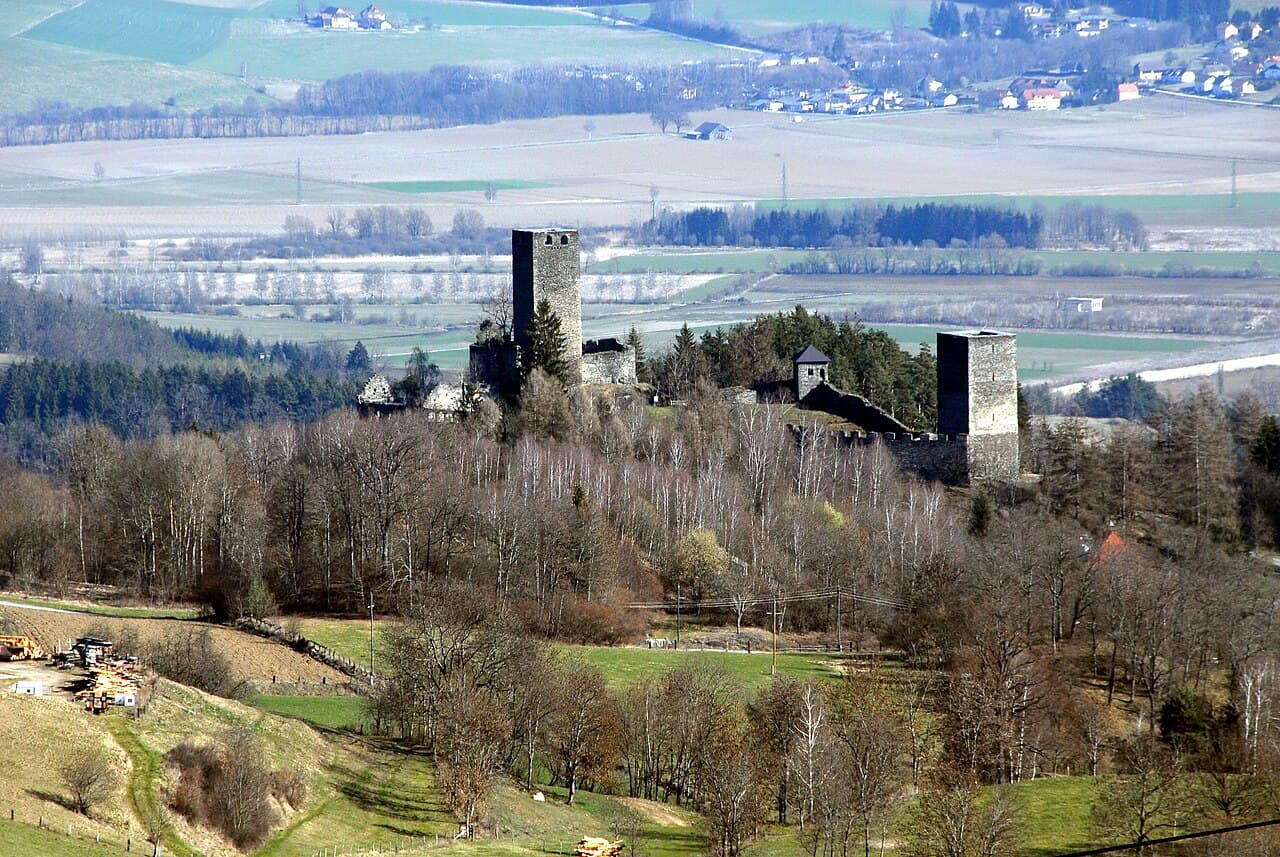
Burgruine Liebenfels is characterized by its twin bergfriede, or defensive towers, which dominate the complex. These massive towers, dating from the early 14th century, rise prominently within the circular curtain wall that encloses the fortress. The curtain wall itself, thick and robust, retains sections of battlements, highlighting the castle's primary function as a defensive stronghold. One of the bergfriede reaches six stories high and features a distinctive group of windows on its fifth floor, indicating a heated room designed for comfort within the austere military environment.
The palas and residential quarters
The former palas within the main fortress served as the residential heart of the castle. Its upper-floor hall is notable for three narrow bifora windows, twin-arched openings that balanced aesthetic appeal with defensive utility by admitting light while maintaining structural strength. Adjacent to this hall is another heated chamber, distinguished by a rare grouping of five windows facing north. Such architectural details suggest a degree of residential luxury uncommon in purely military constructions, reflecting the dual role of the castle as both fortress and noble residence.
The chapel and religious elements
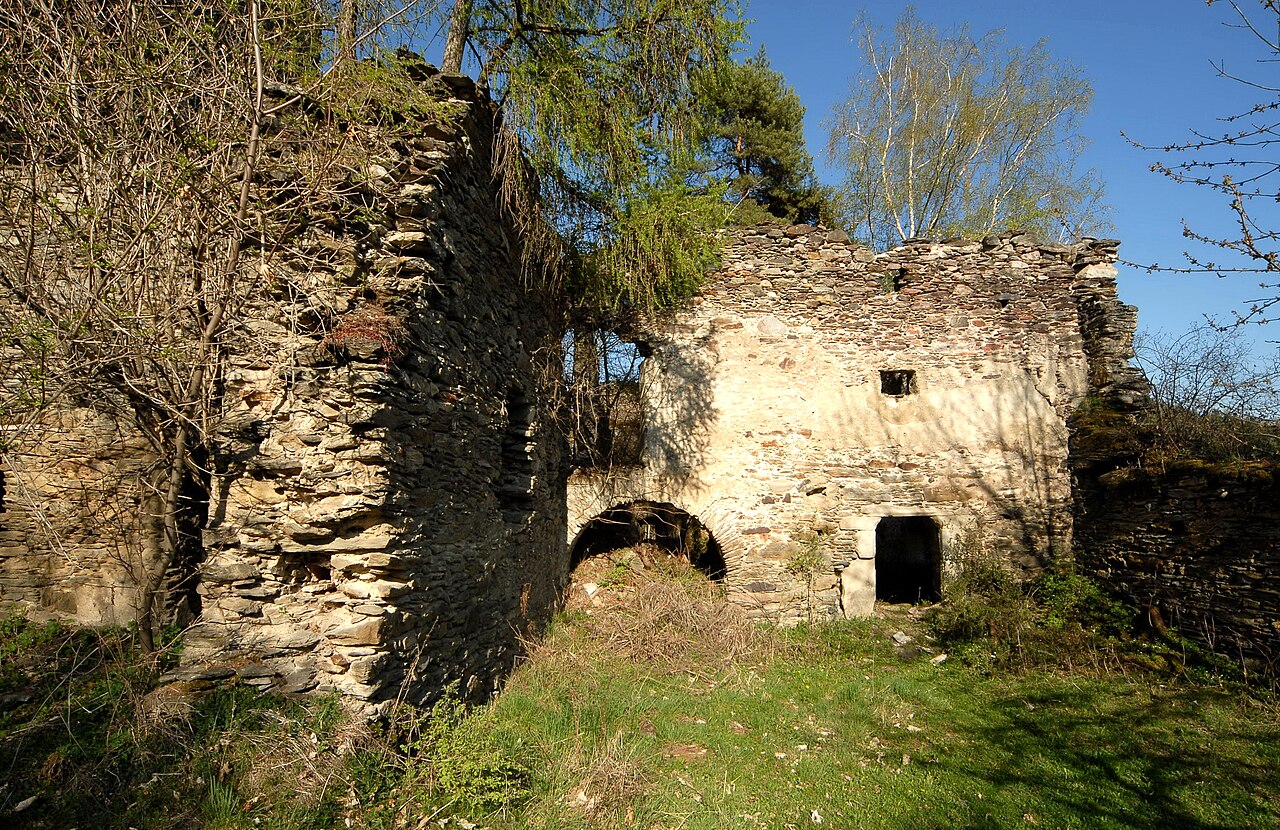
Attached to the northern side of the complex are the remains of a two-story castle chapel dedicated to Saint Nicholas, first recorded in 1419. This early Gothic chapel is integrated with a residential building featuring stepped gables and windows stylistically consistent with those found in the bergfried and palas. The presence of a heated room within this residential section further emphasizes the importance placed on comfort and status. The chapel remained active until at least 1666, serving as a spiritual center for the castle's inhabitants amid its gradual decline.
Decline and preservation
By the late 17th century, Burgruine Liebenfels had largely fallen into disuse. The topographer Valvasor described the castle around 1690 as nearly deserted, though some newer buildings on the site continued to be occupied. The gradual abandonment reflects broader trends in military technology and noble residence preferences, which rendered many medieval fortresses obsolete. Today, the castle exists as a ruin, with preserved and renovated sections that maintain its historical appearance and architectural significance.
Material culture and museum connections
Among the castle's surviving artifacts is an altar originally from its chapel, now preserved at the Carinthian State Museum in Klagenfurt. This connection extends the castle's cultural heritage beyond its physical remains, linking it to regional history and art. The diverse construction materials and decorative elements found throughout the site span several architectural styles, including Romanesque, Gothic, and Renaissance, illustrating the castle's long history of occupation and adaptation.
Architectural significance in a regional context
Burgruine Liebenfels offers valuable insights into the evolution of castle architecture in Carinthia and the broader Alpine region. Its combination of early Gothic military architecture with later Renaissance modifications exemplifies the layered history typical of European castles. The twin bergfriede and circular curtain wall are particularly notable features, demonstrating medieval defensive strategies. The presence of heated rooms within defensive towers and residential buildings highlights the gradual integration of comfort into fortress design, reflecting changing noble lifestyles.
The castle's role in local heritage and tourism
Today, Burgruine Liebenfels attracts visitors interested in medieval history, architecture, and the dramatic landscape of Carinthia. Its ruins provide a tangible connection to the region's feudal past and the complex interplay of military, residential, and religious functions within a single site. Preservation efforts have ensured that key architectural elements remain accessible, allowing for educational and cultural engagement. The castle's scenic hilltop location also offers panoramic views, enhancing its appeal as a heritage destination.
Frequently asked questions (FAQ)
- How do I get to Burgruine Liebenfels?
- Burgruine Liebenfels is located in the municipality of Liebenfels in Carinthia, Austria. It is accessible by local roads and hiking trails leading up the hill where the castle ruins stand. Visitors should check local maps and signage for the best routes.
- What is the historical significance of Burgruine Liebenfels?
- Burgruine Liebenfels was a fortified residence of medieval nobility, notable for its twin bergfriede and role in regional conflicts during the late 15th century. It reflects the military and residential architectural evolution from the early 14th century onwards.
- Can I explore the interior of the castle ruins?
- Visitors can explore the exterior ruins, including the curtain walls, bergfriede, palas, and chapel remains. Due to safety concerns, access to some interior sections may be restricted, but the site offers plenty of visible architectural features to appreciate.
- When is the best time to visit Burgruine Liebenfels?
- The best time to visit is during daylight hours in the warmer months when hiking trails are accessible and the weather is favorable for exploring outdoor ruins.
- Is there an entrance fee to visit Burgruine Liebenfels?
- Admission to Burgruine Liebenfels is free of charge, making it accessible to all visitors interested in medieval history and architecture.
Photo gallery

Information
Opening hours
Daylight hours
Ticket prices
Free
Current owner
Municipality
Website
Visit websiteSources & official resources
Verify the information above using these authoritative references.
Loading map...
Visitor reviews
No reviews yet. Been here? Write the first review and help other travelers!
Write the first reviewVisited this castle? Share your experience
Your review helps other travelers and adds first-hand knowledge to our encyclopedia.