Burgruine Hieburg
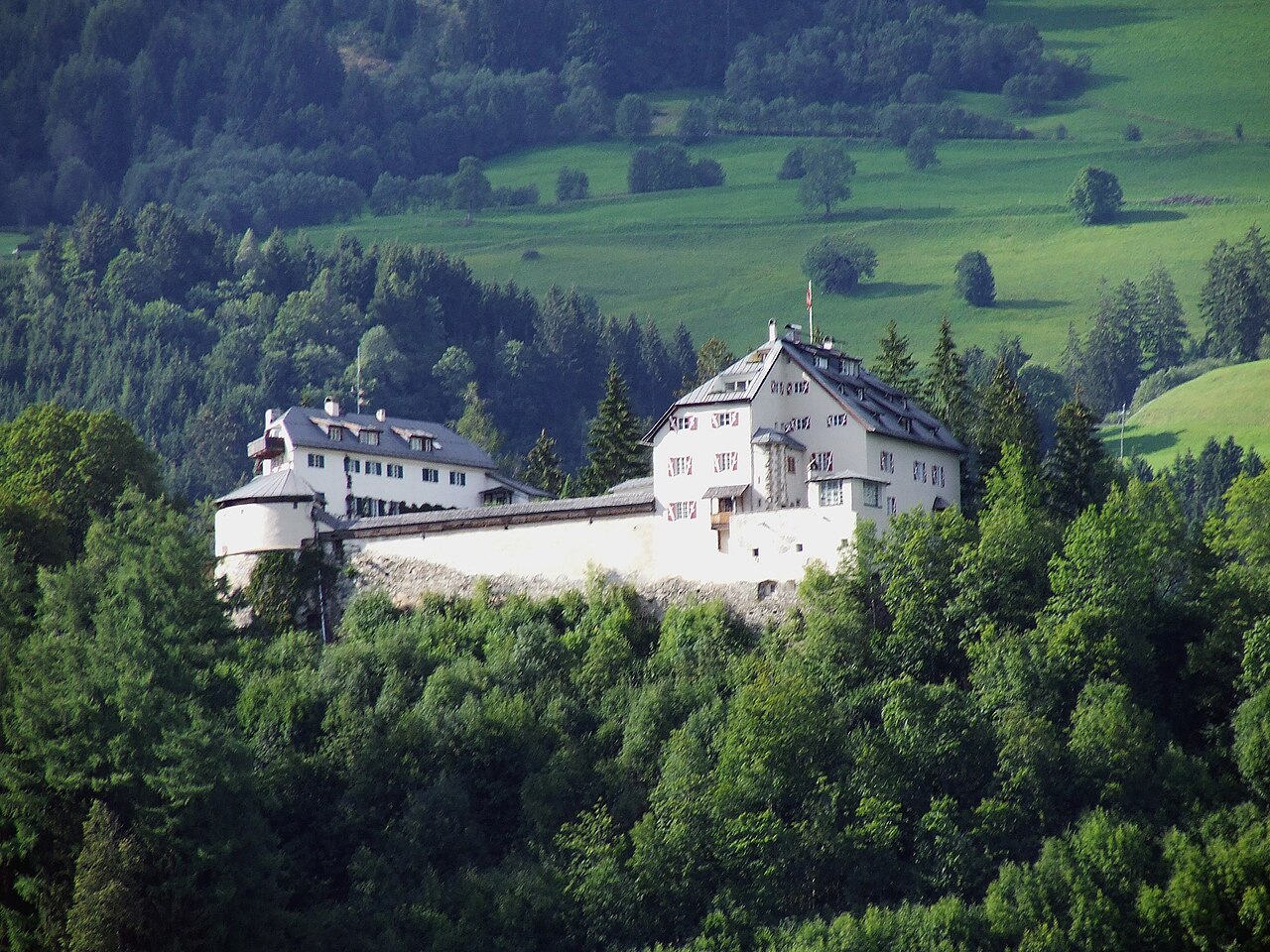
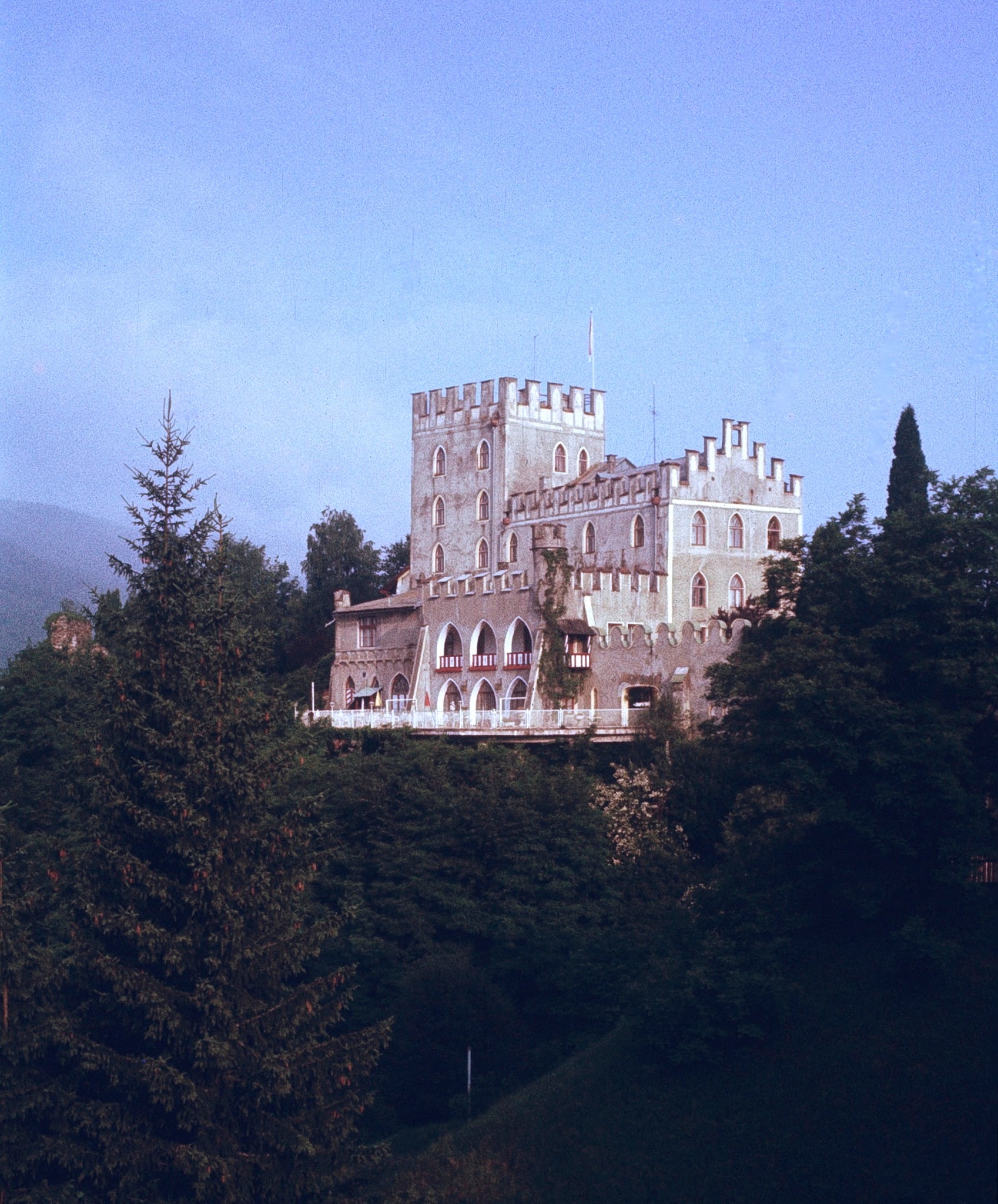
Burgruine Hieburg stands as a significant medieval hill castle ruin located in the municipality of Rosental, Austria. Constructed near the end of the 13th century, this fortress reflects the feudal dynamics and architectural practices of the late Middle Ages in the region. Its strategic position on a hillside near the ascent to the Gerlos Pass afforded it commanding views and defensive advantages, characteristic of hill castles built to control important transit routes and local territories.
Historical context and ownership lineage
The earliest documented reference to the site, originally named Mairhofen, dates to 1290, when it was under the ownership of Walter von Neukirchen. The castle's proprietors were likely vassals serving under the influential Counts of Frontenhausen or the Counts of Falkenstein at Kaprun, situating the fortress within the feudal hierarchy that dominated medieval Austria. This affiliation underscores its role as a local power center within a network of noble estates.
By 1297, ownership passed to Friedrich von Velben, who implemented significant expansions to fortify the site. These enhancements included the construction of a high ring wall and various wooden ancillary buildings, transforming the castle into a robust stronghold capable of withstanding the turbulent political and military challenges of the era.
Despite its fortified status, the castle suffered a damaging lightning strike in 1544, which partially destroyed the structure. Subsequent repairs allowed continued use, but after a series of fires and ownership changes, its strategic importance diminished. By 1620, Christoph von Küenberg officially declared the castle abandoned, marking the end of its active military and residential function.
The ruin further deteriorated following a major fire in 1661 and sustained additional damage during World War II when an American bomb destroyed the southwest wall in 1944. The collapse of the east wall in 1958 compounded the ruinous state, and due to safety concerns, public access has been prohibited since 2009.
Architectural features and surviving structures
The surviving ruins of Burgruine Hieburg reveal a complex that once integrated residential, defensive, and religious functions typical of medieval castles. The core includes the remains of the palas, which served as the main residential building, providing living quarters and administrative space for the castle's lord and household.
Adjacent to the palas lies the probable site of a castle chapel, reflecting the centrality of religious observance in medieval noble life. The chapel would have been a modest but important structure for worship and ceremonies within the castle grounds.
Encircling these core buildings is the ring wall, a high defensive barrier erected during Friedrich von Velben’s expansions in the late 13th century. This wall was designed to protect the inner precinct from assault, featuring battlements and likely walkways for guards and archers.
The castle’s bergfried, a square stone tower measuring approximately 11 by 11 meters, remains a prominent feature. This tower functioned as a last refuge during attacks and a lookout point, exemplifying the defensive priorities of medieval castle design. Its robust stone construction contrasts with the wooden ancillary buildings that once complemented the fortress.
Traces of the former moat are still visible, illustrating the layered defensive system common in medieval fortifications. The moat would have impeded attackers and enhanced the castle’s defensibility, especially important given its hillside location.
Decline, damage, and preservation challenges
Following its abandonment in the early 17th century, Burgruine Hieburg entered a prolonged period of neglect. The major fire of 1661 accelerated the ruinous condition, and centuries of exposure to natural elements further eroded the structures. The impact of World War II bombing inflicted severe damage, notably to the southwest wall, while the collapse of the east wall in 1958 further fragmented the site.
Today, the castle remains in a poorly preserved state, with fragmented walls and foundations that provide only a partial sense of the original complex. The absence of decorative elements or archaeological artifacts such as tools or pottery limits detailed understanding of the daily life and material culture of its inhabitants.
Due to concerns about structural instability and visitor safety, access to the ruins has been restricted since 2009. Preservation efforts face challenges related to the site's exposure and the extent of deterioration, but the ruins continue to offer valuable insights into medieval fortification architecture and feudal history in Austria.
Geographical setting and strategic importance
Burgruine Hieburg is situated on a hillside overlooking the ascent to the Gerlos Pass, a historically significant mountain route in the Austrian Alps. This location provided strategic control over movement through the pass, which was vital for trade, military campaigns, and regional communication during the medieval period.
The surrounding forested terrain added a natural layer of defense and seclusion, while the elevated position enabled surveillance of the surrounding valleys and approaches. Such siting exemplifies the medieval preference for hill castles that combined natural and man-made defenses.
Architectural significance and historical legacy
Although now a ruin, Burgruine Hieburg exemplifies the architectural and historical characteristics of late 13th-century feudal castles in Austria. Its combination of residential buildings, defensive walls, a bergfried, and a chapel illustrate the multifunctional nature of medieval strongholds.
The castle’s history of ownership and expansion reflects broader patterns of feudal allegiance and territorial control. Its eventual abandonment and decline mirror the shifting political and military realities of the early modern period, when many such fortifications became obsolete or unsustainable.
Today, the ruins serve as a cultural heritage site, offering a tangible connection to Austria’s medieval past and the architectural ingenuity of its builders. Despite its fragile condition, Burgruine Hieburg remains an important landmark for historians, archaeologists, and visitors interested in medieval fortifications and Austrian history.
Frequently asked questions (FAQ)
- When was Burgruine Hieburg originally built?
- Burgruine Hieburg was originally constructed near the end of the 13th century, reflecting the medieval period's feudal fortification trends.
- What remains can visitors see at Burgruine Hieburg?
- Visitors can observe the ruins of the palas, the bergfried tower, the ring wall, and traces of the former moat, which illustrate the castle's defensive and residential functions.
- Is Burgruine Hieburg accessible to the public?
- Access to Burgruine Hieburg has been prohibited since 2009 due to safety concerns from structural instability.
- What caused the decline of Burgruine Hieburg?
- The castle declined after fires in the 16th and 17th centuries, abandonment in 1620, World War II bombing damage, and subsequent structural collapses.
- Where is Burgruine Hieburg located?
- Burgruine Hieburg is located in Rosental, Austria, on a hillside near the ascent to the Gerlos Pass.
Information
Loading map...
Visitor reviews
No reviews yet. Been here? Write the first review and help other travelers!
Write the first reviewVisited this castle? Share your experience
Your review helps other travelers and adds first-hand knowledge to our encyclopedia.