Thorberg Castle
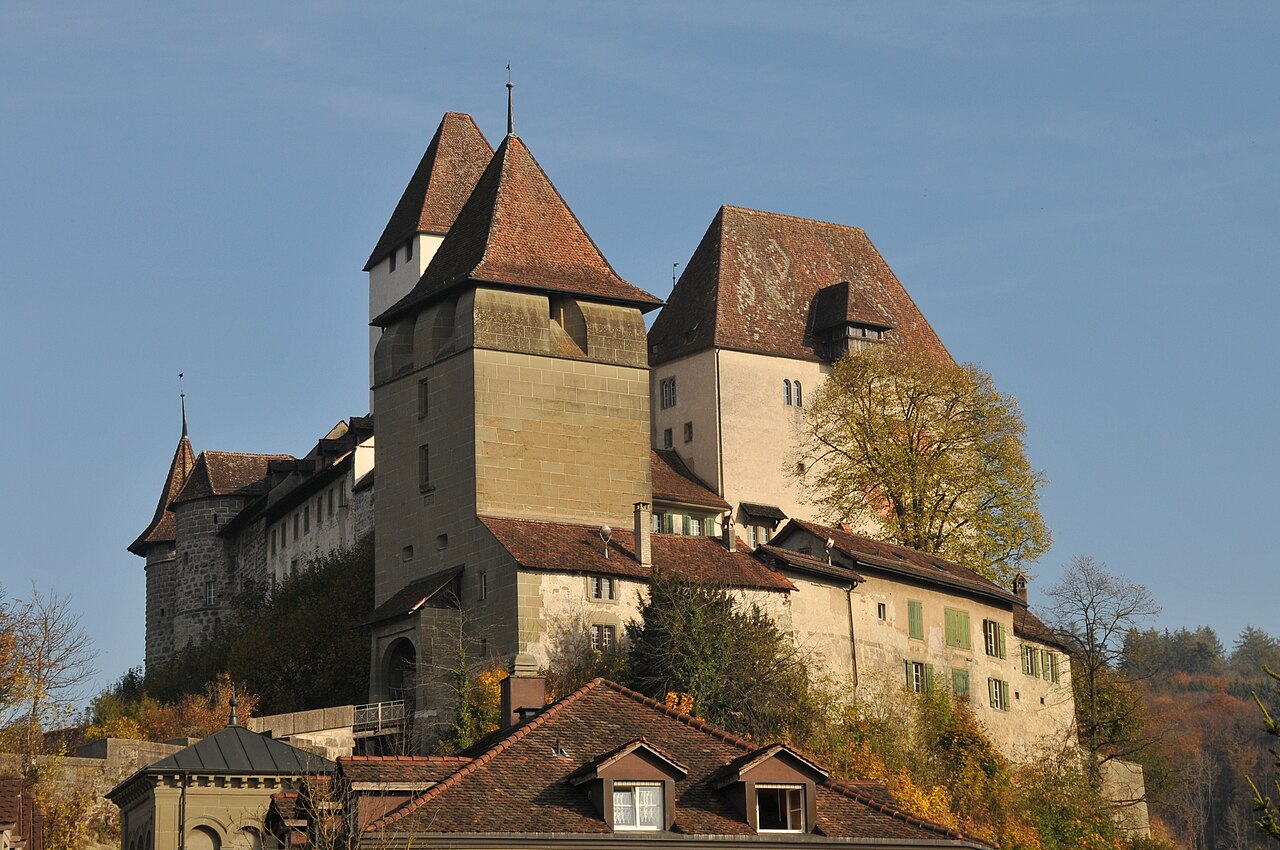
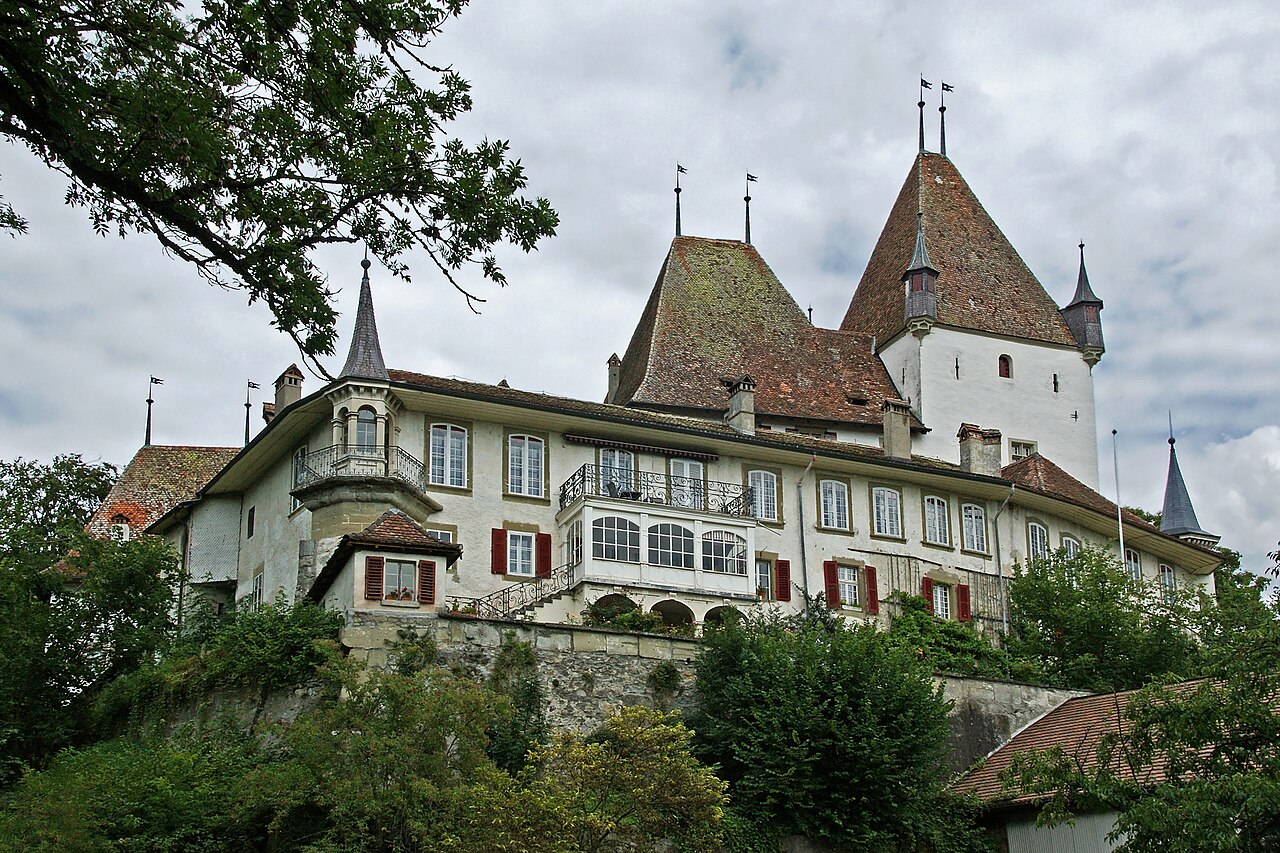
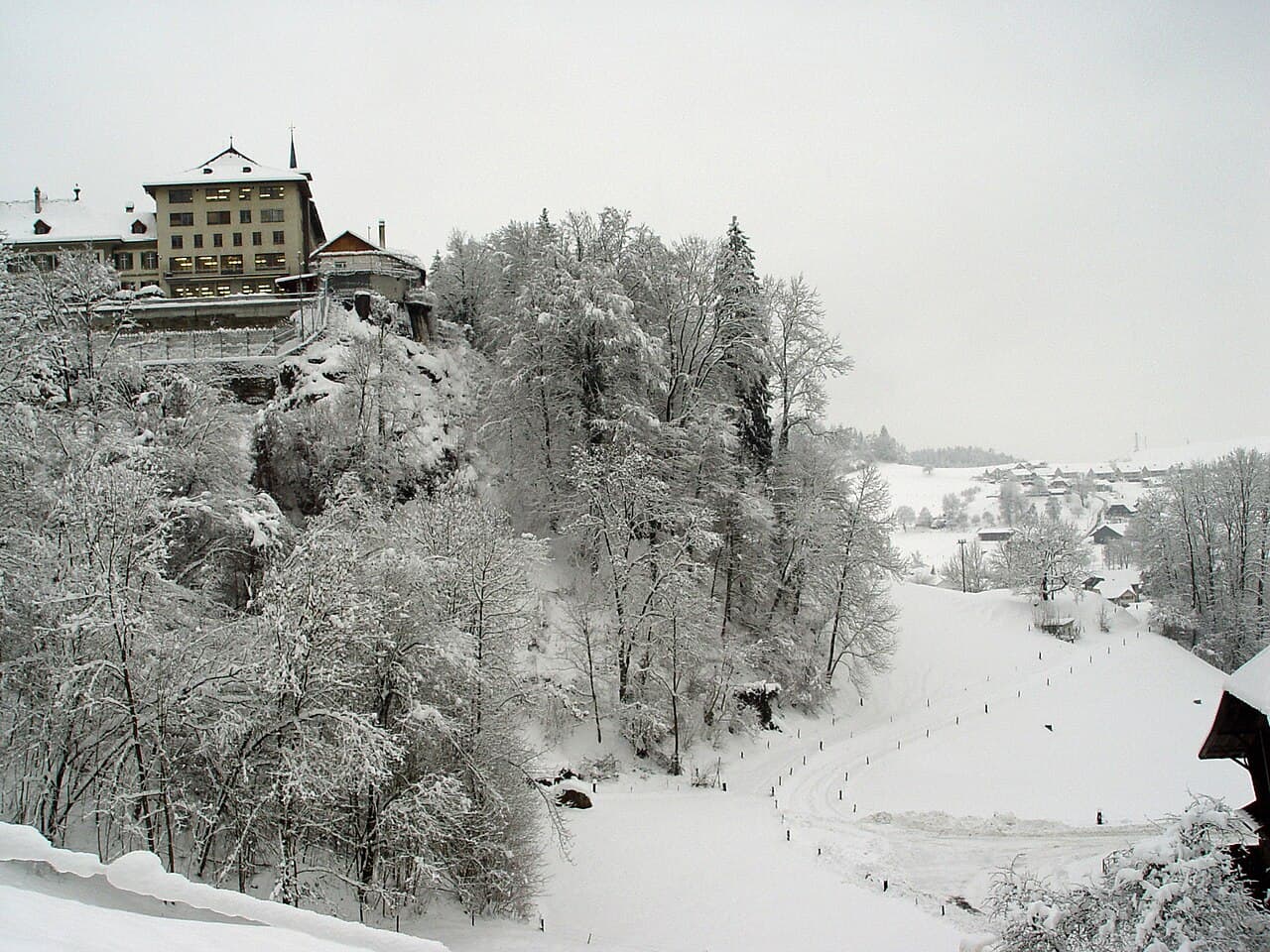
Thorberg Castle, located in Krauchthal in the Canton of Bern, Switzerland, is a unique historical complex that has evolved significantly since its origins in the 12th century. Originally a medieval hill castle belonging to the von Thorberg family, it later transformed into a Carthusian monastery before becoming a prison complex. This layered history reflects the shifting social, religious, and political landscape of the region over several centuries.
The medieval origins and the von Thorberg family
The earliest documented mention of the Thorberg Castle dates back to 1175, when it was the seat of the noble von Thorberg family. This high medieval hill castle was strategically positioned on elevated terrain, typical for defensive structures of the time. Unfortunately, only fragments of the original tower's foundations remain today, as the castle underwent extensive modifications and repurposing over the centuries.
The von Thorberg lineage ended in 1397 with the death of Peter von Thorberg, the last knight of the family. His death marked a turning point for the castle and its estates, as he bequeathed his properties to the Carthusian order, initiating a new chapter in the site's history.
Transformation into a Carthusian monastery
Following the transfer of ownership, the castle was converted into a Carthusian monastery, also known as a charterhouse. The Carthusians were a contemplative monastic order known for their austere lifestyle and devotion to solitude and prayer. The monastery functioned as a religious center for several centuries, with significant architectural additions reflecting its monastic purpose.
Among the surviving structures from this period are the women's guesthouse and the chapel, constructed between 1510 and 1515. The chapel is notable for its frescoes depicting the Adoration of the Magi and the Adoration of the Shepherds, which exemplify early 16th-century religious art in the region. These frescoes provide valuable insight into the devotional practices and artistic styles of the late medieval period.
A remarkable artifact from the charterhouse era is the figure of the Man of Sorrows sculpted by Erhart Küng, a master builder associated with the Berner Münster. This sculpture, originally housed at Thorberg, is now preserved in the Historisches Museum Bern, underscoring the cultural significance of the monastery's artistic heritage.
Impact of the Reformation and secularization
The Reformation in 1528 brought dramatic changes to Thorberg Castle and its monastic community. The assets and property of the Carthusian monastery were seized by the state of Bern, reflecting the widespread secularization of religious institutions during this period. The administration of the former monastery's estates was entrusted to a Vogt from the Bernese patriciate, who managed the income from the Vogtei Thorberg.
Over the following centuries, the site was repurposed for various civic functions. It housed care organizations, a prison, and a hospital, adapting its facilities to meet the evolving needs of the local population. This period illustrates the castle's transition from a religious to a secular institution, embedded within the administrative framework of Bern.
19th-century institutional transformations
In the early 19th century, the former monastery buildings underwent significant functional changes. By 1805, the site served as an almshouse providing shelter for the aged poor. Soon after, it was adapted to function as a reformatory, a model school, and an ancillary lunatic asylum. These institutions reflected contemporary approaches to social welfare and correctional education.
Additional facilities were added in 1807 to accommodate individuals who were considered not to have fully warranted imprisonment, indicating a nuanced approach to penal and social care. However, with the opening of the psychiatric clinic at Waldau near Bern in 1855, the ancillary asylum at Thorberg was closed.
From 1849, the site was transformed into a workhouse or forced labour unit, reflecting 19th-century penal philosophies. This marked a shift towards institutional labor as a form of rehabilitation or punishment.
Development as a prison complex
The most significant modern adaptation of Thorberg Castle came in 1893 with the construction of a new cell block to serve as a prison. This addition marked the beginning of the site's current primary function. Throughout the 20th century, the prison facilities were expanded with various extensions, the latest of which was completed in 1998.
Despite these modernizations, some elements of the original Baroque castle remain, particularly from the era of the Landvogt, a Bernese administrative official. The nearby old sandstone quarry still bears visible traces of traditional hand-working techniques and tools, providing a tangible connection to the castle's construction history.
Architectural features and heritage significance
Thorberg Castle's architecture reflects its complex history, combining elements from its medieval origins, monastic conversion, Baroque modifications, and modern prison adaptations. The surviving chapel and women's guesthouse are key examples of late medieval religious architecture, while the Baroque elements illustrate the site's administrative role in Bernese governance.
The castle's location as a hill castle provided strategic advantages in the medieval period, and its subsequent adaptations reveal a continuous evolution in response to changing social and political demands. The preservation of artistic works like the Man of Sorrows sculpture and the chapel frescoes highlights the cultural importance of the site beyond its military and administrative functions.
Visiting Thorberg Castle today
Today, Thorberg Castle functions primarily as a prison and is not generally open to the public. However, its historical and architectural significance remains recognized in the Canton of Bern. The site's rich history from a medieval noble residence to a religious monastery and finally to a modern correctional facility offers a fascinating case study of adaptive reuse over centuries.
Frequently asked questions (FAQ)
- What is the historical significance of Thorberg Castle?
- Thorberg Castle, located in Krauchthal, Switzerland, dates back to the 13th century and has played a pivotal role in the region's history. It served as a fortress and a residence for the local nobility, showcasing the architectural evolution of medieval Switzerland.
- When was Thorberg Castle built?
- Thorberg Castle was constructed in the early 1200s, with significant renovations occurring in the subsequent centuries. Its rich history is reflected in its well-preserved architecture and its role in local governance over the years.
- What are the opening hours for Thorberg Castle?
- Thorberg Castle is open to visitors from Tuesday to Sunday, with hours varying by season. Typically, the castle opens at 10 AM and closes at 5 PM, but it is advisable to check the official website for any seasonal changes or special events.
- Can I purchase tickets in advance for Thorberg Castle?
- Yes, tickets for Thorberg Castle can be purchased in advance through the official website. This allows you to secure your preferred visiting time and avoid potential queues upon arrival.
- Is it possible to access Thorberg Castle by public transport?
- Yes, Thorberg Castle is accessible by public transport, with several bus routes servicing the area. Visitors can take a bus from nearby towns, making it convenient for those traveling without a car.
- What is the best time to visit Thorberg Castle?
- The best time to visit Thorberg Castle is during the spring and early autumn when the weather is pleasant and the gardens are in full bloom. Additionally, these seasons typically see fewer crowds compared to the summer months.
- Are there any nearby attractions to visit while at Thorberg Castle?
- Yes, visitors can explore several nearby attractions, including the scenic Emmental region and the charming town of Burgdorf. Both locations offer beautiful landscapes, cultural experiences, and additional historical sites.
- How do I get to Thorberg Castle from the nearest city?
- To reach Thorberg Castle from Bern, take a train to Burgdorf and then transfer to a local bus that will take you directly to the castle. The total travel time is approximately 30 to 40 minutes, making it an easy day trip.
- What architectural features can I expect to see at Thorberg Castle?
- Thorberg Castle showcases a blend of medieval and Renaissance architectural styles, featuring thick stone walls, impressive towers, and beautifully crafted interiors. Visitors can admire the castle's sturdy structure and intricate details that reflect its historical importance.
Photo gallery

Information
Current owner
State of Bern
Loading map...
Visitor reviews
No reviews yet. Been here? Write the first review and help other travelers!
Write the first reviewVisited this castle? Share your experience
Your review helps other travelers and adds first-hand knowledge to our encyclopedia.