Burgalimar Castle
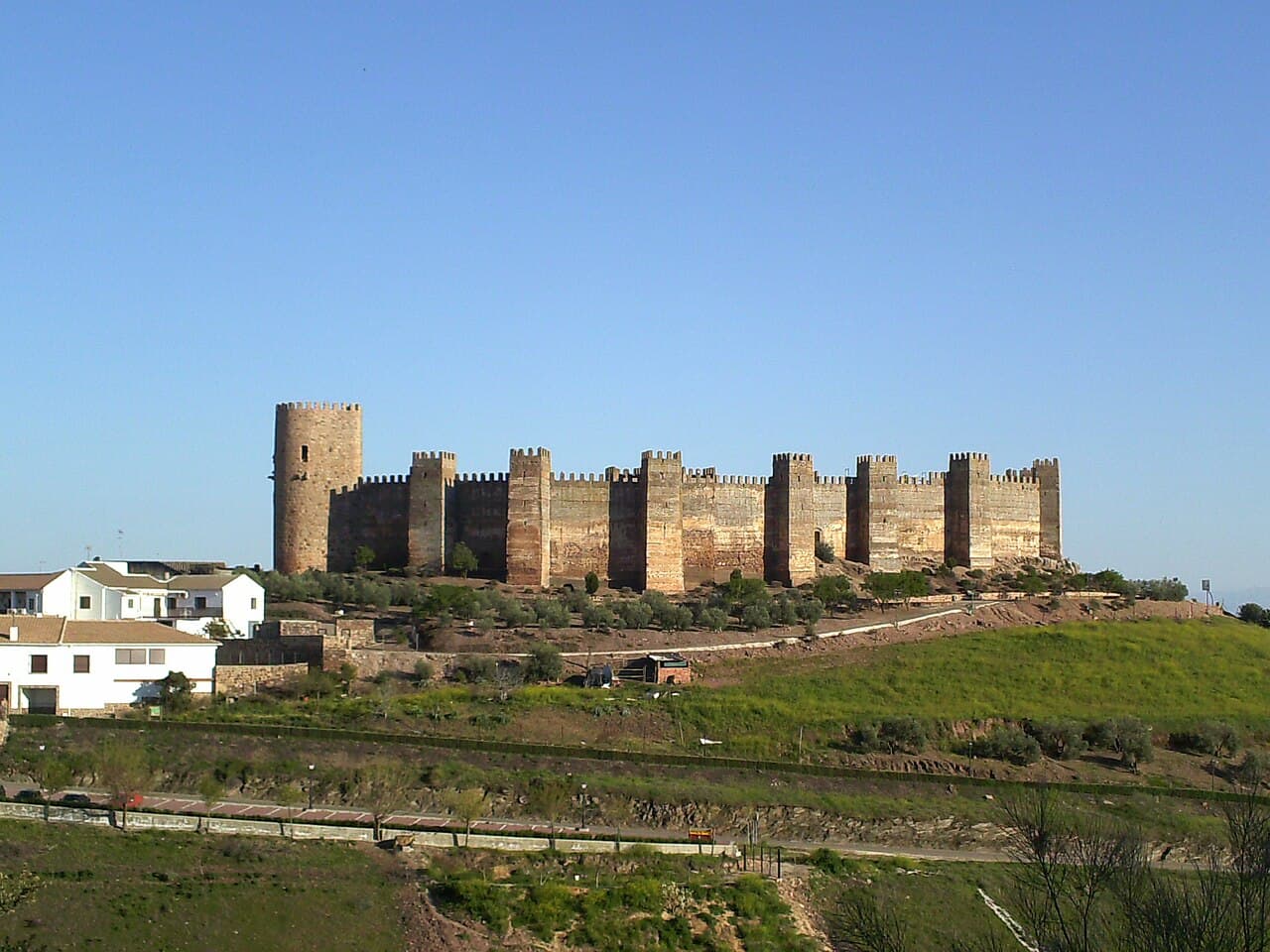
Burgalimar Castle, located in Baños de la Encina in the province of Jaén, Spain, is one of the oldest and best-preserved fortresses from the 10th century in the Iberian Peninsula. Constructed in 967 AD during the reign of the Umayyad Caliphate of Córdoba, it served as a crucial military stronghold guarding the strategic valley of the Guadalquivir River and vital routes connecting to the capital city of Córdoba. The castle's foundation is historically documented by a marble inscription plaque found at its entrance, which names the caliph Al-Hakam II and dates the fortress's construction precisely to this year. This plaque is now preserved at the National Archaeological Museum in Madrid.
Historical context and military significance
Built as a hill castle with a commanding view over the surrounding landscape, Burgalimar Castle was designed to be a formidable defensive installation during the Early Medieval period. Its position allowed control over the valley and the protection of the roads leading to Córdoba, making it a key point in the defense network of Al-Andalus. Throughout the 12th and 13th centuries, the castle's ownership shifted repeatedly amid the turbulent Reconquista conflicts between Muslim and Christian forces.
In 1147, the castle was captured by Alfonso VII of León and Castile but reverted to Muslim control upon his death in 1157. Later, kings Alfonso VIII and Alfonso IX jointly took it in 1189. It was again seized by the Kingdom of Castile in 1212, just before the pivotal Battle of Las Navas de Tolosa, although it briefly returned to Almohad control shortly after. The castle was finally secured by Castilian forces in 1225, consolidating Christian rule over the region.
Architectural features and layout
The castle's layout is an elongated but irregular walled enclosure measuring approximately 100 meters long by 50 meters wide. It features fifteen towers spaced closely along the perimeter walls, most of which have square or rectangular bases, a hallmark of caliphal military architecture from the 10th century. The exception is the prominent Torre del Homenaje, a larger, semi-circular keep tower added by the Castilians in 1466. This tower served as the main stronghold and symbol of lordship within the castle.
The castle has two main gates: the northern gate and the more significant southern gate. The southern entrance is notable for its straight passageway framed by horseshoe arches and flanked by two defensive towers. Unlike later medieval castles, which often employed bent entrances for added security, this gate's straight design reflects its earlier Islamic architectural influences. Above the passage are chambers equipped with openings in the floors, allowing defenders to drop missiles on attackers attempting to breach the gate.
Inside the castle, remnants of a cistern highlight the provisions made for water storage, essential during sieges. Foundations of subsequent buildings within the walls indicate continued use and adaptation of the castle through the centuries.
Construction techniques and materials
Constructed primarily from locally sourced stone and mortar, Burgalimar Castle exemplifies the robust building methods of the Umayyad period. Its thick walls and closely spaced towers provided strong defensive capabilities against siege weaponry of the era. The use of horseshoe arches in the gate design is characteristic of Islamic architectural style prevalent in Al-Andalus during the 10th century.
Later modifications and preservation
Following its final Christian conquest, the castle underwent modifications, most notably the addition of the Torre del Homenaje in the 15th century. This keep tower reflects the evolving military architecture of late medieval Spain, incorporating a semi-circular design that improved defensive coverage.
Today, Burgalimar Castle is well preserved and remains a significant cultural and historical monument. Its enduring walls and towers offer insight into the military strategies and architectural styles of both Islamic and Christian periods in medieval Spain. The castle is accessible to visitors who wish to explore its extensive fortifications and learn about its role in the complex history of the Reconquista.
Visiting Burgalimar Castle
The castle is situated on a hill overlooking the town of Baños de la Encina, providing panoramic views of the surrounding countryside. Visitors can walk along the ramparts and explore the towers, gates, and internal structures. The site includes informative displays about the castle's history and architecture, enriching the visitor experience.
Its location in the province of Jaén places it within a region known for its rich collection of medieval fortresses, making it an important stop for those interested in Spain's military heritage.
Frequently asked questions (FAQ)
- When was Burgalimar Castle built and by whom?
- Burgalimar Castle was built in 967 AD under the Umayyad Caliphate of Córdoba during the reign of Caliph Al-Hakam II.
- What is the architectural style of Burgalimar Castle?
- The castle features 10th-century caliphal Islamic military architecture, including horseshoe arches and square towers, with later Castilian modifications.
- Can visitors explore the towers and walls of Burgalimar Castle?
- Yes, visitors can walk along the ramparts, explore the fifteen towers, including the 15th-century Torre del Homenaje, and enjoy panoramic views.
- How did the castle's ownership change during the Reconquista?
- The castle changed hands multiple times between Muslim and Christian forces from the 12th to the 13th centuries before finally being secured by Castile in 1225.
- What defensive features does Burgalimar Castle have?
- It has thick walls, closely spaced square towers, a cistern for water storage, and a southern gate with a straight passage and defensive chambers above.
Photo gallery

Information
Loading map...
Visitor reviews
No reviews yet. Been here? Write the first review and help other travelers!
Write the first reviewVisited this castle? Share your experience
Your review helps other travelers and adds first-hand knowledge to our encyclopedia.