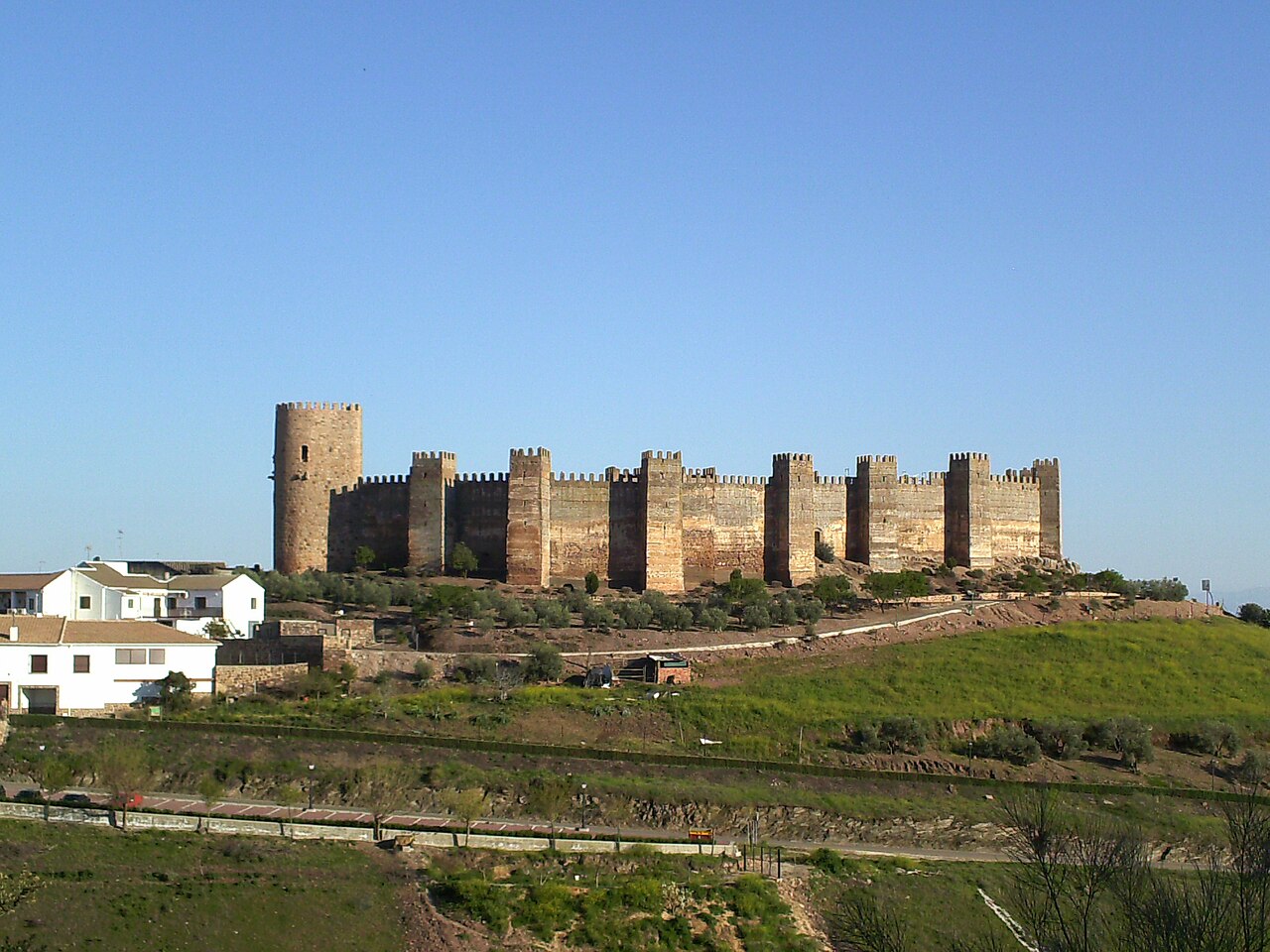
Espeluy Castle
Espeluy Castle is a historic hill castle located in the municipality of Espelúy in the province of Jaén, Spain. Positioned strategically on the banks of the Guadalquivir and Guadalimar rivers, the castle occupies a commanding site overlooking the river valley, which was vital for controlling regional trade and military movements during the Middle Ages. Its origins trace back to the Caliphate era when a Muslim fortress stood on this site, reflecting the Islamic architectural and military presence in Andalusia during the Early Medieval period.
The castle's significance grew during the High Medieval period, particularly in the 13th century when the Christian Reconquista advanced into the region. In 1224, King Fernando III of Castile launched military campaigns to capture key fortifications including Espeluy Castle. Historical records indicate that the castle was found deserted at the time of his assault, leading to its destruction as part of the Christian efforts to consolidate control over Jaén and the surrounding territories.
Medieval reconstruction and feudal ownership
Following the Christian conquest, the castle was rebuilt, likely in the late 13th or early 14th century, marking a transition from Muslim to Christian military architecture. The new structure was designed to secure the important river crossings and crossroads of the upper Guadalquivir, serving as a defensive bastion and administrative center in this frontier zone. The castle was integrated into the feudal system, coming under the ownership of the aristocratic Benavides family, who held titles such as the Counts of Santisteban and Dukes of Medinaceli. They managed the castle as a seigniory, overseeing the surrounding lands and maintaining its military readiness.
Architectural features and layout
The castle complex covers a total area of approximately 4,800 square meters. Of this, about 3,720 square meters are dedicated to stables, corrals, and common areas, while the remaining 1,120 square meters correspond to the main building. The residential section of the castle consists of two floors: the upper floor contains seven rooms and seven bathrooms, reflecting later adaptations for comfort and habitation, while the lower floor includes a cellar, a large stable, warehouses, and a house for the castle guard.
The most distinctive feature of Espeluy Castle is its tower of homage, a square-plan keep tower that stands as a testament to medieval military architecture. Inside the tower are two superimposed rooms, each covered by barrel vaults, a common architectural technique used to provide structural strength. The tower's design emphasizes defense and surveillance, with thick walls and limited access points.
Historical significance and notable events
Throughout its history, Espeluy Castle played a crucial role in regional defense and administration. In 1469, the castle was seized by the troops of Don Miguel Lucas de Iranzo, a significant event reflecting the ongoing conflicts and power struggles in late medieval Spain. Towards the end of the 18th century and the beginning of the 19th century, the castle underwent Christian reconstruction efforts, adapting it further from its original medieval military function to a more residential and administrative role.
Connection to saint teresa of jesus
The castle is also linked to religious history through the experiences of Saint Teresa of Jesus. In her writings, particularly in the book "Foundations," she recounts an incident where she was cared for at the castle after nearly drowning when a rope broke during a boat crossing of the Guadalquivir River. This episode adds a layer of spiritual and cultural significance to the site, connecting it to one of Spain's most revered religious figures.
Preservation and current condition
Today, Espeluy Castle is recognized as an Asset of Cultural Interest, a designation it received in 1985. The most prominent surviving element is the rectangular keep tower, or torre del homenaje, which retains its medieval character with its two vaulted rooms. Modern additions to the upper part of the tower and the surrounding walls have been made to integrate the historic structure with a stately home currently occupying the property.
The castle's gate, designed in a medieval style, serves as the entrance to the estate but is a modern construction rather than part of the original fortress. Despite these alterations, the castle's strategic location overlooking the Guadalquivir valley remains a defining characteristic, illustrating its historical role in controlling river crossings and regional defense.
Espeluy Castle stands as a significant example of the transition from Islamic to Christian military architecture in Andalusia, reflecting the complex history of conquest, feudalism, and religious heritage in southern Spain. Its surviving structures offer valuable insights into medieval defensive design, feudal lordship, and the cultural narratives embedded in this historic site.
Frequently asked questions (FAQ)
- How do I get to Espeluy Castle?
- Espeluy Castle is located in the charming town of Espelúy, Spain, which is easily accessible by car or public transport. The nearest major city is Jaén, from where you can take a bus or drive to the castle in approximately 30 minutes.
- What is the historical significance of Espeluy Castle?
- Espeluy Castle, dating back to the 12th century, played a crucial role in the defense of the region during the Reconquista. Its strategic location allowed it to oversee the surrounding lands, making it a vital stronghold for various historical figures.
- When was Espeluy Castle built?
- The construction of Espeluy Castle began in the 12th century, during the period of Muslim rule in Spain. Over the centuries, it has undergone several renovations and restorations, preserving its historical architecture and significance.
- Can I visit Espeluy Castle?
- Yes, visitors are welcome to explore Espeluy Castle and its grounds. However, it is advisable to check ahead for any guided tours or special events that may enhance your visit.
- Why is Espeluy Castle considered an architectural gem?
- Espeluy Castle showcases a blend of Islamic and Christian architectural styles, reflecting the diverse cultural influences of its time. Its robust stone walls, towers, and intricate details make it a fascinating subject for architecture enthusiasts.
- Is it possible to access the castle grounds with a wheelchair?
- While efforts have been made to improve accessibility at Espeluy Castle, certain areas may still pose challenges for wheelchair users due to uneven terrain and historical structures. It is recommended to check with local tourism offices for specific accessibility options before your visit.
- What is the best time to visit Espeluy Castle?
- The best time to visit Espeluy Castle is during the spring and fall when the weather is mild and pleasant. These seasons also offer fewer crowds, allowing for a more enjoyable exploration of the castle and its surroundings.
- Are there any nearby attractions to visit?
- Yes, there are several nearby attractions, including the historic town of Jaén, known for its stunning cathedral and olive oil museums. Additionally, the natural parks in the region provide opportunities for hiking and enjoying the scenic landscape.
- What are the ticket prices for Espeluy Castle?
- Ticket prices for Espeluy Castle are usually affordable, with discounts available for children and seniors. It is advisable to check the official website or local tourist information for the most current pricing and any special offers.
- What are the opening hours of Espeluy Castle?
- Espeluy Castle typically opens to visitors from 9 AM to 7 PM during the summer months and has reduced hours during the winter. Always check the castle's official website or contact local tourism for the latest information on opening hours and any seasonal changes.
Information
Loading map...
Visitor reviews
No reviews yet. Been here? Write the first review and help other travelers!
Write the first reviewVisited this castle? Share your experience
Your review helps other travelers and adds first-hand knowledge to our encyclopedia.