Burg Züschen was a prominent hill castle located in the municipality of Züschen, Germany. Its origins trace back to the medieval period, when it served as a fortified residence for local nobility. Strategically positioned near the town's southeast fortifications, the castle played a vital role in the defense and administration of the settlement, which was part of the County of Waldeck.
Medieval origins and strategic importance
The castle's earliest documented significance emerges around the early 14th century, with the town of Züschen believed to have received municipal rights circa 1322. This development underscored the growing importance of the settlement within the region. Burg Züschen was situated to oversee and protect the town's defenses, notably adjacent to the thor zur Kirche (gate to the church) and a zwinger mauer, an outer defensive wall designed to strengthen the castle's courtyard and perimeter. The castle's position above the town walls maximized its defensive capabilities, leveraging the natural slope of the landscape.
The castle's layout reflected its complex history of construction and adaptation. Archaeological records and a detailed ground plan preserved at the University Library Kassel reveal an irregular floor plan shaped by multiple building phases. Two spiral stair towers provided vertical access to residential chambers, while the ground floor was likely reserved for practical or economic uses such as storage and service areas.
The meysenbug tenure and architectural transformation
In 1433, stewardship of Burg Züschen and the town passed to the Lords of Meysenbug as a feudal fief. The Meysenbug family maintained control for nearly four centuries, until the extinction of their line in 1810. Their tenure marked a period of significant architectural and social transformation for the castle and its surroundings.
Around the year 1600, the medieval castle underwent a major renovation. Large portions of the original fortifications were dismantled, and the Meysenbug family commissioned the construction of a new four-story stone manor house in a style reminiscent of a castle. This new building became the centerpiece of a larger manorial estate, reflecting the shift from a primarily defensive stronghold to a residence focused on status and estate management.
The manor house is oriented along an east-west axis and features a perpendicular wing extending northward from its eastern end, creating an L-shaped layout. Architectural details include a sandstone relief of a crucifixion scene on the west gable and a prominent two-story bay window on the southern facade's western extremity. These elements highlight the artistic and cultural investment made during the early modern period.
In addition to the manor house, the Meysenbug family also commissioned the construction of a church in 1604, indicating a coordinated effort to reshape the town's architectural and social landscape around the estate.
Castle's role within town fortifications and estate complex
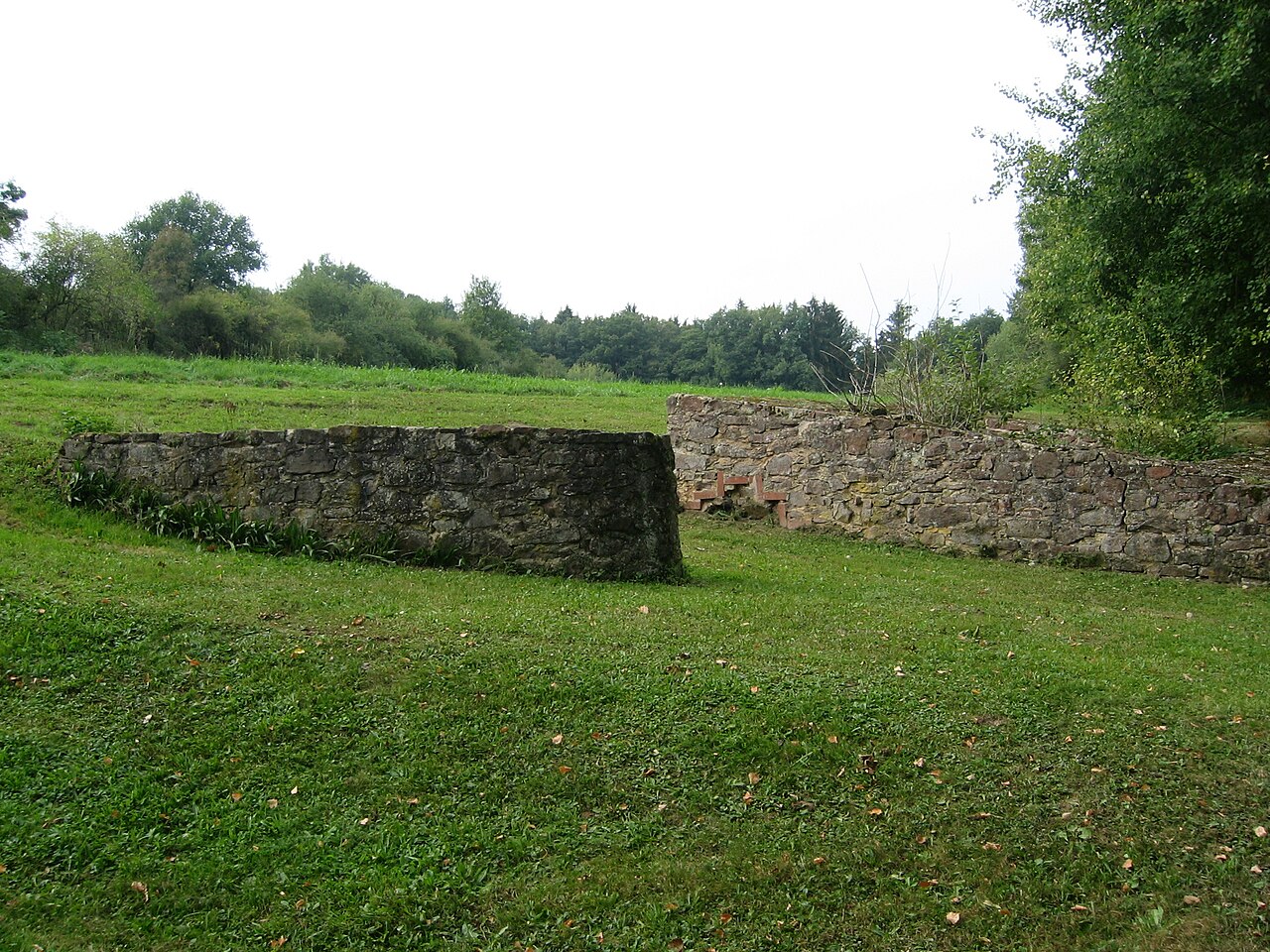
Burg Züschen was integrally linked to the town's defensive system. It stood near the corner of the town walls and was protected by massive outer walls that endured on the opposite side of the courtyard. These fortifications, combined with the castle's elevated position, provided a formidable defensive network.
Surrounding the castle were various stable and utility buildings that supported the manorial household's operations. Over time, these structures evolved, but their arrangement confirms the site's multifaceted use as both a noble residence and a working estate.
Current condition and archaeological legacy
Today, no visible remains of the original medieval castle survive above ground. The site is occupied by the manorial complex established by the Meysenbug family after 1600. The existing manor house, with its castle-like appearance, stands as a testament to the site's historical evolution from medieval fortress to early modern estate.
The preserved ground plan and archaeological documentation provide valuable insights into the castle's original layout and its relationship to the town's fortifications and religious buildings. These records are essential for understanding the castle's historical significance and spatial organization within the medieval settlement.
Architectural features and historical significance
Burg Züschen's architectural history illustrates the transition from medieval defensive architecture to early modern residential design. The castle's original irregular floor plan, spiral stair towers, and massive defensive walls reflect typical medieval fortification strategies adapted to local topography.
The later manor house embodies early 17th-century architectural trends, combining functional estate management with stylistic elements that conveyed noble status. The sandstone relief and bay window are notable artistic features that enhance the building's character.
The castle's history is deeply intertwined with the County of Waldeck and the Lords of Meysenbug, whose long tenure shaped the site's evolution. The transition from a feudal fortress to a manorial estate mirrors broader social and political changes in Germany during the late medieval and early modern periods.
Frequently asked questions (FAQ)
- How do I get to Burg Züschen?
- Burg Züschen is located in the picturesque region of Germany, easily accessible by car or public transport. If you're driving, take the A4 motorway, followed by local roads to reach the castle. For public transport, check regional train services to the nearest station and consider a short taxi ride or bus to the castle.
- What is the historical significance of Burg Züschen?
- Burg Züschen dates back to the medieval period and served as a strategic fortress in the region. Its architecture and preserved structures provide insight into the defensive tactics of the time. The castle is also linked to local legends and historical events that shaped the surrounding area.
- When was Burg Züschen built?
- Burg Züschen was constructed in the late 12th century, showcasing the typical architectural style of the era. Over the centuries, it has undergone various renovations and restorations, which have helped preserve its historical integrity. Its long history makes it a fascinating site for visitors interested in medieval architecture.
- Can I visit Burg Züschen year-round?
- Yes, Burg Züschen is open to visitors throughout the year, though hours may vary by season. It's advisable to check the official website for any seasonal changes in opening times and guided tour availability. Visiting during the warmer months often provides a more enjoyable experience with outdoor exploration.
- Why is Burg Züschen considered an architectural gem?
- Burg Züschen is renowned for its unique blend of medieval and Renaissance architectural styles. The castle features impressive stonework, towers, and defensive structures that reflect its historical purpose. Visitors can appreciate its aesthetic beauty while learning about the engineering techniques of the time.
- Is it possible to take guided tours of Burg Züschen?
- Absolutely! Guided tours are available and provide a rich understanding of the castle's history, architecture, and legends. These tours typically include access to various sections of the castle and are led by knowledgeable guides who can answer questions and share fascinating stories.
- What are the ticket prices for visiting Burg Züschen?
- Ticket prices for Burg Züschen are generally affordable, with discounts available for students and seniors. Family tickets are also offered, making it a great option for a day out. Check the official website for the most current pricing and any special offers or packages.
- What are the opening hours for Burg Züschen?
- Burg Züschen typically opens at 9 AM and closes at 5 PM, but hours may vary, especially on holidays. It’s best to verify the current opening hours on the castle's official website before your visit. Early arrival is recommended to make the most of your time exploring the site.
- Are there nearby attractions to visit while in the area?
- Yes, the area surrounding Burg Züschen offers several attractions, including beautiful hiking trails and charming villages. You can explore local parks, museums, and other historical sites that enhance your visit. Make sure to plan extra time to enjoy the scenic landscapes and culture of the region.
Information
Website
Visit websiteSources & official resources
Verify the information above using these authoritative references.
Loading map...
Visitor reviews
No reviews yet. Been here? Write the first review and help other travelers!
Write the first reviewVisited this castle? Share your experience
Your review helps other travelers and adds first-hand knowledge to our encyclopedia.