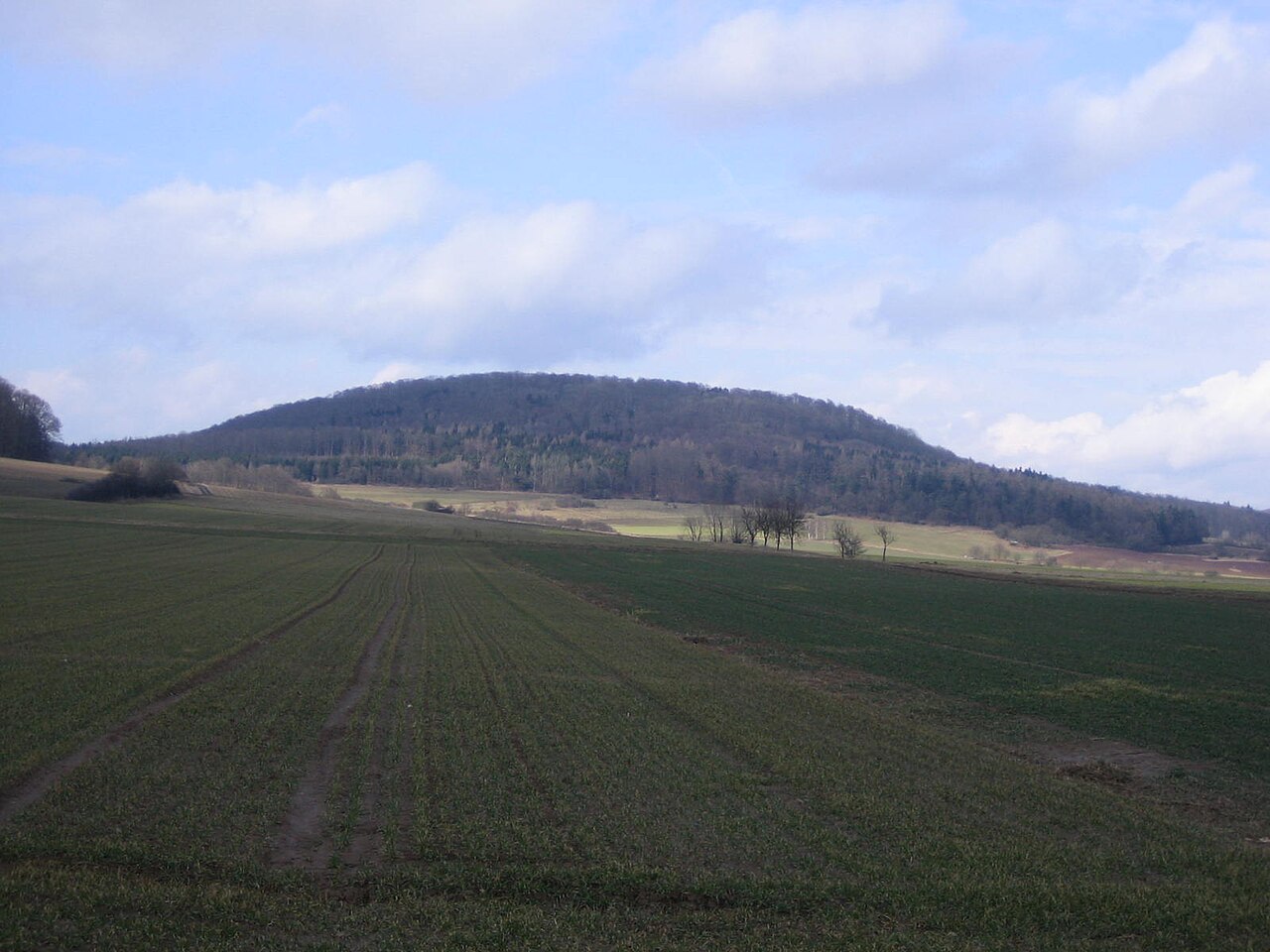
Burg Naumburg
Burg Naumburg, historically known as Nuwenburc, is a significant hill castle located on a prominent ridge overlooking the old town of Naumburg in Germany. Constructed in the early 12th century by the noble family known as the Edelfreien von Naumburg, the castle is first documented in 1182. Its strategic position and robust fortifications made it a focal point of regional power and conflict throughout the medieval period.
The castle gave its name to the settlement below, which emerged in written records from 1206 and was granted official town rights by 1260. The original owners, the Counts of Naumburg, are recorded from around 1170, highlighting the castle’s role as a noble residence and administrative center. After the death of Count Volkwin in 1265, the estate passed through various hands, including the influential Landgrave Heinrich I of Hesse and the Archbishopric of Mainz, whose competing claims led to armed conflict and the castle’s destruction in the early 1270s. It was, however, rebuilt, demonstrating its enduring importance.
Medieval ownership and conflicts
Throughout the 14th and 15th centuries, Burg Naumburg was subject to shifting ownership and political strife. By the mid-1300s, parts of the castle were pledged to the Counts of Waldeck and Thilo von Elben. In 1384, it became the property of the von Hertingshausen family, who maintained control for nearly 150 years. The castle endured a notable siege in 1400 when Friedrich von Hertinghausen was implicated in the assassination of Duke Friedrich I of Brunswick, yet the fortress withstood the attack.
Renewed hostilities culminated in a joint siege by Mainz and Hesse in 1448, resulting in the castle’s capture. Despite this, the von Hertingshausen family remained residents until 1544, when the Counts of Waldeck redeemed the castle, ending that family’s tenure. Control reverted to Mainz by 1588 and remained so until the dissolution of the Holy Roman Empire in 1802.
Destruction and decline
During the Thirty Years’ War, Burg Naumburg suffered significant damage when it was set ablaze in 1626 by Brunswick and Hessian troops. This event marked the beginning of the castle’s decline, leading to its abandonment and gradual ruination. Over subsequent centuries, much of the castle’s stone was repurposed for rebuilding the adjacent town, a common fate for many medieval fortresses that lost military relevance.
Architectural features and layout
Burg Naumburg was originally designed as a hill castle with a hillside layout adapted to the ridge’s topography. Today, it is classified as a burgstall, indicating a former castle site with limited surviving structures. Remnants include traces of defensive walls and moats that once protected the fortress.
Historical depictions and main structures
A valuable 17th-century engraving, based on a 1605 drawing by Wilhelm Dilich, provides detailed insight into the castle’s original form. This illustration reveals a double palas, a large residential building typical of medieval castles, rising at least three stories high. The palas consisted of two adjoining buildings with steeply pitched hipped roofs. A distinctive stair gable extended along two floors on one end, serving as an external staircase.
The castle featured a tall, rectangular bergfried, a defensive tower used for lookout and refuge. Facing the town were two small corner oriel towers known as Wichhäuser, projecting from the main building to enhance defense and visibility. The structure was reinforced by strong supporting walls, underscoring its military function.
Additional defensive elements
Along the longer outer side of the castle stood a separate narrow tower, possibly a stair tower, rising to at least four stories. This tower was hexagonal or octagonal in shape and topped with a pointed tower helmet, a characteristic medieval roofing style. The castle was enclosed on the town-facing side by a curtain wall or bering, which included a gatehouse controlling access. Each corner of this wall was fortified with small towers featuring gabled roofs, further strengthening the perimeter.
Below the main fortress, on a spur of the hill, stood an additional building whose exact purpose is uncertain. It may have served as a forecourt, an economic yard for castle operations, or a defensive outpost guarding the approach to the main stronghold.
Present condition and heritage significance
Today, only fragmentary wall sections and moats remain at the Burg Naumburg site. Despite these limited physical remains, the castle’s historical importance is preserved through archaeological investigations and an information panel by the Eco Pfad Archäologie Naumburg. These efforts help visitors and scholars understand the castle’s architectural layout, its role in regional medieval politics, and its transformation across centuries.
Burg Naumburg exemplifies the typical evolution of a medieval hill castle in central Germany, reflecting the complexities of noble power struggles, military architecture, and the impact of warfare on feudal strongholds. Its ruins and historical records continue to offer valuable insights into medieval castle construction, defensive strategies, and the socio-political landscape of the Holy Roman Empire.
Frequently asked questions (FAQ)
- How do I visit Burg Naumburg?
- Burg Naumburg is accessible to the public as a historic ruin. Visitors can explore the site year-round, though there are no formal facilities on-site. It is recommended to check local tourism websites for any guided tours or special events.
- What is the historical significance of Burg Naumburg?
- Burg Naumburg played a key role in regional medieval politics, serving as a noble residence and military fortress. Its history reflects the power struggles between local counts, the Archbishopric of Mainz, and other regional powers.
- When was Burg Naumburg built?
- Burg Naumburg was constructed in the early 12th century, with the first written record dating to 1182. It represents typical medieval hill castle architecture of the High Middle Ages.
- Can I see the original castle structures at Burg Naumburg?
- Only limited remains of Burg Naumburg survive today, including fragments of walls and moats. However, historical drawings and engravings provide detailed insights into its original layout and architecture.
- Why was Burg Naumburg destroyed?
- The castle was destroyed during a territorial dispute in the 1270s and later damaged significantly during the Thirty Years’ War in 1626. These conflicts, along with abandonment, led to its ruinous state.
Information
Current owner
Municipality
Loading map...
Visitor reviews
No reviews yet. Been here? Write the first review and help other travelers!
Write the first reviewVisited this castle? Share your experience
Your review helps other travelers and adds first-hand knowledge to our encyclopedia.