Burg Wildeck
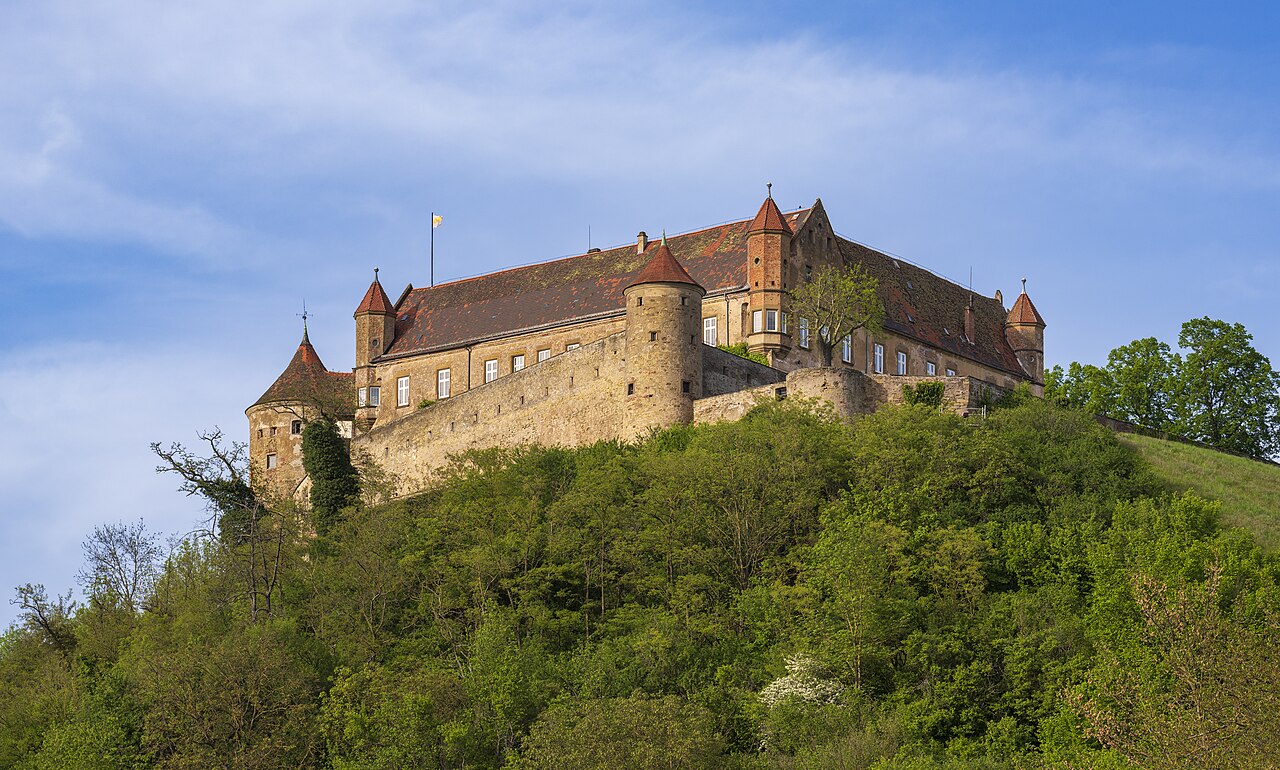
Burg Wildeck is a distinguished medieval hill castle located in the municipality of Abstatt, Germany. Constructed during the high medieval period, between approximately 1250 and 1330, the castle was originally established by the noble family von Heinriet as a secondary residence. Over time, several members of this family adopted the name von Wildeck, reflecting their close connection to the castle and its surrounding lands.
Historical development and ownership
Throughout the 14th century, the nearby settlement of Abstatt evolved from being under the control of the von Heinriet family to gaining autonomy between 1336 and 1364. The male line of the von Heinriet family ended in 1450, after which ownership of Burg Wildeck passed through marriage and inheritance to prominent figures such as Peter Harrant von Hohenberg and later Wilhelm von Neipperg. In 1492, the castle was sold to Ludwig I von Löwenstein, son of Elector Frederick I of the Palatinate, marking the beginning of the Löwenstein family's long association with the estate.
The early 16th century was a period of political transition for Burg Wildeck. The region shifted from Baden to Württemberg authority in 1504, which diminished the castle’s strategic military importance. The castle briefly came under Austrian rule during this time. In 1525, Burg Wildeck was destroyed during the widespread Peasants’ War. Reconstruction began soon after, with a dated inscription marking the rebuilding phase in 1533.
Later, during the Thirty Years’ War (1618–1648), the castle endured further turmoil but was restored to the Löwenstein family following the Peace of Westphalia. From the 16th century onward, the fertile slopes surrounding the castle were extensively cultivated for vineyards. Vineyard holdings expanded from 16 morgens in 1589 to 28 morgens by 1653, with the Muscateller grape gaining recognition as a fine variety grown on the estate.
The dissolution of sovereign lordship in 1806, prompted by the Napoleonic territorial reorganizations, ended the formal Wildeck lordship. Despite this, the castle and its vineyards remained under the private ownership of the Löwenstein-Wertheim family. In a notable event during the early 20th century, the vineyards and winery were sold in July 1932 by Karl Erbprinz zu Löwenstein-Wertheim-Rosenberg to Salman Schocken, a Jewish merchant. This sale became contested, leading to the acquisition of the property by the Württemberg government in 1933.
During World War II, Burg Wildeck and its vineyards suffered significant artillery damage. Starting in 1940, the castle was repurposed as a branch of the Weinsberg viticulture school. This institution played a key role in grape breeding, leading to the development of notable varieties such as Samtrot and Dornfelder. Post-war restoration and modernization efforts continued throughout the latter half of the 20th century, including the reopening of educational rooms in the castle’s main tower by 1995. By the mid-1990s, the estate encompassed 21.1 hectares, with 8.6 hectares actively planted with grape varieties including Riesling, Samtrot, Müller-Thurgau, Pinot Noir, Pinot Blanc, and Pinot Gris.
Architectural features and site layout
Burg Wildeck is classified as a spur castle, constructed primarily from stone and situated on a hill spur approximately 353 meters above sea level. Its elevated position affords commanding views over the village of Abstatt and the surrounding Löwensteiner mountain range. Nearby settlements visible from the castle include Beilstein, Ilsfeld, and Untergruppenbach. The ruins of the nearby Helfenberg castle, located about one kilometer away, add to the historical landscape.
The castle complex features a substantial main tower, or keep, notable for its distinctive oriel window. This tower sustained significant damage from artillery during the Second World War but was later restored. Its upper floors were converted into educational spaces by 1995 to support the viticulture school's activities. The castle has undergone multiple phases of reconstruction, notably after its destruction in the Peasants’ War and during 20th-century renovations.
Several ancillary buildings dating from the 19th and early 20th centuries once formed part of the castle’s working estate. These included a well house, press annex, press house, and a laborers’ house. These structures were eventually removed and replaced by a modern machinery hall to support contemporary vineyard operations. Mid-20th century modifications to the castle grounds involved road construction and adjustments to water features, such as the filling and creation of ponds, which resulted in the leveling of certain vineyard terraces around 1954. The state acquired these newly formed vineyard parcels in 1982.
While specific decorative elements or inscriptions beyond the 1533 construction marker are not recorded, the castle’s main tower and surrounding stone structures exemplify enduring medieval building traditions. Burg Wildeck remains a prominent historic landmark overlooking the Abstatt landscape, with architectural features that illustrate its layered past of conflict, reconstruction, and adaptation.
Viticulture and educational legacy
The fertile slopes around Burg Wildeck have been cultivated for vineyards since the 16th century, playing a significant role in the region's agricultural history. The expansion of vineyard holdings and the cultivation of varieties such as Muscateller highlight the estate’s longstanding connection to viticulture.
The establishment of the Weinsberg viticulture school branch at the castle in 1940 marked a new chapter in its history. The school contributed to the advancement of grape breeding, notably developing varieties like Samtrot and Dornfelder, which remain important in German wine production. The castle’s adaptation into an educational facility reflects its ongoing cultural and agricultural significance.
Frequently asked questions (FAQ)
- When was Burg Wildeck originally constructed?
- Burg Wildeck was constructed during the high medieval period, approximately between 1250 and 1330, by the noble family von Heinriet.
- What is the architectural style of Burg Wildeck?
- Burg Wildeck is primarily a medieval spur castle featuring stone construction and a prominent main tower with an oriel window, reflecting typical medieval building traditions.
- Can visitors tour Burg Wildeck?
- Burg Wildeck is privately owned and does not have regular public visiting hours. Visitors should check locally for any special events or open days.
- What role did Burg Wildeck play in viticulture?
- Since the 16th century, the slopes around Burg Wildeck have been cultivated for vineyards. The castle later hosted a viticulture school branch that contributed to the development of important grape varieties such as Samtrot and Dornfelder.
- How was Burg Wildeck affected during the Peasants' War and World War II?
- Burg Wildeck was destroyed during the Peasants' War in 1525 and suffered artillery damage during World War II. It was subsequently rebuilt and restored, with the main tower converted into educational spaces by 1995.
Information
Current owner
Private owner
Loading map...
Visitor reviews
No reviews yet. Been here? Write the first review and help other travelers!
Write the first reviewVisited this castle? Share your experience
Your review helps other travelers and adds first-hand knowledge to our encyclopedia.