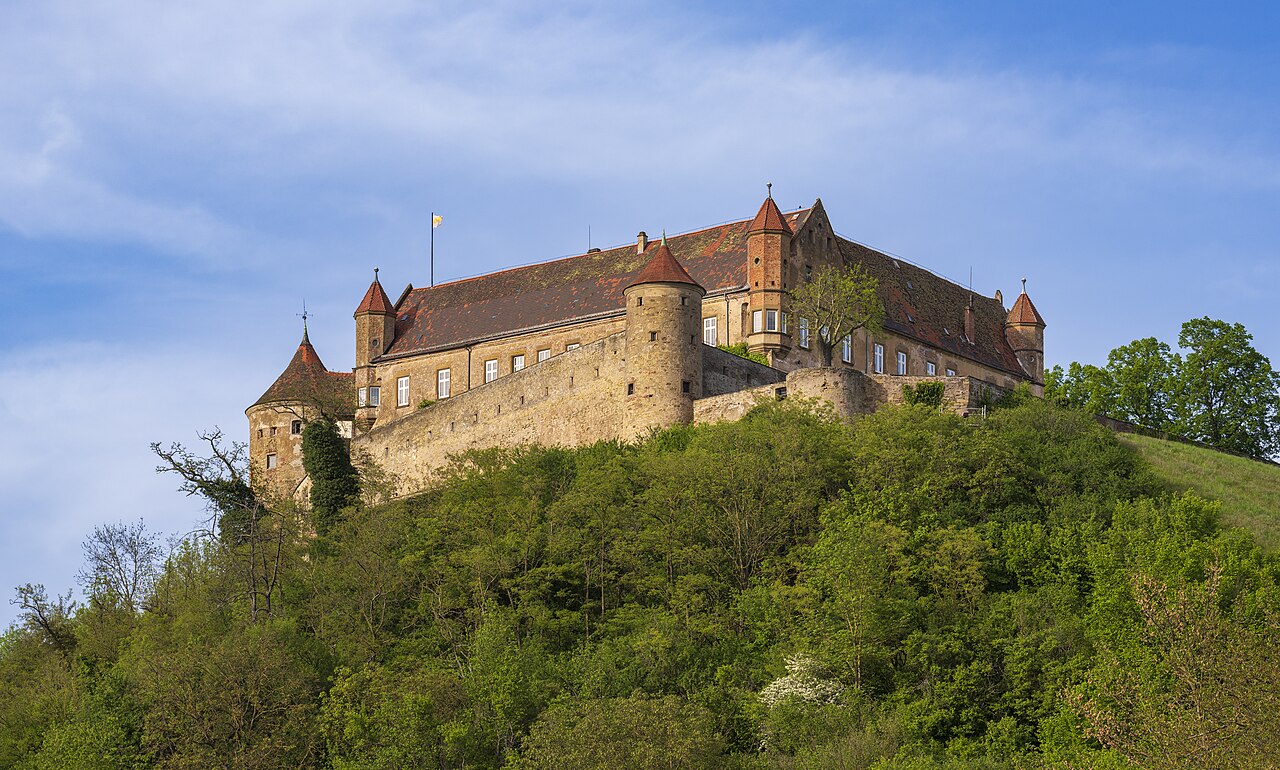
Weinsberg Castle Ruins
Weinsberg castle, located on a mountain overlooking the historic trade route between Heilbronn and Schwäbisch Hall in Germany, was established around the year 1000. This strategically positioned hill castle played a significant role in the medieval power struggles of the region. Its elevated location provided commanding views of the surrounding landscape, crucial for controlling the trade route and defending against attacks.
The founding and early history of Weinsberg castle
The castle was constructed during the high medieval period, a time marked by the consolidation of territorial powers and frequent conflicts among noble families. Its initial purpose was to secure the trade route and serve as a fortified residence for the local lord. The castle's early architecture likely featured typical Romanesque and early medieval defensive elements, including thick stone walls and a central keep, though much of the original structure is now lost to time.
The siege of 1140 and the legend of the loyal women
One of the most notable events in the castle's history occurred in 1140 when it was besieged by the forces of King Konrad III during the conflict between the Staufers and the Welfs. The castle's defenders were loyal to Welf VI, but after his army was defeated in battle, the castle was forced to surrender on December 21, 1140.
According to the Chronica regia Coloniensis, the king granted safe passage to the women of the castle. They were allowed to leave carrying whatever they could on their backs. In an extraordinary act of courage and loyalty, these women carried their men down the mountain on their backs, saving their lives. This event earned the women the name "treue Weiber" or "loyal women," and the castle became known as Weibertreu ("woman's loyalty"). This story remains a defining aspect of the castle's cultural heritage.
Destruction during the German Peasants' War
Weinsberg castle suffered significant damage during the German Peasants' War. On April 16, 1525 (Easter Sunday), peasants attacked and destroyed the castle, which had already been weakened by an earlier assault in 1504. The peasants' anger was fueled by the harsh treatment they had endured from the local nobility, including the castle's commander. After capturing the castle, they executed this nobleman, marking a violent episode in the castle's decline.
Architectural features and current condition
Today, Weinsberg castle remains as ruins, offering visitors a glimpse into its medieval past. The remnants include portions of the curtain walls, foundations of towers, and other defensive structures typical of a hill castle from the high medieval period. The site reflects the architectural evolution from early Romanesque fortifications to later medieval adaptations. Its elevated position and surviving masonry provide insights into medieval military architecture and the strategic importance of controlling trade routes.
Visiting Weinsberg castle ruins
The ruins of Weinsberg castle are accessible to the public and serve as a historical landmark commemorating the legendary loyalty of its women defenders. Visitors can explore the site, enjoy panoramic views of the surrounding landscape, and learn about the castle's role in regional history. The castle's story is often highlighted in local cultural events and educational programs, emphasizing its significance in German medieval history.
Legacy and cultural significance
The story of the "loyal women" of Weinsberg has been passed down through generations, symbolizing courage and fidelity in the face of adversity. This legend has contributed to the castle's identity and its nickname, Weibertreu. The castle ruins stand not only as a monument to medieval architecture but also as a testament to the human stories intertwined with its stones.
Nearby attractions and historical context
Weinsberg is situated in a region rich with medieval history and architecture. Nearby towns like Heilbronn and Schwäbisch Hall feature additional historical sites, including churches, fortifications, and museums that contextualize the era in which Weinsberg castle thrived. The castle ruins complement these sites, offering a tangible connection to the high medieval period and the complex political landscape of southern Germany.
Frequently asked questions (FAQ)
- When was Weinsberg castle built?
- Weinsberg castle was established around the year 1000 during the high medieval period.
- What is the legend of the loyal women of Weinsberg castle?
- During the siege of 1140, the women of the castle were allowed to leave carrying whatever they could on their backs. They famously carried their men down the mountain, saving their lives and earning the castle the nickname Weibertreu.
- What happened to Weinsberg castle during the German Peasants' War?
- In 1525, peasants attacked and destroyed the castle, which had already been damaged in 1504. They executed the nobleman in command due to his harsh treatment of the peasants.
- Is Weinsberg castle open to visitors?
- Yes, the ruins of Weinsberg castle are accessible to the public and offer panoramic views along with historical insights.
- Where is Weinsberg castle located?
- Weinsberg castle is located in the town of Weinsberg in the Baden-Württemberg region of Germany, on a mountain overlooking a historic trade route.
Information
Loading map...
Visitor reviews
No reviews yet. Been here? Write the first review and help other travelers!
Write the first reviewVisited this castle? Share your experience
Your review helps other travelers and adds first-hand knowledge to our encyclopedia.