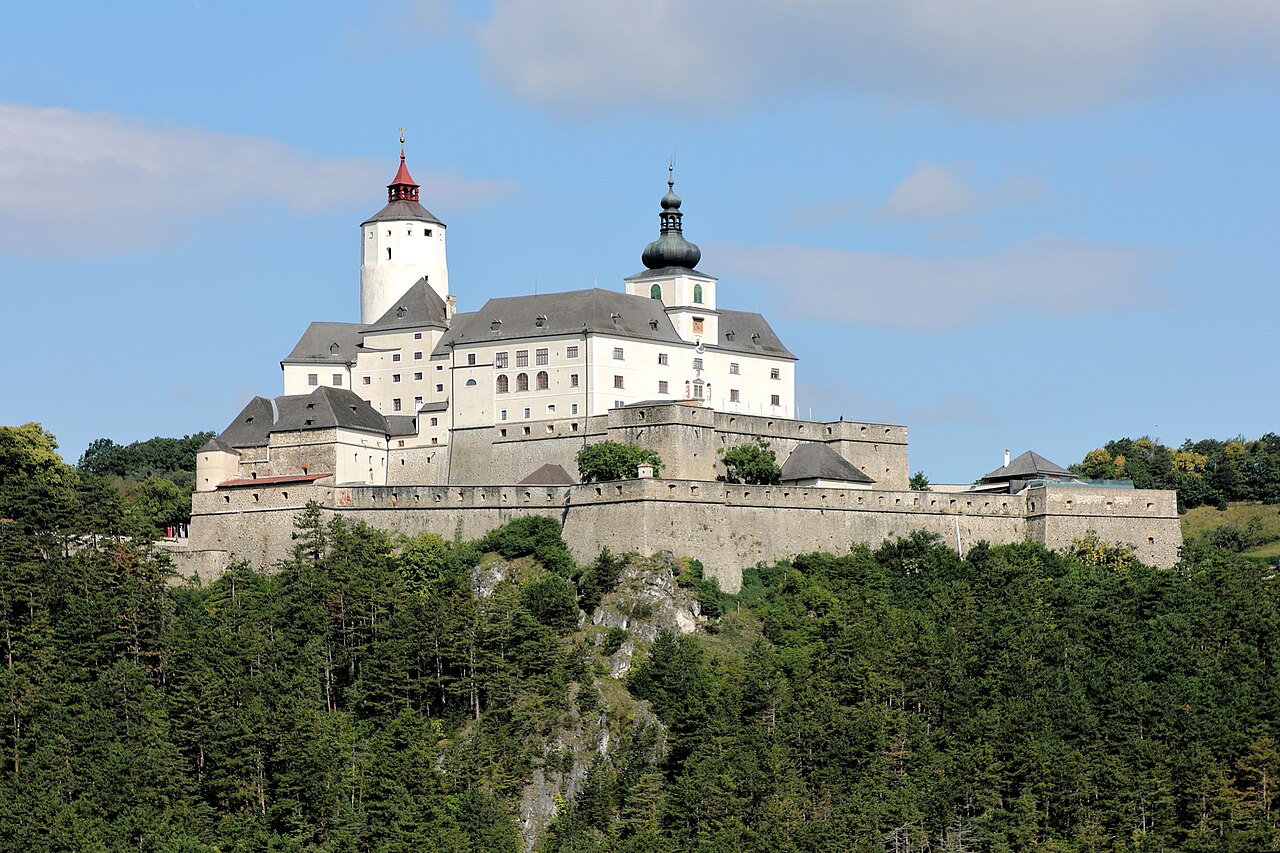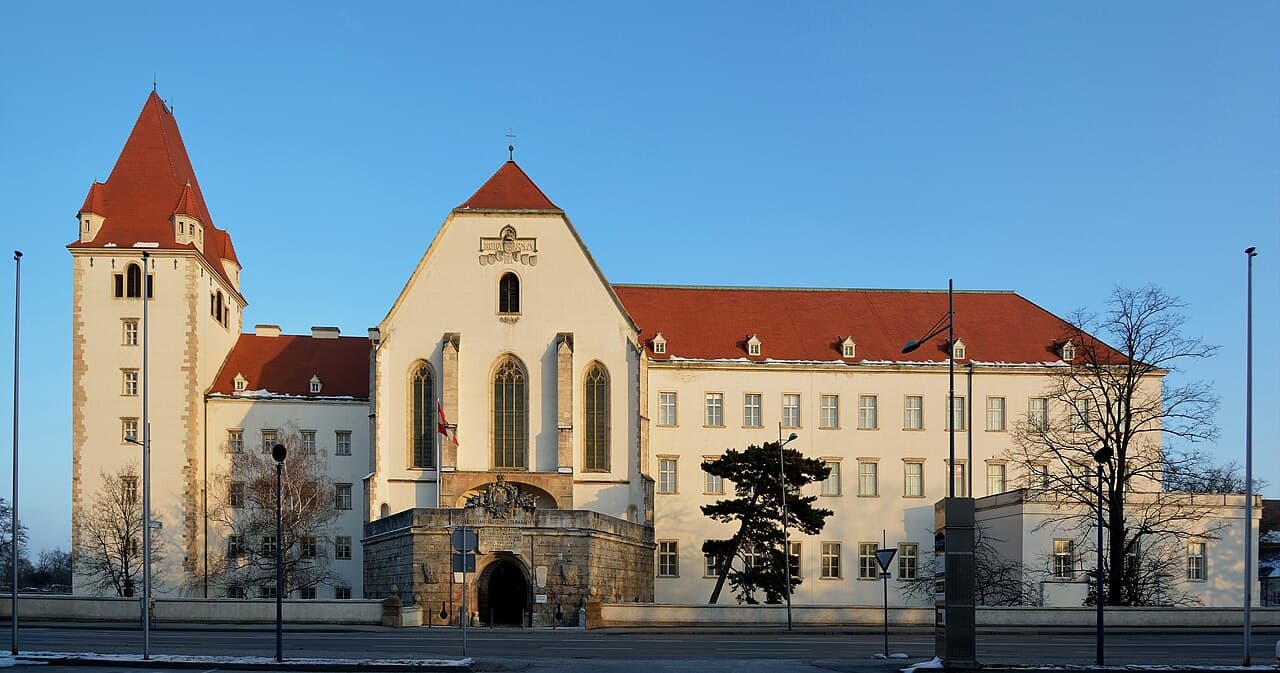
Burg Wiener Neustadt
Burg Wiener Neustadt stands as a monumental example of high medieval castle architecture in Austria, deeply intertwined with the country's medieval and military history. Its origins date back to the late 12th century, with the first castle reportedly constructed in 1193-94 alongside the city walls of Wiener Neustadt. This initial fortification was financed by the ransom of the English king Richard the Lionheart, a remarkable historical detail linking international events to local development. Although this early castle is believed to have been located at the north-eastern corner of the city, no archaeological remains have been found to confirm its exact position.
As the needs of the city and its rulers evolved, the original castle became insufficient, prompting the construction of a new, more formidable fortress at the beginning of the 13th century. This new castle was commissioned by Leopold VI the Glorious, a significant figure in Austrian history known for his contributions to regional fortifications and urban development. Due to the marshy terrain of the site, the castle's foundations were ingeniously built on wooden piles, demonstrating advanced medieval engineering techniques adapted to challenging landscapes.
Architectural evolution and fortifications
During the reign of Frederick II the Warlike, the castle underwent substantial enhancements to its defensive capabilities. It was surrounded by a moat, outer walls, and multiple towers, transforming it into a robust fortress capable of withstanding sieges and military threats. The addition of these fortifications reflects the turbulent political climate of the high medieval period and the strategic importance of Wiener Neustadt as a border town and military hub.
Structural features
- The moat provided a water barrier that complicated enemy approaches.
- Outer walls were thick and high, designed to resist battering and scaling.
- Towers served as lookout points and defensive positions for archers and artillery.
Theresian Military Academy and later adaptations
In 1751, the castle's role shifted from purely defensive to educational when Maria Theresa of Austria founded the Theresian Military Academy within its walls. This prestigious institution was established to train officers for the Habsburg Monarchy's army, marking a significant chapter in the castle's history. The transformation required extensive architectural modifications to accommodate classrooms, dormitories, and administrative offices.
The renovations were overseen by the notable Viennese architect Matthias Gerl, who implemented numerous changes that blended the castle's medieval character with the requirements of an 18th-century military academy. These adaptations included the construction of new wings, internal restructuring, and modernization of facilities, ensuring the castle remained functional and relevant.
Landscape and surrounding environment
The castle's location was originally in a swampy area between the town of Wiener Neustadt and the Leitha river. Under the rule of Frederick III, this terrain was drained, improving the site's stability and usability. The extensive area, covering approximately 106 hectares, was later converted into a public park, enhancing the castle's accessibility and aesthetic appeal.
This park has been open to the public since the time of Maria Theresa, providing a green space that complements the historical significance of the castle. The integration of natural and architectural elements contributes to the cultural heritage value of the site.
Current status and ownership
Burg Wiener Neustadt has always remained the property of the sovereign, reflecting its importance as a state asset. Today, it is owned by the Republic of Austria, ensuring its preservation and management under national heritage policies. The castle is well preserved, with many original and restored features accessible to visitors interested in medieval architecture and military history.
The castle's enduring presence and adaptive reuse over centuries highlight its significance as a symbol of Austrian history, military tradition, and architectural ingenuity. It continues to attract historians, architects, and tourists alike, offering insights into the evolution of castle construction and the strategic role of fortifications in Central Europe.
Frequently asked questions (FAQ)
- What is the historical significance of Burg Wiener Neustadt?
- Burg Wiener Neustadt is a key historical landmark in Austria, originally built in the 12th century. It served as a royal residence and military stronghold, playing a vital role in the region's defense and governance throughout the Middle Ages.
- When was Burg Wiener Neustadt constructed?
- Construction of Burg Wiener Neustadt began in 1192 under the rule of Duke Leopold VI of Austria. Over the centuries, it has undergone various renovations and expansions, reflecting the architectural styles of different eras.
- What are the opening hours for Burg Wiener Neustadt?
- Burg Wiener Neustadt is typically open to visitors from 10 AM to 5 PM, Tuesday through Sunday. It is advisable to check the official website for any seasonal changes or special closures.
- Can I take a guided tour of Burg Wiener Neustadt?
- Yes, guided tours are available and highly recommended to fully appreciate the castle's rich history and architecture. Tours are often led by knowledgeable guides who provide insights into the castle's past and its significance in Austrian history.
- Is it possible to access Burg Wiener Neustadt with public transportation?
- Yes, Burg Wiener Neustadt is accessible via public transportation, including trains and buses that connect to Wiener Neustadt. Visitors can easily reach the castle from the city center, making it convenient for day trips.
- What is the best time to visit Burg Wiener Neustadt?
- The best time to visit Burg Wiener Neustadt is during the spring and early autumn when the weather is mild and pleasant. These seasons also offer fewer crowds, allowing for a more enjoyable experience while exploring the castle.
- Are there any nearby attractions to visit while at Burg Wiener Neustadt?
- Yes, nearby attractions include the Wiener Neustadt Cathedral and the historic town center, both of which showcase beautiful architecture and rich history. Additionally, the scenic landscapes around the castle provide great opportunities for hiking and outdoor activities.
- What are the ticket prices for entering Burg Wiener Neustadt?
- Ticket prices for Burg Wiener Neustadt are generally affordable, with discounts available for students, seniors, and groups. It is recommended to check the official website for the most current pricing and any special offers that may be available.
- How do I prepare for my visit to Burg Wiener Neustadt?
- To prepare for your visit, consider wearing comfortable shoes as there may be uneven terrain and stairs. It’s also wise to check the weather forecast and bring a light jacket if you plan to explore the outdoor areas around the castle.
Photo gallery

Information
Website
Visit websiteSources & official resources
Verify the information above using these authoritative references.
Loading map...
Visitor reviews
No reviews yet. Been here? Write the first review and help other travelers!
Write the first reviewVisited this castle? Share your experience
Your review helps other travelers and adds first-hand knowledge to our encyclopedia.