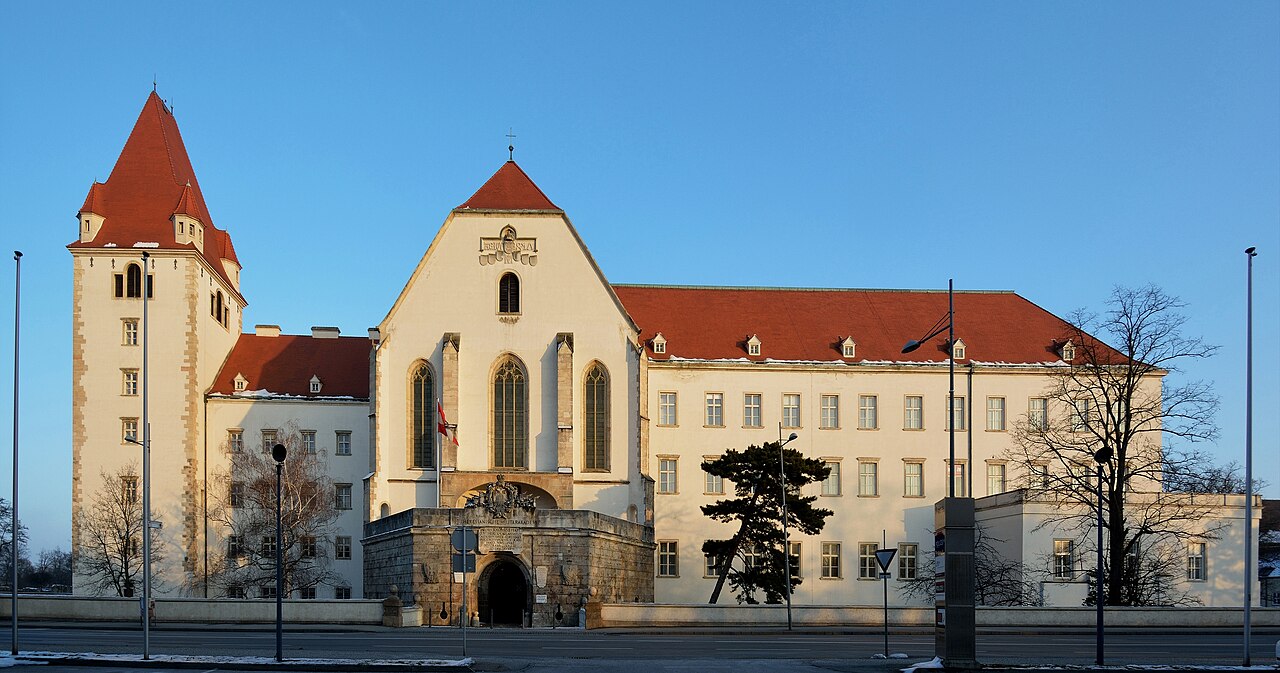
Schloss Ebenfurth stands as a remarkable example of a medieval hill castle in the town of Ebenfurth, Austria. Its origins trace back to the 12th century, making it one of the region's oldest fortifications. Initially recorded around 1160 as a fief under the Diocese of Passau, the castle began as a simple defensive tower constructed by early Austrian nobility. This early structure formed the nucleus of what would evolve into a significant fortified complex over the centuries.
Throughout its history, Schloss Ebenfurth has witnessed numerous architectural transformations and played a role in important regional conflicts. The castle's strategic location on a hill provided natural defense advantages, complemented by artificial fortifications such as a protective moat which characterized its medieval water fortress design. Over time, the castle expanded from a solitary tower into a nearly square fortified complex, reflecting the shifting needs and tastes of its successive owners.
Medieval origins and noble ownership
By the mid-13th century, the castle had passed into the hands of prominent noble families, including the Feldsberg (Seefelder) family around 1250 and later the Pottendorf family circa 1270. After suffering damage during local conflicts, the castle was rebuilt and expanded under the authority of Duke Albert I of Austria towards the end of the 13th century. This reconstruction introduced Romanesque architectural elements and reinforced the castle’s defenses with a moat, enhancing its ability to withstand sieges.
Conflicts and military significance
In the late 15th century, Schloss Ebenfurth became a focal point during the power struggles between Matthias Corvinus of Hungary and Frederick III of Habsburg. The castle was seized by Corvinus’s forces but was later reclaimed by Austrian imperial troops after Matthias’s death. This period underscored the castle’s strategic importance in the border conflicts of the time.
Renaissance and baroque transformations
During the early 1600s, the castle underwent a significant Renaissance makeover, which updated its appearance and internal layout to align with contemporary architectural trends. This phase introduced more refined residential features while maintaining its defensive capabilities.
The 18th century brought further transformation with a comprehensive Baroque remodeling. This renovation altered the castle’s external appearance, adding ornamental details and enhancing its grandeur while preserving its historic character. The Baroque influence is evident in the castle’s façade, interior decoration, and the overall aesthetic harmony of the complex.
Artistic heritage
One of the castle’s most notable artistic features is the series of 18th-century frescoes painted by Franz Anton Maulbertsch, a renowned Baroque artist. These frescoes adorn the interior walls and provide valuable insight into the cultural and artistic priorities of the period, enriching the castle’s historical narrative.
Damage, decline, and modern restoration
Schloss Ebenfurth suffered serious damage during the Ottoman siege of 1529, a pivotal event that left lasting marks on the fortress. Subsequent centuries saw further deterioration due to conflicts, neglect, and vandalism, particularly throughout the 20th century. During World War II, the castle was repurposed as a shelter for displaced persons, which, combined with war-related damage, contributed to its decline.
Restoration efforts began in earnest in the 21st century after the castle was acquired in 2010 by Serbian singer Dragana Mirković and her partner. These efforts focused on stabilizing the structure, repairing the roof, and conserving both the exterior and interior elements. By 2018, a comprehensive renovation had been completed, restoring much of the castle’s former grandeur and ensuring its preservation for future generations.
Archaeological discoveries and cultural significance
During restoration, an extraordinary archaeological find was made: twenty-eight Jewish gravestones and fragments dating back to the 17th century were uncovered within the castle’s defensive walls. This discovery provides a unique window into the history of Jewish communities in Lower Austria and Burgenland, highlighting the castle’s connection to the region’s diverse cultural heritage.
The presence of these gravestones suggests that the castle’s grounds were historically linked to nearby Jewish burial sites, underscoring the complex social history intertwined with the fortress. Their preservation enriches the narrative of Schloss Ebenfurth, extending its significance beyond military and architectural history to encompass important aspects of religious and communal life.
Architectural features and layout
Schloss Ebenfurth is characterized by its large, nearly square layout, typical of a medieval water fortress. The moat surrounding the castle was a crucial defensive feature, designed to hinder enemy access and protect the stronghold from siege warfare. The castle’s silhouette is dominated by two prominent towers flanking the main façade, which served both defensive and symbolic roles as guardians of the entrance.
The construction materials and techniques visible in these towers reflect the different periods of building and renovation, showcasing a blend of medieval and Baroque craftsmanship. Inside, the castle retains significant historical elements, including the Maulbertsch frescoes, which enhance its cultural and artistic value.
Today, Schloss Ebenfurth stands as a testament to centuries of architectural evolution, noble lineage, and historical resilience. Its preservation and ongoing restoration efforts continue to reveal new facets of its rich past, making it a vital cultural landmark in Austria.
Frequently asked questions (FAQ)
- How do I get to Schloss Ebenfurth?
- Schloss Ebenfurth is conveniently located near the town of Ebenfurth in Austria. You can reach it by car via the A2 motorway or take a train to the nearby station and enjoy a short walk to the castle. Public transport options are available, making it accessible for visitors.
- What is the historical significance of Schloss Ebenfurth?
- Schloss Ebenfurth dates back to the 13th century and has a rich history that reflects the architectural evolution of the region. Originally built as a fortress, it has served various purposes over the centuries, including a noble residence. The castle is a noteworthy example of Gothic and Renaissance architecture in Austria.
- When was Schloss Ebenfurth built?
- Construction of Schloss Ebenfurth began in the late 13th century, with significant renovations occurring during the Renaissance period. The castle has undergone various modifications, showcasing different architectural styles over the centuries. Today, it stands as a testament to the historical changes in the region.
- Can I visit the interior of Schloss Ebenfurth?
- Yes, the interior of Schloss Ebenfurth is open for public tours during the regular visiting season. Guided tours provide insights into the castle's history, architecture, and the lives of its former inhabitants. Be sure to check the schedule for specific tour times and availability.
- Why is Schloss Ebenfurth considered an architectural gem?
- Schloss Ebenfurth combines elements of Gothic and Renaissance architecture, showcasing intricate details and impressive design. Its grand facades, beautiful courtyards, and well-preserved interiors reflect the artistic trends of its time. The castle is a fascinating study for architecture enthusiasts and history buffs alike.
- Is it possible to host events at Schloss Ebenfurth?
- Yes, Schloss Ebenfurth offers facilities for hosting various events, including weddings, conferences, and private gatherings. The picturesque setting and historical ambiance make it a popular choice for special occasions. For more information on booking and available services, you can contact the castle management directly.
- What are the opening hours for Schloss Ebenfurth?
- Schloss Ebenfurth is typically open to visitors from April to October, with specific opening hours varying by day. It is advisable to check the official website or contact the castle for the most current visiting hours. During peak tourist season, extended hours may be available for guests.
- What are the ticket prices for visiting Schloss Ebenfurth?
- Ticket prices for Schloss Ebenfurth vary depending on age and the type of tour selected. Generally, reduced rates are available for children, students, and seniors. To ensure you have the most accurate pricing, it's best to visit the official website or inquire upon arrival.
- What nearby attractions should I visit while at Schloss Ebenfurth?
- While visiting Schloss Ebenfurth, you can explore other local attractions such as the beautiful parks and historical sites in the surrounding area. Nearby towns offer charming cafes, shops, and additional castles worth visiting. Make a day of it by enjoying the rich culture and natural beauty of the region.
Information
Website
Visit websiteSources & official resources
Verify the information above using these authoritative references.
Loading map...
Visitor reviews
No reviews yet. Been here? Write the first review and help other travelers!
Write the first reviewVisited this castle? Share your experience
Your review helps other travelers and adds first-hand knowledge to our encyclopedia.