Starhemberg Castle
Starhemberg Castle stands as a significant high medieval fortress located in Dreistetten, Lower Austria. Constructed between 1140 and 1145 by Ottokar III, Margrave of Styria, the castle originally marked the frontier along the Piesting river, which served as the border between the duchies of Styria and the March of Austria. This strategic position shaped the castle's role and development throughout the centuries.
The earliest phase of Starhemberg was a modest stronghold, but its importance grew significantly after the acquisition of Styria by the Babenbergs in 1192. Under the rule of the Babenbergs, the castle was expanded and fortified, reflecting its rising military and administrative significance. The last Babenberger duke, Frederick II the Warlike, notably enhanced the castle's defenses in the 13th century, establishing Starhemberg as one of the most important fortresses in Lower Austria.
Architectural features and medieval fortifications
The castle's design incorporated typical high medieval defensive elements, including thick stone walls, a great hall for gatherings and administration, and a chapel serving the spiritual needs of the inhabitants. The presence of a tower above the chapel provided a vantage point for surveillance and defense. The castle's fortifications were robust enough to safeguard critical assets; during times of conflict, the archives and family treasures were secured within its walls and guarded by the Teutonic Knights, a military order known for their role in protecting Christian territories.
Historical significance and ownership transitions
Following the Battle on the Marchfeld in 1278, a decisive conflict that shifted power in the region, Starhemberg Castle passed into the hands of the Habsburg dynasty. The castle's strategic value continued through the late medieval period, evidenced by its capture in 1482 by Matthias Corvinus, king of Hungary, during his campaigns against the Habsburgs.
In the 17th century, Starhemberg played a protective role for the local population during the Turkish invasions, notably in 1683 when it provided refuge amid the Ottoman siege threats. This period underscored the castle's enduring military and communal importance despite evolving warfare technologies and political landscapes.
Decline and ruin through the centuries
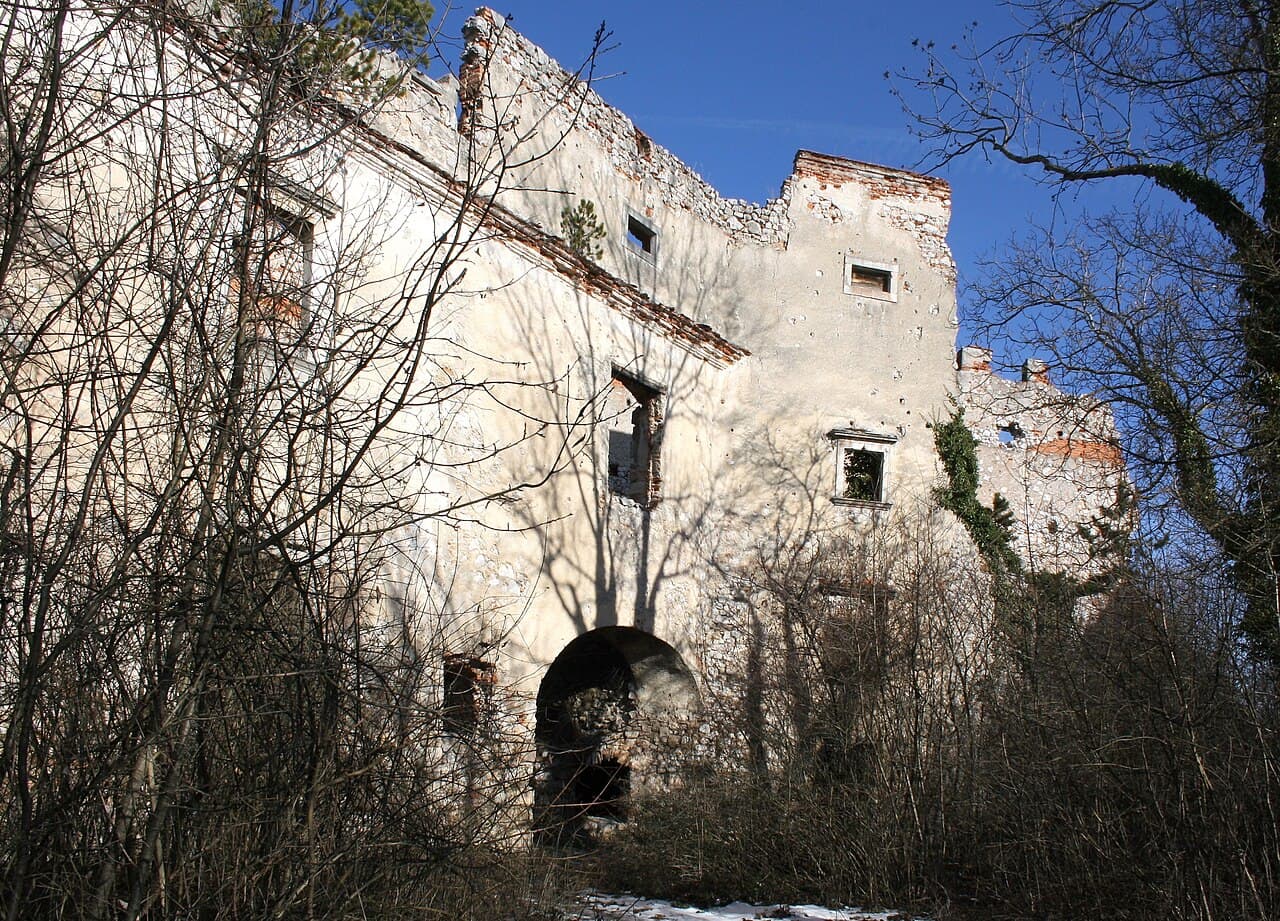
The castle's decline began around 1800 when the counts of Heusenstamm, seeking to avoid a newly imposed roof tax, removed the roof covering, doors, and window frames. This act accelerated the deterioration of the structure. By approximately 1870, a significant portion of the great hall collapsed, marking a visible phase of ruin.
Throughout the 19th and early 20th centuries, the ruins were further degraded as local populations extracted stone and other materials for construction. The castle's military relevance briefly resurfaced in 1945 when a Waffen-SS unit used the remaining tower as an observation post during the final stages of World War II. This military use attracted Russian artillery fire, which inflicted heavy damage on the already weakened walls.
Modern preservation efforts and current status
In the latter half of the 20th century, a local group known as the Friends of the Castle Starhemberg initiated efforts to stabilize and restore the ruins. Despite these attempts, the castle remains in a state of ruin and has been closed to the public since 2007 due to safety concerns.
Today, Starhemberg Castle is recognized as an important archaeological site that offers insights into the high medieval fortifications and the shifting political landscape of Lower Austria. Its remains, situated at an elevation of approximately 520 metres above sea level, continue to attract interest from historians, archaeologists, and visitors intrigued by medieval military architecture and regional history.
The castle's role in regional history and heritage
Starhemberg's location on the border between Styria and Austria made it a key military and administrative center in the 12th and 13th centuries. Its evolution reflects broader historical trends, including the rise and fall of noble families like the Babenbergs, the expansion of the Habsburg empire, and the conflicts with neighboring powers such as Hungary and the Ottoman Empire.
The castle's connection with the Teutonic Knights highlights the intersection of military, religious, and political forces during the medieval period. The use of Starhemberg to safeguard treasures and archives underscores its role beyond mere defense, serving as a repository of power and heritage.
Architectural remnants and archaeological importance
Though much of the original structure has succumbed to time and human activity, surviving elements such as the chapel tower, parts of the curtain walls, and foundations provide valuable information about medieval castle construction techniques. Archaeological studies continue to reveal details about the castle's layout, defensive mechanisms, and daily life within its walls.
Visitor information and accessibility
Currently, Starhemberg Castle is closed to visitors due to safety concerns stemming from its ruinous condition. However, the site remains a point of interest for those studying medieval fortifications and Austrian history. The surrounding region of Dreistetten offers scenic landscapes and other historical sites, making it a worthwhile destination for cultural tourism.
Frequently asked questions (FAQ)
- What is the historical significance of Starhemberg Castle?
- Starhemberg Castle, located in Dreistetten, Austria, dates back to the 12th century and is known for its rich history and strategic importance. It played a vital role in the defense of the region and has witnessed various historical events, including battles and sieges throughout the centuries.
- When was Starhemberg Castle built?
- The construction of Starhemberg Castle began in the early 12th century, making it one of the oldest fortifications in the area. Over the years, it has undergone several renovations and expansions, reflecting different architectural styles and historical periods.
- What are the opening hours for Starhemberg Castle?
- Starhemberg Castle is generally open to visitors from April to October, with specific hours varying based on the season. It is advisable to check the official website or contact the castle directly for the most up-to-date information regarding opening times.
- Can I take guided tours at Starhemberg Castle?
- Yes, guided tours are available at Starhemberg Castle, providing visitors with insights into its history, architecture, and the notable figures associated with it. These tours are typically offered in multiple languages, so it's best to inquire upon arrival for language options.
- Is it possible to visit Starhemberg Castle year-round?
- While the castle is primarily open from April to October, special arrangements for visits outside this period may be possible. It is recommended to contact the castle administration in advance to inquire about off-season visits or private tours.
- What is the best time to visit Starhemberg Castle?
- The best time to visit Starhemberg Castle is during the spring and early autumn months when the weather is mild, and the gardens are in full bloom. This allows for a more pleasant experience while exploring the castle and its surroundings.
- Are there nearby attractions to visit after touring Starhemberg Castle?
- Yes, after visiting Starhemberg Castle, you can explore the beautiful countryside of Lower Austria, including quaint villages and scenic hiking trails. Additionally, nearby attractions include other historic sites and natural parks that offer a variety of recreational activities.
- What are the ticket prices for visiting Starhemberg Castle?
- Ticket prices for Starhemberg Castle vary depending on age and tour type, with discounts often available for children, students, and seniors. It's advisable to check the official website for current pricing and any special offers that may be available during your visit.
- How do I get to Starhemberg Castle?
- Starhemberg Castle is accessible by car and is located just a short drive from major cities in Austria. Public transportation options are available, including trains and buses, which can take you close to the castle, followed by a short walk to the entrance.
Photo gallery

Information
Loading map...
Visitor reviews
No reviews yet. Been here? Write the first review and help other travelers!
Write the first reviewVisited this castle? Share your experience
Your review helps other travelers and adds first-hand knowledge to our encyclopedia.