Burg Wernerseck
Burg Wernerseck, also known as the Kelterhausburg, is a late medieval hill castle located in the municipality of Ochtendung within the county of Mayen-Koblenz in the German state of Rhineland-Palatinate. The castle's name translates to "Werner's corner," a direct reference to its founder and original lord, Archbishop Werner of Falkenstein, who ruled from 1388 to 1418. Constructed in the 15th century, Burg Wernerseck was strategically positioned on elevated terrain, typical of hill castles built during this period for defensive advantages.
Historical context and foundation
The castle was established during the late medieval period, a time marked by territorial conflicts and the consolidation of ecclesiastical power in the Rhineland region. Archbishop Werner of Falkenstein, a prominent figure in the Electorate of Trier, commissioned the castle to secure his influence and protect important trade routes and ecclesiastical lands. The construction of Burg Wernerseck reflects the political and military priorities of the era, balancing fortification needs with administrative functions.
Architectural features and layout
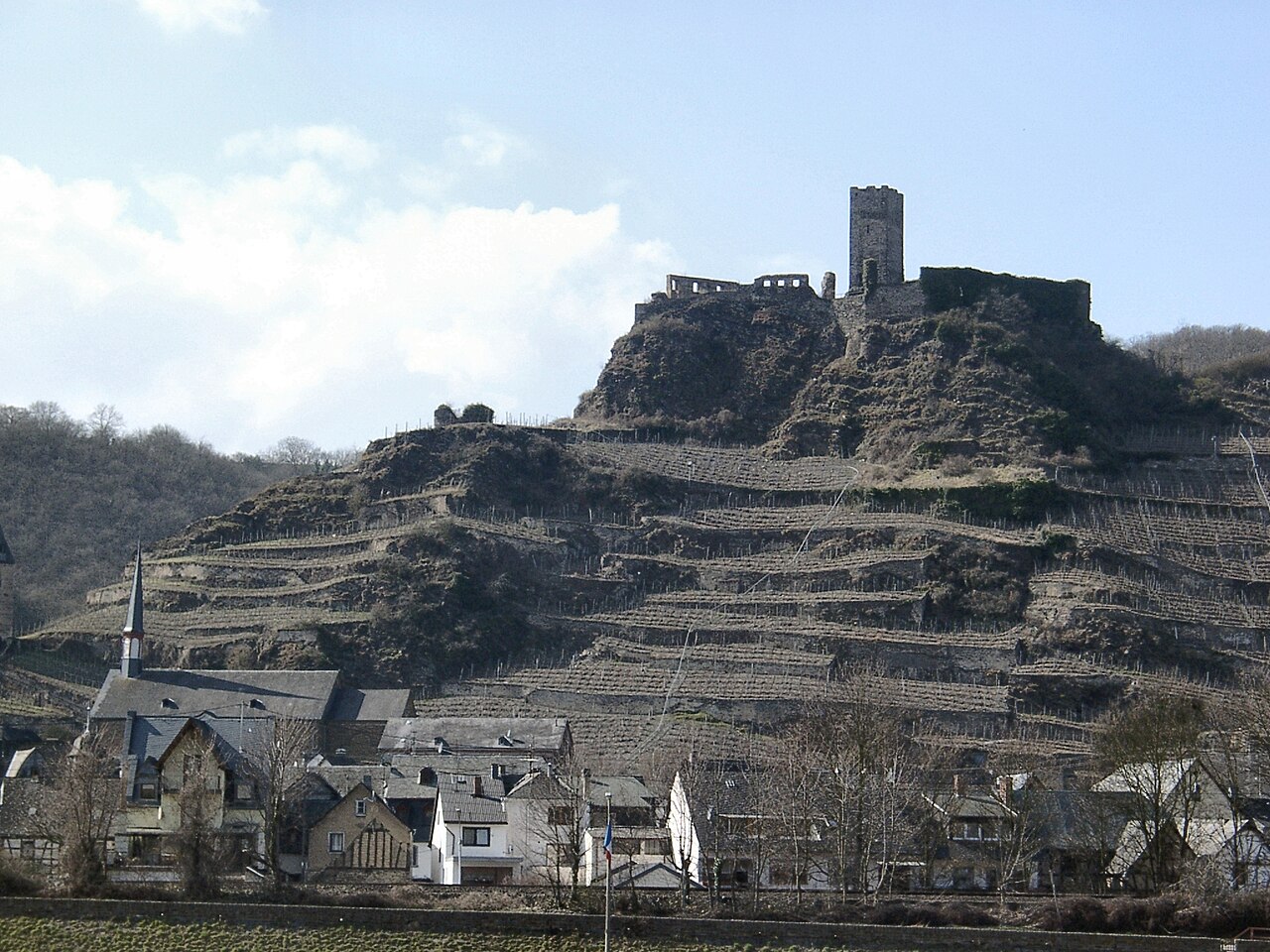
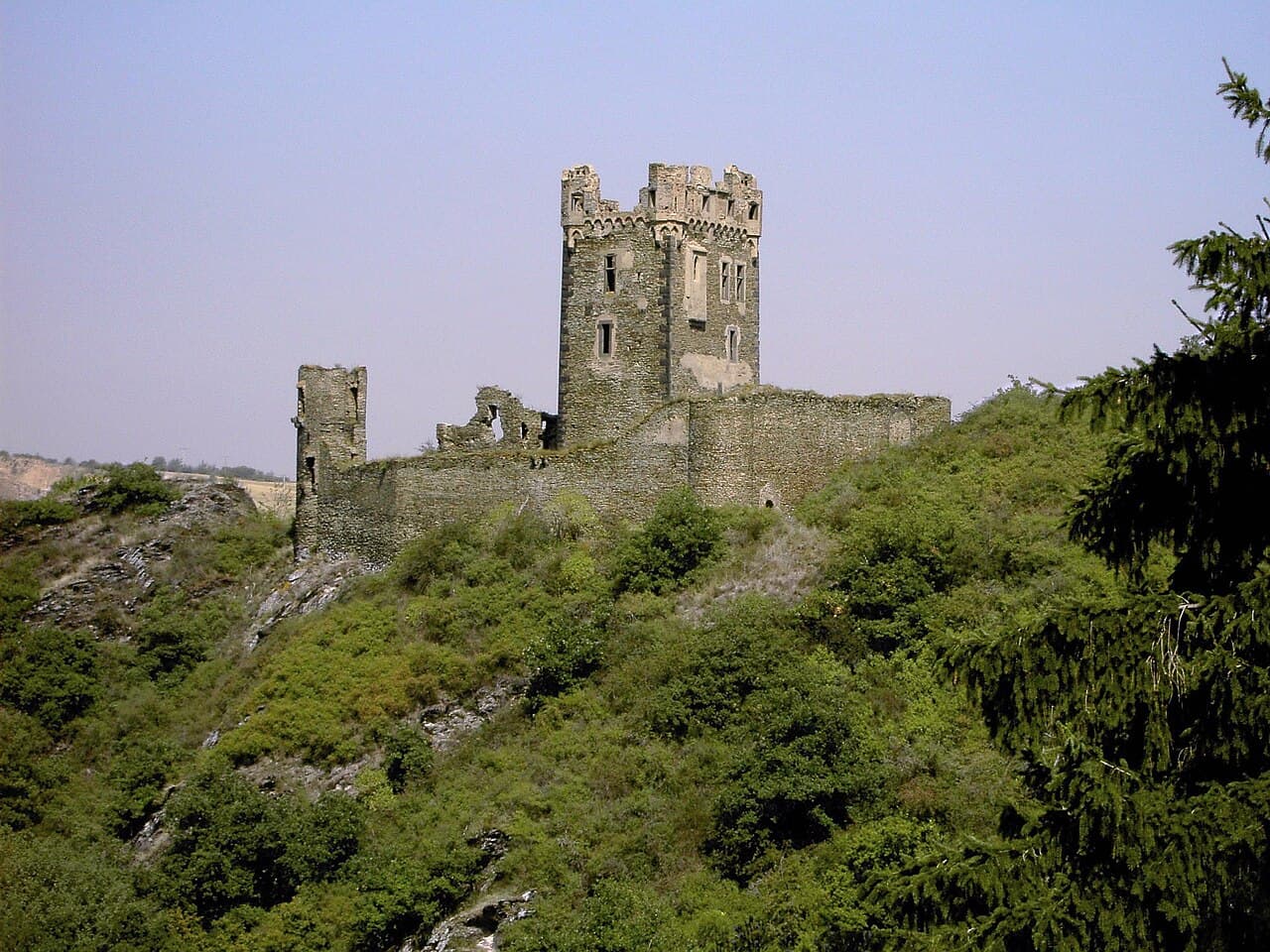
Burg Wernerseck exemplifies the characteristics of late medieval hill castles with its robust defensive structures adapted to the topography. The castle was designed with a stone keep and fortified curtain walls that enclosed a central courtyard. The elevated position allowed for extensive views over the surrounding landscape, providing early warning against approaching threats.
The castle's gatehouse and entrance defenses were constructed to control access tightly, often including a drawbridge and portcullis, though specific details about these features at Wernerseck are limited. The residential buildings within the walls served as living quarters for the lord and his retinue, while ancillary structures supported the castle's self-sufficiency.
Defensive elements
Typical of the period, Burg Wernerseck incorporated battlements and arrow slits in its walls, enabling defenders to protect the castle effectively. The use of natural terrain enhanced its defensibility, with steep slopes acting as natural barriers. Although no extensive moat is recorded, the castle's location on a hill reduced the need for water defenses.
Historical significance and ownership
As a possession of the Archbishopric of Trier, Burg Wernerseck played a role in the region's ecclesiastical and secular governance. The castle functioned not only as a military stronghold but also as an administrative center overseeing local affairs. Over the centuries, it witnessed various political changes, including shifts in territorial control during conflicts such as the Thirty Years' War.
Though precise records of subsequent owners are sparse, the castle's association with the powerful archbishops of Trier underscores its importance in the Rhineland's medieval power structure.
Preservation and current state
Today, Burg Wernerseck remains a partially preserved example of late medieval castle architecture. While some original structures have survived, others exist only as ruins or archaeological remains. The castle's elevated site continues to attract visitors interested in medieval history and architecture.
Efforts have been made to stabilize and maintain the ruins to prevent further deterioration, allowing for public access and educational opportunities. The castle's setting within the scenic Rhineland landscape adds to its appeal as a heritage site.
Visiting Burg Wernerseck
Visitors to Burg Wernerseck can explore the remnants of the castle's walls and enjoy panoramic views of the surrounding countryside. The site is accessible via hiking trails from Ochtendung and nearby towns, making it a popular destination for history enthusiasts and hikers alike.
Information panels on site provide historical context, and guided tours may be available during certain seasons, enhancing the visitor experience.
Nearby attractions
The castle is situated in a region rich with other medieval sites and natural landmarks. Nearby attractions include the historic town of Mayen, the volcanic Eifel region, and other castles within the Rhineland-Palatinate, offering visitors a comprehensive glimpse into the area's heritage.
Frequently asked questions (FAQ)
- When was Burg Wernerseck built and by whom?
- Burg Wernerseck was built in the 15th century by Archbishop Werner of Falkenstein, who ruled from 1388 to 1418.
- What type of castle is Burg Wernerseck?
- Burg Wernerseck is a late medieval hill castle characterized by its elevated position and defensive stone structures.
- Is Burg Wernerseck open to visitors?
- Yes, the castle ruins are accessible to visitors, with hiking trails leading to the site and informational panels available on location.
- What defensive features does Burg Wernerseck have?
- The castle includes battlements, arrow slits, and fortified curtain walls, utilizing natural terrain for enhanced defense.
- Where is Burg Wernerseck located?
- Burg Wernerseck is located in the municipality of Ochtendung in the county of Mayen-Koblenz, Rhineland-Palatinate, Germany.
Photo gallery

Photo by Labradormix at German Wikipedia•Public domain
Information
Loading map...
Visitor reviews
No reviews yet. Been here? Write the first review and help other travelers!
Write the first reviewVisited this castle? Share your experience
Your review helps other travelers and adds first-hand knowledge to our encyclopedia.