Niederburg Castle
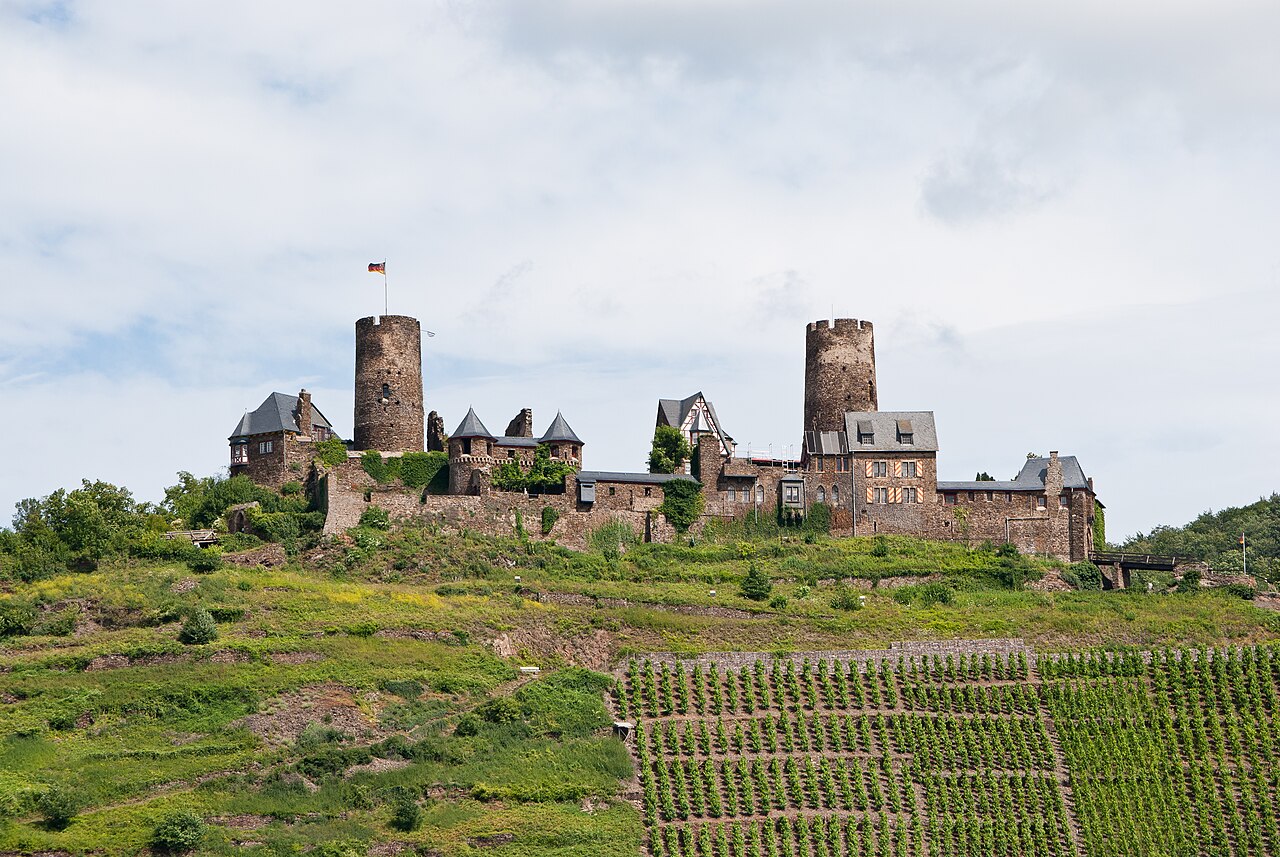
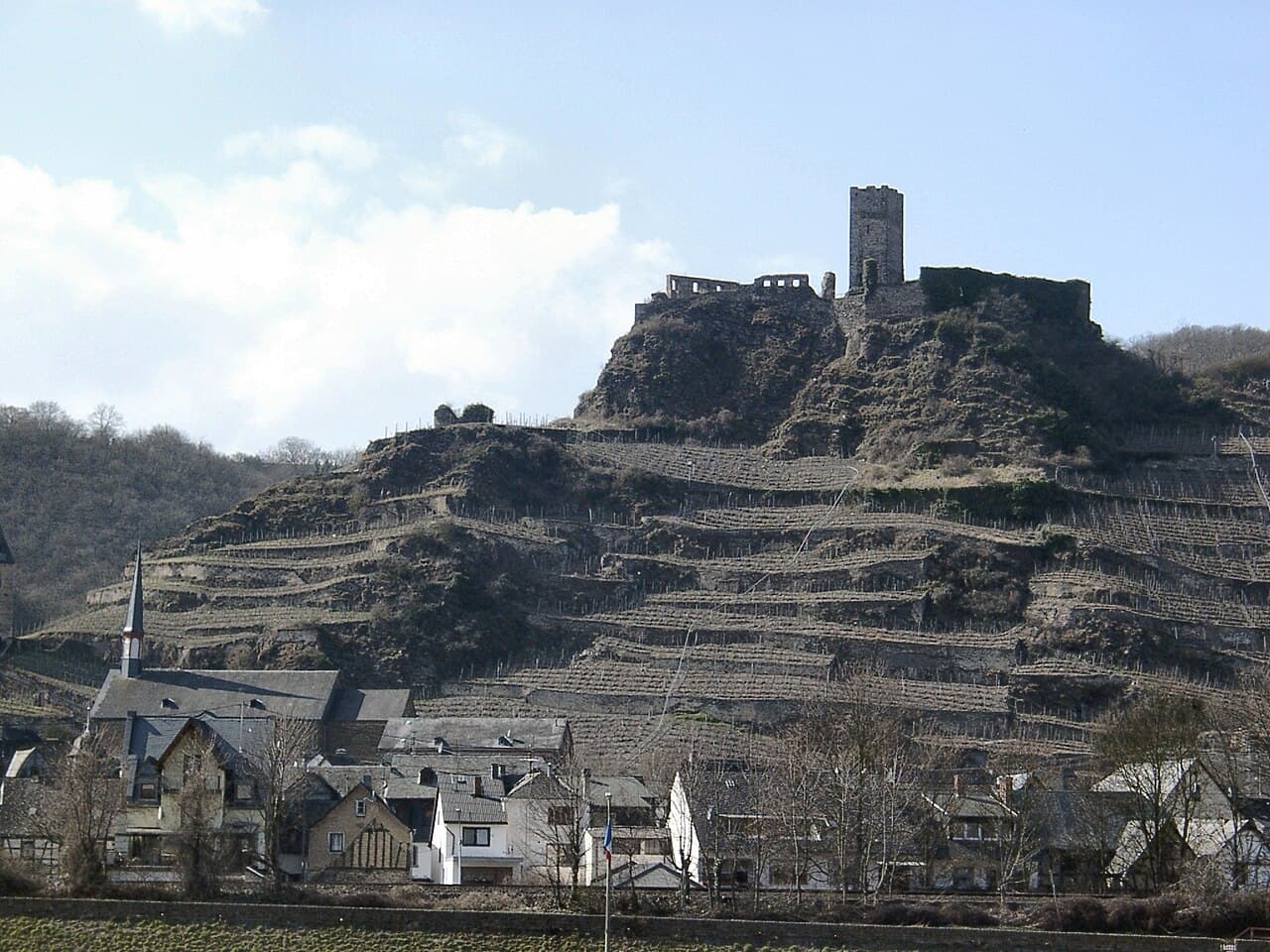
Niederburg Castle, also known as the Lower Castle, is a striking example of a high medieval hill castle located in Kobern-Gondorf, Germany. Perched approximately 150 metres above the village of Kobern on a prominent hill ridge that extends towards the Moselle River, the castle's ruins offer a fascinating glimpse into medieval fortification and noble residence architecture. The site is closely associated with the nearby Oberburg (Upper Castle) and the historic St. Matthias' Chapel, which lie about 50 metres higher on the same ridge, creating a strategic defensive complex overlooking the valley.
Architectural layout and key features
The castle's amygdaloidal (almond-shaped) ground plan is distinctive, conforming to the natural contours of the hill ridge for optimal defense and visibility. One of the most prominent surviving structures is the three-storey bergfried, a tall defensive tower standing approximately 20 metres high with a footprint measuring 7.5 by 8 metres. This bergfried features an elevated entrance located 10 metres above ground level, a classic medieval defensive design intended to hinder attackers. The upper third of this tower, along with its battlements, was reconstructed in the 19th century, preserving its imposing silhouette.
Adjacent to the bergfried are the remains of a two-storey Late Gothic palas, which served as the main residential and ceremonial building within the castle. This palas reflects architectural developments from the later medieval period, contrasting with the earlier defensive elements. Additional well-preserved components include a wall tower and a cistern, essential for water storage during sieges. Significant portions of the outer curtain walls remain intact, showcasing the castle’s formidable defensive perimeter.
The castle’s western defenses included a curtain wall with a zwinger—a narrow enclosed killing zone designed to trap and expose attackers—and to the north, a throat ditch further enhanced its protection. These features exemplify medieval military architecture aimed at maximizing the castle’s defensibility.
Historical background and ownership
Niederburg Castle was constructed in the mid-12th century, with its first documentary mention dating to 1195. At that time, the castle was held as a fief by the Electorate of Trier, a powerful ecclesiastical principality within the Holy Roman Empire. The original lords of the castle were the Isenburg-Kobern family, whose female line died out in the 13th century. Through an heiress named Cecilia, the castle and its lordship passed to Frederick II of Neuerburg, a member of a side branch of the Counts of Vianden.
By 1309, the male line of the Neuerburg family also became extinct, leading to the sale of the castle and lordship to the Archbishop of Trier. This transfer reflects the shifting power dynamics in the region during the late medieval period, with ecclesiastical authorities consolidating territorial control.
In 1688, during the conflicts associated with the Nine Years' War (War of the Grand Alliance), the castle was destroyed, leaving it in ruins. Despite this, the site retains significant architectural remnants that illustrate its former prominence and strategic importance.
Restoration and current condition
The castle is classified as archaeological ruins, with ongoing preservation efforts to maintain its structural remains. Between 1976 and 1978, the state castle administration undertook a careful reconstruction and enhancement of the palas and the cistern located between the two towers, ensuring these features remain accessible and understandable to visitors.
The upper third of the bergfried and its battlements were rebuilt in the 19th century, blending historical restoration with romanticized medieval revival aesthetics common in that period. The ruins today provide a tangible connection to the castle’s medieval past while accommodating modern conservation standards.
Visiting Niederburg Castle
Niederburg Castle is open to the public throughout the year and can be visited free of charge, making it an accessible destination for history enthusiasts and tourists. Visitors can reach the castle via a footpath ascending from the Mühlbach valley, offering scenic views of the surrounding landscape and the Moselle River.
The site’s combination of natural setting, architectural remains, and historical significance makes it a notable cultural landmark in the Rhineland-Palatinate region. Its proximity to the Oberburg and St. Matthias' Chapel enriches the visitor experience, providing a broader context of medieval fortifications and religious sites in the area.
Architectural significance and military features
The castle’s bergfried is a key defensive feature typical of high medieval hill castles in Germany, serving both as a lookout and a last refuge during attacks. Its elevated entrance and robust construction demonstrate the strategic design priorities of the era.
The presence of a zwinger and throat ditch further underline the castle’s military function, creating multiple layers of defense to delay and expose assailants. The Late Gothic palas indicates the castle’s evolution from a purely military fortress to a residence with greater emphasis on comfort and status.
Historical context of the region
The Moselle valley was a contested and strategically important region throughout the Middle Ages, with numerous castles constructed to control trade routes and territory. Niederburg Castle’s location on a hill ridge provided commanding views and control over the surrounding lands, reflecting the feudal power structures of the time.
The castle’s transfer through noble families and eventually to the Archbishop of Trier illustrates the complex web of feudal allegiances and the role of ecclesiastical authorities in regional governance. Its destruction in the late 17th century corresponds with widespread military conflicts that reshaped the political landscape of the Rhineland.
Frequently asked questions (FAQ)
- What is the historical significance of Niederburg Castle?
- Niederburg Castle, located in Kobern-Gondorf, dates back to the 12th century and is an important example of medieval architecture in the region. It served as a fortress and residence for local nobility, reflecting the power dynamics of its time. Today, it stands as a testament to the rich history of the Moselle Valley.
- When was Niederburg Castle built?
- Niederburg Castle was constructed in the early 12th century, specifically around 1150. Its strategic location overlooking the Moselle River made it a key defensive structure during various conflicts throughout the Middle Ages.
- Can I visit Niederburg Castle?
- Yes, Niederburg Castle is open to visitors, and exploring its ruins offers a glimpse into medieval life. Guided tours may be available, which provide deeper insight into the castle's history and architecture.
- What are the opening hours for Niederburg Castle?
- Niederburg Castle is typically open to visitors from April to October, with specific opening hours varying by day. It is advisable to check the official website or local tourism information for the most current hours before planning your visit.
- Is it possible to access Niederburg Castle with mobility impairments?
- While Niederburg Castle is a historical site, it is important to note that the terrain can be uneven and may pose challenges for visitors with mobility impairments. However, efforts have been made to improve access, so it's recommended to contact the site directly for detailed information regarding accessibility options.
- What is the best time to visit Niederburg Castle?
- The best time to visit Niederburg Castle is during the spring and early autumn when the weather is pleasant, and the surrounding landscape is beautiful. Additionally, visiting during these seasons allows you to enjoy local events and festivals that may be held nearby.
- Are there any nearby attractions to visit after touring Niederburg Castle?
- Yes, after visiting Niederburg Castle, you can explore nearby attractions such as the charming village of Kobern-Gondorf and the scenic Moselle wine region. The area is known for its vineyards, offering opportunities for wine tastings and picturesque hikes along the river.
- What are the ticket prices for visiting Niederburg Castle?
- Ticket prices for Niederburg Castle are generally quite affordable, often ranging from a few euros for adults, with discounted rates for children and seniors. Special group rates may also be available, so it's worth inquiring if you're planning a group visit.

Information
Loading map...
Visitor reviews
No reviews yet. Been here? Write the first review and help other travelers!
Write the first reviewVisited this castle? Share your experience
Your review helps other travelers and adds first-hand knowledge to our encyclopedia.