Burg Tringenstein
Burg Tringenstein is a medieval hilltop castle located in the municipality of Siegbach, Germany. Constructed in the mid-14th century, this fortress played a significant role in regional defense and administration during the late medieval period. Its strategic position atop the Murstein hill at 532 meters elevation provided commanding views over the surrounding landscape, enabling control of important routes and territorial boundaries.
Historical origins and early construction
The castle's origins trace back to around 1350 or 1351, when Countess Adelheid of Vianden, widow of Count Otto II of Nassau-Siegen, commissioned its construction. This initiative was a direct response to the nearby Hessian fortress Neu-Dernbach, emphasizing the castle's strategic importance in asserting control over contested borderlands. Initially referred to as Burg Murstein in 1352 documents, it is definitively named Burg Tringenstein in a 1356 deed. The castle was erected on a hill owned by the lords von Bicken, and the village of Tringenstein developed alongside the fortress, illustrating the common medieval pattern of settlements growing in proximity to fortified sites.
Expansion and noble residence in the late Middle Ages
During the late 15th century, Count Johann IV of Nassau-Siegen undertook significant expansions of Burg Tringenstein. These enhancements transformed the castle from a purely military stronghold into a more comfortable noble residence, while retaining its defensive capabilities. It served as a key administrative center and symbol of comital authority in the region.
Countess Elisabeth of Hessen-Marburg, wife of Count Johann V of Nassau-Siegen, resided in the castle temporarily, underscoring its status as a noble domicile. In the early 17th century, during the initial phases of the Thirty Years’ War, members of the Nassau-Dillenburg line used Burg Tringenstein as a residence for extended periods, highlighting its continued relevance in noble affairs and regional governance.
Administrative role and regional significance
Burg Tringenstein functioned as the seat of the Amt Tringenstein, an administrative district governed by an Amtmann appointed to oversee local affairs. This role involved managing judicial, fiscal, and military matters within the territory. The castle's administrative function balanced the influence of the neighboring Hessian Amt Blankenstein, centered at Burg Blankenstein near Gladenbach.
The castle also served as a hunting lodge within the extensive comital game reserves of the Schelderwald forest, demonstrating its importance in noble leisure activities and land management practices during the medieval and early modern periods.
Decline and partial demolition
In 1725, the administrative offices of Amt Tringenstein were merged with those of Amt Ebersbach, resulting in the relocation of the Amtmann's official seat to Ebersbach. Following this change, Burg Tringenstein gradually lost its governmental function and was largely abandoned, save for a castle servant who maintained the site.
After the extinction of the Nassau-Dillenburg family line in 1739, interest in maintaining the castle waned further. Between 1773 and 1774, all valuables and movable items were sold off, signaling the fortress's diminished importance. The main castle building was demolished in 1839 due to safety concerns, and subsequent quarrying activities removed substantial portions of the stone fabric, accelerating the site's deterioration.
Architectural features and surviving remains
Burg Tringenstein was originally designed as a defensive hilltop fortress utilizing the natural advantages of its elevated location. The castle's stone walls and structures were built to withstand attacks and control the surrounding territory effectively.
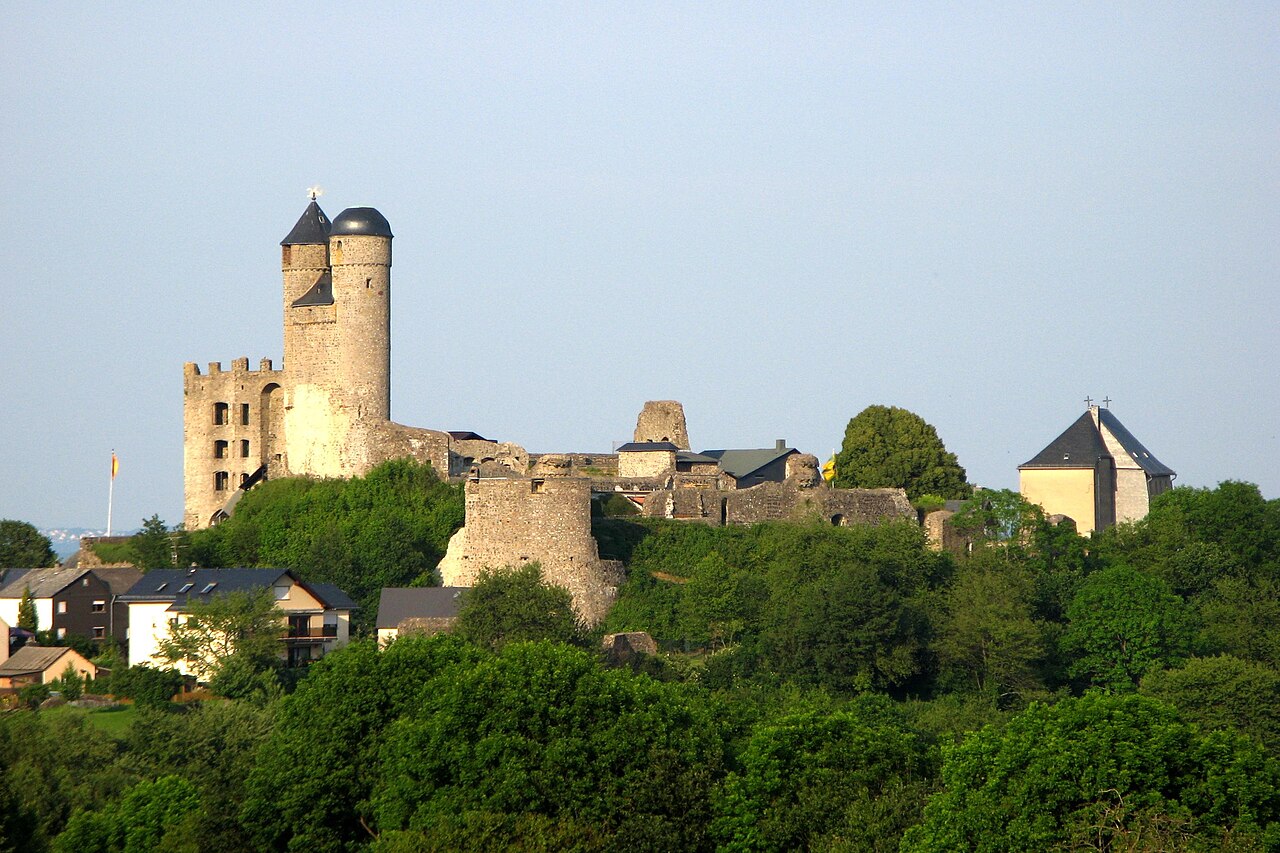
Today, only scattered fragments of the original castle walls and portions of building ruins remain. These masonry remnants reflect the robust medieval stone construction techniques employed during the castle's active use. Although the physical evidence is limited, the surviving ruins provide valuable insight into the castle's layout and defensive features.
To aid visitors and researchers in visualizing the castle's original form, a detailed scale model has been installed atop the castle hill. This interpretive tool illustrates the fortress's layout and scale during its period of significance, compensating for the limited surviving fabric.
Castle layout and defensive elements
The castle's position on the Murstein hill allowed for a commanding vantage point over the village of Tringenstein and the surrounding landscape. Defensive features likely included thick curtain walls, battlements, and a gatehouse controlling access. The presence of an inner courtyard and residential quarters would have supported both military and domestic functions.
Legacy and cultural importance
Although Burg Tringenstein now stands as a ruin, it remains an important cultural and historical landmark in the region. Its layered history from the mid-14th century through the early modern period reflects the shifting political and military dynamics of the area. The castle's role as a noble residence, administrative center, and hunting lodge illustrates the multifaceted functions of medieval fortifications beyond mere defense.
The site continues to attract visitors interested in medieval architecture, regional history, and archaeology. Preservation efforts focus on maintaining the remaining ruins and promoting awareness of the castle's historical significance within the context of German medieval heritage.
Frequently asked questions (FAQ)
- When was Burg Tringenstein built and by whom?
- Burg Tringenstein was constructed around 1350-1351 by Countess Adelheid of Vianden, widow of Count Otto II of Nassau-Siegen, to assert control over the region near the Hessian fortress Neu-Dernbach.
- What role did Burg Tringenstein serve during the late medieval period?
- The castle functioned as a defensive stronghold, noble residence, and administrative seat (Amt) overseeing local governance and balancing neighboring Hessian influence.
- What remains of Burg Tringenstein can visitors see today?
- Visitors can see scattered fragments of the original stone walls and building ruins, along with a scale model atop the hill illustrating the castle's former layout.
- Why was Burg Tringenstein abandoned and partially demolished?
- After the administrative offices merged with Amt Ebersbach in 1725 and the Nassau-Dillenburg line ended in 1739, the castle lost its function and was gradually abandoned, leading to the sale of valuables and demolition due to safety concerns.
- Is Burg Tringenstein accessible to the public?
- The castle ruins are accessible to visitors, but there are no specific ticketing or opening hour requirements noted. Visitors should check local resources for access details.
Information
Loading map...
Visitor reviews
No reviews yet. Been here? Write the first review and help other travelers!
Write the first reviewVisited this castle? Share your experience
Your review helps other travelers and adds first-hand knowledge to our encyclopedia.