Castel Belfort
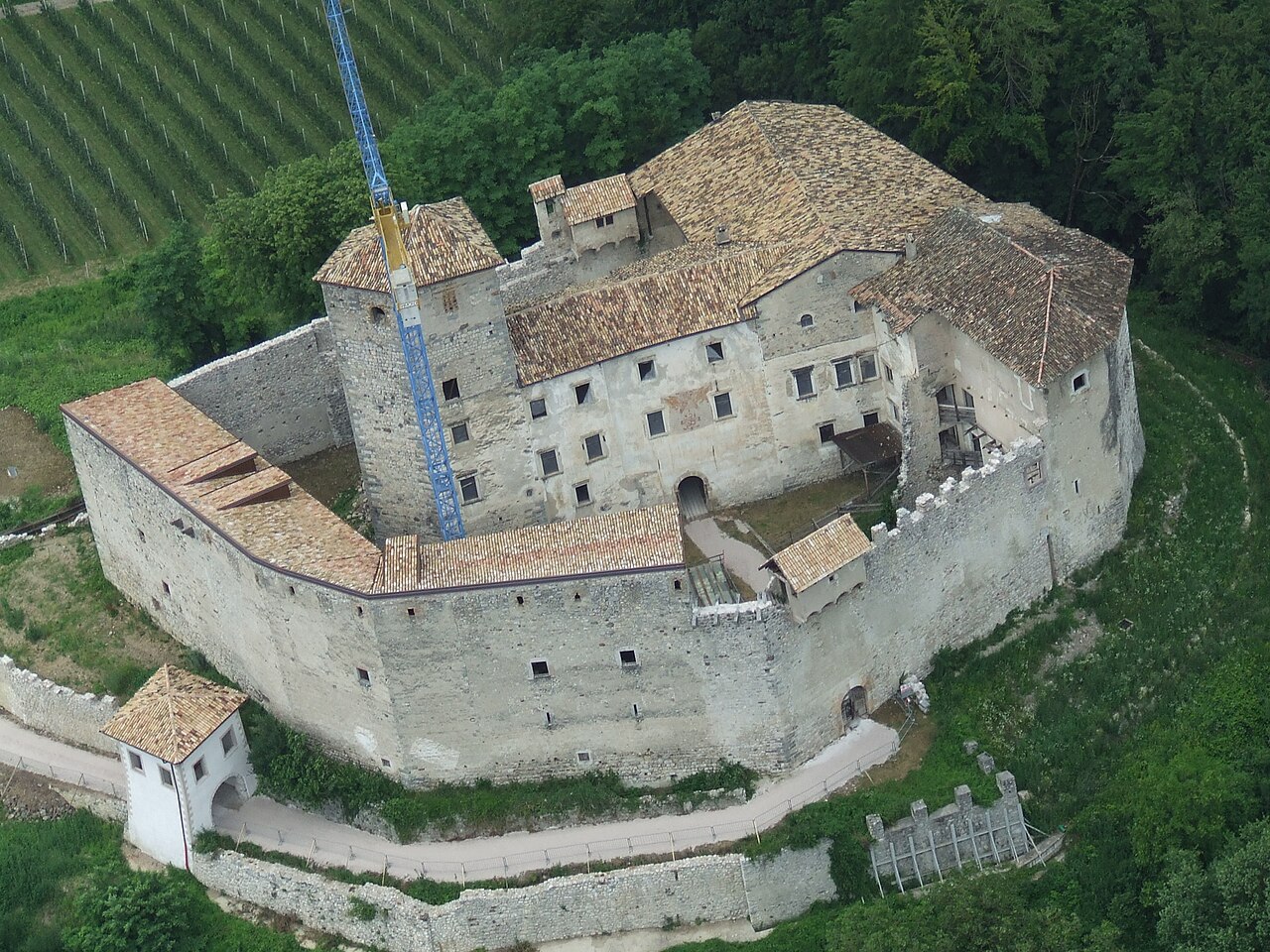
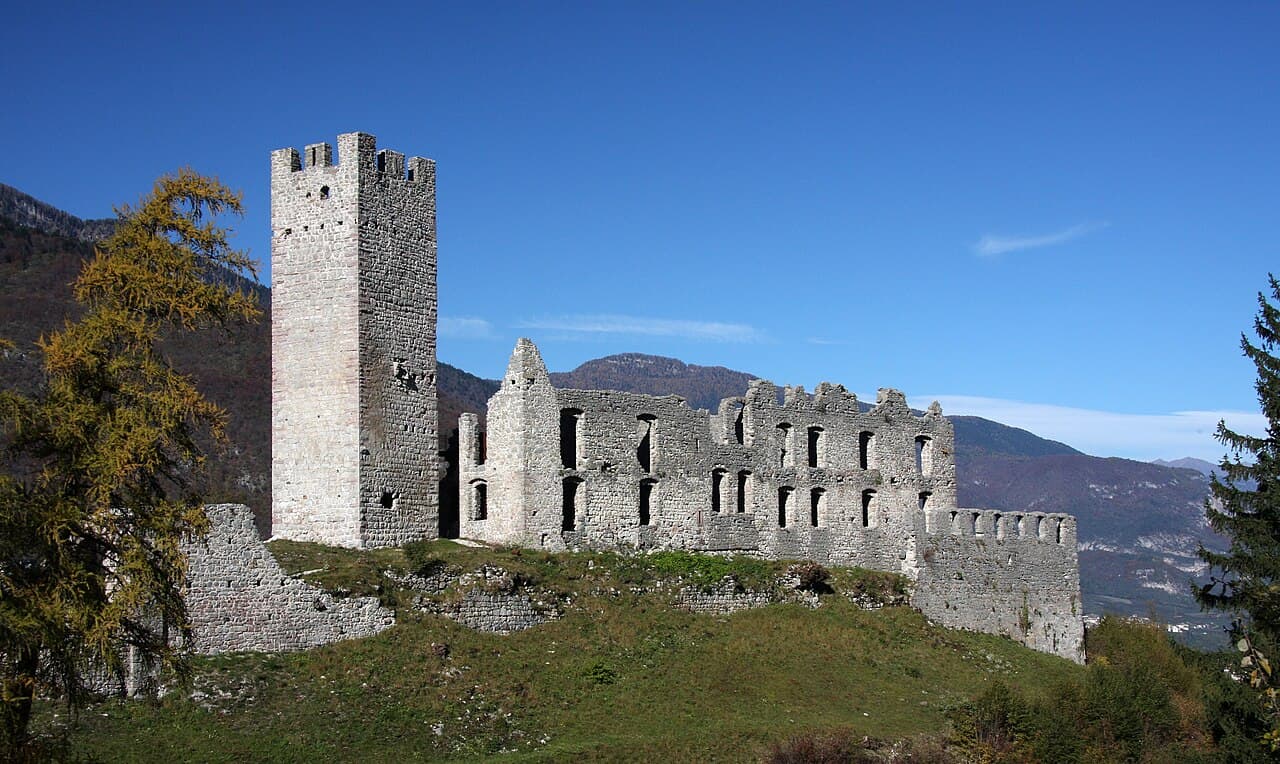
Castel Belfort is a notable medieval hill castle located in the municipality of Spormaggiore in the Trentino region of Italy. Founded in 1311 by Tissone, son of Geremia I, it began as a defensive tower authorized by Count Henry of Tyrol. This initial construction marked the castle's establishment during the late medieval period, reflecting the feudal power struggles and territorial disputes characteristic of the Val di Non valley in northern Italy.
The castle's strategic position atop a hill provided commanding views of the surrounding landscape, making it a valuable military and administrative stronghold. Over the centuries, Castel Belfort evolved from its original tower into a complex fortress, witnessing numerous changes in ownership, architectural modifications, and historical events that shaped the region's political landscape.
Early history and medieval significance
The castle's origins trace back to the early 14th century when Tissone secured permission to erect a tower, signaling the start of a fortified residence. This tower formed the nucleus around which the castle expanded. By 1334, Castel Belfort was embroiled in regional noble conflicts, underscoring its importance in local power dynamics.
Following Tissone's death in 1339, the castle passed to his heirs until 1350, when it was sold to the influential Thun family. The Thun appointed the Reifer family as captains, who managed the castle until 1415. That year, the lords of Sporo seized the castle, but after Pietro Sporo's death, control reverted to Frederick IV of Austria, the Count of Tyrol.
Between 1427 and 1429, ownership shifted among notable figures including Giovanni Uber and Judge Andrea Vogt, before the Thun family regained possession and reinstated the Reifers as captains by 1450. The Reifer lineage ended around 1470, after which the Neideck family acquired the castle, expanding their regional influence through multiple properties.
Ownership transitions and regional influence
The castle's ownership changed hands several times after the Neidecks' extinction near the turn of the 16th century. It passed through the Concini family, was sold to Leonardo Nogarola from Verona in 1543, and later acquired by Antonio Pezzen in 1607. The Pezzen family line ended with inheritance passing to the Terlago family.
In 1642, Domenico Vigilio Spaur purchased the castle but sold it eight years later to Antonio del Monte, married to Antonia Saracini. The castle ultimately became property of the Saracini counts, who presided over it during a pivotal moment in its history.
Fire, reconstruction, and 17th-century fortress transformation
A catastrophic fire in 1670 severely damaged the medieval structures of Castel Belfort. In response, the Saracini counts chose to demolish the ruined portions and rebuild the site as a 17th-century fortress. This reconstruction reflected the evolving military architectural styles designed to withstand artillery and modern siege warfare.
The new fortress incorporated thicker walls, angled bastions, and other defensive features typical of early modern military design. This adaptation marked a significant shift from the castle's original role as a noble residence to a fortified stronghold suited to contemporary military needs.
Architectural features and materials
The original medieval tower was constructed using local stone and mortar, typical of the late medieval period in northern Italy. The 17th-century reconstruction employed advanced fortification techniques, though detailed architectural plans are not extensively documented. The fortress likely featured battlements, curtain walls, and possibly a moat, consistent with military architecture of the time.
Decline and modern preservation efforts
By 1785, administrative reforms merged Castel Belfort's jurisdiction with those of nearby castles Sporo and Flavon, relocating the administrative center to the town of Spormaggiore. This change led to the castle's abandonment and gradual decline into ruin.
The Saracini family retained ownership for centuries, but the castle fell into disrepair. In the late 20th century, the municipality of Spormaggiore acquired the site, initiating preservation efforts to stabilize the ruins and improve public access.
In 2013, restoration work consolidated the remaining structures, enhancing safety and visitor experience without compromising the site's historical integrity. These efforts earned the prestigious "Building Trentino" award from the Circolo Trentino Architettura Contemporanea, recognizing the project's sensitive approach to conservation.
Current state and visitor experience
Today, Castel Belfort stands as a ruined hill castle that showcases a layered history of medieval and early modern fortifications. Visitors can explore stabilized walls, remnants of the original tower, and the later fortress elements. The site offers insight into the region's feudal past and the evolution of military architecture over several centuries.
While no detailed decorative elements or inscriptions survive, the castle's ruins provide a tangible connection to the noble families and historical events that shaped the Trentino region. The castle's elevated position also affords panoramic views of the surrounding valleys, enhancing its appeal as a cultural and historical landmark.
Historical context and regional importance
Castel Belfort played a crucial role within the network of castles controlling the Val di Non area. Its various owners, including the Thun, Reifer, Neideck, and Saracini families, were influential in regional politics and defense. The castle's transformation from a medieval tower to a 17th-century fortress reflects broader shifts in military technology and feudal administration.
The castle's history mirrors the turbulent political landscape of northern Italy during the medieval and early modern periods, marked by noble rivalries, territorial disputes, and changing allegiances. Its preservation allows modern audiences to appreciate these complex historical narratives through the physical remains of its architecture.
Frequently asked questions (FAQ)
- How do I get to Castel Belfort?
- Castel Belfort is located in Spormaggiore, Italy, and can be easily reached by car or public transport from nearby cities. The nearest train station is in Trento, from where you can take a bus or taxi to reach the castle. Parking facilities are available nearby for visitors traveling by car.
- What is the historical significance of Castel Belfort?
- Castel Belfort dates back to the 13th century and played a crucial role in the defense strategies of the region. It served as a fortress for noble families and has witnessed numerous historical events, reflecting the rich heritage of the area. Today, it stands as a testament to medieval architecture and the history of Trentino.
- When was Castel Belfort built?
- Construction of Castel Belfort began in the early 13th century, around 1210, and it was completed a few decades later. Over the centuries, it underwent various renovations and expansions, adapting to the changing needs of its inhabitants. The castle's architecture showcases the evolution of fortification techniques throughout the medieval period.
- Can I visit Castel Belfort year-round?
- Yes, Castel Belfort is open to visitors year-round, although specific opening hours may vary by season. It is advisable to check the official website for the most up-to-date information on visiting hours and any seasonal events. Guided tours are also available, providing deeper insights into the castle's history.
- Why is Castel Belfort a popular tourist attraction?
- Castel Belfort is popular for its stunning views of the surrounding landscape and its well-preserved medieval architecture. Visitors are drawn to its historical significance and the opportunity to explore its fascinating exhibitions. The castle also hosts cultural events, making it a vibrant part of the local community.
- Is it possible to access Castel Belfort with mobility aids?
- While efforts have been made to improve accessibility at Castel Belfort, some areas may still pose challenges for those with mobility aids. Visitors are encouraged to contact the castle administration beforehand to inquire about specific accommodations and available services. The staff is committed to assisting all visitors in enjoying their experience.
- What are the ticket prices for Castel Belfort?
- Ticket prices for Castel Belfort are generally affordable, with discounts available for children, students, and seniors. Family passes are also offered to encourage group visits. It is recommended to purchase tickets in advance during peak tourist seasons to avoid long wait times.
- What is the best time to visit Castel Belfort?
- The best time to visit Castel Belfort is during the spring and early autumn months when the weather is mild and the surrounding scenery is particularly beautiful. During these seasons, visitors can enjoy pleasant walks around the castle grounds and participate in outdoor events. Summer can be busy, so early morning visits are recommended for a quieter experience.
- Are there any nearby attractions to visit after Castel Belfort?
- Yes, there are several nearby attractions worth visiting, including the picturesque town of Spormaggiore and the nearby Nature Park. Visitors can also explore the Trento Museum of Science or enjoy hiking in the surrounding Dolomites. These attractions complement the historical experience of Castel Belfort, making for a full day of exploration.
Photo gallery

Information
Website
Visit websiteSources & official resources
Verify the information above using these authoritative references.
Loading map...
Visitor reviews
No reviews yet. Been here? Write the first review and help other travelers!
Write the first reviewVisited this castle? Share your experience
Your review helps other travelers and adds first-hand knowledge to our encyclopedia.