Belasi Castle
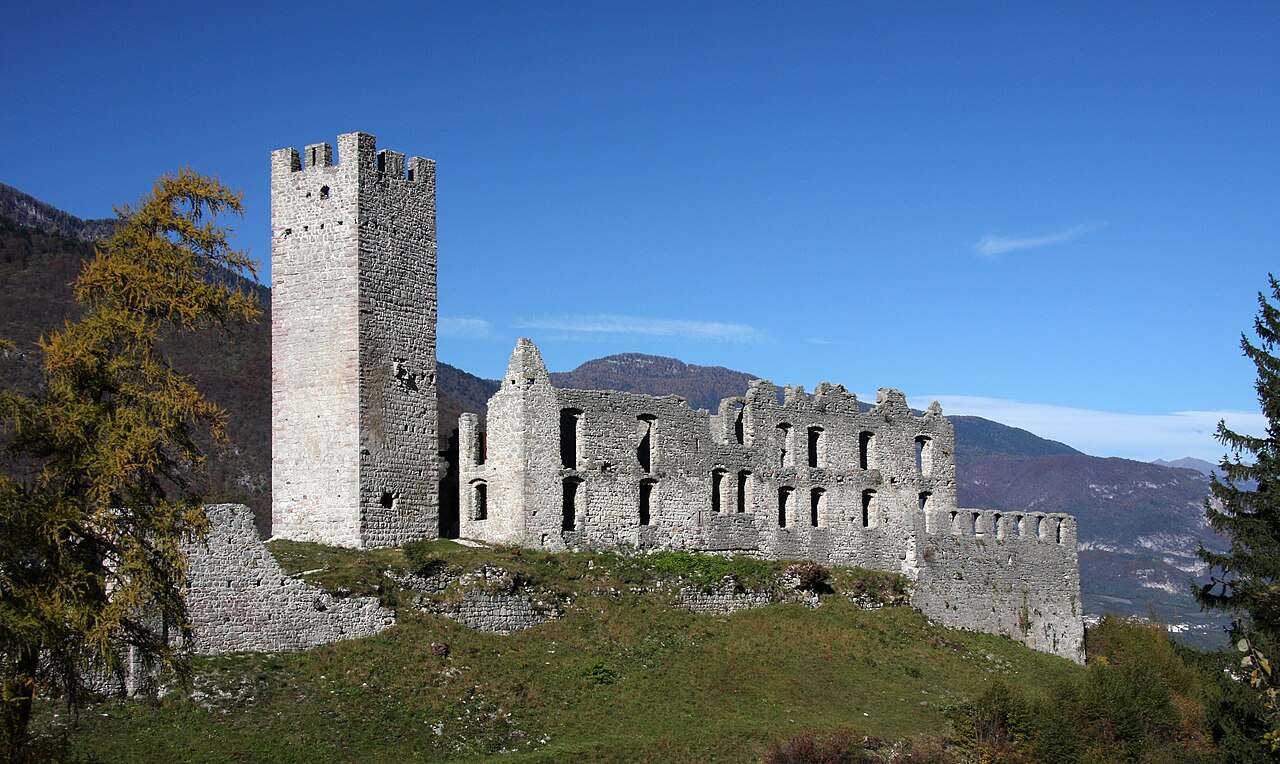
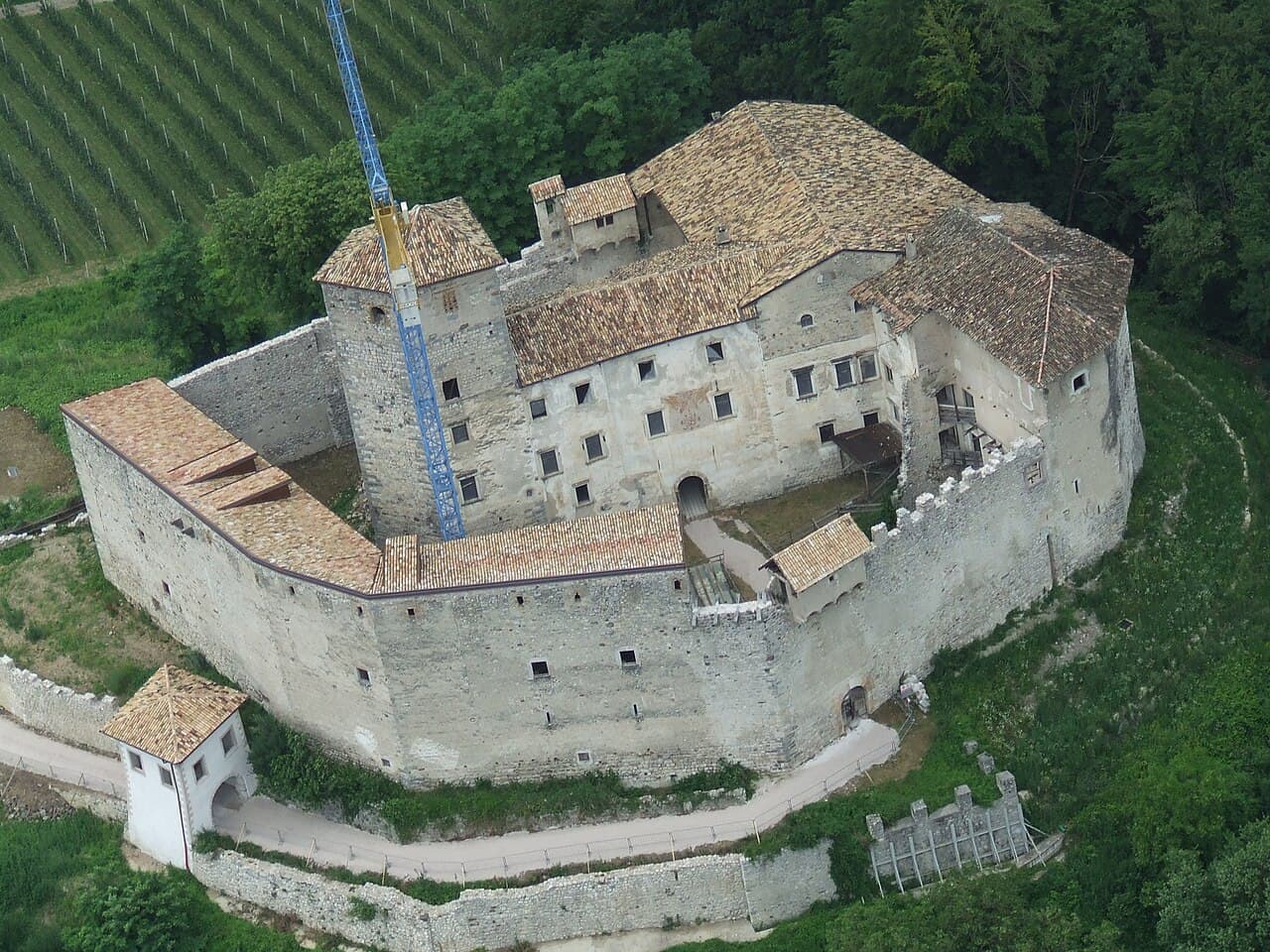
Belasi Castle stands as a remarkable example of medieval hill castle architecture in the Trentino region of northern Italy. Perched on a gentle hillside overlooking the valley and the river bearing its name, the castle dominates the landscape near the locality of Segonzone within the municipality of Campodenno. Its strategic position on the right bank of the Non Valley allowed it to serve as a vital fortification and administrative center during the High Medieval period.
Originally constructed in the late 13th century by the Rubein-Ragogna family, loyal vassals of the Counts of Tyrol, Belasi Castle was intended to consolidate Tyrolean control over the region amidst ongoing disputes with the Prince-Bishops of Trento. Contrary to earlier beliefs that dated its origins to the 12th century and linked it to the ancient Belasi family, modern research has clarified its foundation by the Rubein-Ragogna lineage from the Burgraviate of Merano. After the extinction of this family line, the castle was granted as a fief in 1291 to Ulrico di Ragogna, a trusted military captain of the Tyrolean counts.
Historical evolution and ownership
In 1368, the castle changed hands when Corrado Khuen of Termeno purchased it from Simone Rubein. This transaction marked the beginning of the Khuen-Belasi family's long association with the castle. The family incorporated the castle's name into their own, rising to prominence in the 15th and 16th centuries as one of the wealthiest and most influential noble houses in the region. Members of the Khuen-Belasi dynasty held significant roles as bishops, politicians, and military leaders within the broader Habsburg domains.
The castle's history was marked by military conflicts and local rivalries. Between 1415 and 1420, it was captured by the Spaur family, and during the 1525 Rustic War, peasant rebels seized it, plundering its granaries. Despite these challenges, the Khuen-Belasi family maintained feudal control over extensive agricultural estates surrounding the castle, which included farmland, vineyards, meadows, and forests.
Architectural development and features
Fortifications and layout
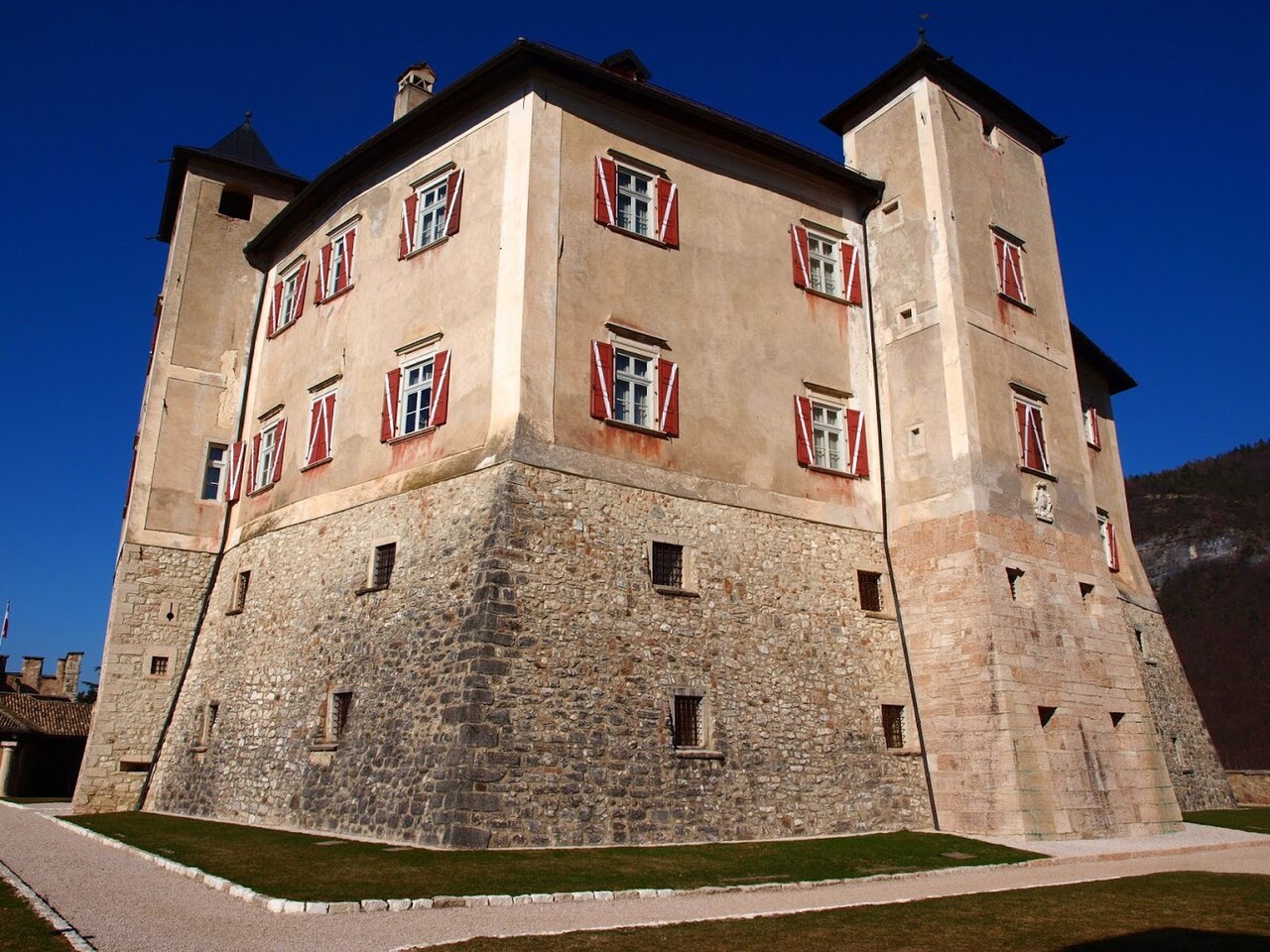
Belasi Castle's architecture reflects its evolution from a medieval stronghold to a fortified noble residence. The castle's most imposing external feature is its massive pentagonal keep (mastio), which served as the last defensive refuge. Encircling the castle is a high curtain wall, to which various buildings from different periods are attached, demonstrating the castle's layered construction history.
Defensive enhancements include two bartizans, or small overhanging turrets, positioned near the main entrances on the curtain wall. These provided vantage points for defenders to monitor and protect the gateways. On the southern slope, two smaller curtain walls connected by a ravelin—a low triangular fortification—guard the main approach road, illustrating advanced medieval military architecture designed to delay and expose attackers.
Interior decoration and frescoes
The castle's interior, although stripped of original furnishings, preserves significant frescoes primarily dating to the 16th century. Restoration efforts uncovered earlier 15th-century paintings depicting knightly tournaments, coats of arms, family crests, and musicians, linking the imagery to the castle's noble heritage and chivalric culture.
Among the notable decorated rooms is the "Music and Fruits" hall, featuring mid-16th-century frescoes with parapets draped in fabrics supporting images of musical instruments alongside fruits and vegetables. Another distinguished chamber houses a sophisticated fresco of the Judgment of Paris, attributed to the German artist Bartlmä Dill Riemenschneider, highlighting Renaissance artistic influences.
The "Hall of Metamorphoses" contains frescoes illustrating stories from Ovid's Metamorphoses, reflecting the Renaissance interest in classical mythology and allegory. These artistic elements underscore the castle's transformation from a purely military fortress into a residence showcasing cultural refinement.
Chapel and religious features
Attached to the central palace within the western courtyard is the family chapel dedicated to Saint Martin of Tours. The chapel contains frescoes from the 15th and 16th centuries and features an architectural innovation: a window connecting the chapel to a first-floor chamber in the main building. This design allowed the castle's lords to attend religious services even when confined indoors, demonstrating the integration of private devotion within the castle's layout.
Economic and social role
By the 18th century, as the Khuen family attained the rank of Counts of the Holy Roman Empire, Belasi Castle had largely lost its military function. It evolved into a major agricultural estate, with extensive stables, barns, and storage buildings constructed against the curtain walls. The castle remained a center of economic activity, managing vast estates of farmland, vineyards, meadows, and forests.
The castle's owners collected tithes and exercised feudal rights over the surrounding countryside, reinforcing its role as a local administrative hub. The elegant stucco work and decorative majolica ceramic stoves added during this period reflect the influence of contemporary artistic trends and the castle's status as a noble residence.
Later history and preservation efforts
The 19th century brought decline following the Napoleonic Wars and the abolition of noble privileges. Belasi Castle became a seasonal residence as the Khuen family pursued careers elsewhere. Although the family returned between the world wars, the castle was ultimately abandoned in the 1950s, leading to deterioration and loss of interior furnishings.
In 2000, the municipality of Campodenno acquired the castle along with the nearby chapel dedicated to Saints Philip and James. Since then, restoration efforts have stabilized the structure, preserved key architectural and artistic elements, and prepared the site for public use. The castle today stands as a testament to the region's medieval history, noble lineage, and architectural heritage.
Visitor information and cultural significance
Belasi Castle is a significant cultural landmark in Trentino, offering insights into medieval fortification, noble life, and Renaissance art. Its combination of military architecture and richly decorated interiors provides a unique experience for visitors interested in history and art. The castle's location amidst orchards and woods enhances its scenic appeal, making it a valuable heritage site for both locals and tourists.
Ongoing conservation efforts aim to facilitate public access and educational programs, ensuring that Belasi Castle continues to contribute to the cultural vitality and historical understanding of the Non Valley region.
Frequently asked questions (FAQ)
- How do I get to Belasi Castle?
- Belasi Castle is located in Campodenno, Italy, and can be accessed by car or public transportation. If you are driving, take the A22 motorway and follow the signs to Campodenno. There is parking available near the castle for visitors.
- What is the historical significance of Belasi Castle?
- Belasi Castle dates back to the 12th century and has a rich history tied to the local nobility and significant events in the region. It served as a defensive stronghold and has been preserved as a testament to medieval architecture and feudal life. The castle offers insights into the history of Trentino and its influence over the centuries.
- When was Belasi Castle built?
- Belasi Castle was constructed in the early 12th century, during a time when many castles were built for protection against invasions. Over the years, it has undergone various renovations and restorations, preserving its historical essence while adapting to modern visitor needs.
- Can I take guided tours of Belasi Castle?
- Yes, guided tours of Belasi Castle are available and provide an in-depth look at its history, architecture, and significance. Tours are typically conducted in multiple languages, and it is advisable to check the schedule in advance for availability. Group bookings can also be arranged for a more personalized experience.
- Why is Belasi Castle a popular tourist destination?
- Belasi Castle is popular for its stunning architecture, breathtaking views of the surrounding landscape, and rich historical background. Visitors are drawn to its well-preserved structures and the opportunity to learn about medieval life in Italy. The castle also hosts cultural events throughout the year, attracting both locals and tourists.
- Is it possible to access Belasi Castle with a wheelchair?
- While Belasi Castle has made efforts to improve accessibility, certain areas may still pose challenges for wheelchair users due to the castle's historic architecture. It is recommended to contact the castle administration in advance to inquire about specific accessibility options and assistance available during your visit.
- What are the opening hours for Belasi Castle?
- Belasi Castle is generally open to visitors from March to October, with varying hours during the peak season. It is advisable to check the official website or contact the castle for the most current opening times, especially around holidays and special events. Guided tours may have specific time slots, so planning ahead is recommended.
- What are the ticket prices for visiting Belasi Castle?
- Ticket prices for Belasi Castle vary depending on the season and whether you choose a guided tour. Generally, adults can expect to pay a modest entrance fee, while discounts are often available for children, students, and seniors. Family packages may also be offered, making it an affordable visit for groups.
- What are some nearby attractions to visit along with Belasi Castle?
- In addition to Belasi Castle, visitors can explore the beautiful landscapes of the Val di Non region, including vineyards and hiking trails. Nearby attractions include the charming town of Cles and the stunning Lake Tovel, known for its crystal-clear waters. These sites offer additional opportunities for sightseeing and enjoying the natural beauty of the area.

Information
Website
Visit websiteSources & official resources
Verify the information above using these authoritative references.
Loading map...
Visitor reviews
No reviews yet. Been here? Write the first review and help other travelers!
Write the first reviewVisited this castle? Share your experience
Your review helps other travelers and adds first-hand knowledge to our encyclopedia.