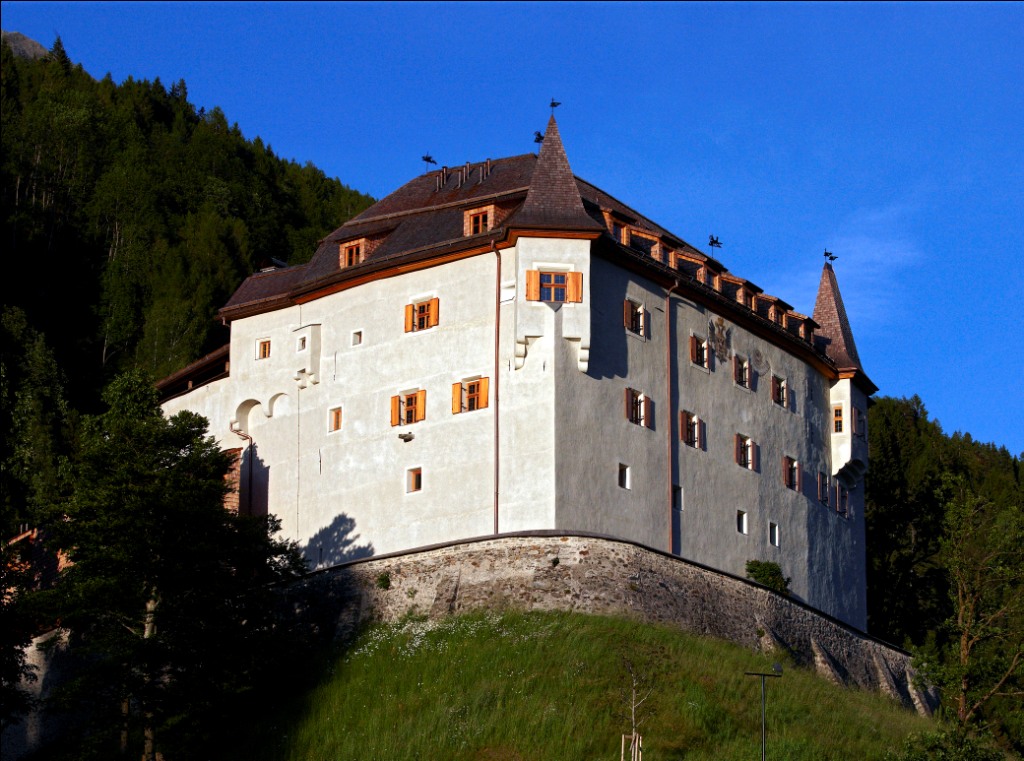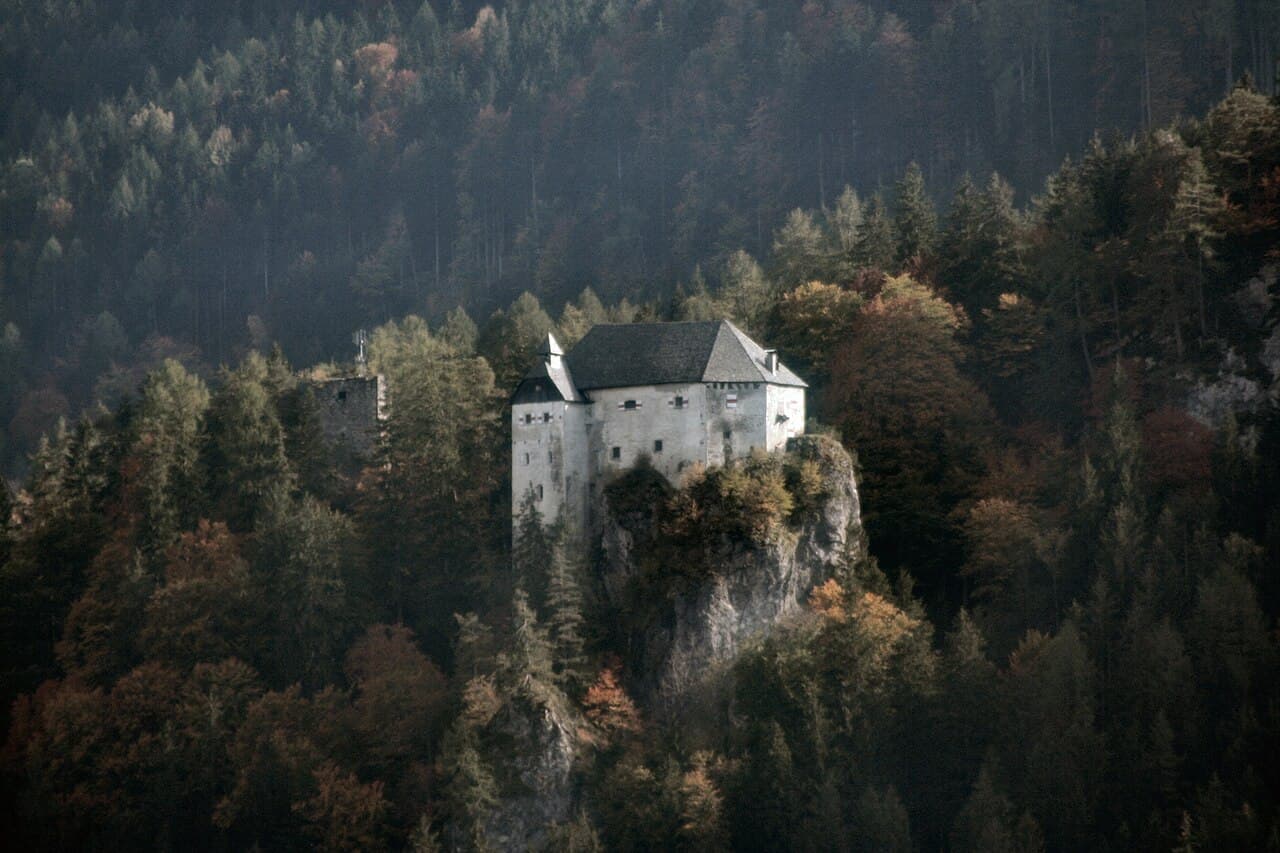
Burg Stein im Drautal is a medieval hill castle situated in the municipality of Stein in Austria, prominently perched on a steep rocky outcrop overlooking the Upper Drau Valley. Constructed in the late 12th century by German-speaking settlers, it first appears in historical records around 1190 under the ownership of Haidenrich de Lapide, a ministerial serving the Counts of Ortenburg. The castle's strategic location on the southern bank of the Drau River allowed it to control the surrounding valley and served as a noble seat for centuries.
Historical ownership and significance
Throughout its history, Burg Stein im Drautal experienced several changes in ownership that reflect the shifting political landscape of medieval Central Europe. In the 13th century, the castle came under the control of the Meinhardiner dynasty, also known as the Counts of Görz, a powerful noble family in the region. By 1440, the castle was held by the Counts of Cilli, though their tenure was brief. In 1456, the castle passed to the Habsburgs, one of the most influential ruling houses in Europe, marking a significant shift in its governance.
At the start of the 16th century, Emperor Maximilian I granted Burg Stein to Virgil von Graben and his son Lukas von Graben zum Stein. The Von Graben family maintained stewardship for over 150 years until the male line ended with Christof David von Graben zum Stein in 1664. The subsequent inheritance dispute involved the Tyrolean Von Graben branch and the Lamberg family, but due to inheritance laws favoring male heirs, the property reverted to the Habsburgs.
In 1668, the Habsburgs sold the castle to Balthasar von Beverellis, and by 1681, ownership transferred to the Orsini-Rosenberg family, descendants of the Von Graben line. The Orsini-Rosenbergs have retained possession since then. Throughout these centuries, the castle remained a noble residence but was not generally accessible to the public.
Architectural features and layout
Burg Stein im Drautal is a rock castle that exploits its natural elevation approximately 200 meters above the valley floor. The fortress is built with robust stone masonry that integrates with the rugged terrain, typical of medieval defensive architecture from the late 12th century. Its location on a rocky outcrop provided natural defenses, complemented by man-made fortifications.
Bergfried and defensive structures
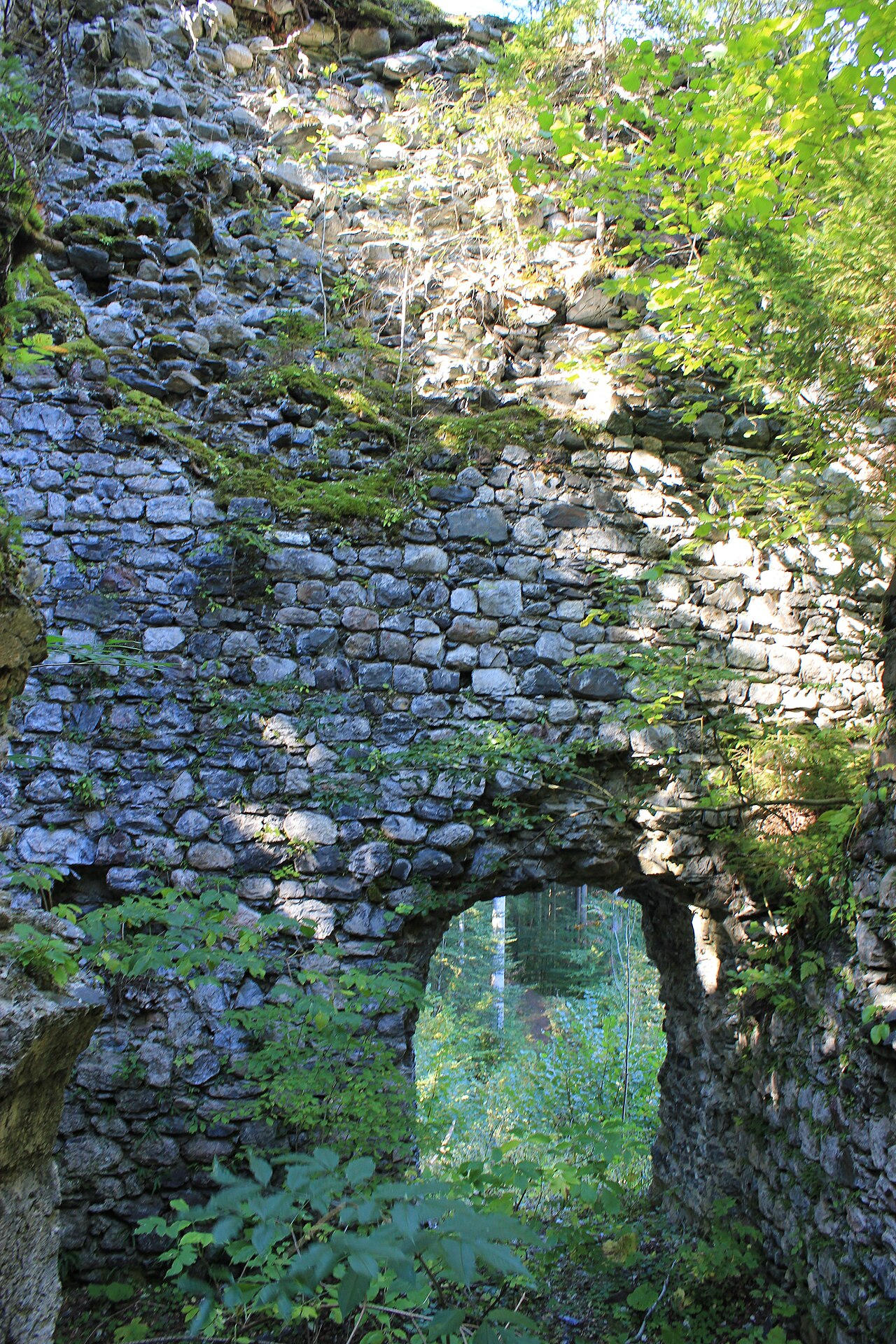
The castle's defining architectural feature is its bergfried, a square-shaped main tower standing about 15 meters tall. Originally, this tower functioned as a self-contained defensive refuge, separated from the main residential building, or palas. A wooden bridge connected the bergfried to the palas, emphasizing its role as a last stronghold during sieges. While parts of the tower are now in ruin, the upper sections remain intact and accessible, offering commanding views over the Drau Valley.
Double chapel: religious and artistic heritage
One of the most remarkable features within the castle complex is the double chapel located in the northeast corner. Dating from the 15th century, this architectural element consists of two vertically stacked chapels in the Romanesque style, connected by an opening that allows passage between the floors. The lower chapel is dedicated to Saint Valentine, while the upper chapel honors Saint Martin.
The upper chapel's decorations were created by Bartlmä Firtaler, a notable artist of the period. Both chapels are adorned with finely carved statues and frescoes by Simon von Taisten, a late Gothic painter from South Tyrol. These artworks highlight the castle's religious significance and the patronage of the noble families who resided there.
Preservation and current condition
Today, Burg Stein im Drautal retains much of its original medieval structure, although some areas show signs of partial ruin and wear due to centuries of exposure. The bergfried and the double chapel remain prominent features and serve as tangible links to the castle's historical and architectural past. The castle's remote and elevated position has helped preserve its remains, making it a valuable cultural heritage site.
Despite its historical importance, the castle is privately owned by the Orsini-Rosenberg family and is not generally open to public tours. Its preservation is maintained through private stewardship, ensuring that the castle's medieval character endures.
Location and strategic importance
Situated between the towns of Oberdrauburg and Dellach im Drautal, Burg Stein commands a strategic vantage point over the Upper Drau Valley. The castle's position on a steep rock outcrop made it a formidable defensive site, controlling access along the river and the valley routes. Its elevation of approximately 200 meters above the valley floor enhanced its defensive capabilities and visibility across the landscape.
The castle's location reflects typical medieval military architecture principles, where natural topography was harnessed to strengthen fortifications and provide early warning against approaching threats.
Frequently asked questions (FAQ)
- How do I get to Burg Stein im Drautal?
- Burg Stein im Drautal is accessible by car and public transport. If you're driving, take the A2 motorway and follow the signs to the castle. Public transportation options include regional trains and buses, which connect to nearby towns.
- What are the opening hours for Burg Stein im Drautal?
- Burg Stein im Drautal is typically open from 10 AM to 5 PM, but it's advisable to check their official website for seasonal variations. During peak tourist season, longer hours may be available to accommodate visitors. Always verify the hours before your visit to avoid disappointment.
- Is there an entrance fee to visit the castle?
- Yes, there is a small entrance fee to explore Burg Stein im Drautal. The ticket prices are generally affordable, and they may vary for adults, children, and families. Your ticket helps support the preservation and maintenance of this historic site.
- Can I take guided tours at Burg Stein im Drautal?
- Yes, guided tours are available at Burg Stein im Drautal, offering visitors in-depth insights into the castle's history and architecture. These tours are typically conducted by knowledgeable guides who can share fascinating stories and details about the castle. It's best to check in advance if you need to book a spot.
- When was Burg Stein im Drautal built?
- Burg Stein im Drautal dates back to the 12th century, making it a significant historical landmark in the region. It has undergone various renovations and restorations over the centuries, reflecting different architectural styles. The castle's long history adds to its allure as a tourist destination.
- Why is Burg Stein im Drautal historically significant?
- Burg Stein im Drautal is historically significant due to its role in regional politics and its strategic location overseeing important trade routes. It has served various noble families throughout its history, influencing the area's development. Its preservation allows visitors to connect with the rich heritage of Austria.
- What is the best time to visit Burg Stein im Drautal?
- The best time to visit Burg Stein im Drautal is during the late spring and early autumn when the weather is mild and pleasant. These seasons also offer beautiful scenery as the surrounding landscape comes alive with vibrant colors. Additionally, visiting during these times can help you avoid large crowds.
- Is the castle accessible for visitors with mobility challenges?
- Burg Stein im Drautal has made efforts to accommodate visitors with mobility challenges, but some areas may still present difficulties due to the castle's historical nature. It's advisable to contact the castle in advance to inquire about specific accessibility features. Staff members are typically very helpful and can provide guidance on navigating the site.
- What nearby attractions can I visit while at Burg Stein im Drautal?
- While visiting Burg Stein im Drautal, you can explore several nearby attractions, including the scenic Drautal Valley and local hiking trails. Additionally, the charming towns and villages in the area offer cultural experiences and local cuisine. Consider taking a day to enjoy the natural beauty and history surrounding the castle.

Information
Website
Visit websiteSources & official resources
Verify the information above using these authoritative references.
Loading map...
Visitor reviews
No reviews yet. Been here? Write the first review and help other travelers!
Write the first reviewVisited this castle? Share your experience
Your review helps other travelers and adds first-hand knowledge to our encyclopedia.