Burgruine Weidenburg — Austria castle

Burgruine Weidenburg

Burgruine weidenburg medieval castle ruins in carinthia, austria
Late Medieval (14th–15th c.)
Ruins

Burgruine Weidenburg is a medieval castle ruin located in the region of Carinthia, Austria. This fortress is an example of the many late medieval castles that once dotted the Austrian landscape, serving as defensive strongholds and noble residences. Although the castle now exists only as ruins, it provides valuable insight into the architectural styles and feudal history of the region.

Historical background and construction

The origins of Burgruine Weidenburg likely trace back to the 12th century, making it an early medieval foundation that was expanded or modified into the late medieval period. The castle was strategically positioned to oversee surrounding lands, a common practice in medieval fortification design to control trade routes and defend territories.

While some sources suggest a 15th-century construction date, the architectural remnants and historical records indicate that the core structure was established earlier, with significant developments occurring through the centuries until it fell into disrepair after the 1500s.

Architectural features and layout

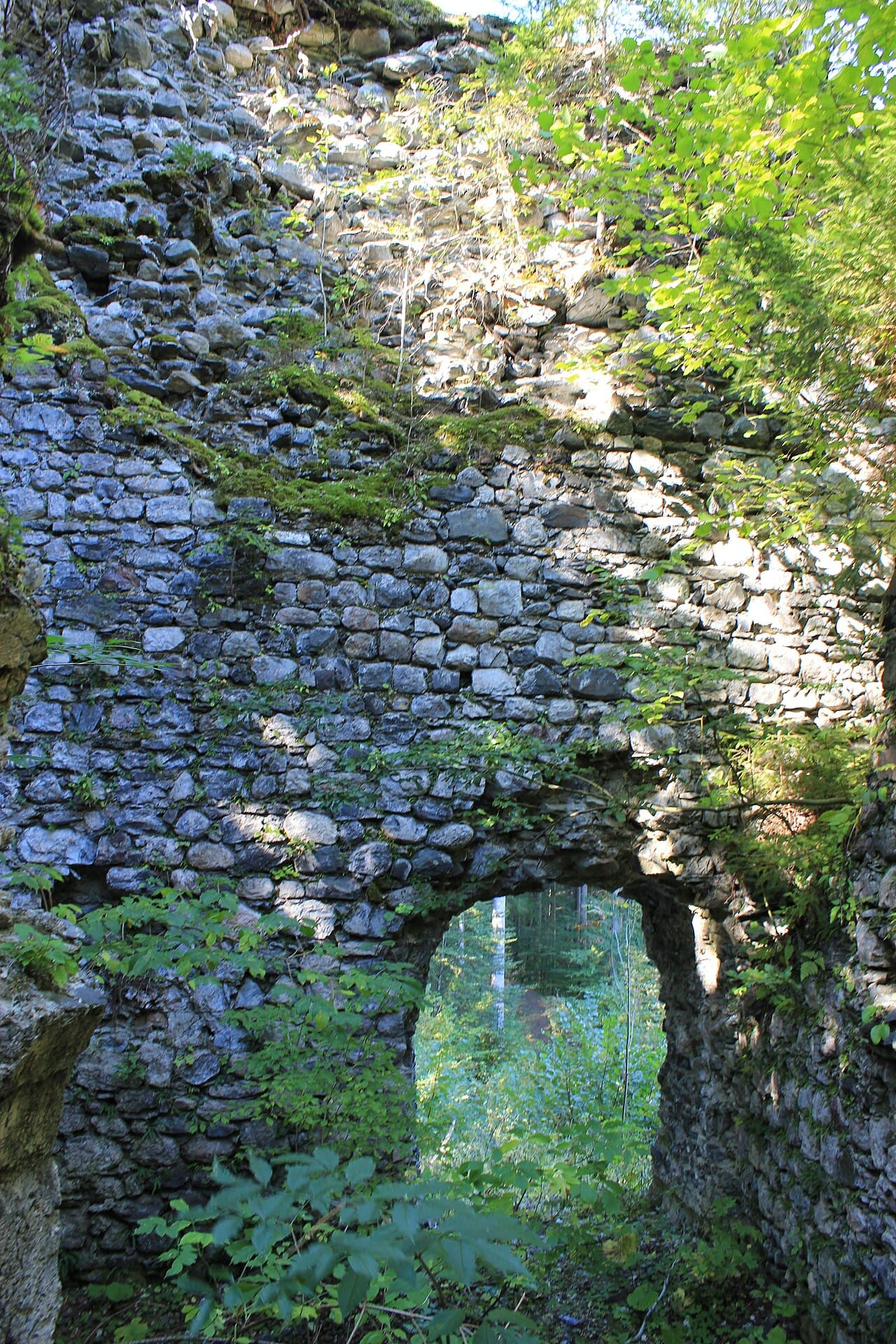
The castle was built as a hill castle, typical of medieval fortresses in the region, utilizing natural elevations for defense. Its remains include sections of thick stone walls, foundations of towers, and defensive elements such as battlements and gatehouses. The layout likely comprised a central courtyard surrounded by residential and defensive buildings.

The use of local stone materials and masonry techniques reflect the construction practices of the medieval period in Carinthia. Although much of the superstructure has collapsed, the surviving ruins allow for archaeological study of the castle's design and defensive capabilities.

Decline and current condition

After the 16th century, Burgruine Weidenburg was abandoned and gradually fell into ruin. Its decline may have been influenced by changes in military technology, political shifts, or economic factors that rendered the castle obsolete.

Today, the site is classified as archaeological ruins and is partially preserved. Visitors can explore the remaining stonework and foundations, which offer a glimpse into medieval fortification architecture. The ruins are a cultural heritage site, contributing to the understanding of medieval life and defense in Austria.

Cultural significance and tourism

Although not as extensively restored or developed as some other castles in Austria, Burgruine Weidenburg holds local historical importance. It attracts visitors interested in medieval history, archaeology, and castle architecture. The site provides an authentic experience of a medieval fortress in its ruined state.

Access to the ruins may be limited due to preservation efforts and the natural terrain. Visitors are advised to check local information for access details and guided tours that may be available in the region.

Frequently asked questions (FAQ)

What is the historical significance of Burgruine Weidenburg?
Burgruine Weidenburg is a medieval castle that dates back to the 12th century, playing a crucial role in the defense of the region during its early years. It stands as a testament to the feudal architecture of the time and offers insights into the historical conflicts and governance of Austria.
When was Burgruine Weidenburg built?
The construction of Burgruine Weidenburg began in the early 12th century, with various modifications and additions made over the centuries. Its strategic location made it an important fortress throughout its history, particularly during the Middle Ages.
Can I visit Burgruine Weidenburg year-round?
Yes, Burgruine Weidenburg is generally open to visitors year-round, although specific hours may vary depending on the season. It is advisable to check the official website for any seasonal changes or special events that might affect access.
What are the opening hours for Burgruine Weidenburg?
The opening hours for Burgruine Weidenburg typically vary by season, with longer hours during the summer months. Generally, it opens from 10 AM to 6 PM during peak season, but it is best to verify current hours before planning your visit.
Is it possible to access Burgruine Weidenburg with limited mobility?
Access to Burgruine Weidenburg can be challenging for those with limited mobility, as the castle is situated on a hill and requires navigating uneven terrain. However, visitors are encouraged to contact the site in advance to inquire about any available accommodations or alternative routes.
What are the ticket prices for Burgruine Weidenburg?
Ticket prices for Burgruine Weidenburg are generally modest, making it an affordable destination for visitors. Discounts may be available for students, seniors, and groups, so it's worth checking for any special rates before your visit.
When is the best time to visit Burgruine Weidenburg?
The best time to visit Burgruine Weidenburg is during the spring and fall when the weather is mild and the scenery is particularly beautiful. Additionally, visiting during these seasons can help you avoid the larger crowds that typically come during the summer months.
Are there any nearby attractions to visit along with Burgruine Weidenburg?
Yes, there are several nearby attractions that complement a visit to Burgruine Weidenburg, including picturesque hiking trails and other historical sites. The surrounding region is rich in natural beauty, making it perfect for a full day of exploration.

Photo gallery

Burgruine Weidenburg
Click to view

Photo by Neithan90•Public domain

1 photo • Click any image to view in full screen

Information

Archaeological Site / Ruins

Loading map...

Visitor reviews

No reviews yet. Been here? Write the first review and help other travelers!

Write the first review

Visited this castle? Share your experience

Your review helps other travelers and adds first-hand knowledge to our encyclopedia.
Write a review

(5/5)

0/2000 characters

Your review will be visible after admin approval

Nearby castles

9.8 km
Burg Stein im Drautal — Austria castle

Burg Stein im Drautal

Austria, Austria

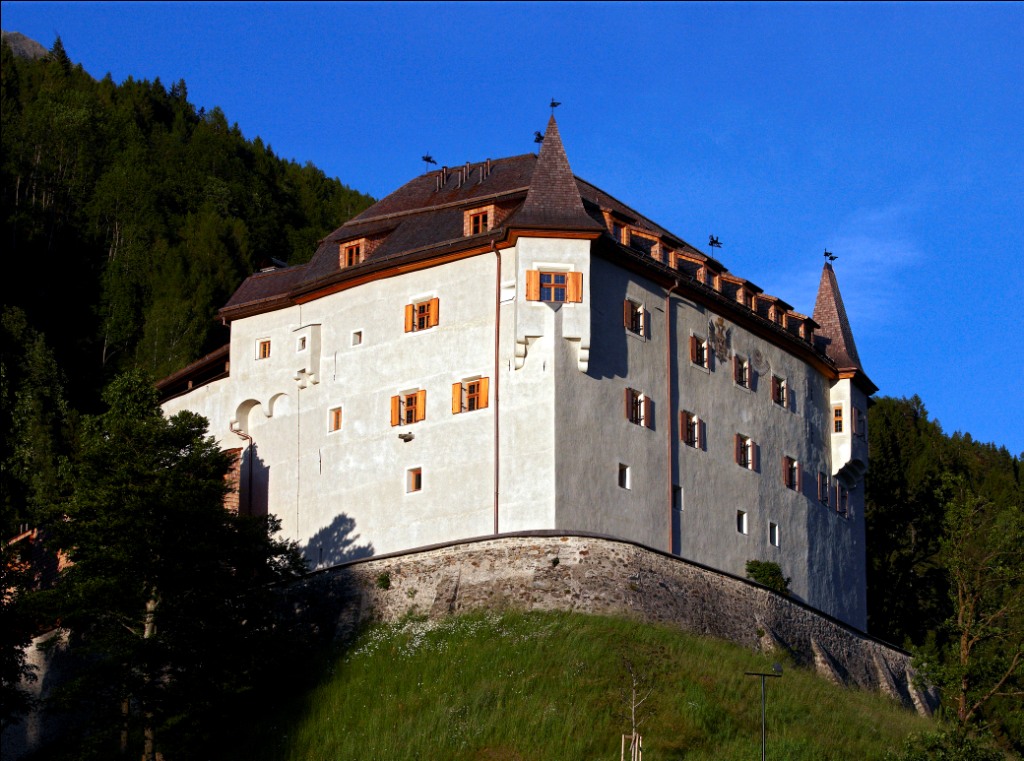
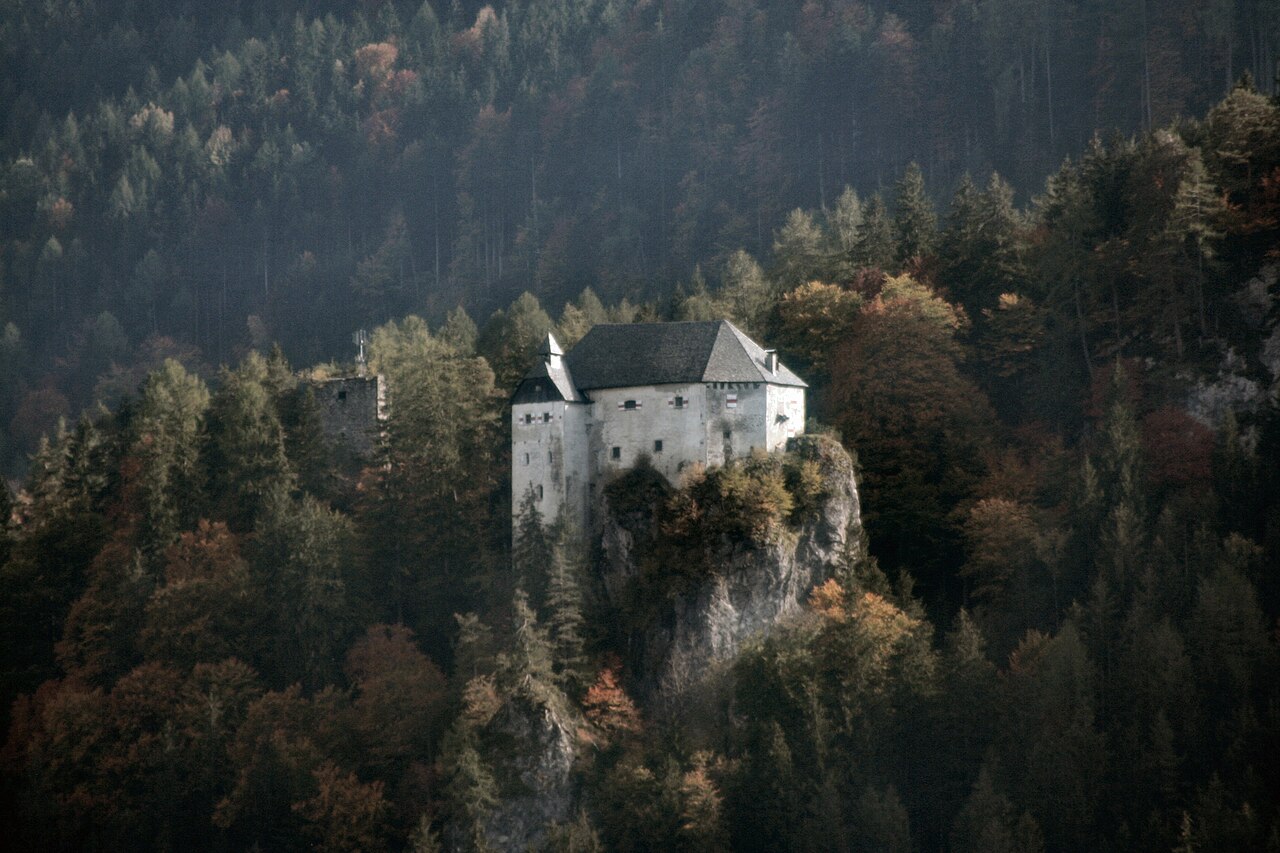
Burg Stein im Drautal is a medieval hill castle situated in the municipality of Stein in Austria, prominently perched on a steep rocky outcrop overlooking the Upper Drau Valley. Constructed in the late 12th century by German-speaking settlers, it first appears in historical records around 1190 under the ownership of Haidenrich de Lapide, a ministerial serving the Counts of Ortenburg. The castle's strategic location on the southern bank of the Drau River allowed it to control the surrounding valley and served as a noble seat for centuries. Historical ownership and significance Throughout its history, Burg Stein im Drautal experienced several changes in ownership that reflect the shifting political landscape of medieval Central Europe. In the 13th century, the castle came under the control of the Meinhardiner dynasty, also known as the Counts of Görz, a powerful noble family in the region. By 1440, the castle was held by the Counts of Cilli, though their tenure was brief. In 1456, the castle passed to the Habsburgs, one of the most influential ruling houses in Europe, marking a significant shift in its governance. At the start of the 16th century, Emperor Maximilian I granted Burg Stein to Virgil von Graben and his son Lukas von Graben zum Stein. The Von Graben family maintained stewardship for over 150 years until the male line ended with Christof David von Graben zum Stein in 1664. The subsequent inheritance dispute involved the Tyrolean Von Graben branch and the Lamberg family, but due to inheritance laws favoring male heirs, the property reverted to the Habsburgs. In 1668, the Habsburgs sold the castle to Balthasar von Beverellis, and by 1681, ownership transferred to the Orsini-Rosenberg family, descendants of the Von Graben line. The Orsini-Rosenbergs have retained possession since then. Throughout these centuries, the castle remained a noble residence but was not generally accessible to the public. Architectural features and layout Burg Stein im Drautal is a rock castle that exploits its natural elevation approximately 200 meters above the valley floor. The fortress is built with robust stone masonry that integrates with the rugged terrain, typical of medieval defensive architecture from the late 12th century. Its location on a rocky outcrop provided natural defenses, complemented by man-made fortifications. Bergfried and defensive structures The castle's defining architectural feature is its bergfried, a square-shaped main tower standing about 15 meters tall. Originally, this tower functioned as a self-contained defensive refuge, separated from the main residential building, or palas. A wooden bridge connected the bergfried to the palas, emphasizing its role as a last stronghold during sieges. While parts of the tower are now in ruin, the upper sections remain intact and accessible, offering commanding views over the Drau Valley. Double chapel: religious and artistic heritage One of the most remarkable features within the castle complex is the double chapel located in the northeast corner. Dating from the 15th century, this architectural element consists of two vertically stacked chapels in the Romanesque style, connected by an opening that allows passage between the floors. The lower chapel is dedicated to Saint Valentine, while the upper chapel honors Saint Martin. The upper chapel's decorations were created by Bartlmä Firtaler, a notable artist of the period. Both chapels are adorned with finely carved statues and frescoes by Simon von Taisten, a late Gothic painter from South Tyrol. These artworks highlight the castle's religious significance and the patronage of the noble families who resided there. Preservation and current condition Today, Burg Stein im Drautal retains much of its original medieval structure, although some areas show signs of partial ruin and wear due to centuries of exposure. The bergfried and the double chapel remain prominent features and serve as tangible links to the castle's historical and architectural past. The castle's remote and elevated position has helped preserve its remains, making it a valuable cultural heritage site. Despite its historical importance, the castle is privately owned by the Orsini-Rosenberg family and is not generally open to public tours. Its preservation is maintained through private stewardship, ensuring that the castle's medieval character endures. Location and strategic importance Situated between the towns of Oberdrauburg and Dellach im Drautal, Burg Stein commands a strategic vantage point over the Upper Drau Valley. The castle's position on a steep rock outcrop made it a formidable defensive site, controlling access along the river and the valley routes. Its elevation of approximately 200 meters above the valley floor enhanced its defensive capabilities and visibility across the landscape. The castle's location reflects typical medieval military architecture principles, where natural topography was harnessed to strengthen fortifications and provide early warning against approaching threats.

Details
20.8 km
Lengberg Castle — Austria castle

Lengberg Castle

Nikolsdorf, Austria

Lengberg Castle is a 12th-century hill castle located near Nikolsdorf in East Tyrol, Austria, approximately 13 kilometres east of the town of Lienz. This castle stands as a significant example of High Medieval fortification architecture in the region, reflecting the strategic importance of the area during the medieval period. Historical context and strategic location Constructed in the 12th century, Lengberg Castle was built during a time when the control of mountain passes and trade routes in the Eastern Alps was crucial. Its position on a hilltop provided commanding views over the surrounding valleys, enabling effective surveillance and defense against potential invaders or rival noble families. The castle's location near Nikolsdorf allowed it to oversee and protect the important transit routes connecting Tyrol with neighboring regions. Architectural features and construction The castle is classified as a hill castle, characterized by its elevated position which was typical for medieval fortifications aimed at maximizing defensive capabilities. The original construction likely included a robust keep or donjon, surrounded by defensive walls and possibly a moat or ditch to hinder attackers. The surviving structures exhibit High Medieval masonry techniques, with thick stone walls designed to withstand sieges and artillery of the period. Defensive structures Lengberg Castle would have featured essential defensive elements such as battlements, arrow slits, and fortified gates. The castle's design focused on controlling access and providing strongholds for defenders. Although much of the original fortification may have been altered or partially lost over the centuries, archaeological studies have revealed the layout and construction methods typical of 12th-century hill castles. Residential and functional spaces Within the castle walls, there would have been residential quarters, storage rooms, and halls serving administrative and domestic functions. The living spaces were likely modest but functional, reflecting the dual role of the castle as a military stronghold and noble residence. The castle's rooms might have included a great hall, private chambers, and service areas necessary for sustaining the inhabitants during peacetime and conflict. Archaeological significance and discoveries Lengberg Castle has gained attention not only for its medieval architecture but also for important archaeological findings. Excavations have uncovered artifacts that provide insights into the daily life of the castle's inhabitants and the broader historical context of the region. These discoveries include medieval textiles and tools, which have contributed valuable information about the material culture of the High Middle Ages in Tyrol. Preservation and current condition The castle remains a partially preserved medieval structure, with some original walls and features still visible. Efforts have been made to maintain and study the site to preserve its historical and cultural significance. While not fully restored, Lengberg Castle offers visitors a glimpse into medieval fortification architecture and the history of East Tyrol during the High Medieval period. Visiting Lengberg Castle Visitors to Lengberg Castle can explore the ruins and surrounding landscape, which provide a scenic view of the East Tyrolean Alps. The castle's location makes it accessible for hikers and history enthusiasts interested in medieval architecture and archaeology. While facilities may be limited due to its status as a partially preserved site, the castle remains an important cultural landmark in the region. Legacy and cultural importance Lengberg Castle holds a place in the heritage of Tyrol as a representative of medieval defensive architecture and noble residence. Its archaeological finds have contributed to a deeper understanding of medieval life in the Eastern Alps. The castle continues to be a subject of study and interest for historians, archaeologists, and visitors seeking to connect with Austria's medieval past.

High Medieval (11th–13th c.)
Details
27.8 km

Burgruine Khünburg

Austria, Austria

Burgruine Khünburg is a remarkable medieval hill castle ruin located near the village of Khünburg within the municipality of Hermagor, in the Austrian state of Carinthia. This fortress stands as a testament to medieval fortification architecture and the complex feudal history of the region. Constructed in the late 12th century, it was originally built by the noble Kuenburg family, who played a significant role in the local political and social landscape during the High Medieval period. The castle's first documented mention dates back to 1189, identifying Count Pero de Kinburch, a ministerial nobleman serving the Kuenburg lineage, as its owner. This early record situates the castle firmly within the medieval Christian civilization that shaped central Europe. Over the following centuries, Burgruine Khünburg witnessed a series of ownership changes that reflect the intertwined secular and ecclesiastical powers typical of the era. By the 13th century, the castle came under the control of the Bishopric of Bamberg, illustrating the influence of church authorities in regional governance. Later, in 1311, the fortress was pawned to Duke Heinrich of Carinthia, indicating its involvement in the political and financial maneuvers of the time. Architectural features and layout Burgruine Khünburg was constructed around 1200 in the Romanesque architectural style, which is evident in its robust stone masonry and simple geometric forms. The castle occupies an area approximately thirty by forty meters, situated strategically on a rocky hill that commands views over the Gail Valley and surrounding alpine terrain. The bergfried: the castle's dominant tower The most prominent surviving feature of the castle is its bergfried, or main tower, which is an excellent example of Romanesque military architecture. Built of natural stone on a nearly square footprint measuring just under nine meters per side, the tower rises to about 22.5 meters in height. It is crowned with a distinctive pyramid-shaped roof that preserves the medieval silhouette. Access to the bergfried is through an arched doorway leading to an interior wooden staircase. This staircase is a remarkable structural element, consisting of seven flights and six landings, totaling ninety-eight steps that ascend to an observation platform approximately seventeen meters above ground level. The tower's walls are notably thick, about one meter wide, and feature two square window openings on each side near the top, offering panoramic views of the valley and mountains. Defensive walls and residential structures Surrounding the bergfried, large sections of the original ring wall still stand, measuring between five and eight meters tall. These walls formed the castle's primary defensive perimeter, enclosing the courtyard and residential buildings. South of the bergfried, the remains of a residential building's ground floor walls provide valuable insights into the castle's internal organization and living quarters. Historical significance and decline Burgruine Khünburg's history is marked by its role in the power dynamics of medieval Carinthia. The castle's transfer to the Bishopric of Bamberg in the 13th century underscores the significant ecclesiastical influence in the region. Its pawning to Duke Heinrich of Carinthia in 1311 reflects the castle's strategic and economic importance during a period of territorial disputes and shifting alliances. Tragedy struck the castle around 1540 or 1541 when a devastating fire led to its abandonment. The Kuenburg family subsequently relocated to Schloss Khünegg at Egg, near Hermagor, marking the end of the castle's active use. Without maintenance, Burgruine Khünburg gradually fell into ruin, its walls weathering the centuries but retaining enough structure to convey its former grandeur. Preservation and restoration efforts Interest in preserving Burgruine Khünburg revived in the early 20th century, with initial restoration work focusing on stabilizing the bergfried. These efforts included roofing the tower to protect it from the elements and reinforcing its timber framework. Continued restoration throughout the 20th and early 21st centuries has ensured that the bergfried remains accessible to visitors and retains its distinctive profile against the alpine landscape. Today, Burgruine Khünburg stands as a well-preserved example of a Romanesque hill castle, offering visitors a tangible connection to medieval history and architecture. Its commanding position provides spectacular views and a vivid sense of the strategic considerations that shaped its construction and use. Visiting Burgruine Khünburg Visitors to Burgruine Khünburg can explore the remains of the bergfried and the surrounding fortifications. The castle's elevated position offers excellent opportunities for photography and appreciating the natural beauty of the Gail Valley. While the site is primarily a ruin, the preserved structures and interpretive signage provide valuable context for understanding its historical and architectural significance. As a cultural heritage site, Burgruine Khünburg exemplifies the medieval fortresses that once dominated the Carinthian landscape. Its enduring presence enriches the historical narrative of Austria and invites ongoing study and preservation.

High Medieval (11th–13th c.)
Details