Burg Staufeneck
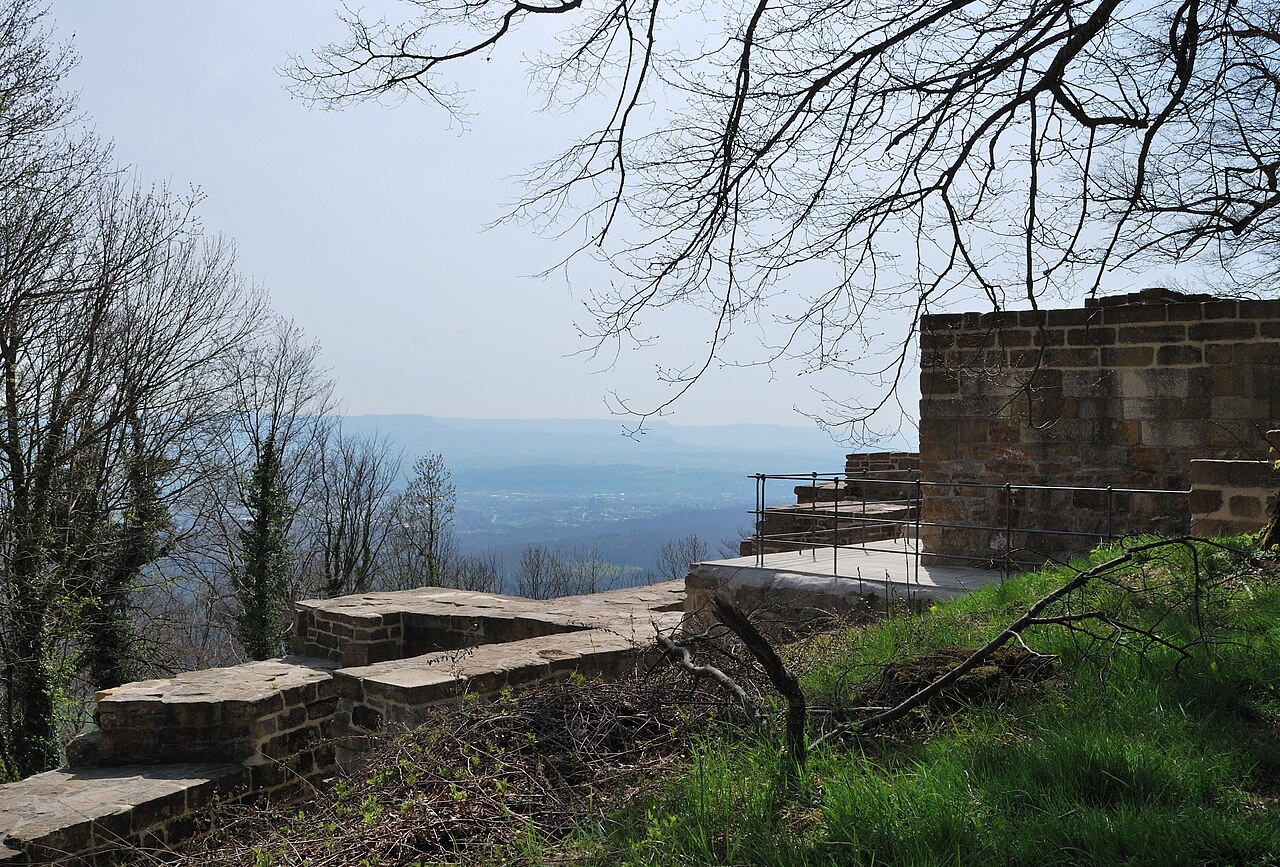
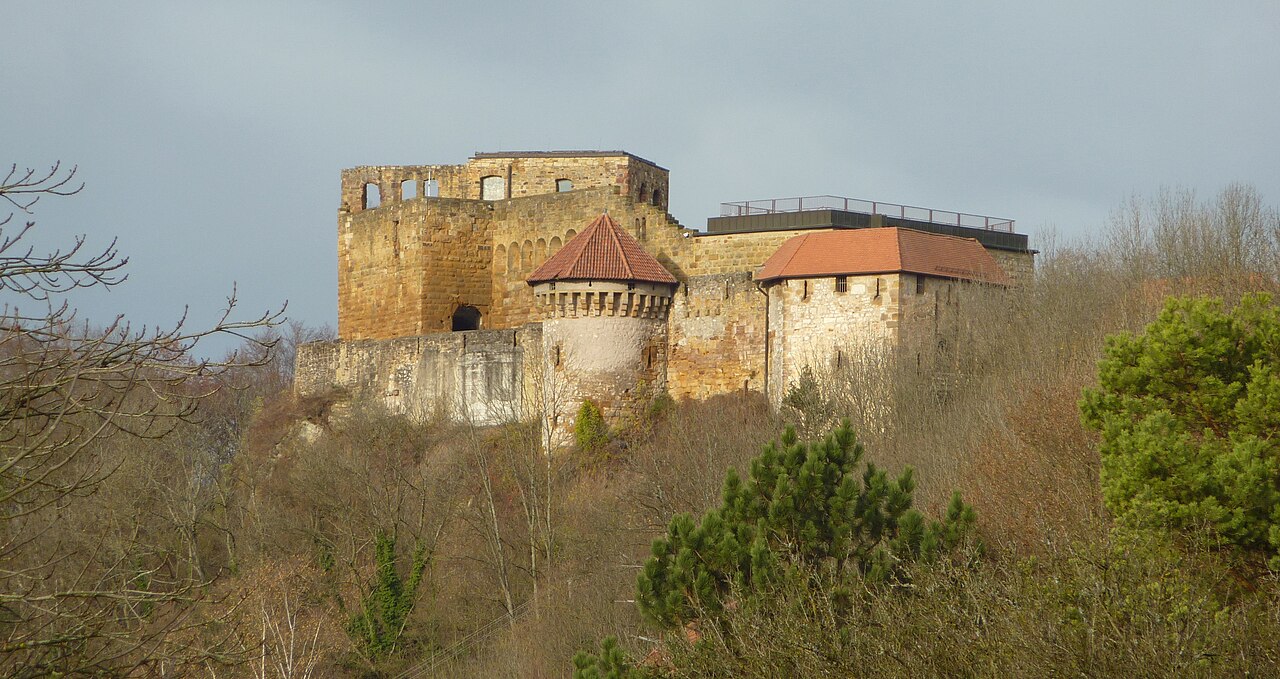
Burg Staufeneck is a striking hill castle ruin located above the municipality of Salach in Germany, perched strategically on a rocky spur at 529 meters elevation on the southwestern edge of the Rehgebirge. This elevated position overlooks the Filstal valley and faces the fortress of Burg Ramsberg on the opposite ridge, highlighting its historical military significance as a spur castle designed to exploit natural terrain for defense. The castle's origins are somewhat debated, with sources suggesting its founding either around 1080 or in the mid-13th century (circa 1240), linking it to the noble Lords of Staufeneck, a family likely connected to the renowned Staufer dynasty as evidenced by shared heraldic symbols like the lion in their coat of arms.
The noble lineage and ownership history
The castle remained under the control of the Lords of Staufeneck until 1333, when it passed to the Lords of Rechberg zu Staufeneck. This family maintained possession until their line ended in 1599. Subsequently, ownership transferred to Gertraud von Schutzbar (née Milchling) and her relatives. The early 17th century saw the castle embroiled in complex disputes involving Duke Friedrich I of Württemberg, who notably seized the castle by force around 1601 to 1604, underscoring the political tensions of the era.
Throughout the 17th century, Burg Staufeneck changed hands multiple times. It was held briefly by Friedrich von Württemberg before passing to Georg Ludwig von Freyberg. Later, Anna Margaretha held the castle under the guardianship of Bishop Heinrich of Augsburg, indicating ecclesiastical involvement in its administration. In 1642, the fortress became the property of Generalwachtmeister Wilhelm von Guyn. After his death in 1661, it was sold to Ferdinand von Degenfeld, and eventually inherited by Christoph Martin von Degenfeld-Schonburg (1689–1769), who was the last notable noble associated with the estate.
Decline and partial restoration
By the turn of the 19th century, Burg Staufeneck had fallen into neglect. By 1844, the castle was largely abandoned and suffered deliberate dismantling of some sections. However, the 20th century brought renewed interest in preserving the site. In 1926, the castle's main tower, the bergfried, was restored and made accessible to visitors, highlighting its importance as a medieval defensive structure. The following year, parts of the castle were adapted for hospitality purposes, with the west section converted into a hotel and restaurant, marking a new chapter in the castle's long history.
Architectural features and surviving structures
The most prominent surviving element of Burg Staufeneck is its 27-meter-high bergfried, a tall central tower typical of medieval fortifications. This structure showcases traditional medieval masonry techniques and has been preserved as a key landmark of the castle's defensive architecture. The castle's layout takes full advantage of its rocky spur location, with natural cliffs enhancing its defensive capabilities.
Alongside the bergfried, the west wing has been sympathetically modified to serve as a hotel and restaurant since 1927, blending modern usage with historical preservation. Within the castle grounds lies the Anselm-Schott-Haus, notable as the birthplace of Anselm Schott in 1843. This ancillary building offers insights into the domestic life associated with the castle in its later periods.
While much of the original castle fabric has deteriorated or been removed, the remaining medieval masonry and adaptive reuse efforts provide valuable glimpses into the site's layered history. There are no known surviving inscriptions, mosaics, or archaeological artifacts such as tools or pottery, focusing attention primarily on the enduring stone architecture that has withstood centuries of change.
Strategic importance and regional context
Burg Staufeneck's location on the southwestern edge of the Rehgebirge and overlooking the Filstal valley was of strategic military and administrative importance during the medieval period. Its positioning opposite Burg Ramsberg suggests a network of fortifications controlling key routes through the region. The castle's role as a spur castle exemplifies medieval defensive architecture that integrates natural topography to enhance fortification strength.
The castle's historical associations with noble families tied to the Staufer dynasty and later Württemberg rulers reflect the shifting political landscape of southwestern Germany from the High Middle Ages through the Early Modern period. Its involvement in ownership disputes and military actions during the early 1600s further illustrates its continued strategic relevance well into the Renaissance era.
Visiting Burg Staufeneck today
Today, visitors to Burg Staufeneck can explore the restored bergfried and enjoy the unique experience of staying or dining in the castle's adapted west wing hotel and restaurant. The site offers panoramic views of the surrounding Rehgebirge and the Filstal valley, making it a favored destination for those interested in medieval architecture and regional history.
The preservation efforts have maintained the castle's historical ambiance while providing modern amenities, allowing guests to immerse themselves in the atmosphere of a medieval fortress. The Anselm-Schott-Haus adds a cultural dimension to the visit, connecting the site to notable historical figures from the 19th century.
While the castle remains a ruin in many respects, its combination of medieval fortifications and 20th-century adaptations offers a distinctive example of how historical sites can be preserved and repurposed for contemporary use without losing their heritage significance.
Frequently asked questions (FAQ)
- How do I get to Burg Staufeneck?
- Burg Staufeneck is located above Salach in Baden-Württemberg, Germany. It is accessible by local roads and hiking trails from the town center, with parking available nearby.
- What is the historical significance of Burg Staufeneck?
- Burg Staufeneck was a strategic medieval spur castle linked to the Staufer dynasty and later Württemberg nobility, playing a key role in regional defense and administration.
- Can I visit the bergfried tower?
- Yes, the 27-meter-high bergfried has been restored and is open to visitors, offering panoramic views of the Rehgebirge and Filstal valley.
- Is there accommodation available at Burg Staufeneck?
- The west wing of the castle has been adapted into a hotel and restaurant since 1927, providing unique lodging and dining experiences within the historic site.
- When is the best time to visit Burg Staufeneck?
- The best time to visit is during the warmer months, from late spring to early autumn, when the castle's grounds and bergfried tower are fully accessible.
Information
Opening hours
Varies seasonally, typically 10:00-18:00
Ticket prices
Free to access bergfried, hotel and restaurant fees apply
Current owner
Private owner
Website
Visit websiteSources & official resources
Verify the information above using these authoritative references.
Loading map...
Visitor reviews
No reviews yet. Been here? Write the first review and help other travelers!
Write the first reviewVisited this castle? Share your experience
Your review helps other travelers and adds first-hand knowledge to our encyclopedia.