Burg Schlosseck
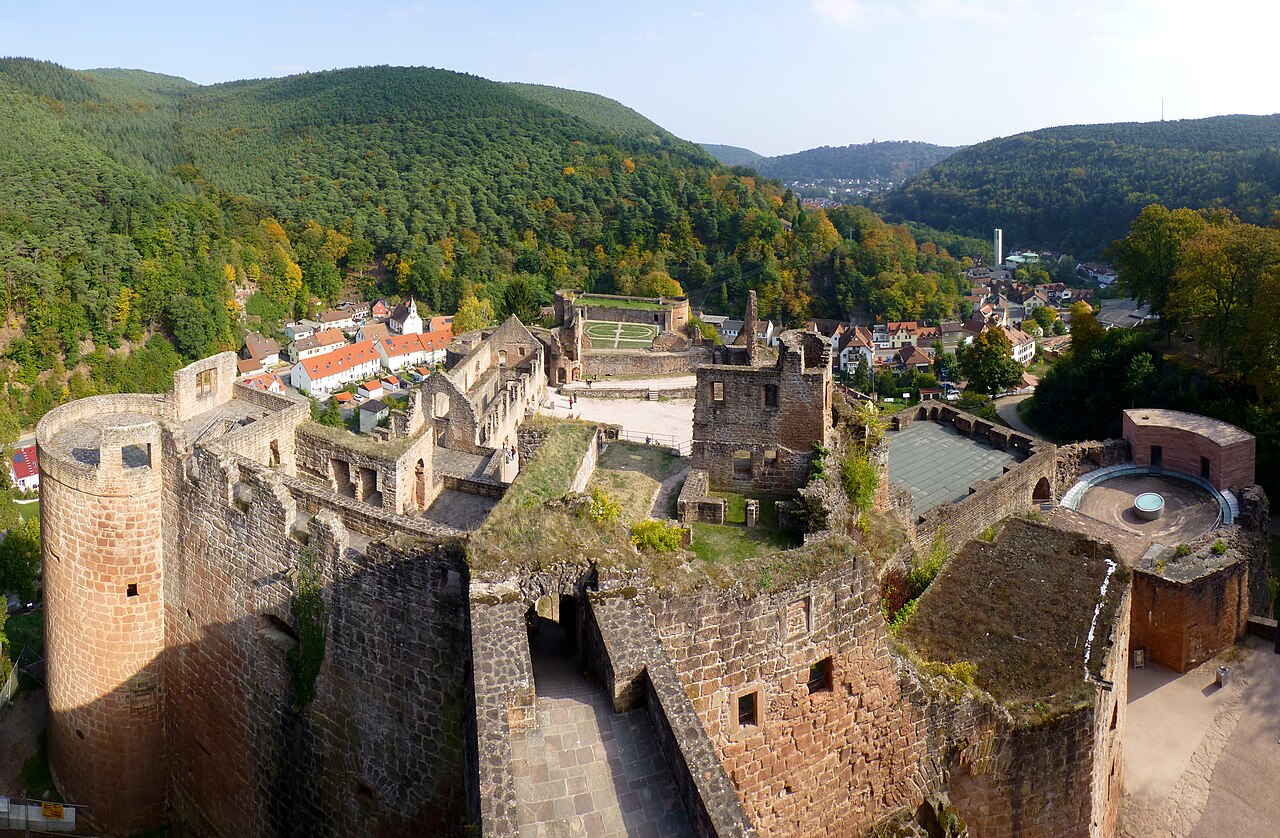
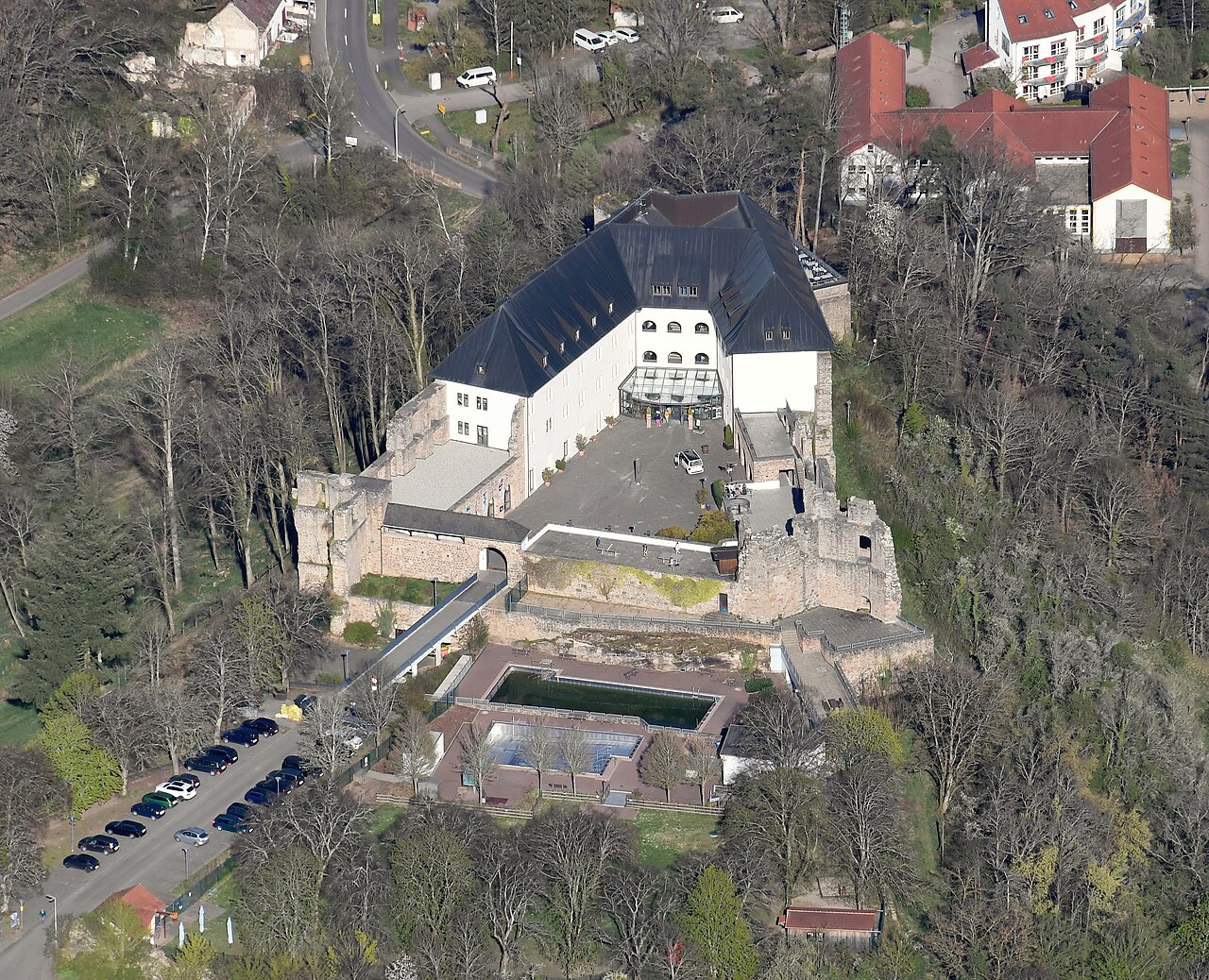
Burg Schlosseck stands as a notable castle ruin located near the municipality of Bad Dürkheim in the Rhineland-Palatinate region of Germany. Its story begins in the early medieval period, specifically during the 9th or 10th century, when it was initially constructed as a refuge castle to protect local communities from invasions, likely by Norse raiders known as the Normans. This early fortification was part of a broader network of defensive sites in the area, including nearby locations such as Heidenlöcher and Heidenschuh, which collectively contributed to regional security during turbulent times.
In the early 13th century, the castle underwent a significant transformation under the probable direction of the Counts of Leiningen, who controlled the surrounding lands. This rebuilding effort reflected the military and architectural advancements of the Staufer period, transitioning the site from a simple refuge to a more robust stronghold. Archaeological evidence indicates that during this century, the castle suffered a major fire, which may have been caused by conflict or accident. Despite this damage, Burg Schlosseck remained in use and inhabited into the following century.
The castle's original name remains unknown, as no medieval documents mention it. The name "Schlosseck" appeared later through post-medieval folk traditions, which often shaped the popular memory of historical sites. Interest in the castle's history and archaeology was revived in the late 19th century, beginning with excavations by Christian Mehlis in 1879. Subsequent restoration efforts between 1883 and 1884 focused on stabilizing the ruins and reconstructing the castle gate using original fragments. The gate is notable for its decorative reliefs featuring eagles, motifs similar to those seen at the Erkenbert ruin in Frankenthal and the Worms Cathedral. The keystone is adorned with a distinctive leaf mask, adding artistic character to the entrance. Further conservation work took place in 1988 and 1989, ensuring the site's preservation. Since 1963, the castle has been managed by the Rhineland-Palatinate state castle administration.
Architectural layout and defensive features
Burg Schlosseck's layout follows the natural contours of a rocky outcrop rising approximately 303 meters above the Isenach valley. The castle's elongated oval shape respects the footprint of the original early medieval refuge. This elevated position provided strategic advantages, offering wide views over the surrounding landscape and natural defensive benefits.
On the uphill side, a straight neck ditch was cut to reduce the length of the defensive perimeter. Adjacent to this ditch are the foundations of a substantial shield wall approximately three meters thick, designed to protect the castle from direct assault. Embedded within this wall is the base of a pentagonal bergfried, a tall, freestanding defensive tower typical of medieval German castles. This bergfried dates from the early 13th-century reconstruction and measures about 8.5 meters across and 11.5 meters in length, with walls around 2.5 meters thick. The tower's masonry features well-cut bossage stones, which have raised faces with rough-hewn edges, providing both strength and a rugged aesthetic.
The castle gate and decorative elements
The castle gate is one of Burg Schlosseck's most distinctive restored features. Reconstructed in the 1880s from original fragments uncovered during archaeological excavations, the gate showcases artistic reliefs depicting eagles, a motif symbolizing power and protection. These reliefs bear resemblance to similar carvings found at the Erkenbert ruin and the Worms Cathedral, linking Burg Schlosseck to regional artistic traditions. The gate's keystone is decorated with a leaf mask, an ornamental detail that adds a touch of elegance to the fortress's otherwise martial appearance.
Historical significance and usage
While Burg Schlosseck was clearly an important defensive site, the castle's relatively modest remains suggest it may never have been fully completed or extensively expanded. The absence of key structures such as a palas (main residential hall) and the low height of surviving walls indicate a provisional or temporary use rather than a fully developed noble residence or major fortress.
This provisional nature aligns with the castle's origins as a refuge during a period of frequent raids and instability. Its primary function was likely to serve as a secure refuge for local inhabitants and a military outpost for controlling the surrounding territory. The castle's endurance into the 14th century, despite fire damage and limited expansion, attests to its ongoing strategic value.
Archaeological and conservation efforts
Starting in the late 19th century, archaeological interest in Burg Schlosseck grew, with Christian Mehlis conducting the first recorded excavations in 1879. These investigations uncovered important architectural fragments and helped clarify the castle's historical phases. The restoration of the gate in the 1880s was a pioneering effort to preserve and interpret the site for future generations.
Further conservation work in the late 20th century focused on stabilizing the ruins and preventing further deterioration. Today, the castle is maintained by the Rhineland-Palatinate state castle administration, which ensures public access and ongoing preservation.
Visiting Burg Schlosseck
Visitors to Burg Schlosseck can explore the atmospheric ruins set atop a commanding rocky hill overlooking the Isenach valley. The site offers insight into early medieval defensive architecture and the evolution of castle construction during the Staufer period. Although only low walls remain, the reconstructed gate and bergfried base provide tangible connections to the castle's past.
The castle's location near Bad Dürkheim makes it accessible for day trips, combining historical interest with scenic views of the Rhineland-Palatinate countryside. Interpretive signage and preserved features help visitors appreciate the castle's role in regional history and medieval military architecture.
Frequently asked questions (FAQ)
- When was Burg Schlosseck originally built?
- Burg Schlosseck was originally constructed in the 9th or 10th century as an early medieval refuge castle to protect local communities from invasions.
- What architectural style characterizes Burg Schlosseck?
- The castle exhibits a mixed architectural style, with early medieval origins and significant rebuilding in the early 13th century reflecting Staufer period military architecture.
- Can visitors access the castle ruins?
- Yes, Burg Schlosseck is accessible to visitors. The ruins are open for exploration, offering views of the Isenach valley and insight into medieval defensive structures.
- What is unique about the castle gate?
- The castle gate was reconstructed in the 1880s from original fragments and features decorative reliefs of eagles and a leaf mask keystone, linking it to regional artistic traditions.
- Who manages Burg Schlosseck today?
- Since 1963, Burg Schlosseck has been managed by the Rhineland-Palatinate state castle administration, which oversees its preservation and public access.
Information
Sources & official resources
Verify the information above using these authoritative references.
Loading map...
Visitor reviews
No reviews yet. Been here? Write the first review and help other travelers!
Write the first reviewVisited this castle? Share your experience
Your review helps other travelers and adds first-hand knowledge to our encyclopedia.