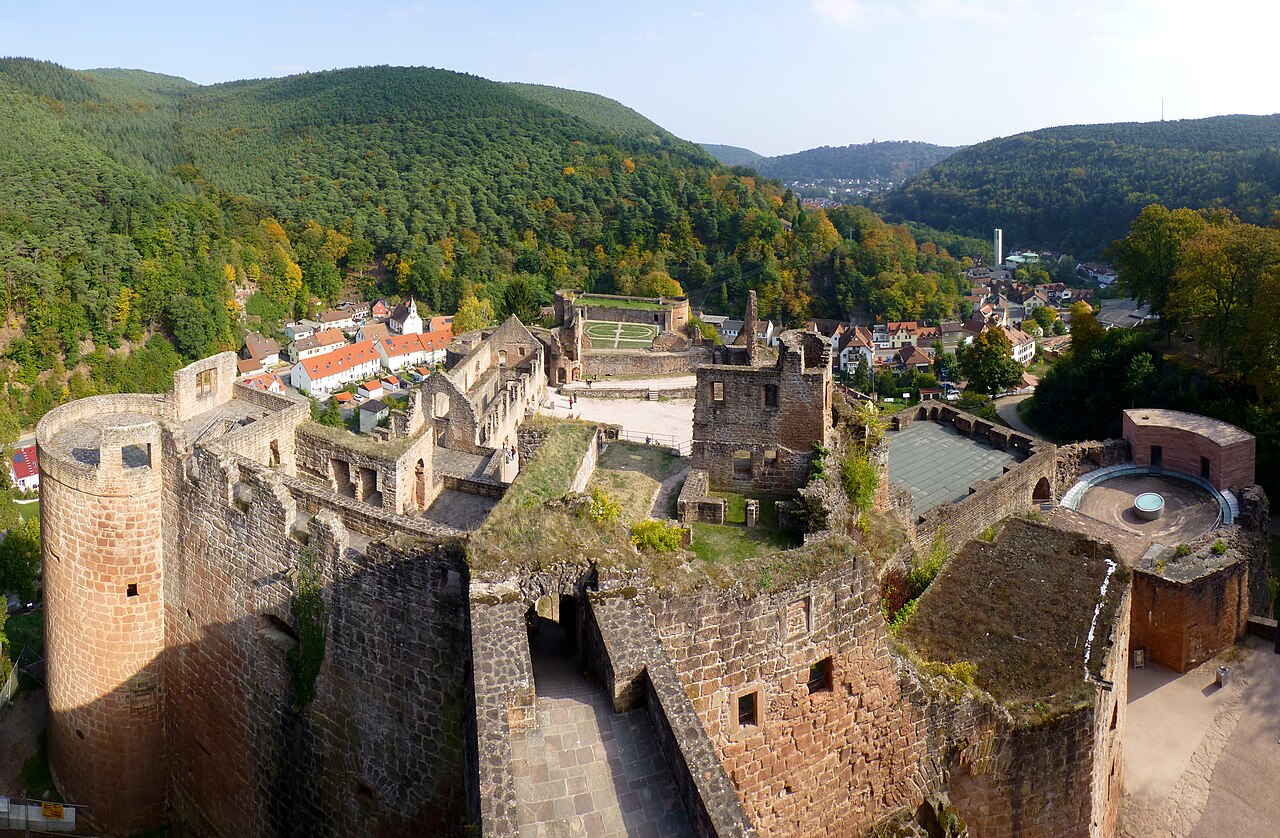
Limburg Abbey Ruins
The Limburg Abbey ruins located in Bad Dürkheim, Germany, represent the remains of a significant high medieval monastery complex dating back to the 11th century. Originally constructed as a fortress by the Salian Dukes from Worms in the 9th century, the site was strategically positioned on the Linthberg hill to serve as their family seat. This early fortification marked the beginning of a complex history that would see the fortress transformed into a religious institution of notable importance.
In the early 11th century, the fortress underwent a major conversion into a monastery, featuring a basilica church that became the centerpiece of the abbey. This transformation reflected the broader trend of secular sites being repurposed for ecclesiastical use during the high medieval period. The basilica was constructed in the Romanesque architectural style, characterized by its robust stone walls, rounded arches, and massive piers, typical of religious buildings of that era.
Historical development of Limburg Abbey
The abbey flourished throughout the 11th to 16th centuries, serving as a religious, cultural, and economic center in the region. It was closely tied to the Salian dynasty, which played a crucial role in the Holy Roman Empire during the high medieval period. The monastery's influence waned by the mid-16th century, coinciding with the religious upheavals of the Reformation and changing political landscapes.
From fortress to monastery
The initial fortress on the Linthberg was primarily a defensive structure, designed to protect the Salian Dukes' territorial interests. Its conversion into a monastery involved significant architectural modifications, including the addition of the basilica and monastic buildings such as cloisters, chapter houses, and living quarters for the monks. These structures were arranged around a central courtyard, typical of monastic layouts of the time.
Decline and ruin
By the mid-16th century, the abbey was secularized and eventually fell into disuse, leading to its gradual decay. Today, the site is recognized as an important archaeological ruin, with substantial remnants of the basilica and other monastic buildings still visible. The ruins provide valuable insights into Romanesque architecture and monastic life during the high medieval period.
Architectural features and layout
The surviving elements of Limburg Abbey include parts of the basilica's walls, foundation outlines, and fragments of decorative stonework. The basilica was constructed with a traditional basilican plan, featuring a nave flanked by aisles and an apse at the eastern end. The use of thick stone walls and rounded arches demonstrates the typical Romanesque style prevalent in the 11th century.
Additional monastic buildings would have included a cloister, which served as a central open space for contemplation and movement between the various functional areas of the abbey. The layout reflects the self-contained nature of monastic communities, designed to support religious devotion, communal living, and agricultural activities.
Significance and heritage
The Limburg Abbey ruins hold cultural and historical importance as a testament to the Salian dynasty's influence and the religious transformations of the high medieval period in the Rhineland-Palatinate region. The site attracts historians, archaeologists, and visitors interested in medieval architecture and monastic history.
Preservation efforts focus on maintaining the structural remains and promoting public awareness of the site's heritage value. The ruins are accessible to visitors and provide an evocative glimpse into the medieval past, illustrating the transition from military fortress to religious center.
Visiting Limburg Abbey ruins
The ruins are open to the public year-round, offering a unique opportunity to explore early medieval architecture in an atmospheric setting. Informational signage helps visitors understand the historical context and architectural features. The site is often included in regional heritage tours and is a highlight for those interested in the medieval history of Bad Dürkheim and the surrounding area.
Frequently asked questions (FAQ)
- How do I get to Limburg Abbey Ruins?
- Limburg Abbey Ruins is located in Bad Dürkheim, Germany, easily accessible by car or public transport. If you are traveling by train, the nearest station is Bad Dürkheim, from which you can take a short bus ride or enjoy a scenic walk to the site.
- What is the historical significance of Limburg Abbey Ruins?
- Limburg Abbey was founded in the 10th century and served as a Benedictine monastery. Its ruins are an important reminder of the region's religious history and architectural heritage, showcasing the medieval monastic lifestyle and the influence of the church in this area.
- When was Limburg Abbey built?
- Limburg Abbey was established around the year 1000 AD, making it one of the oldest monastic sites in the region. Over the centuries, it underwent various renovations and expansions, reflecting the architectural styles and religious practices of different eras.
- Can I visit Limburg Abbey Ruins year-round?
- Yes, Limburg Abbey Ruins is open to visitors throughout the year. However, it is advisable to check for any seasonal restrictions or maintenance closures before your visit to ensure a pleasant experience.
- Why is Limburg Abbey Ruins a popular tourist attraction?
- Limburg Abbey Ruins attracts visitors due to its rich history, stunning architecture, and picturesque surroundings. The site offers a unique glimpse into medieval life and serves as a popular spot for photography and exploration of the beautiful Palatinate Forest.
- Is it possible to take guided tours of Limburg Abbey Ruins?
- Yes, guided tours are available for visitors who wish to learn more about the history and architecture of Limburg Abbey. These tours provide insightful information and enhance your understanding of the site's significance.
- What are the opening hours for Limburg Abbey Ruins?
- Limburg Abbey Ruins generally opens from 9 AM to 6 PM during the warmer months, with reduced hours in winter. It's recommended to verify the current opening hours on the official website or local tourism information before planning your visit.
- Are there any nearby attractions to visit along with Limburg Abbey Ruins?
- Yes, visitors can explore nearby attractions such as the Bad Dürkheim spa, the historic town center, and the beautiful hiking trails in the Palatinate Forest. These sites complement your visit to the Abbey and offer a full day of exploration in the area.
- What are the ticket prices for visiting Limburg Abbey Ruins?
- Admission to Limburg Abbey Ruins is typically free of charge, making it an accessible destination for all visitors. However, fees may apply for guided tours or special events, so it's advisable to check in advance for any updates on pricing.
Information
Loading map...
Visitor reviews
No reviews yet. Been here? Write the first review and help other travelers!
Write the first reviewVisited this castle? Share your experience
Your review helps other travelers and adds first-hand knowledge to our encyclopedia.