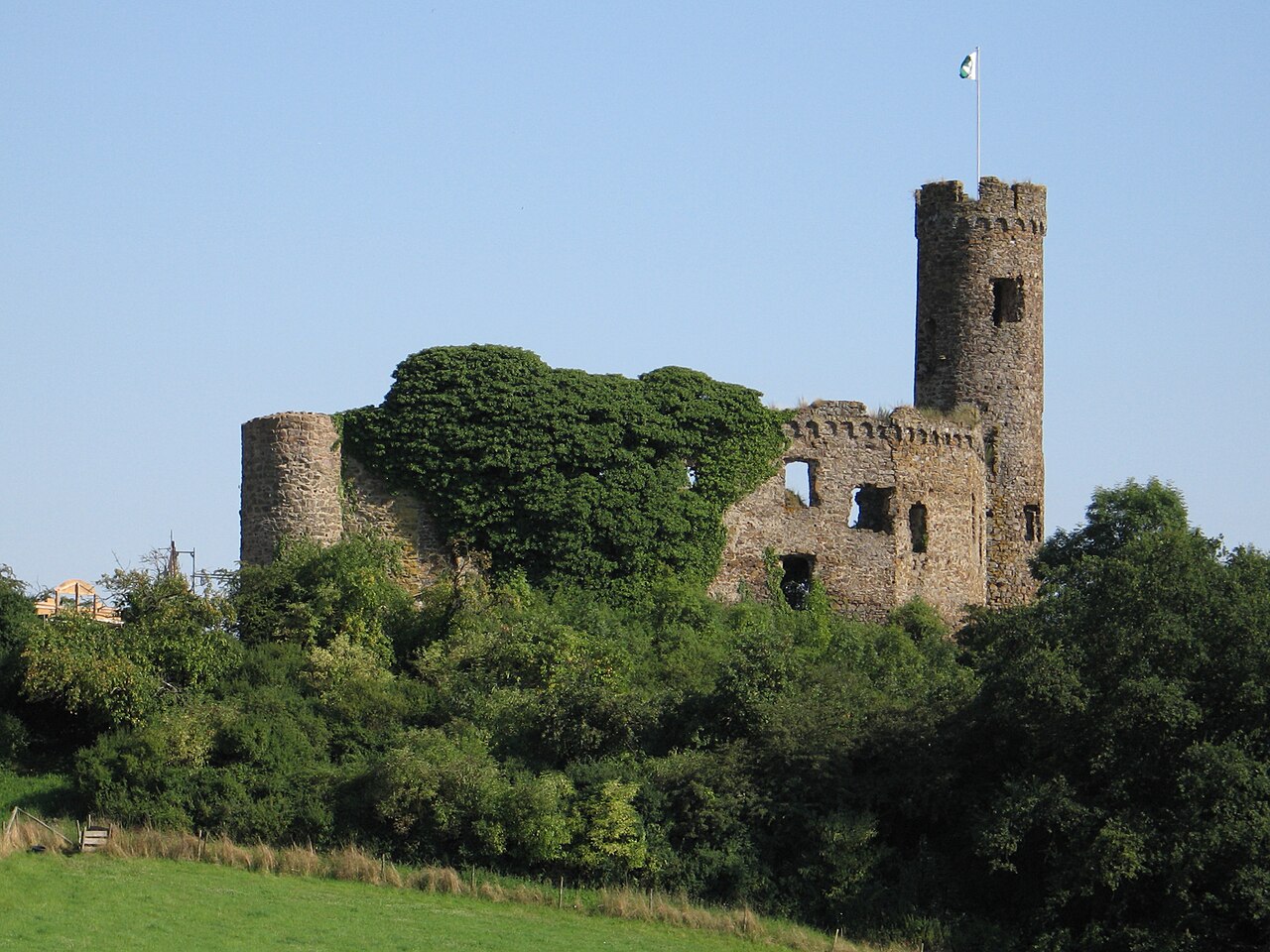
Burg Runkel
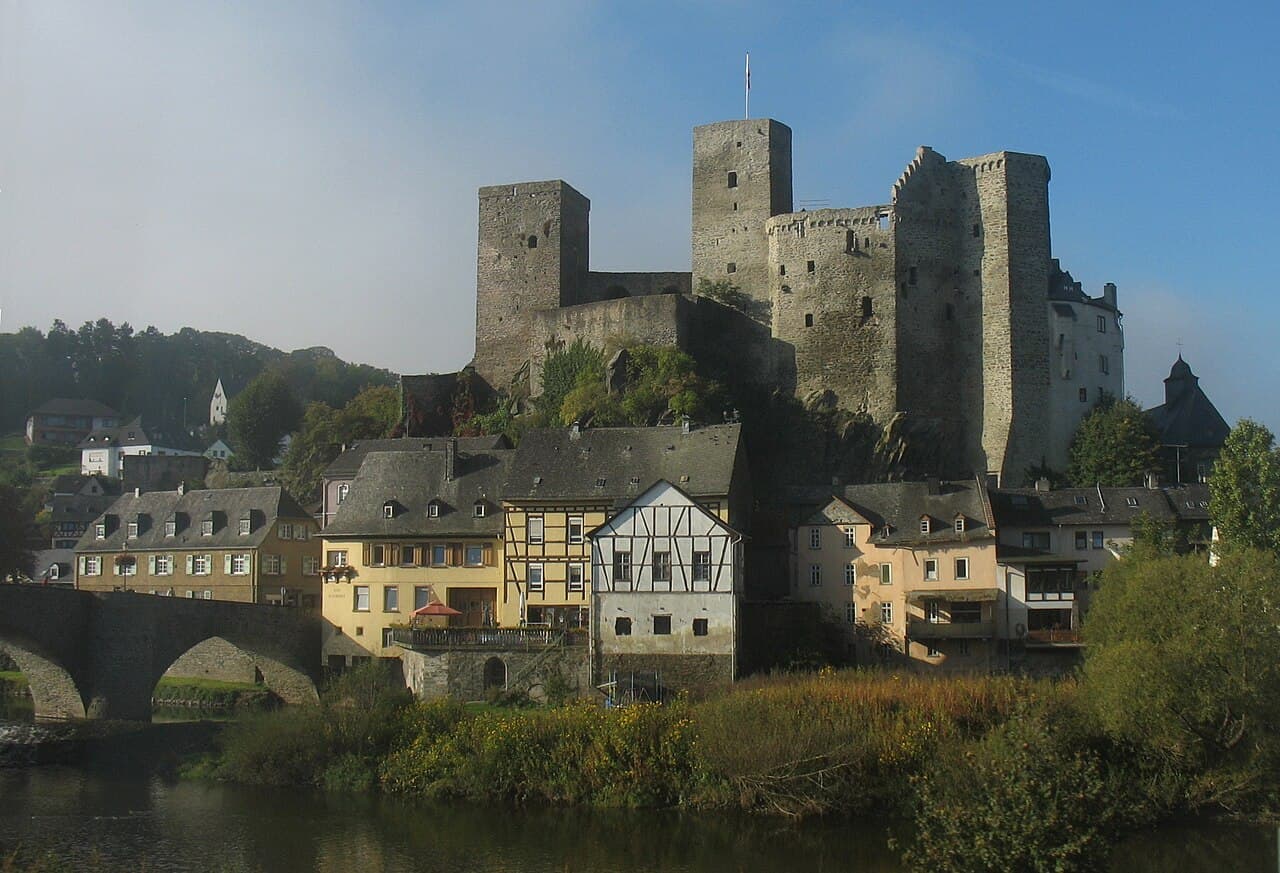
Burg Runkel, located in the picturesque Lahn valley in Hessen, Germany, is a striking example of an early medieval hill castle that has shaped the cityscape of Runkel since its first recorded mention in 1159. Perched on steep, vertically falling rocks, the castle's fortified towers rise suddenly and impressively, offering a commanding view and a formidable defensive position that has endured through centuries of European history.
Historical origins and strategic importance
The origins of Burg Runkel trace back to the mid-12th century, likely constructed shortly before it was first documented in 1159. The castle was founded by Siegfried I von Runkel under the auspices of Emperor Frederick Barbarossa, serving a crucial military and administrative role. Its location was carefully chosen to guard a vital crossing on the Lahn River, controlling ferry traffic at a time when the stone bridge spanning the river would only be built centuries later, between 1440 and 1448.
This strategic position not only provided military advantages but also economic control over river traffic and trade routes, making Burg Runkel a significant stronghold in the region. The castle's commanding presence on the rocky hilltop allowed its occupants to monitor and regulate movement along the Lahn valley, an important corridor in medieval Germany.
Medieval conflicts and family dynamics
Throughout the 13th century, Burg Runkel's history was marked by internal family disputes that shaped its development. Around 1250, Siegfried V von Runkel expelled his cousin Heinrich from the castle, prompting Heinrich to build Schadeck Castle across the river. This act physically and politically divided the territories between the Runkel and Westerburg family branches, a division that influenced the region's medieval landscape and power dynamics.
Later, in the late 14th century, Dietrich III von Runkel expanded his domain by acquiring nearby tithing districts and erecting a new castle adjacent to the original structure. His successor, Dietrich IV von Runkel, further enhanced the family's stature through marriage to Anastasia of Wied-Isenburg, bringing the County of Wied into the fold and establishing the Wied-Runkel lineage.
Renaissance influence and reformation connections
During the 16th century, Burg Runkel played a role beyond military and noble residence functions. In 1543, the castle hosted the renowned Protestant reformer Philipp Melanchthon, a guest of Count Johann IV von Wied-Runkel. This visit highlights the castle's significance as a center of religious and political discourse during the Reformation, reflecting the broader cultural shifts occurring in Europe at the time.
The castle's importance continued into the late Renaissance period, serving as the administrative center for the Upper County of Wied after the division of the county in 1595. This administrative role underscored Burg Runkel's continued relevance in regional governance and noble affairs.
Destruction and rebuilding in the early modern period
The turmoil of the Thirty Years War brought significant destruction to Burg Runkel. In 1634, Imperial troops under Count Isolani burned the town and devastated the Upper Castle, leaving it in ruins. Despite this, the Lower Castle was repaired and rebuilt by 1642, enabling continued habitation and administrative functions within the castle complex.
Subsequent centuries saw the Wied-Runkel principality elevated to princely status in 1791, though sovereignty was relinquished in 1806 with the formation of the Confederation of the Rhine. The territory was absorbed into the Duchy of Nassau and later annexed by Prussia in 1866. The Wied-Runkel family line ended in 1824, with ownership passing to the Wied-Neuwied branch.
Architectural features and castle layout
Upper castle
The castle complex is divided into two main parts: the Upper Castle, located atop a rocky hill about 150 meters above sea level, and the Lower Castle, which functions as the forecourt. The Upper Castle rises approximately 35 to 40 meters above the valley floor, commanding a panoramic view of the surrounding landscape.
At the summit stands a prominent keep, a tall tower approximately 31 meters high above the Lower Castle courtyard. This keep is accessible to visitors and offers spectacular views of the medieval Lahn bridge and the neighboring Schadeck Castle. The Upper Castle's main building extends roughly 40 meters in length and is flanked by large stone towers at both ends. These towers, similar in height and wall thickness to the keep, form a formidable shield wall facing the river, designed to protect the castle from attacks.
Uniquely, Burg Runkel features three bergfriede—defensive stone towers—an uncommon architectural characteristic that underscores its military significance during the medieval period.
Lower castle
The Lower Castle was rebuilt and expanded in the 17th and 18th centuries following the destruction of the Upper Castle. It consists of two- and three-story buildings arranged in a U-shape, enclosing a central courtyard. These buildings served residential, administrative, and religious functions, reflecting the castle's evolution from a purely military fortress to a multifunctional noble residence.
Surrounding the castle grounds are agricultural buildings arranged around a courtyard and enclosed by a circular wall. These structures supported the castle's farming activities and storage needs, some of which remain in use today, illustrating the castle's integration with local agrarian life.
Current status and cultural significance
Today, the Lower Castle is well preserved and remains in active use, housing a museum, chapel, and archive. Parts of the complex serve as private residences and storage for farming equipment, maintaining the castle's connection to the local community. The castle is owned by Maximilian, Prince of Wied, who resides at Neuwied Castle.
Burg Runkel is recognized as a significant regional architectural monument and enjoys protection under the Hague Convention, which safeguards cultural property during armed conflicts. This status ensures the preservation of the castle's historical and cultural heritage for future generations.
Visitors to Burg Runkel can explore its rich history, climb the imposing keep for breathtaking views, and experience the blend of medieval fortification and later residential architecture that tells the story of this enduring German castle.
Frequently asked questions (FAQ)
- How do I get to Burg Runkel?
- Burg Runkel is conveniently located in the town of Runkel, Germany. You can reach the castle by car, with parking available nearby, or by public transport with regular train services to the closest station in Limburg an der Lahn, followed by a short bus or taxi ride.
- What is the historical significance of Burg Runkel?
- Burg Runkel dates back to the 13th century and played a crucial role in the regional power dynamics of the Middle Ages. The castle served as a defensive stronghold and residence for various noble families, reflecting the feudal history of the area.
- When was Burg Runkel built?
- Construction of Burg Runkel began in the year 1260, making it one of the oldest castles in the region. Over the centuries, it has undergone several renovations and restorations to preserve its structure and historical integrity.
- Can I tour Burg Runkel?
- Yes, visitors can take guided tours of Burg Runkel, which provide insights into its history, architecture, and the lives of those who lived there. Tours are available in multiple languages and are a great way to explore the castle's fascinating features.
- Why is the architecture of Burg Runkel notable?
- The architecture of Burg Runkel showcases a blend of medieval and Gothic styles, with impressive stone walls, towers, and intricate details. Its well-preserved structure offers a glimpse into the architectural practices of the 13th century, making it a significant site for history and architecture enthusiasts.
- Is it possible to host events at Burg Runkel?
- Yes, Burg Runkel offers facilities for hosting a variety of events, including weddings, corporate functions, and cultural gatherings. The picturesque setting and historical ambiance make it a unique location for memorable occasions.
- What are the opening hours for Burg Runkel?
- Burg Runkel is typically open to visitors from April to October, with varying hours depending on the day of the week. It is recommended to check the official website for the most current opening times and any seasonal variations.
- What is the best time to visit Burg Runkel?
- The best time to visit Burg Runkel is during the spring and early autumn when the weather is mild and the surrounding landscape is particularly beautiful. Additionally, visiting during these months allows you to enjoy fewer crowds and a more peaceful experience.
- Are there any nearby attractions to visit?
- Yes, nearby attractions include the charming town of Limburg an der Lahn, known for its historic old town and cathedral. Other nearby sites include the scenic Lahn Valley, perfect for hiking and enjoying nature.
- What are the ticket prices for Burg Runkel?
- Ticket prices for Burg Runkel are generally affordable, with discounts available for children, students, and seniors. It’s advisable to check the official website for the latest pricing information and any special offers or family packages.
Photo gallery

Information
Website
Visit websiteSources & official resources
Verify the information above using these authoritative references.
Loading map...
Visitor reviews
No reviews yet. Been here? Write the first review and help other travelers!
Write the first reviewVisited this castle? Share your experience
Your review helps other travelers and adds first-hand knowledge to our encyclopedia.