Limburg Cathedral
Limburg Cathedral, located in Limburg an der Lahn, Hessen, Germany, stands as a remarkable example of late Romanesque architecture with a rich history intertwined with the adjacent medieval Limburg Castle complex. This cathedral is one of the best preserved late Romanesque style buildings in Germany, renowned for its distinctive architecture and significant historical legacy.
The site of Limburg Cathedral has been a place of worship and strategic importance since at least the 9th century, with archaeological evidence revealing traces of a church dating back to this period. The earliest known church likely originated during the Merovingian era, with a castle and chapel established on the Domberg limestone outcrop overlooking the Lahn River. In 910 AD, Count Konrad Kurzbold, a cousin of King Konrad I, founded a collegiate chapter of 18 canons who lived according to the rule of Bishop Chrodegang of Metz. This foundation marked the beginning of the site's religious prominence.
Architectural development of Limburg Cathedral
The current cathedral construction dates from approximately 1180 to 1235, built in four distinct stages that reflect a transition from Romanesque to early Gothic influences. The initial phase included the west facade, south side aisle, choir, and transept up to the matroneum, forming what is known as the Conradine church. Subsequent phases introduced the bound system with inner pillars in the south nave, the construction of the matroneum in the southern nave, and finally the north side of the transept and choir matroneum, where Gothic stylistic elements become more evident.
The cathedral features a three-aisled basilica layout with a prominent west facade and a choir area richly decorated with medieval frescoes dating from 1220 to 1235. These frescoes, though heavily altered over centuries, remain important artistic and historical treasures. The interior was severely damaged during the Thirty Years War (1618-1648) by Swedish troops and was later reconstructed in a late Baroque style in 1749. This renovation covered medieval murals, replaced stained glass windows, and altered the original high altar, reflecting the Baroque aesthetic of the time.
Restoration and stylistic changes
The 19th-century Romantic period brought a renewed interest in restoring the cathedral to its medieval Romanesque appearance. The exterior stonework was stripped of its Baroque plaster and paint to reveal the natural stone beneath, aligning with the Romantic ideal of medieval authenticity. The interior Baroque elements were removed, medieval wall paintings were uncovered and repainted, and new Art Nouveau stained glass windows were installed in the early 20th century. A major restoration from 1965 to 1990 focused on preserving the structure and frescoes, carefully balancing historical accuracy with conservation needs.
Historical significance and ecclesiastical role
Originally serving as a collegiate church founded by the Conradine family, Limburg Cathedral’s religious importance grew when the collegiate chapter was dissolved during the Napoleonic period in 1803. It was elevated to cathedral status in 1827 with the establishment of the bishopric of Limburg. Since then, it has remained a central religious institution in the region, reflecting the evolving ecclesiastical and political history of Hessen and Germany.
The adjacent limburg castle complex
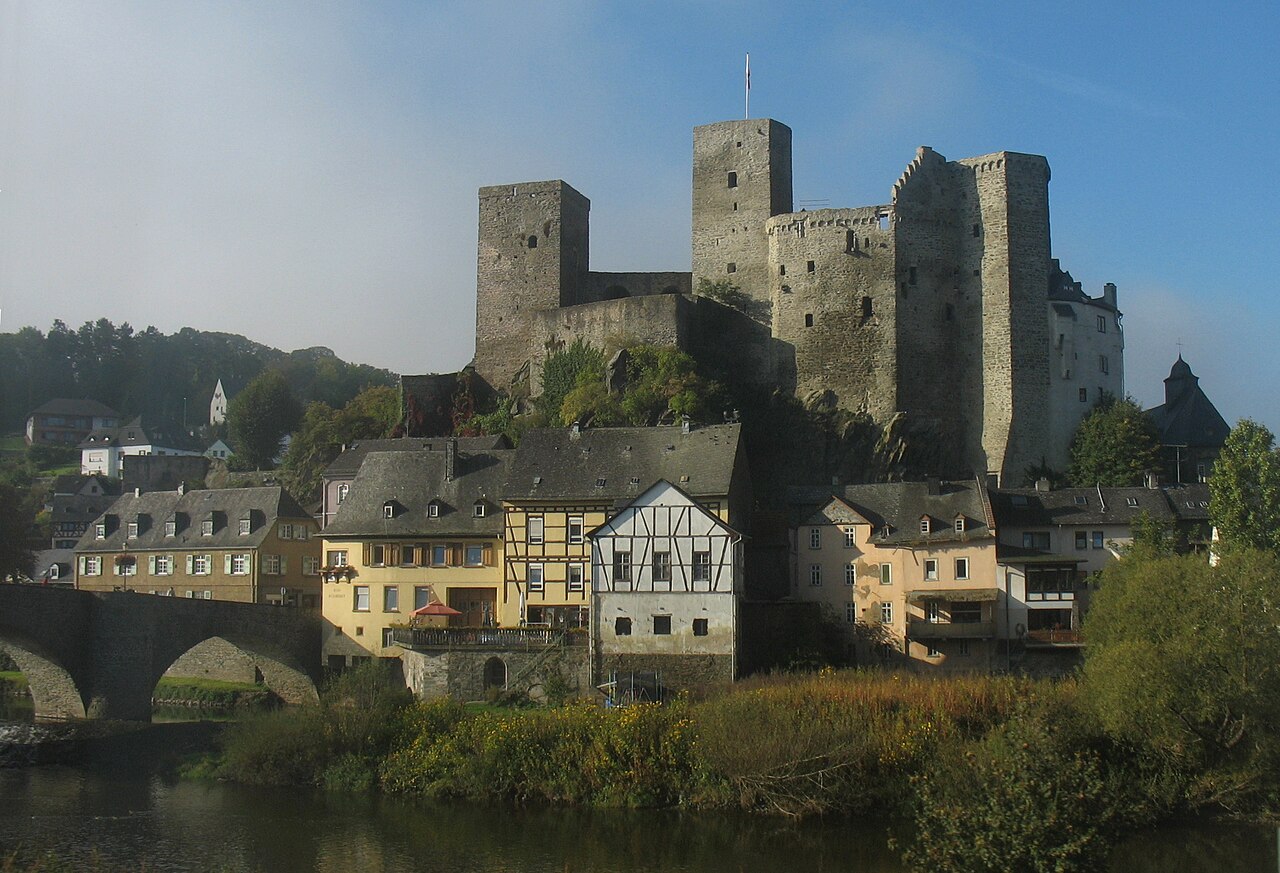
Limburg Castle sits on the same Domberg hill as the cathedral, overlooking the Lahn River. The castle’s origins trace back to a Celtic settlement around 500 BCE, with a fortified complex established by the early Middle Ages to protect a key river crossing. The castle was a residence for local counts and later the Conradine family, who founded the collegiate church within its walls.
Throughout the 13th to 16th centuries, Limburg Castle evolved from a military fortress to a noble residence, with additions including a large residential tower, St. Peter’s Chapel, and a late Gothic hall. The castle passed through various noble families, including the Isenburgs and the Electorate of Trier, serving administrative and defensive functions.
Architectural features of the castle
- The residential tower, built around 1250, features an 11 by 10.5 meter footprint with a vaulted cellar and three upper floors. Its ground-floor vaulted hall is supported by early Gothic leaf-shaped capitals.
- St. Peter’s Chapel, the oldest structure dating to the 11th century, showcases Gothic stone tracery windows and a significant early Gothic wall painting of Saint Christopher from circa 1300.
- The late Gothic hall, constructed after 1379, is notable for its large size and prominent fireplace, originally serving as a kitchen and later stables.
- A Renaissance building from about 1600 adds architectural diversity with half-timbered upper stories and a Baroque octagonal stair tower.
- The castle courtyard is bordered by reconstructed Gothic arcades and includes a 19th-century garden with historic linden trees and gravestones of ecclesiastical officials.
Preservation and modern use
After periods of decline and partial abandonment following changes in ownership in the 19th century, Limburg Castle found new life as an educational and cultural site. The vocational school established in 1883 expanded over the years, and the castle also housed diocesan museums and parish offices. Fire damage in 1929 led to reconstruction efforts in the 1930s, preserving the castle’s historical character.
Today, the castle is owned by the city of Limburg and serves multiple functions, including archival storage and cultural activities. Ongoing restoration projects focus on structural stabilization, roof repairs, and preserving the Renaissance building and southeastern wing. The castle and cathedral together form a significant heritage site that illustrates the intertwined military, religious, and cultural history of the region.
Limburg Cathedral and Castle remain vital landmarks in Hessen, attracting visitors interested in medieval architecture, ecclesiastical history, and the evolution of German noble residences. Their preservation offers insight into the architectural styles and historical events spanning from the early medieval period through the Romantic restoration era.
Frequently asked questions (FAQ)
- What is Limburg Cathedral known for?
- Limburg Cathedral, also known as St. George's Cathedral, is renowned for its stunning Romanesque and Gothic architecture. It features intricate stained glass windows and a striking façade that attracts visitors from around the world. The cathedral is also a significant religious site, serving as the seat of the Bishop of Limburg.
- When was Limburg Cathedral built?
- Construction of Limburg Cathedral began in 1200 and was completed in 1235. The building showcases a blend of architectural styles that evolved over the centuries, reflecting the historical changes and influences in the region. Its long history adds to its charm and significance as a cultural landmark.
- How do I get to Limburg Cathedral?
- Limburg Cathedral is easily accessible by train, car, or bus. The nearest train station is Limburg (Lahn), which is just a short walk from the cathedral. If you're driving, there are nearby parking facilities available for visitors.
- What are the opening hours of Limburg Cathedral?
- Limburg Cathedral is typically open to visitors from 9 AM to 5 PM daily, with extended hours during the summer months. It's advisable to check the official website or local tourist information for any changes to the schedule or special events. Guided tours may also be available at specific times.
- Can I take photographs inside Limburg Cathedral?
- Yes, visitors are welcome to take photographs inside Limburg Cathedral, but be respectful of the sacred space and other visitors. Flash photography and tripods may be restricted, so it’s best to check for any specific guidelines upon your visit. Capturing the beauty of the architecture and stained glass windows can enhance your experience.
- Is it possible to attend a service at Limburg Cathedral?
- Yes, Limburg Cathedral holds regular services, and visitors are welcome to attend. It is a great way to experience the spiritual atmosphere of the cathedral and witness its role in the local community. Check the cathedral's schedule for specific service times and any special events.
- What are some nearby attractions to Limburg Cathedral?
- Nearby attractions include the historic Old Town of Limburg, with its charming streets and half-timbered houses, as well as the scenic Lahn River. The Limburg Museum, showcasing the region's history and culture, is also within walking distance. These sites provide a comprehensive experience of Limburg's rich heritage.
- What are the ticket prices for Limburg Cathedral?
- Entry to Limburg Cathedral is free, but donations are appreciated to help with the maintenance and preservation of the site. Special guided tours may have a fee, so it’s recommended to check in advance. This makes it an accessible cultural experience for all visitors.
- When is the best time to visit Limburg Cathedral?
- The best time to visit Limburg Cathedral is during the spring and early fall when the weather is mild, and the crowds are smaller. Additionally, visiting during special religious festivals or events can offer unique experiences. Be sure to check the cathedral’s calendar for any special occasions during your visit.
Information
Website
Visit websiteSources & official resources
Verify the information above using these authoritative references.
Loading map...
Visitor reviews
No reviews yet. Been here? Write the first review and help other travelers!
Write the first reviewVisited this castle? Share your experience
Your review helps other travelers and adds first-hand knowledge to our encyclopedia.