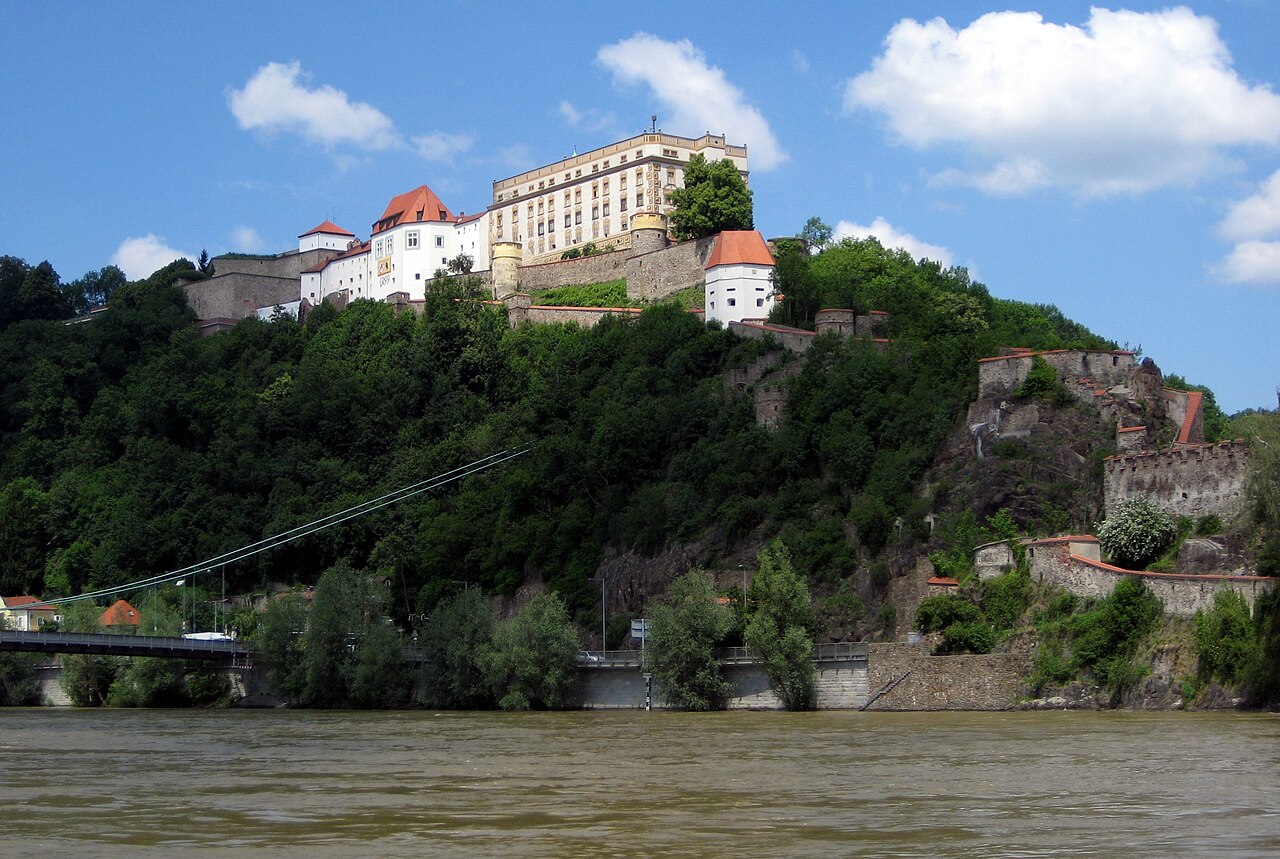
Burg Obernberg
Burg Obernberg stands as a significant medieval hill castle located in the municipality of Obernberg am Inn, Austria. Perched on a steep terrace overlooking the Inn River, this castle has played a pivotal role in regional defense and administration since its construction in the 10th or 11th century. Originally established by the noble Counts of Formbach, it was designed to control and protect the surrounding territory, reflecting the strategic importance of the location.
The castle's earliest documented mention dates back to 1160, identifying Meginhart de Obernberge as its lord. Throughout the centuries, Burg Obernberg experienced numerous transitions in ownership and function, illustrating the complex feudal and ecclesiastical relationships characteristic of medieval Europe. In the late 12th century, the castle was transferred to the Diocese of Passau, marking a significant shift from noble to ecclesiastical control. This transfer initiated a period of extensive fortification and architectural enhancement under Bishop Wolfker of Passau between 1199 and 1202, transforming the castle into a formidable fortress.
Historical significance and ownership transitions
During the mid-13th century, Burg Obernberg was embroiled in regional conflicts that underscored its military and political value. In 1243, Duke Frederick II of Babenberg seized the castle with the aid of a betraying burgrave, subsequently entrusting it to the Counts Ulrich and Wernhart von Schaunberg. These counts notably withstood a grueling six-month siege in 1245 by forces loyal to the Bishop of Passau and Duke Otto of Bavaria. By 1246, the castle was restored to the Diocese of Passau, though it was occasionally pledged to regional powers such as Bavaria and Salzburg during the 14th and 15th centuries due to shifting political alliances.
A significant fire in 1368 caused extensive damage, but the castle was promptly repaired, demonstrating its continued importance. The 16th century brought a period of modernization and administrative reform under Bishop Count Wolfgang I Salm, who in 1550 constructed a new residential and office building within the castle complex. This building, characterized by its long, single-story design and stepped gable roof, served as a residence and administrative center, reflecting the castle's evolving role from a purely military fortress to a center of governance.
Architectural features and defensive structures
Burg Obernberg was originally designed as a classic hill castle with defensive features adapted to its terrain. The castle was surrounded on three sides by deep moats, while the fourth side was protected by a fortified building, creating a nearly impregnable defense system. The castle's ring wall included two surviving round towers on the northern and western edges, which provided vantage points for surveillance and defense. Unfortunately, other key defensive elements such as the large bergfried (Gothic keep), eastern and southern walls, gate tower, and drawbridge were dismantled in the early 19th century following military conflicts involving Austrian and Napoleonic forces.
The site also features a remarkable well shaft over 60 meters deep, fully lined with durable tuff stone. This well exemplifies medieval engineering ingenuity, ensuring a reliable water supply during sieges. Additionally, remnants of the castle’s original defensive ring wall and the layout of the former neck moat remain visible, though the moat itself has been filled with rubble from demolished structures.
Residential and civic adaptations through the centuries
Following the decline of its military significance, Burg Obernberg adapted to new roles. The long residential building constructed in 1550 by Bishop Wolfgang I Salm became a courthouse for over two centuries, highlighting its civic importance. The building bears a stone inscription above its main entrance featuring the coat of arms of the Diocese of Passau alongside the Latin phrase "Dominus videbit" (the Lord will see), and the notation "W.E.P.C.A. SALM".
The second surviving building on the site, originally a granary or Zehenthaus (tithe house), constructed from exposed tuff blocks, was transformed into living quarters in the early 20th century. Today, it serves cultural functions, including as a meeting place and museum, maintaining the castle's connection to the local community and heritage preservation efforts.
Landscape integration and visitor experience
Historically, a promenade known as Bischof Wolfker Weg encircled the castle grounds, offering panoramic views of the Inn River valley. While much of this pathway has been lost to landslides and natural overgrowth, a section extending toward Mautnerstiege remains accessible, inviting visitors to appreciate the castle's commanding position in the landscape.
Today, Burg Obernberg offers a tangible link to Austria's medieval past through its well-preserved structures and evocative ruins. Its steep terrace location, surviving buildings, and remaining fortifications provide valuable insights into the architectural and historical developments from the High Medieval period through to the early modern era. The castle's evolution from a military fortress to an administrative center and cultural site encapsulates the broader historical transformations of European castles over the centuries.
Frequently asked questions (FAQ)
- What is the historical significance of Burg Obernberg?
- Burg Obernberg is a medieval castle that dates back to the 12th century, symbolizing the strategic importance of the region during the Middle Ages. It has served various purposes throughout its history, including as a noble residence and a defensive stronghold. Today, it stands as a testament to the architectural and cultural heritage of the area.
- When was Burg Obernberg built?
- Burg Obernberg was constructed around the year 1150, making it one of the older castles in Austria. Its original purpose was to protect trade routes along the Inn River, and over the centuries, it has undergone several renovations and expansions that reflect different architectural styles.
- Can I visit Burg Obernberg?
- Yes, Burg Obernberg is open to visitors year-round. Guided tours are available, allowing guests to explore the castle's history and architecture. Be sure to check the official website for any special events or restrictions that may affect your visit.
- What are the opening hours for Burg Obernberg?
- Burg Obernberg typically opens daily from 10 AM to 5 PM, but hours may vary seasonally. It is advisable to confirm the current opening times on the castle's official website before planning your visit, especially during holidays or special events.
- Is it possible to access Burg Obernberg with a wheelchair?
- Burg Obernberg has limited accessibility for visitors with mobility challenges due to its historic structure and uneven terrain. However, efforts have been made to accommodate guests with disabilities, so it is recommended to contact the castle management in advance for specific access information.
- What is the best time to visit Burg Obernberg?
- The best time to visit Burg Obernberg is during the spring and early autumn when the weather is mild, and the surrounding landscapes are particularly beautiful. These seasons are ideal for exploring the castle and enjoying the outdoor areas. Summer can be busy with tourists, while winter may present challenging weather conditions.
- Are there any nearby attractions to Burg Obernberg?
- Yes, visitors to Burg Obernberg can explore the charming town of Obernberg am Inn, which features picturesque streets and local shops. Additionally, the scenic Inn River offers opportunities for hiking and cycling. Nearby attractions include the historic city of Braunau am Inn, known for its rich history and beautiful architecture.
- What are the ticket prices for visiting Burg Obernberg?
- Ticket prices for Burg Obernberg are generally affordable, with discounts available for students, seniors, and groups. Children under a certain age may enter for free. It is advisable to check the official website for the most current pricing and any special offers.
Information
Current owner
Austrian government
Loading map...
Visitor reviews
No reviews yet. Been here? Write the first review and help other travelers!
Write the first reviewVisited this castle? Share your experience
Your review helps other travelers and adds first-hand knowledge to our encyclopedia.