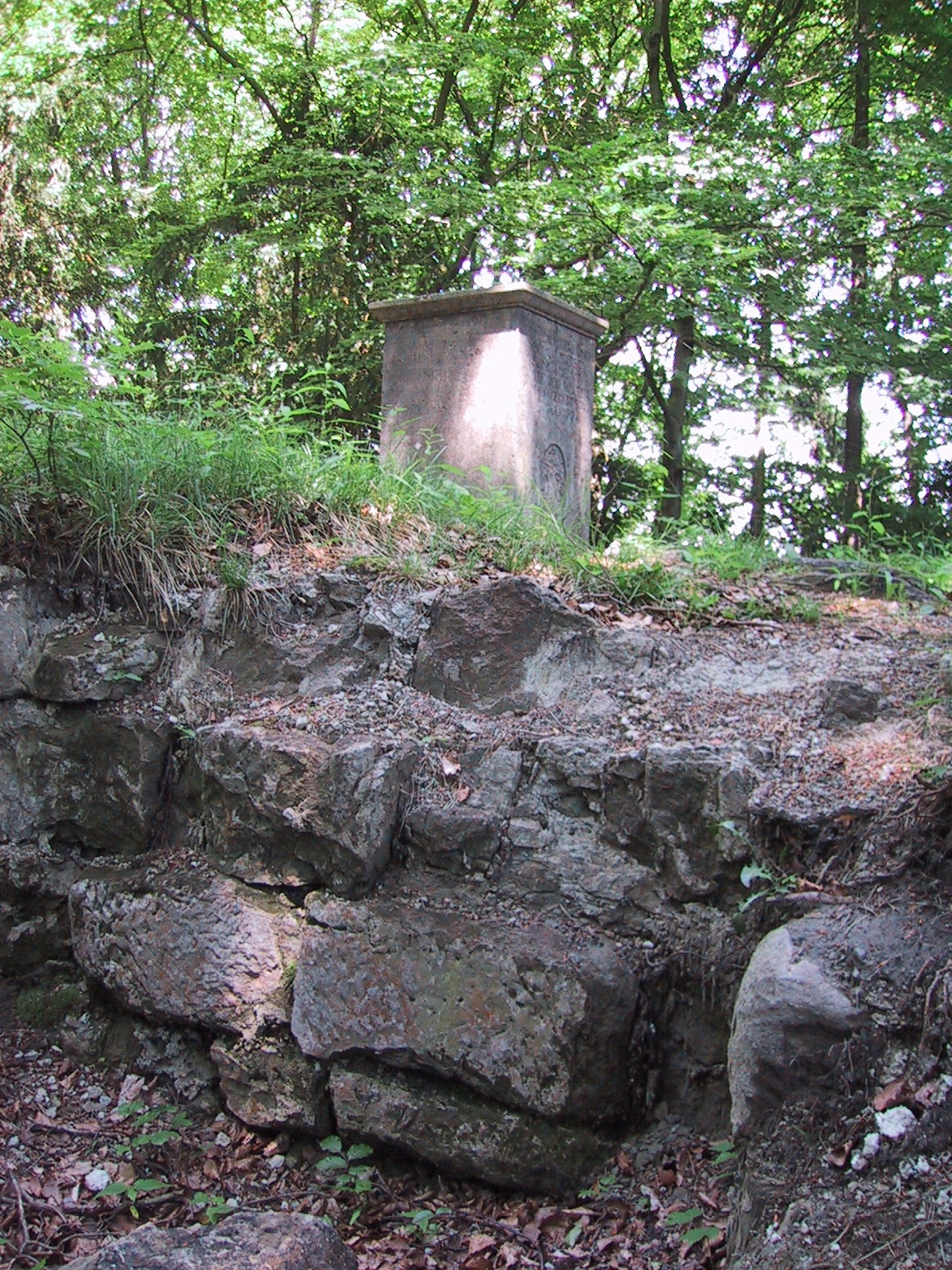
Burg Friesenberg
Burg Friesenberg is a notable medieval castle ruin located in the municipality of Zürich, Switzerland. Constructed around the year 1200 by local nobility, it served primarily as a fortified outpost rather than a central fortress, playing a strategic role in the defense and control of the surrounding region during the High medieval period. The castle's position on the eastern slope of the Uetliberg mountain provided a commanding view of the approaches to medieval Zürich, approximately three kilometers away, underscoring its importance in regional power dynamics.
Historical context and ownership
The first recorded mention of Burg Friesenberg dates to 1218, when it was cited as a landmark associated with the property of the St. Peter church in Zürich. During the 13th century, the castle was part of a complex network of fortifications and noble estates in the region, supporting the influence of the Regensberg family, a prominent noble lineage with holdings including the nearby Uetliburg castle. Burg Friesenberg functioned as a forward defensive site, likely reinforcing the Regensberg family's strategic presence on the eastern approaches to Zürich.
The political landscape of the region was marked by the rise of free cities such as Zürich, which increasingly challenged the authority of noble families. By 1257, a knight named Jacobus Molendinarius de Vriesenberch, possibly linked to the Mülner family, was documented as serving as a bailiff for Zürich at Burg Friesenberg. This reflects the castle's role not only as a military installation but also as an administrative center.
In 1321, the castle was recorded as a fief held under the overlordship of both the Regensberg and Habsburg families, indicating the complex feudal relationships that characterized the region. The castle's decline began around the turn of the 14th century, with evidence suggesting it was abandoned or destroyed by 1300. It was listed as a "castle site" in a 1317 inventory, and its destruction may be linked to regional conflicts such as the Regensberger Feud (1267–1268) or political upheavals following the assassination of King Albert I in 1308. Some sources also propose 1383 as a possible date of destruction, though this remains less certain.
Ownership of the site changed hands multiple times after its decline. By 1344, it was in possession of the Mülner family until the last member died in 1386. Subsequently, in 1387, the castle site was acquired by Johann Aeppli, a future guild master in Zürich. In 1436, the property passed to the Oetenbach monastery, reflecting its transition from a military to ecclesiastical asset. Eventually, in 1902, the site became property of the city of Zürich.
Architectural features and layout
The ruins of Burg Friesenberg occupy a terraced spur known locally as Goldbrunnenegg, situated at approximately 658 meters above sea level on the forested eastern slope of the Uetliberg mountain. The castle was a hill castle strategically positioned to control the narrow approach to the site, which was protected by a neck ditch, a defensive trench designed to impede attackers.
The main fortified area was enclosed by a defensive wall measuring roughly 30 by 18 meters. Within this enclosure, an internal well shaft was essential for the castle's water supply, reflecting careful planning for prolonged defense. At the heart of the castle stood a bergfried, a tall, fortified tower typical of medieval castles, used for refuge and defense. This bergfried originally had a square footprint with each side approximately six meters long.
During a later romanticized restoration, the bergfried's original form was altered to a trapezoidal plan, with the addition of architectural elements such as a window and a portal arch that were not part of the initial medieval construction. These modifications reflect 19th or early 20th-century tastes rather than authentic medieval design, illustrating changing attitudes toward castle preservation and interpretation.
Excavations conducted between 1925 and 1930 uncovered the castle's core walls and well shaft but also caused some damage by disturbing archaeological layers. Minor repairs in the 1980s and 1990s involved concrete patching, which further altered the ruins' appearance. Due to ongoing deterioration, the site was temporarily closed in 2019 and underwent a comprehensive restoration project during 2021–2022 under the supervision of Zürich's archaeological authorities, aiming to stabilize and preserve the remaining stonework.
Strategic significance and defensive role
Burg Friesenberg served as a terminus point of the Letzi defensive line, a series of fortifications designed to protect the approaches to Zürich and surrounding territories. Although it was not physically integrated into the city's fortifications, the castle's role as an outpost was critical in the broader defensive network controlled by the Regensberg family.
The castle's location on the eastern slope of the Uetliberg mountain allowed it to monitor and control movement along key routes, providing early warning and defense against potential invaders or hostile forces. Its relatively modest size and fortifications suggest it was intended more for surveillance and regional control than for withstanding prolonged sieges.
Archaeological investigations and preservation efforts
Archaeological investigations at Burg Friesenberg began in the early 20th century, revealing important structural elements such as the core defensive walls and the well shaft. However, early excavation methods caused some damage to masonry and disturbed stratigraphic layers, complicating efforts to fully reconstruct the castle's original layout.
Later conservation efforts in the late 20th century included concrete patching to prevent further decay, though these interventions were not always sympathetic to the site's historic fabric. The recent restoration project completed in 2022 focused on stabilizing the ruins and enhancing their accessibility for visitors, ensuring the castle remains a valuable cultural and historical landmark.
Cultural heritage and visitor information
Today, the ruins of Burg Friesenberg stand as a testament to the medieval history of the Zürich region and the complex feudal relationships that shaped it. The site offers visitors a glimpse into the architectural and military strategies of the High medieval period, showcasing typical features such as the bergfried, neck ditch, and defensive walls.
While the castle is in a partially preserved state, ongoing preservation efforts have made it accessible for educational and recreational purposes. Its location on the Uetliberg mountain also provides scenic views and opportunities for hiking, connecting cultural heritage with natural beauty.
Frequently asked questions (FAQ)
- How do I get to Burg Friesenberg?
- Burg Friesenberg is easily accessible by public transport from Zürich city center. You can take a tram or bus to the nearest stop, followed by a short walk to the castle. Additionally, there are parking facilities available if you prefer to drive.
- What is the historical significance of Burg Friesenberg?
- Burg Friesenberg dates back to the 13th century and played a crucial role in the region's defense during medieval times. It served as a strategic lookout point and residence for local nobility, reflecting the architectural style and feudal history of the area. The castle's well-preserved structure offers visitors a glimpse into Switzerland's rich past.
- When was Burg Friesenberg built?
- Construction of Burg Friesenberg began in the early 1200s, with various modifications made over the centuries. The castle has witnessed numerous historical events and has evolved architecturally, showcasing elements from different periods. Today, it stands as a testament to medieval engineering and design.
- Can I visit Burg Friesenberg year-round?
- Yes, Burg Friesenberg is open to visitors throughout the year, though specific opening hours may vary by season. It's advisable to check the official website or local tourism information for any seasonal changes or special events. Visiting during the spring and summer months offers the chance to enjoy the surrounding gardens and scenic views.
- Why is Burg Friesenberg considered an architectural treasure?
- Burg Friesenberg is renowned for its unique blend of medieval and renaissance architectural styles. The castle features impressive stone walls, intricate carvings, and a picturesque setting that attracts architecture enthusiasts. Its design not only reflects historical significance but also the artistic trends of its time.
- Is it possible to host events at Burg Friesenberg?
- Yes, Burg Friesenberg offers venues for special events such as weddings, corporate gatherings, and private tours. The castle's stunning backdrop and historical ambiance provide a memorable setting for any occasion. It's recommended to contact the management in advance to discuss availability and arrangements.
- What are the ticket prices for visiting Burg Friesenberg?
- Ticket prices for Burg Friesenberg vary depending on the type of tour and age group. Generally, adult tickets range from CHF 10 to CHF 15, while discounts are available for students and seniors. Children under a certain age may enter for free, making it an affordable outing for families.
- What are the opening hours for Burg Friesenberg?
- Burg Friesenberg typically opens at 10 AM and closes at 5 PM, with extended hours during peak tourist seasons. It's best to verify the current hours on the castle's official website before planning your visit, as they may change for special events or holidays. Early visits are recommended to avoid crowds.
- Are there nearby attractions to visit after Burg Friesenberg?
- Yes, after exploring Burg Friesenberg, visitors can enjoy nearby attractions such as the Zürich Zoo and the beautiful Lake Zürich. The area is rich in cultural experiences, including art galleries and local markets. Take advantage of your visit to explore the stunning landscapes and vibrant atmosphere of Zürich.
Information
Loading map...
Visitor reviews
No reviews yet. Been here? Write the first review and help other travelers!
Write the first reviewVisited this castle? Share your experience
Your review helps other travelers and adds first-hand knowledge to our encyclopedia.