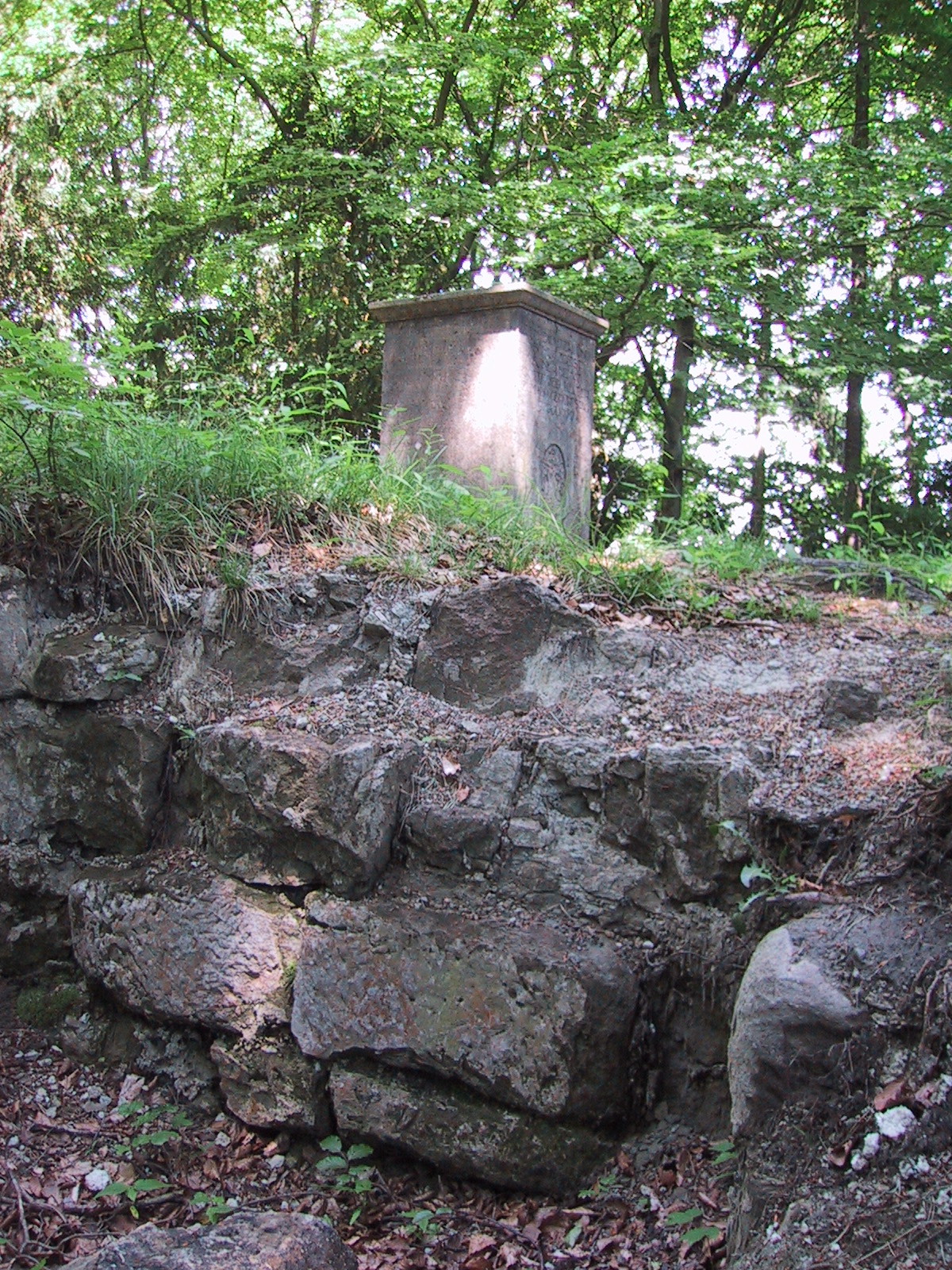
Alt-Regensberg Castle Ruins

Alt-Regensberg Castle ruins in Regensdorf, Switzerland
Regensdorf, Zurich, Switzerland
High Medieval (11th–13th c.)
Partially Preserved

Alt-Regensberg Castle is a significant medieval ruin located in the municipality of Regensdorf, Switzerland. Constructed in the mid-11th century by the noble House of Regensberg, this fortress exemplifies the architectural and strategic developments of the High Medieval period in the region. The castle's remains offer valuable insight into the evolution of medieval fortifications and residential structures over several centuries.

Historical background and significance

The castle was originally built as the stronghold of the House of Regensberg, a prominent family influential in the area during the 11th century. Its strategic location was intended to control surrounding lands and assert the family's power. However, by the time of the Old Zürich War (1440–1446), the castle's military importance had declined significantly. During this conflict, the opposing forces of Zürich occupied Alt-Regensberg Castle without resistance, indicating its reduced defensive role.

Following the war, the castle gradually fell into disuse. Over time, the ruins were repurposed as a quarry, with stones from the castle being extracted for other local constructions. This common practice contributed to the partial destruction and deterioration of the original medieval structures.

Architectural features and construction phases

The keep and residential tower

The most prominent surviving feature of Alt-Regensberg Castle is its quadratic keep, dating from the initial construction phase in the 11th century. This keep served both defensive and residential functions, embodying the architectural norms of early medieval fortifications.

The residential tower underwent significant modifications over the centuries. Originally, the exterior walls were constructed with a rough outer casing filled with boll stones set in horizontal mortar joints. By around 1200, this outer surface was extensively remodeled. The rough stonework was removed and replaced with carefully cut boss squares, which gave the tower a more refined and prestigious appearance, reflecting the evolving tastes and social status of its occupants.

Outer walls and auxiliary buildings

Surrounding the keep was a circular perimeter wall, which formed part of the castle's defensive system. In the northern section of the castle complex, a rectangular foundation wall abuts this perimeter wall. This area initially supported wooden outbuildings such as stables and service structures, likely erected in the 12th or early 13th century.

During the 14th century, these wooden buildings were relocated to the south side of the complex. In their place, a palas (a grand residential hall) was constructed, occupying the space between the keep and the circular wall in the northeastern part of the castle. This development indicates a shift towards more comfortable and representative living quarters within the fortress, consistent with broader architectural trends in medieval castle design.

Decline and current condition

After its military and residential functions diminished, Alt-Regensberg Castle was abandoned and fell into ruin. Its stones were quarried for other building projects in the area, which accelerated the loss of original fabric. Today, the castle remains as partially preserved ruins that provide a tangible connection to the region's medieval past.

The ruins include the foundational outlines of the main structures, the keep's base, and sections of the perimeter walls. These remnants allow visitors and scholars to study the castle's layout, construction techniques, and historical transformations.

Architectural and cultural importance

Alt-Regensberg Castle is a valuable example of a High Medieval hill castle in Switzerland. Its construction techniques, especially the evolution of the keep's exterior from rough stone to bossed masonry, illustrate the changing architectural styles and social aspirations of medieval nobility.

The castle's history also reflects the broader political and military shifts in the region, particularly during the Old Zürich War. As such, it holds cultural significance for understanding medieval Swiss history and feudal power structures.

Visiting the ruins

Today, the ruins of Alt-Regensberg Castle are accessible to the public and serve as a point of interest for visitors to Regensdorf. While the site is primarily an archaeological ruin, it offers an evocative glimpse into medieval life and fortification architecture.

Interpretive signage and guided tours may be available locally to help visitors appreciate the castle's historical context and architectural features. The surrounding landscape also provides scenic views typical of Swiss hill castles.

Frequently asked questions (FAQ)

How do I get to Alt-Regensberg Castle Ruins?
Alt-Regensberg Castle Ruins are easily accessible by public transport from Zurich. You can take a train to Regensdorf and then a short hike will lead you to the castle site.
What is the historical significance of Alt-Regensberg Castle?
Alt-Regensberg Castle, built in the 13th century, played a crucial role in the region's defense and trade routes. Its ruins now serve as a reminder of the medieval history of Switzerland and the strategic importance of the area.
When was Alt-Regensberg Castle constructed?
The construction of Alt-Regensberg Castle began in the early 13th century, around 1230. Over the years, it underwent various modifications before falling into ruins in the late 15th century.
Can I visit the castle ruins year-round?
Yes, the castle ruins are open to visitors year-round. However, it's best to visit during the spring and summer months when the weather is pleasant and the surrounding nature is in full bloom.
Why is Alt-Regensberg Castle a popular attraction?
Alt-Regensberg Castle is popular for its stunning views of the surrounding landscapes, historical significance, and the charm of its ruins. Visitors appreciate the blend of nature and history that the site offers.
Is it possible to explore the castle ruins on my own?
Yes, visitors can explore the ruins independently. There are no guided tours, allowing you to take your time and enjoy the site at your own pace.
What are the opening hours for Alt-Regensberg Castle?
The castle ruins are open for public access at all times, as there are no specific opening hours. This allows for flexibility in planning your visit.
Are there any nearby attractions to visit?
Yes, nearby attractions include the charming village of Regensdorf and the scenic nature trails around the area. You can also explore other historical sites in the Zurich region after visiting the castle.
What are the ticket prices for visiting Alt-Regensberg Castle?
There is no entrance fee to visit Alt-Regensberg Castle Ruins, making it a budget-friendly option for history enthusiasts and nature lovers alike. Enjoy the ruins and the breathtaking views without any cost.

Information

Hill Castle

Loading map...

Visitor reviews

No reviews yet. Been here? Write the first review and help other travelers!

Write the first review

Visited this castle? Share your experience

Your review helps other travelers and adds first-hand knowledge to our encyclopedia.

Write a review

(5/5)

0/2000 characters

Your review will be visible after admin approval

Nearby castles

7.9 km

Burg Friesenberg

Zürich, Switzerland

Burg Friesenberg is a notable medieval castle ruin located in the municipality of Zürich, Switzerland. Constructed around the year 1200 by local nobility, it served primarily as a fortified outpost rather than a central fortress, playing a strategic role in the defense and control of the surrounding region during the High medieval period. The castle's position on the eastern slope of the Uetliberg mountain provided a commanding view of the approaches to medieval Zürich, approximately three kilometers away, underscoring its importance in regional power dynamics. Historical context and ownership The first recorded mention of Burg Friesenberg dates to 1218, when it was cited as a landmark associated with the property of the St. Peter church in Zürich. During the 13th century, the castle was part of a complex network of fortifications and noble estates in the region, supporting the influence of the Regensberg family, a prominent noble lineage with holdings including the nearby Uetliburg castle. Burg Friesenberg functioned as a forward defensive site, likely reinforcing the Regensberg family's strategic presence on the eastern approaches to Zürich. The political landscape of the region was marked by the rise of free cities such as Zürich, which increasingly challenged the authority of noble families. By 1257, a knight named Jacobus Molendinarius de Vriesenberch, possibly linked to the Mülner family, was documented as serving as a bailiff for Zürich at Burg Friesenberg. This reflects the castle's role not only as a military installation but also as an administrative center. In 1321, the castle was recorded as a fief held under the overlordship of both the Regensberg and Habsburg families, indicating the complex feudal relationships that characterized the region. The castle's decline began around the turn of the 14th century, with evidence suggesting it was abandoned or destroyed by 1300. It was listed as a "castle site" in a 1317 inventory, and its destruction may be linked to regional conflicts such as the Regensberger Feud (1267–1268) or political upheavals following the assassination of King Albert I in 1308. Some sources also propose 1383 as a possible date of destruction, though this remains less certain. Ownership of the site changed hands multiple times after its decline. By 1344, it was in possession of the Mülner family until the last member died in 1386. Subsequently, in 1387, the castle site was acquired by Johann Aeppli, a future guild master in Zürich. In 1436, the property passed to the Oetenbach monastery, reflecting its transition from a military to ecclesiastical asset. Eventually, in 1902, the site became property of the city of Zürich. Architectural features and layout The ruins of Burg Friesenberg occupy a terraced spur known locally as Goldbrunnenegg, situated at approximately 658 meters above sea level on the forested eastern slope of the Uetliberg mountain. The castle was a hill castle strategically positioned to control the narrow approach to the site, which was protected by a neck ditch, a defensive trench designed to impede attackers. The main fortified area was enclosed by a defensive wall measuring roughly 30 by 18 meters. Within this enclosure, an internal well shaft was essential for the castle's water supply, reflecting careful planning for prolonged defense. At the heart of the castle stood a bergfried, a tall, fortified tower typical of medieval castles, used for refuge and defense. This bergfried originally had a square footprint with each side approximately six meters long. During a later romanticized restoration, the bergfried's original form was altered to a trapezoidal plan, with the addition of architectural elements such as a window and a portal arch that were not part of the initial medieval construction. These modifications reflect 19th or early 20th-century tastes rather than authentic medieval design, illustrating changing attitudes toward castle preservation and interpretation. Excavations conducted between 1925 and 1930 uncovered the castle's core walls and well shaft but also caused some damage by disturbing archaeological layers. Minor repairs in the 1980s and 1990s involved concrete patching, which further altered the ruins' appearance. Due to ongoing deterioration, the site was temporarily closed in 2019 and underwent a comprehensive restoration project during 2021–2022 under the supervision of Zürich's archaeological authorities, aiming to stabilize and preserve the remaining stonework. Strategic significance and defensive role Burg Friesenberg served as a terminus point of the Letzi defensive line, a series of fortifications designed to protect the approaches to Zürich and surrounding territories. Although it was not physically integrated into the city's fortifications, the castle's role as an outpost was critical in the broader defensive network controlled by the Regensberg family. The castle's location on the eastern slope of the Uetliberg mountain allowed it to monitor and control movement along key routes, providing early warning and defense against potential invaders or hostile forces. Its relatively modest size and fortifications suggest it was intended more for surveillance and regional control than for withstanding prolonged sieges. Archaeological investigations and preservation efforts Archaeological investigations at Burg Friesenberg began in the early 20th century, revealing important structural elements such as the core defensive walls and the well shaft. However, early excavation methods caused some damage to masonry and disturbed stratigraphic layers, complicating efforts to fully reconstruct the castle's original layout. Later conservation efforts in the late 20th century included concrete patching to prevent further decay, though these interventions were not always sympathetic to the site's historic fabric. The recent restoration project completed in 2022 focused on stabilizing the ruins and enhancing their accessibility for visitors, ensuring the castle remains a valuable cultural and historical landmark. Cultural heritage and visitor information Today, the ruins of Burg Friesenberg stand as a testament to the medieval history of the Zürich region and the complex feudal relationships that shaped it. The site offers visitors a glimpse into the architectural and military strategies of the High medieval period, showcasing typical features such as the bergfried, neck ditch, and defensive walls. While the castle is in a partially preserved state, ongoing preservation efforts have made it accessible for educational and recreational purposes. Its location on the Uetliberg mountain also provides scenic views and opportunities for hiking, connecting cultural heritage with natural beauty.

High Medieval (11th–13th c.)
Details
9.3 km

Sellenbüren / Ofengüpf

Stallikon, Switzerland

Sellenbüren / Ofengüpf is a historic hill castle site located in the municipality of Stallikon, Switzerland, on the western slope of the Uetliberg mountain. The site occupies a strategic natural plateau known as Ofengüpf, which has been a focal point of human activity since the Bronze Age. This long history of occupation reflects the area's importance in controlling local routes and resources. The earliest evidence of settlement at Ofengüpf dates back to the Bronze Age, when communities established a fortified settlement on this elevated terrain. This prehistoric occupation laid the groundwork for later medieval developments. By the 11th century, the site evolved into a medieval castle environment marked by the construction of a wooden manor house set on a stone foundation. This manor likely served as a fortified residence or administrative center for the local nobility, specifically the Freiherren (barons) of Sellenbüren. Although the barons themselves probably lived at the nearby Uetliburg castle, the Ofengüpf site functioned as a subsidiary stronghold, possibly housing their vassals or household servants. Medieval construction and defensive features The castle's design reflects typical early medieval wooden fortification practices. The main structure was a wooden manor built atop a solid stone base, a method that combined the durability of stone foundations with the flexibility of timber construction. Unlike many contemporary castles, Ofengüpf did not feature a stone ring wall. Instead, its defense relied on a wooden palisade, which has since decayed completely. The natural topography provided significant protection, with steep slopes on three sides forming natural barriers against attackers. To secure the most vulnerable approach, the builders engineered a man-made neck ditch on the accessible side of the plateau. This defensive trench was carved into the bedrock, creating a formidable obstacle to any advancing force. The combination of natural terrain and constructed defenses demonstrates a strategic use of landscape, typical of hill castles designed to maximize protection with limited resources. Abandonment and archaeological findings By the 12th century, the castle was deliberately abandoned. Archaeological evidence indicates that the site was intentionally set on fire before being vacated, suggesting a planned evacuation rather than destruction through siege or battle. The reasons for this abandonment remain unclear but may relate to changes in political control or shifts in regional power dynamics. Excavations conducted in 1950 and 1951 uncovered a variety of artifacts that provide insight into the daily life and social status of the castle's inhabitants. Finds included ceramic fragments, horseshoe pieces, arrowheads, two keys, a knife, a belt buckle, and a richly decorated spur with spikes. These items reflect the material culture and martial readiness of the occupants, consistent with a minor noble household or its retainers. Current remains and preservation Today, the site of Sellenbüren / Ofengüpf is recognized primarily for its archaeological value rather than standing architecture. The surviving elements include the stone foundation of the manor house and the well-preserved neck ditch, both of which remain in their original locations. No wooden structures survive due to natural decay over centuries, and no stone defensive walls were ever constructed. The plateau itself has been reduced in size by repeated landslides, which have eroded parts of the original fortification footprint. These geological processes have contributed to the loss of physical evidence but also highlight the challenges of maintaining hilltop fortifications in this region. As a hill castle from the high medieval period, Sellenbüren / Ofengüpf offers a rare glimpse into the transitional phase between prehistoric settlement and medieval feudal fortification in Switzerland. Its combination of natural defenses, wooden architecture, and archaeological remains makes it a valuable site for understanding early medieval castle development and regional history.

High Medieval (11th–13th c.)
Details
10.4 km
Manegg Castle — Switzerland castle

Manegg Castle

, Switzerland

Manegg Castle is a late medieval hill castle whose ruins are located on the eastern slopes of the Albis range in the canton of Zürich, Switzerland. The site lies near the village of Leimbach and the residential area known as Manegg. This castle, dating from the 14th century, represents a typical example of a fortified noble residence from the period, designed to oversee and control the surrounding region. Historical context and significance The construction of Manegg Castle in the 14th century places it firmly within the late medieval period, a time when castles served both defensive and administrative functions in the Swiss territories. The castle was likely built to assert local lordship and to protect trade routes and agricultural lands in the Albis region. Although detailed records of its founders and occupants are scarce, the castle's strategic location on a hill provided a commanding view over the surrounding landscape, which was crucial for early warning against invaders or rival factions. Architectural features and layout While only ruins remain today, archaeological evidence and surviving structures suggest that Manegg Castle was constructed with typical hill castle features of the late medieval period. The castle was likely composed of a central fortified keep or donjon, surrounded by defensive walls and possibly a moat or natural ditch to enhance protection. The eastern slope location provided natural defense advantages, reducing the need for extensive artificial fortifications on that side. The castle's walls would have been built from local stone, with battlements and arrow slits to allow defenders to repel attackers. The internal courtyard probably contained residential buildings, storage facilities, and a chapel, typical of noble residences of the time. The ruins today include remnants of these walls and foundation outlines, reflecting the castle's original footprint and defensive design. Decline and current condition Over the centuries, Manegg Castle fell into disuse and ruin, likely due to changes in military technology, political shifts, and the consolidation of power in larger urban centers such as Zürich. The castle was abandoned and gradually deteriorated, leaving only the ruins visible today. Its current state is classified as ruins, with partial walls and foundations accessible to visitors and researchers interested in medieval fortifications. Visiting Manegg Castle ruins The castle ruins are accessible to the public and are a point of interest for hikers and history enthusiasts exploring the Albis range. The site offers scenic views and an opportunity to connect with the medieval heritage of the Zürich region. Visitors should be prepared for uneven terrain and limited facilities, as the site is primarily an archaeological ruin without extensive visitor infrastructure. Manegg Castle in the context of Swiss medieval castles Manegg Castle is one of many hill castles built during the late medieval period in Switzerland, reflecting the feudal landscape and the need for fortified residences. Its ruins contribute to understanding the defensive strategies and architectural styles prevalent in the region during the 14th century. The castle's remains provide valuable insights into the construction techniques and spatial organization of medieval noble estates in the canton of Zürich. Architectural style and influences The castle's design adheres to the pragmatic and functional style typical of late medieval hill castles in Central Europe. While specific stylistic details are limited due to the ruinous condition, the use of stone masonry, defensive walls, and a compact layout aligns with the Gothic architectural period prevalent during the 14th century. The castle likely incorporated features such as pointed archways and narrow windows suited for defense, consistent with Gothic military architecture. Archaeological research and preservation Archaeological investigations at the Manegg Castle site have helped document the castle's layout and construction phases. Preservation efforts focus on stabilizing the remaining structures to prevent further decay. The site is an important cultural heritage landmark for the canton of Zürich, offering educational opportunities about medieval fortifications and local history.

Late Medieval (14th–15th c.)
Details