Burg Creuzburg
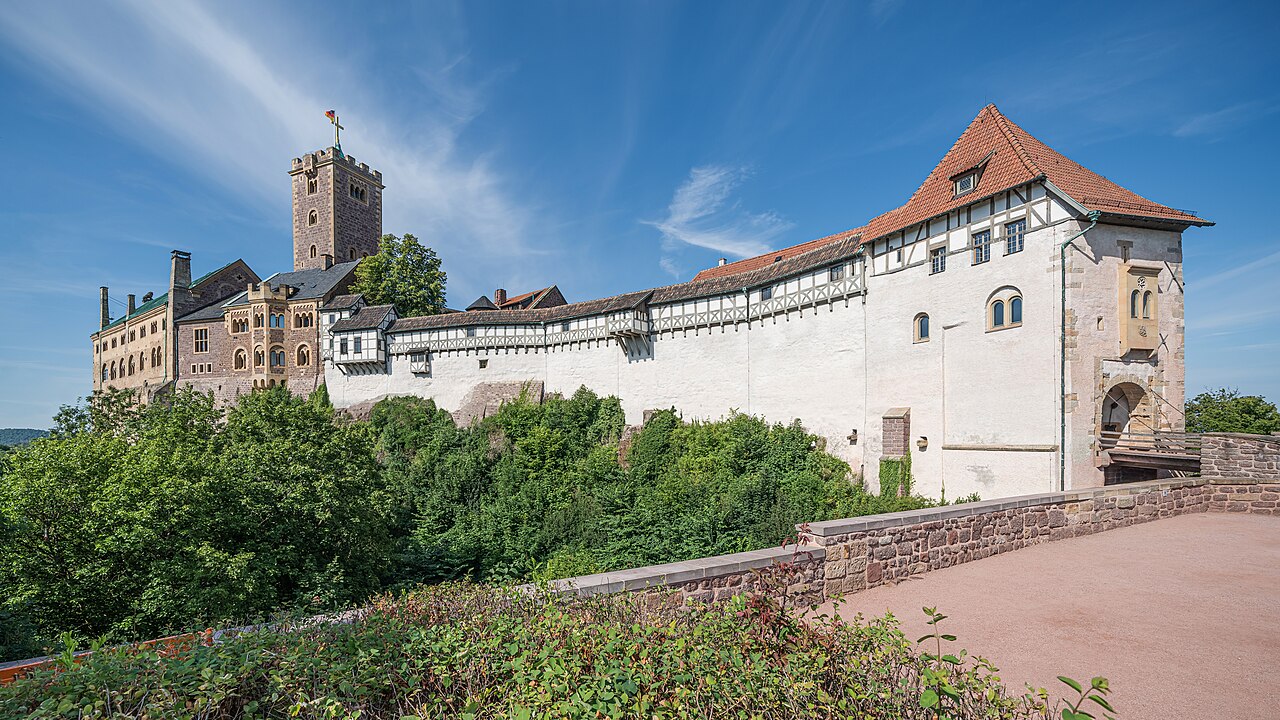
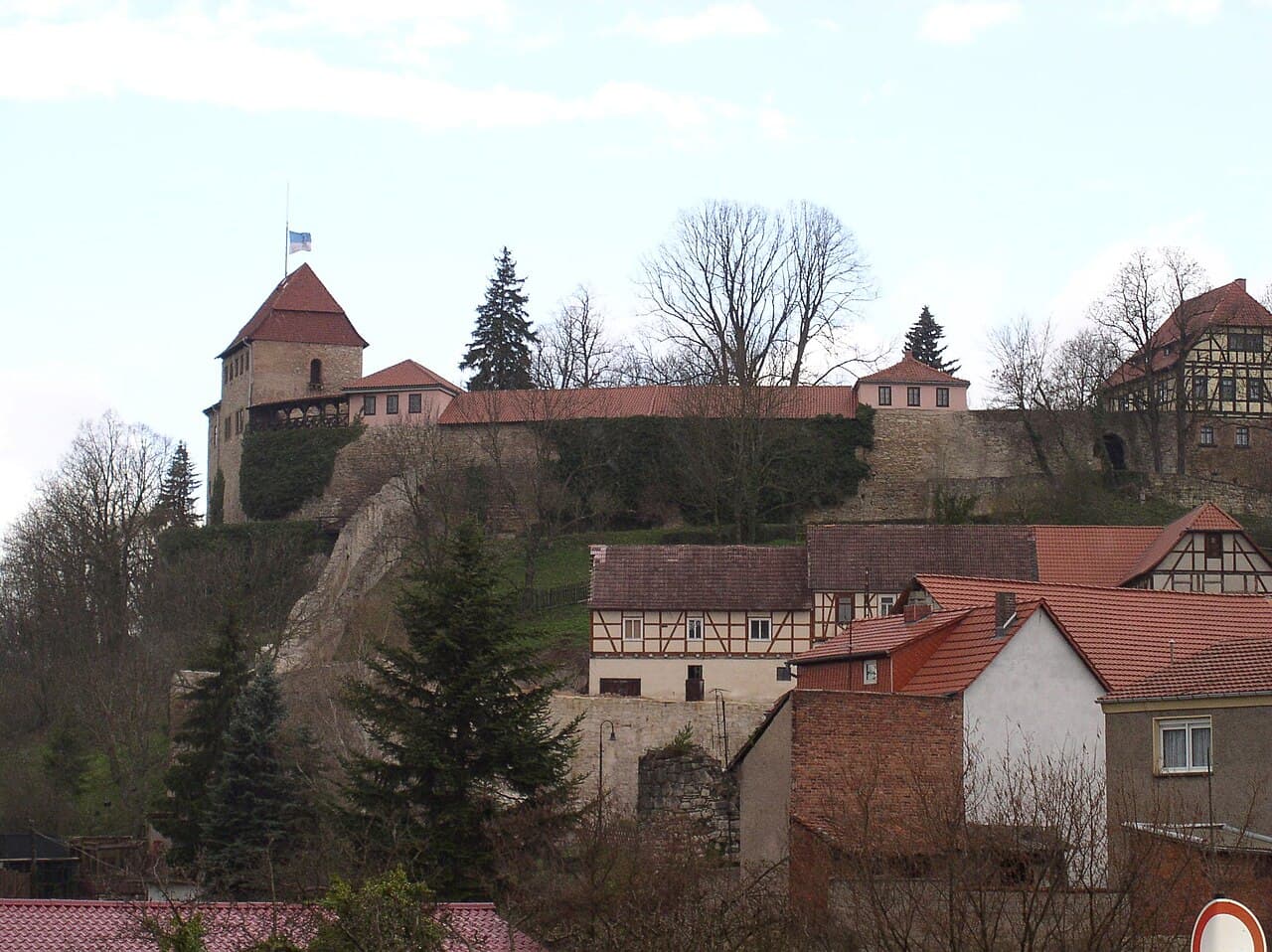
Burg Creuzburg stands as a remarkable example of a Romanesque hill castle in the heart of Thuringia, Germany. Constructed in the latter half of the 12th century by the Ludowing dynasty, this fortress occupies a strategic hilltop overlooking the Werra valley. Its commanding position and robust fortifications reflect its historical role as a military stronghold, administrative center, and noble residence over centuries.
The foundation and medieval significance of Burg Creuzburg
The castle was built between 1165 and 1170 on the orders of Landgrave Ludwig II of Thuringia, replacing an earlier fortified monastic site. This location was chosen for its strategic importance, controlling a vital crossing over the Werra river and overseeing the surrounding northern territories of the Ludowing realm. Shortly after the castle's establishment, the nearby St. Jacob monastery was founded around 1173, continuing the site's religious tradition.
Burg Creuzburg quickly became a key fortress protecting the newly founded city of Creuzburg (established in 1213) and the important Werra river bridge. The castle is historically notable as the favored residence of Landgravine Elisabeth of Thuringia, later canonized as a saint. She gave birth to her son Hermann within its walls in the early 13th century, around 1222 or 1225.
Military conflicts and sieges in the 13th century
The 13th century was turbulent for Burg Creuzburg. The castle withstood a siege in 1260 during the Thuringian-Hessian War of Succession, a contest for regional control. Later, in 1295, King Adolf of Nassau besieged the castle successfully, burning the adjacent town and forcing surrender by cutting off the water supply. These events underscore the castle's military importance and resilience during medieval conflicts.
Transition to administrative and noble functions
Following the Ludowing dynasty, the Wettin dynasty took over, gradually shifting Burg Creuzburg's role from a fortress to an administrative hub. The addition of a well house and granary during this period reflects its evolving function to support bureaucratic and residential needs rather than purely military defense.
By the 15th century, the castle housed judicial and governmental activities, exemplified by the construction of the Yellow House, which served as a court and administrative center. This change marked Burg Creuzburg's integration into the regional governance structure.
Baroque transformation and later ownership
In the 18th century, under Duke Johann Wilhelm of Saxony and master builder Gottfried Heinrich Krohne, Burg Creuzburg underwent significant remodeling. The fortress was transformed into a palace complex with the addition of the Duke's House, coach houses, and a Baroque garden adorned with ornamental sculptures. This period reflects the castle's shift from medieval fortress to noble residence, embracing Baroque architectural and landscaping styles.
Ownership changed hands in the late 19th and early 20th centuries, including acquisition by a descendant of the needle gun inventor in 1899 and later by hotelier Georg Kossenhaschen in 1921. Kossenhaschen restored the castle for private residence and writers' retreat, adding features such as a tall Boniface cross and an Elisabeth chamber honoring the castle's saintly connection.
Modern history and preservation efforts
During World War II, Burg Creuzburg suffered minor damage from American artillery. Post-war occupation by American, then Soviet, and East German forces followed. The castle later served as a school and holiday camp until structural decline led to its closure in 1975.
A citizens' association formed in 1981 initiated cleanup and restoration, leading to public reopening by 1991. Further renovations in 1997 adapted parts of the castle for hotel use. Today, the town of Creuzburg owns the castle, which remains a protected monument of regional heritage despite restitution claims.
Architectural features and castle grounds
Perched approximately 225 meters above sea level, Burg Creuzburg is surrounded by a substantial ring wall about 340 meters in circumference, enclosing nearly 7,400 square meters. This makes it one of the largest surviving Romanesque stone castles in Thuringia.
Key medieval structures include the robust ring wall, a tower house containing the Elisabeth chamber, and portions of the original palas. A deep well nearly 37.5 meters deep ensured water supply during sieges. The central courtyard features a 500-year-old summer lime tree, a living testament to the castle's long history.
The Baroque garden and later additions such as the Duke's House, coach houses, and decorative putti sculptures illustrate the castle's architectural evolution. The Yellow House from the 15th century reflects the administrative expansion.
The castle grounds extend to terraced slopes with roads and sections of the town wall, linking the fortress to the surrounding settlement physically and historically.
Current uses and cultural significance
Today, Burg Creuzburg functions as a hotel with dining facilities, a civil registry office wedding venue, and a private pottery workshop. It also hosts a local history museum exhibiting artifacts spanning over 800 years of urban and castle history. Notable exhibits include the Michael Praetorius room, torture cellar, and dedicated local history cabinets, offering insights into medieval life and earlier periods.
Displayed in the courtyard are a wooden Boniface cross and a historic Saxon cannon dating to 1691, underscoring the castle's martial and religious heritage.
Despite periods of neglect, the castle is now well preserved thanks to extensive restoration efforts, securing its status as a key monument of regional history and architecture.
Frequently asked questions (FAQ)
- How do I visit Burg Creuzburg?
- Burg Creuzburg is open to visitors with a hotel, museum, and event spaces. Check local tourism websites for current hours and booking information.
- What is the historical significance of Burg Creuzburg?
- Burg Creuzburg was a strategic medieval fortress and residence of the Ludowing dynasty, associated with Saint Elisabeth and regional governance.
- Can I explore the castle's medieval and Baroque architecture?
- Yes, visitors can see the Romanesque ring wall, tower house, palas remains, and Baroque additions like the Duke's House and garden sculptures.
- Is the castle accessible for weddings and events?
- The castle houses the Creuzburg civil registry office wedding room and offers facilities for private events and celebrations.
- When was Burg Creuzburg built?
- Construction of Burg Creuzburg took place between 1165 and 1170 under Landgrave Ludwig II of Thuringia.
- Are there guided tours available?
- Guided tours are often available through the local museum or tourist office, providing detailed historical and architectural insights.

Information
Sources & official resources
Verify the information above using these authoritative references.
Loading map...
Visitor reviews
No reviews yet. Been here? Write the first review and help other travelers!
Write the first reviewVisited this castle? Share your experience
Your review helps other travelers and adds first-hand knowledge to our encyclopedia.