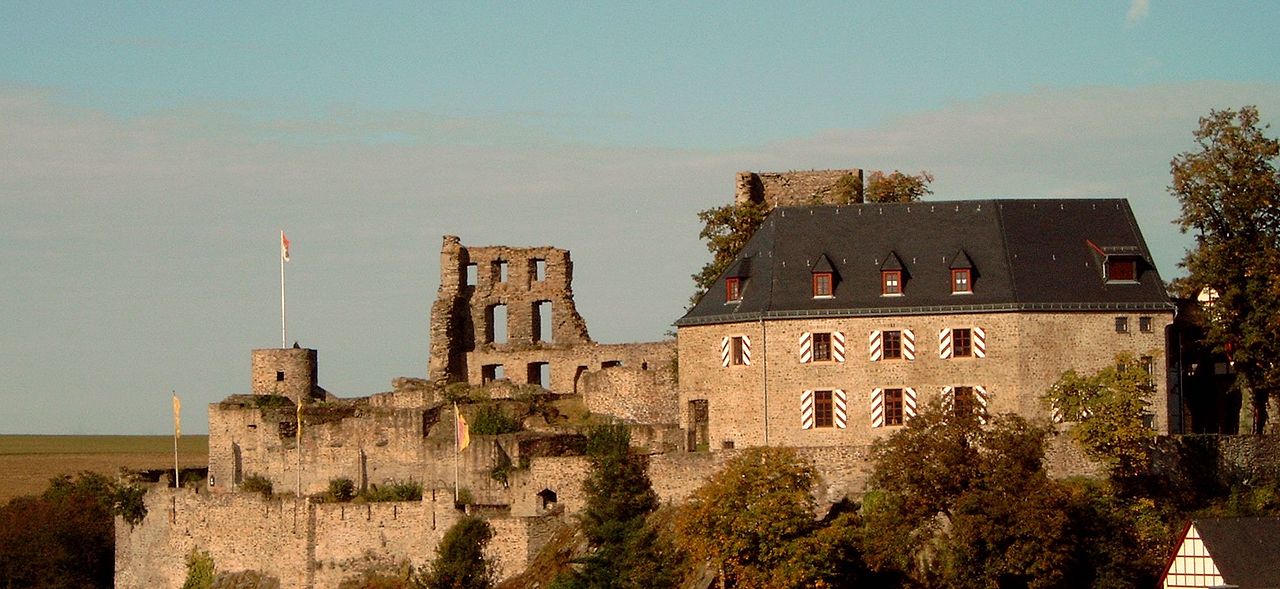
Burg Braunshorn is a notable example of a medieval motte castle located in the municipality of Braunshorn, Germany. Established by the noble family known as the Freiherren von Braunshorn, it served as their ancestral seat and military stronghold during the High Medieval period. The castle's origins date back to the late 11th century, a time when motte-and-bailey castles were common defensive structures across Europe.
Historical background and significance
The earliest documented mention of the Braunshorn family involves Gundolph von Braunshorn in 1098, which aligns with the estimated construction period of the castle. For centuries, Burg Braunshorn remained under the stewardship of this noble lineage, symbolizing their regional power and influence.
In 1268, the Braunshorn family relocated their residence to Beilstein on the Moselle River, marking a shift in their territorial focus. Subsequently, in 1273, the castle was sold to Count Palatine Ludwig. This transaction was significant as it positioned the castle within the sphere of the Palatinate, a key player in the political landscape of the Holy Roman Empire.
The castle played a strategic role in the conflicts involving the Archbishopric of Trier. Notably, in 1314, it was pledged by Ludwig the Bavarian, then King of the Romans, to King John of Bohemia and Archbishop Baldwin of Trier as collateral to secure Ludwig's election as king. After Baldwin's death, control reverted to the Palatinate, but detailed records of the castle's use after this period are scarce.
By the late 18th century, the castle had fallen into ruin, with only foundation remnants visible. By the mid-19th century, these remains had largely disappeared, reflecting a gradual decline from its former prominence.
Architectural features and site layout
Burg Braunshorn is characterized by its classic motte structure, a rectangular earthen mound approximately 20 meters across and rising between 3.4 and 4 meters high. This elevated platform would have supported a central tower or keep, typical of motte castles designed for defense and surveillance.
Surrounding the motte is a low embankment about 1.5 meters high, whose exact period of construction remains uncertain. The site is situated in marshy terrain, which naturally enhanced its defensive capabilities by complicating direct assaults.
The original defenses likely included a wooden palisade atop the motte and a water-filled ditch or moat surrounding the mound. These features combined to create a formidable barrier against attackers, reflecting the military architecture of the High Medieval era.
In the 20th century, a residential building was constructed adjacent to the motte, incorporating parts of the original earthworks. This modern development has altered the site and restricted public access due to fencing and private property boundaries.
Archaeological findings and research
Archaeological investigations have been limited but informative. In 1936, two pottery fragments were found near the motte. One was a modern glazed shard, while the other was a yellow earthenware piece tentatively linked to the Pingsdorf ceramic tradition, which dates to the 11th and 12th centuries. However, the absence of typical red decoration on the shard prevents precise dating.
Additionally, aerial photographs taken by British reconnaissance during the 1940s offer a visual record of the castle's layout. These images remain unpublished and inaccessible to the public, leaving some aspects of the site’s structure and extent open to further study.
Preservation status and accessibility
Today, Burg Braunshorn is classified as a hill castle type, specifically a motte castle, with its remains primarily consisting of earthworks. The site is partially preserved but lacks above-ground stone structures, typical of many early medieval motte castles that originally relied on timber constructions.
Due to modern residential development and fencing, the site is currently closed to public access. The preservation of the motte and surrounding embankments remains important for understanding the region’s medieval fortifications and noble residences.
Context within regional medieval fortifications
Burg Braunshorn illustrates the typical defensive strategies employed by German nobility during the High Medieval period. Its location in marshy terrain and use of a motte structure reflect a common approach to fortification that balanced natural landscape advantages with constructed defenses.
The castle’s history of ownership, including its involvement in regional conflicts and political pledges, highlights its strategic importance within the shifting power dynamics of the Holy Roman Empire’s western territories.
Frequently asked questions (FAQ)
- How do I get to Burg Braunshorn?
- Burg Braunshorn is located in Germany, easily accessible by car or public transport. The nearest train station is a short distance away, and local buses provide convenient connections to the castle.
- What is the historical significance of Burg Braunshorn?
- Burg Braunshorn dates back to the 12th century and played a crucial role in the region's defense during the medieval period. It is a significant example of feudal architecture and offers insights into the historical conflicts and power dynamics of its time.
- When was Burg Braunshorn last renovated?
- Burg Braunshorn underwent major renovations in the early 2000s to preserve its structure and enhance visitor experience. Ongoing maintenance ensures that the castle remains a beautiful and educational destination for future generations.
- Can I take guided tours of Burg Braunshorn?
- Yes, guided tours are available at Burg Braunshorn, providing visitors with in-depth knowledge about its history and architecture. These tours are led by knowledgeable guides who bring the castle's rich history to life.
- Why is Burg Braunshorn a popular tourist attraction?
- Burg Braunshorn is popular for its stunning architecture and panoramic views of the surrounding landscape. Its historical significance combined with engaging tours makes it a must-visit destination for history enthusiasts and casual visitors alike.
- Is it possible to hold events at Burg Braunshorn?
- Yes, Burg Braunshorn offers facilities for hosting events such as weddings, corporate gatherings, and private tours. The castle's unique ambiance and beautiful setting provide a memorable backdrop for any occasion.
- What are the opening hours for Burg Braunshorn?
- Burg Braunshorn is typically open to visitors from 10 AM to 6 PM daily, but hours may vary seasonally. It's advisable to check the official website for the most current information before planning your visit.
- What are the ticket prices for visiting Burg Braunshorn?
- Ticket prices for Burg Braunshorn are generally affordable, with discounts available for children, seniors, and groups. Family passes and special event pricing may also be offered, so it's best to check the official site for detailed pricing information.
- What is the best time to visit Burg Braunshorn?
- The best time to visit Burg Braunshorn is during the spring and early fall when the weather is mild and the surrounding scenery is at its most beautiful. These seasons also feature fewer crowds, allowing for a more enjoyable experience.
- Are there any nearby attractions to visit along with Burg Braunshorn?
- Yes, there are several nearby attractions, including scenic hiking trails and charming villages that showcase the local culture. Visitors can also explore museums and other historical sites that complement the experience at Burg Braunshorn.
Information
Loading map...
Visitor reviews
No reviews yet. Been here? Write the first review and help other travelers!
Write the first reviewVisited this castle? Share your experience
Your review helps other travelers and adds first-hand knowledge to our encyclopedia.