Buckden Towers
Buckden Towers is a historic site located in the village of Buckden in Cambridgeshire, England. Originally established as a manor belonging to the Bishop of Lincoln and first recorded in the Domesday Book of 1086, the site evolved over centuries into a significant episcopal residence with notable architectural and historical importance.
Early development and medieval origins
The earliest substantial construction at Buckden was undertaken around 1225 by Hugh de Wells, who replaced the earlier timber manor with a stone house. This marked the beginning of the site's transformation into a fortified residence. Subsequently, Robert Grosseteste, Bishop of Lincoln from 1235 to 1253, added a prominent Great Hall, enhancing the building's stature and functionality.
Despite these improvements, a devastating fire in 1291 destroyed much of the medieval structures built by Hugh de Wells and Grosseteste. The site was rebuilt and continued to serve as a bishop's residence, reflecting the ecclesiastical wealth and influence in the region.
The tower and late medieval reconstruction
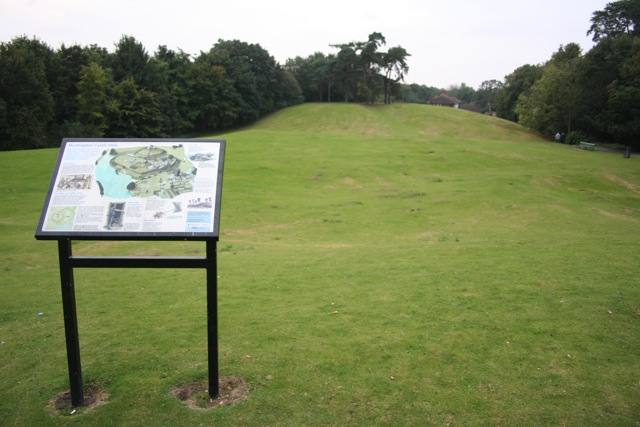
The construction of the defining Tower at Buckden was completed in 1480 under Bishop Rotherham. Shortly thereafter, between 1480 and 1494, Bishop John Russell undertook extensive rebuilding efforts that significantly expanded the complex. During this period, the residence was known as Buckden Palace and was surrounded by a moat, emphasizing its defensive and prestigious character.
Buckden Palace was notable enough to be visited by King Richard III in 1483, underscoring its importance as an episcopal seat and royal residence. This phase of construction reflects late medieval architectural styles with fortified elements typical of episcopal palaces of the time.
Renaissance era and notable occupants
In the early 16th century, Katherine of Aragon resided at Buckden Palace between 1533 and 1534 following the annulment of her marriage to King Henry VIII. This association with significant Tudor figures adds to the site's historical prominence.
By the late 16th century, the palace began to decline in status. Bishop Chaderton vacated the residence in 1595 due to financial constraints, although his successor returned despite the building's deteriorating condition. King James I visited the palace in 1619, indicating its continued ceremonial importance.
17th century challenges and civil war impact
During the episcopacy of John Williams (1625-1642), the palace saw repairs to the cloisters and reconstruction of the stables and barns in the outer courtyard. However, Williams' extravagant lifestyle led to his arrest and imprisonment in the Tower of London in 1637. During his absence, the estate was mismanaged, resulting in the sale of interior fittings and the destruction of the grounds' trees.
The English Civil War further disrupted the palace's fortunes. The estate was seized from the See of Lincoln and sold. Following the restoration of the monarchy in 1660, Bishop Sanderson restored the dilapidated palace, attempting to revive its former status.
Decline, transformation, and modern restoration
By the 19th century, the palace's importance had diminished significantly. In 1838, the Ecclesiastical Commissioners ordered the demolition of about half the main buildings and parts of the Gatehouse, with materials and furnishings sold off. This marked a major reduction in the site's scale and grandeur.
In 1870, the complex was sold to James Marshall, who made it habitable again and constructed a Victorian house on the site. During this period, the original moat was filled in, altering the medieval defensive landscape. The site became known as Buckden Towers, reflecting its changed character from a palace to a castellated mansion.
After World War I, parts of the Inner Gatehouse were rebuilt. Following World War II, the estate was donated back to the Church and in 1956 passed to the Claretian Missionaries, who initiated a restoration campaign to preserve the historic structures.
Architectural features and current status
Buckden Towers today retains significant elements of its medieval and late medieval architecture, particularly the Tower and portions of the Gatehouse. The site originally featured a moat, cloisters, Great Hall, stables, and other ancillary buildings typical of an episcopal palace.
While much of the complex has been altered or lost, the surviving structures provide insight into the architectural evolution from a fortified manor to a Renaissance episcopal palace and later Victorian residence. The grounds are open to the public for free visits, allowing appreciation of its historic and architectural significance.
Currently owned by the Claretian Missionaries, Buckden Towers serves as a reminder of the ecclesiastical power and architectural heritage of the Bishops of Lincoln, maintaining its presence as a notable historic site in Cambridgeshire.
Frequently asked questions (FAQ)
- How do I visit Buckden Towers?
- Buckden Towers is located in Buckden village, Cambridgeshire, with grounds open daily for free visits. There is no admission fee, but visitors should check local resources for any special events or restricted access.
- What is the historical significance of Buckden Towers?
- Buckden Towers served as an episcopal palace for the Bishops of Lincoln from the 13th century, hosting notable figures such as Katherine of Aragon and King Richard III. Its architecture reflects medieval and Renaissance periods.
- When was Buckden Towers built?
- The site was first developed with stone buildings in the 13th century, with major additions including the Tower completed in 1480 and further renovations through the 17th century.
- Can I see original medieval architecture at Buckden Towers?
- Yes, parts of the medieval Tower and Gatehouse remain, showcasing late medieval construction techniques and episcopal palace features despite later alterations.
- Is Buckden Towers wheelchair accessible?
- As a historic site with partial preservation and some Victorian modifications, accessibility may be limited. Visitors with mobility concerns should contact the current owners or local tourism offices for detailed information.
Information
Opening hours
Grounds open daily, free access
Ticket prices
Free
Current owner
Claretian Missionaries
Address
High Street, Buckden, Cambridgeshire, United Kingdom
Loading map...
Visitor reviews
No reviews yet. Been here? Write the first review and help other travelers!
Write the first reviewVisited this castle? Share your experience
Your review helps other travelers and adds first-hand knowledge to our encyclopedia.