Huntingdon Castle — United Kingdom castle

Huntingdon Castle

Huntingdon Castle: medieval hill fortress in Cambridgeshire
Huntingdon, United Kingdom
High Medieval (11th–13th c.)
Archaeological Site

Huntingdon Castle was a significant high medieval hill castle located in the historic market town of Huntingdon, Cambridgeshire, England. Positioned strategically on elevated ground at grid reference TL240714, the castle played a crucial role in the region's medieval defensive network.

Historical context and origins

The castle was constructed in the 11th century, likely soon after the Norman Conquest of England in 1066. This period saw a widespread establishment of castles across England as the Normans sought to consolidate their control over newly acquired territories. Huntingdon Castle was part of this wave of fortifications, serving both military and administrative functions.

Its location in Huntingdon, a market town of some importance, allowed the castle to control key routes and oversee the surrounding countryside. The castle's presence underscored the Norman strategy of imposing feudal authority and securing strategic points across the kingdom.

Architectural features and layout

As a hill castle, Huntingdon Castle was built on raised terrain to maximize its defensive advantages. The elevated position provided commanding views of the surrounding landscape, enabling early detection of approaching threats.

While detailed architectural records are scarce, typical Norman hill castles of the period featured a motte-and-bailey design or a stone keep surrounded by defensive walls and ditches. Huntingdon Castle likely included a fortified keep or donjon as its central stronghold, with ancillary buildings arranged within protective walls.

The castle's defenses would have included battlements, gatehouses, and possibly a moat or ditch system to deter attackers. The layout facilitated both military defense and the administration of the surrounding estates.

Role in medieval England

Throughout the high medieval period, Huntingdon Castle served as a local seat of power. It was a center for the administration of justice, collection of taxes, and military organization. The castle's garrison would have been responsible for maintaining order and defending the region against external threats or local unrest.

Huntingdon itself was historically associated with notable figures such as David I of Scotland, who held the earldom of Huntingdon in the 12th century. The castle would have been a focal point for the governance of the earldom and its territories.

Decline and current condition

Over the centuries, the military importance of Huntingdon Castle diminished, particularly as changes in warfare and political stability reduced the need for such fortifications. By the late medieval or early post-medieval period, the castle fell into disuse and was likely dismantled or allowed to decay.

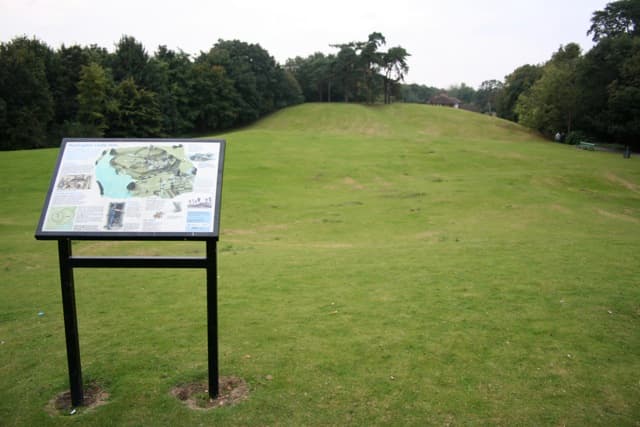
Today, there are no significant above-ground remains of Huntingdon Castle. The site is classified as archaeological ruins, with only earthworks and subtle landscape features indicating its former presence. Archaeological investigations have helped to identify the castle's location and layout, contributing to the understanding of medieval fortifications in Cambridgeshire.

Heritage and archaeological significance

The site of Huntingdon Castle holds value for historians and archaeologists studying Norman military architecture and medieval society in England. Its remains provide insights into the construction techniques, defensive strategies, and feudal governance of the high medieval period.

Preservation efforts focus on protecting the earthworks and promoting awareness of the castle's historical role within the region. The castle's legacy endures through local history and archaeological research, offering a window into England's medieval past.

Frequently asked questions (FAQ)

What is the historical significance of Huntingdon Castle?
Huntingdon Castle, dating back to the 11th century, played a crucial role in the Norman Conquest of England. It served as a royal residence and a strategic military stronghold, reflecting the power dynamics of the time.
When was Huntingdon Castle built?
Huntingdon Castle was constructed around 1068 under the orders of William the Conqueror. Its establishment marked the beginning of Norman influence in the region and the castle has witnessed many historical events since its inception.
Can I visit Huntingdon Castle?
Yes, Huntingdon Castle is open to visitors, allowing them to explore its rich history and beautiful surroundings. Guided tours may be available, providing insights into its architectural features and historical context.
What are the opening hours for Huntingdon Castle?
Huntingdon Castle typically opens to the public from 10 AM to 5 PM during the peak season. However, it's advisable to check the official website for any seasonal variations or special events that may affect opening times.
Is it possible to access Huntingdon Castle with mobility aids?
Yes, Huntingdon Castle is committed to providing accessibility for all visitors. There are designated paths and facilities to assist those with mobility aids, ensuring everyone can enjoy the historical site.
What is the best time to visit Huntingdon Castle?
The best time to visit Huntingdon Castle is during the spring and summer months when the weather is pleasant, and the gardens are in full bloom. This period also coincides with various events and activities that enhance the visitor experience.
Are there any nearby attractions to visit while at Huntingdon Castle?
Yes, nearby attractions include the beautiful St. Mary's Church and the picturesque River Ouse, which are both within walking distance. Additionally, the town of Huntingdon offers charming shops and cafes for visitors to enjoy.
What are the ticket prices for visiting Huntingdon Castle?
Ticket prices for Huntingdon Castle vary depending on age and whether you are part of a guided tour. Generally, adult tickets are reasonably priced, with discounts available for children and seniors.

Photo gallery

Huntingdon Castle
Click to view

Photo by Duncan Grey•CC BY-SA 2.0

1 photo • Click any image to view in full screen

Information

Hill Castle

Loading map...

Visitor reviews

No reviews yet. Been here? Write the first review and help other travelers!

Write the first review

Visited this castle? Share your experience

Your review helps other travelers and adds first-hand knowledge to our encyclopedia.

Write a review

(5/5)

0/2000 characters

Your review will be visible after admin approval

Nearby castles

6.1 km

Buckden Towers

Buckden, United Kingdom

Buckden Towers is a historic site located in the village of Buckden in Cambridgeshire, England. Originally established as a manor belonging to the Bishop of Lincoln and first recorded in the Domesday Book of 1086, the site evolved over centuries into a significant episcopal residence with notable architectural and historical importance. Early development and medieval origins The earliest substantial construction at Buckden was undertaken around 1225 by Hugh de Wells, who replaced the earlier timber manor with a stone house. This marked the beginning of the site's transformation into a fortified residence. Subsequently, Robert Grosseteste, Bishop of Lincoln from 1235 to 1253, added a prominent Great Hall, enhancing the building's stature and functionality. Despite these improvements, a devastating fire in 1291 destroyed much of the medieval structures built by Hugh de Wells and Grosseteste. The site was rebuilt and continued to serve as a bishop's residence, reflecting the ecclesiastical wealth and influence in the region. The tower and late medieval reconstruction The construction of the defining Tower at Buckden was completed in 1480 under Bishop Rotherham. Shortly thereafter, between 1480 and 1494, Bishop John Russell undertook extensive rebuilding efforts that significantly expanded the complex. During this period, the residence was known as Buckden Palace and was surrounded by a moat, emphasizing its defensive and prestigious character. Buckden Palace was notable enough to be visited by King Richard III in 1483, underscoring its importance as an episcopal seat and royal residence. This phase of construction reflects late medieval architectural styles with fortified elements typical of episcopal palaces of the time. Renaissance era and notable occupants In the early 16th century, Katherine of Aragon resided at Buckden Palace between 1533 and 1534 following the annulment of her marriage to King Henry VIII. This association with significant Tudor figures adds to the site's historical prominence. By the late 16th century, the palace began to decline in status. Bishop Chaderton vacated the residence in 1595 due to financial constraints, although his successor returned despite the building's deteriorating condition. King James I visited the palace in 1619, indicating its continued ceremonial importance. 17th century challenges and civil war impact During the episcopacy of John Williams (1625-1642), the palace saw repairs to the cloisters and reconstruction of the stables and barns in the outer courtyard. However, Williams' extravagant lifestyle led to his arrest and imprisonment in the Tower of London in 1637. During his absence, the estate was mismanaged, resulting in the sale of interior fittings and the destruction of the grounds' trees. The English Civil War further disrupted the palace's fortunes. The estate was seized from the See of Lincoln and sold. Following the restoration of the monarchy in 1660, Bishop Sanderson restored the dilapidated palace, attempting to revive its former status. Decline, transformation, and modern restoration By the 19th century, the palace's importance had diminished significantly. In 1838, the Ecclesiastical Commissioners ordered the demolition of about half the main buildings and parts of the Gatehouse, with materials and furnishings sold off. This marked a major reduction in the site's scale and grandeur. In 1870, the complex was sold to James Marshall, who made it habitable again and constructed a Victorian house on the site. During this period, the original moat was filled in, altering the medieval defensive landscape. The site became known as Buckden Towers, reflecting its changed character from a palace to a castellated mansion. After World War I, parts of the Inner Gatehouse were rebuilt. Following World War II, the estate was donated back to the Church and in 1956 passed to the Claretian Missionaries, who initiated a restoration campaign to preserve the historic structures. Architectural features and current status Buckden Towers today retains significant elements of its medieval and late medieval architecture, particularly the Tower and portions of the Gatehouse. The site originally featured a moat, cloisters, Great Hall, stables, and other ancillary buildings typical of an episcopal palace. While much of the complex has been altered or lost, the surviving structures provide insight into the architectural evolution from a fortified manor to a Renaissance episcopal palace and later Victorian residence. The grounds are open to the public for free visits, allowing appreciation of its historic and architectural significance. Currently owned by the Claretian Missionaries, Buckden Towers serves as a reminder of the ecclesiastical power and architectural heritage of the Bishops of Lincoln, maintaining its presence as a notable historic site in Cambridgeshire.

Renaissance (15th–17th c.)
Details
14.5 km

Kimbolton Castle

Kimbolton, United Kingdom

Kimbolton Castle stands as a remarkable example of a Renaissance-period English country house with medieval origins, located in the village of Kimbolton, Cambridgeshire. This castle is historically significant as the final residence of Queen Catherine of Aragon, the first wife of King Henry VIII. Originally constructed as a medieval fortress, it underwent substantial transformation during the 16th and 17th centuries, evolving into a grand stately palace that reflected the architectural tastes and social aspirations of the English nobility during the Renaissance.Medieval origins and early historyThe site of Kimbolton Castle has been occupied since the medieval period, with its earliest form dating back to the 12th or 13th century. Initially, it served as a fortified manor house, designed primarily for defense with typical medieval features such as thick stone walls, battlements, and a moat. The castle's strategic location in the English countryside provided both security and control over the surrounding lands.Throughout the Middle Ages, Kimbolton Castle was owned by various noble families. Its medieval structure was characterized by a central keep or tower, curtain walls, and defensive gatehouses, which were common architectural elements of medieval castles in England. However, by the late 15th century, the military importance of such castles diminished, and many were adapted for residential use.Renaissance transformation and architectural evolutionDuring the 16th century, Kimbolton Castle underwent significant remodeling that reflected the Renaissance architectural style, which emphasized symmetry, proportion, and the incorporation of classical elements. The castle was transformed from a fortress into a more comfortable and elegant residence suitable for nobility. Large windows replaced narrow arrow slits, allowing more natural light into the interiors, and ornamental stonework was added to enhance its aesthetic appeal.The castle's Renaissance features include richly decorated façades, grand staircases, and spacious halls designed for entertaining and courtly life. The building materials primarily consisted of local stone, and the layout was adapted to accommodate the changing needs of its residents, moving away from purely defensive considerations to focus on comfort and status.Catherine of aragon’s residenceKimbolton Castle is particularly renowned for being the final home of Catherine of Aragon after her marriage to Henry VIII was annulled. She lived here from 1534 until her death in 1536. During this period, the castle served as her place of confinement but also as a dignified residence befitting her status as a former queen. Historical records describe the castle as a place of quiet dignity where Catherine spent her last years, supported by loyal attendants.The dukes of manchester and later historyIn 1615, Kimbolton Castle became the family seat of the Dukes of Manchester, a title in the English peerage. The Dukes made further modifications to the castle, adding elements that reflected the tastes of the 17th and 18th centuries. These included landscaped gardens, additional wings, and interior refurbishments that combined Renaissance and later stylistic influences.The castle remained in the possession of the Manchester family until 1950. Afterward, it was repurposed and now serves as the home of Kimbolton School, a prestigious independent school. This adaptive reuse has helped preserve the castle’s historic fabric while giving it a new function in contemporary education.Architectural features and groundsKimbolton Castle features a blend of medieval defensive structures and Renaissance residential architecture. Notable elements include its stone curtain walls, corner towers, and a gatehouse that retains some medieval character. The interior boasts large great halls, ornate fireplaces, and spacious chambers that demonstrate the castle’s evolution from fortress to palace.The surrounding grounds have been landscaped over centuries, featuring formal gardens, parkland, and avenues that enhance the castle’s stately appearance. The estate reflects typical English country house settings, combining natural beauty with architectural grandeur.Cultural significance and preservationKimbolton Castle holds an important place in English history due to its association with Catherine of Aragon and its representation of Renaissance architectural transition from medieval fortresses to elegant noble residences. It is a Grade I listed building, recognizing its national heritage value.Today, the castle is well preserved and maintained, serving educational purposes while allowing visitors to appreciate its rich history and architectural beauty. Its layered history offers insights into England’s social and political changes from the medieval period through the Renaissance and into modern times.

Renaissance (15th–17th c.)
Details
19.2 km

Rampton Castle

Rampton, United Kingdom

Rampton Castle stands as a significant relic of England's turbulent mid-12th century, embodying the military and political struggles of The Anarchy, a civil war between supporters of King Stephen and the rival claimant Empress Matilda. Located in the village of Rampton, this hill castle was strategically positioned to counter the rebellious baron Geoffrey de Mandeville, a formidable figure challenging royal authority during this period. Historical context and purpose The castle's origins are deeply intertwined with the chaotic events of The Anarchy (1135-1153), a period marked by widespread conflict and shifting allegiances across England. Geoffrey de Mandeville, who held extensive lands and wielded considerable power, became a central antagonist to King Stephen's rule. In response to the threat posed by Mandeville's rebellion, forces loyal to Stephen initiated the construction of Rampton Castle as a defensive stronghold. Construction began in the early 1140s, reflecting the urgent need for fortified positions to maintain control over rebellious territories. However, the castle's development was abruptly halted following Geoffrey de Mandeville's death in 1144 at Burwell Castle, which effectively ended the immediate threat in the region. Consequently, Rampton Castle was never fully completed or garrisoned to its intended capacity. Architectural design and earthworks Rampton Castle exemplifies the motte and bailey type, a prevalent form of medieval fortification characterized by a raised earthwork mound (the motte) and an enclosed courtyard (the bailey). The surviving earthworks at Rampton rise approximately eight meters above the surrounding landscape, forming a prominent feature known locally as Giant's Hill. The motte would have originally supported a wooden or possibly stone keep, although no stone structures are known to have been completed here. Surrounding the motte, the bailey would have contained essential buildings such as barracks, stables, and storage facilities, all enclosed by protective ditches and ramparts. The earthworks are well-preserved, providing valuable insight into the castle's layout and defensive strategy despite the absence of standing masonry. The castle's location adjacent to All Saints' Churchyard and overlapping the eastern end of the medieval village indicates a deliberate choice to integrate the fortress within the existing settlement framework. This positioning allowed control over local routes and resources, enhancing the castle's strategic value during the conflict. Historical significance and legacy Though Rampton Castle was never completed or played a prolonged role in military engagements, it serves as a tangible reminder of the localized impact of The Anarchy on England's landscape and communities. The castle's earthworks remain a visible testament to the medieval practice of rapid fortification construction in response to political instability. The local name Giant's Hill reflects the enduring presence of the earthworks in the cultural memory of Rampton village, symbolizing both the physical prominence of the site and its legendary associations. Today, Rampton Castle is an important archaeological site that offers scholars and visitors alike a glimpse into the defensive architecture and feudal conflicts of 12th-century England. Preservation and current condition Presently, Rampton Castle exists primarily as a well-preserved set of earthworks, classified as partially preserved remains typical of a motte and bailey castle. No significant stone structures survive, and there is no evidence of later modifications or restorations. The site is accessible near the village churchyard, allowing visitors to appreciate the scale and form of this medieval fortification. Interpretive efforts focus on the visible earthworks and their historical context, with informational signage helping to convey the castle's role during The Anarchy. As a heritage asset, Rampton Castle contributes to understanding England's feudal past and the architectural responses to civil unrest in the Middle Ages.

High Medieval (11th–13th c.)
Details