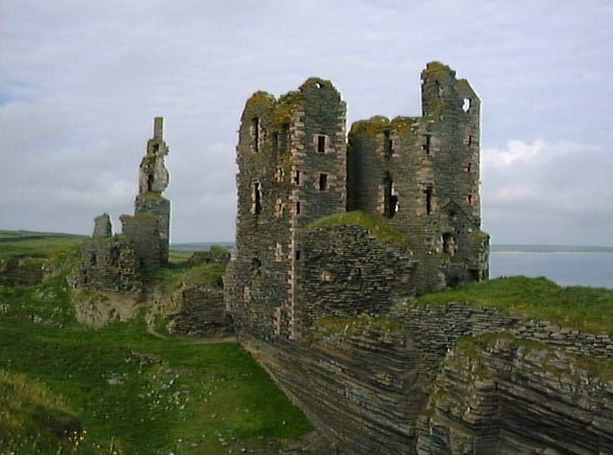
Bucholie Castle
Bucholie Castle, located in the Scottish Highlands, stands as a testament to the turbulent medieval history of northern Scotland. Originally constructed in 1140 by the infamous pirate and thief Svein Aliefson, the fortress was initially known as Lambaborg. This castle, perched on a thirty-foot-high rock, was strategically positioned to dominate the surrounding landscape and coastline, providing a formidable defensive advantage against invaders and rival clans.
Early history and construction
The castle's founder, Svein Aliefson, was a notorious figure whose activities included piracy and theft, making Lambaborg a stronghold for his operations. The castle's design took advantage of the natural rock outcrop, with steep cliffs on most sides, making it difficult to assault. The fortress likely featured a combination of stone walls and wooden structures typical of early medieval Scottish fortifications, designed to house Svein and his band of followers securely.
The 1152 siege and daring escape
In 1152, Svein found himself besieged by Count Rognvald, a local nobleman angered by the killing of a prominent local in a rent dispute by Svein's henchmen. The nobleman's son appealed to the Count, who mustered a strong force to arrest Svein. Despite the siege, Svein refused to surrender his personal henchman, Margad Grimson, and with about sixty men, he fortified himself within the castle walls.
When supplies dwindled, Svein and Margad executed a daring escape by descending the steep castle rock using a rope and swimming along the shore to evade capture. This dramatic episode highlights the castle's natural defenses and the resourcefulness of its occupants.
Clan conflicts and tragedy in 1427
By the early 15th century, the castle was associated with the Mowat family, known as the Mowat of Bucholie. In a violent episode in 1427, the Mowats and their followers were burned to death in the chapel of St Duthac in Tain by the rival clan, the MacNeil of Creich. This tragic event underscores the intense clan rivalries and brutal conflicts that characterized Scottish history during the late medieval period.
Decline and abandonment
In 1661, the castle was sold by the Mowat family to the Sinclair clan. Following this transaction, the castle was abandoned and gradually fell into disrepair. The decline of Bucholie Castle reflects broader changes in Scottish society and military technology, where traditional fortresses became less relevant with the advent of gunpowder and centralized governance.
Architectural features and significance
Although now in ruins, Bucholie Castle's original layout likely included a fortified keep atop the rock, surrounded by defensive walls and possibly a small courtyard. Its natural elevation and cliffside location made it a classic example of a hill castle, leveraging the terrain for defense rather than extensive man-made fortifications.
The castle's history of sieges, clan warfare, and its dramatic escapes contribute to its cultural significance in the Highlands. It represents the archetypal medieval Scottish fortress, embodying the lawlessness and clan dynamics of the period.
Visiting Bucholie Castle today
Today, Bucholie Castle remains a site of archaeological interest and historical importance. Visitors to the Highlands can explore the ruins and surrounding landscape, gaining insight into Scotland's medieval past. Although the castle is largely in ruins, its dramatic setting continues to capture the imagination and offers a tangible connection to the region's storied history.
Frequently asked questions (FAQ)
- When was Bucholie Castle originally built?
- Bucholie Castle was originally built in 1140 by the pirate Svein Aliefson, establishing a stronghold in the Scottish Highlands.
- What is the historical significance of Bucholie Castle?
- The castle is significant for its association with medieval piracy, clan conflicts, and its dramatic 1152 siege and escape.
- Is Bucholie Castle accessible to visitors today?
- Yes, visitors can explore the ruins of Bucholie Castle, which remains a site of historical interest in the Scottish Highlands.
Information
Loading map...
Visitor reviews
No reviews yet. Been here? Write the first review and help other travelers!
Write the first reviewVisited this castle? Share your experience
Your review helps other travelers and adds first-hand knowledge to our encyclopedia.