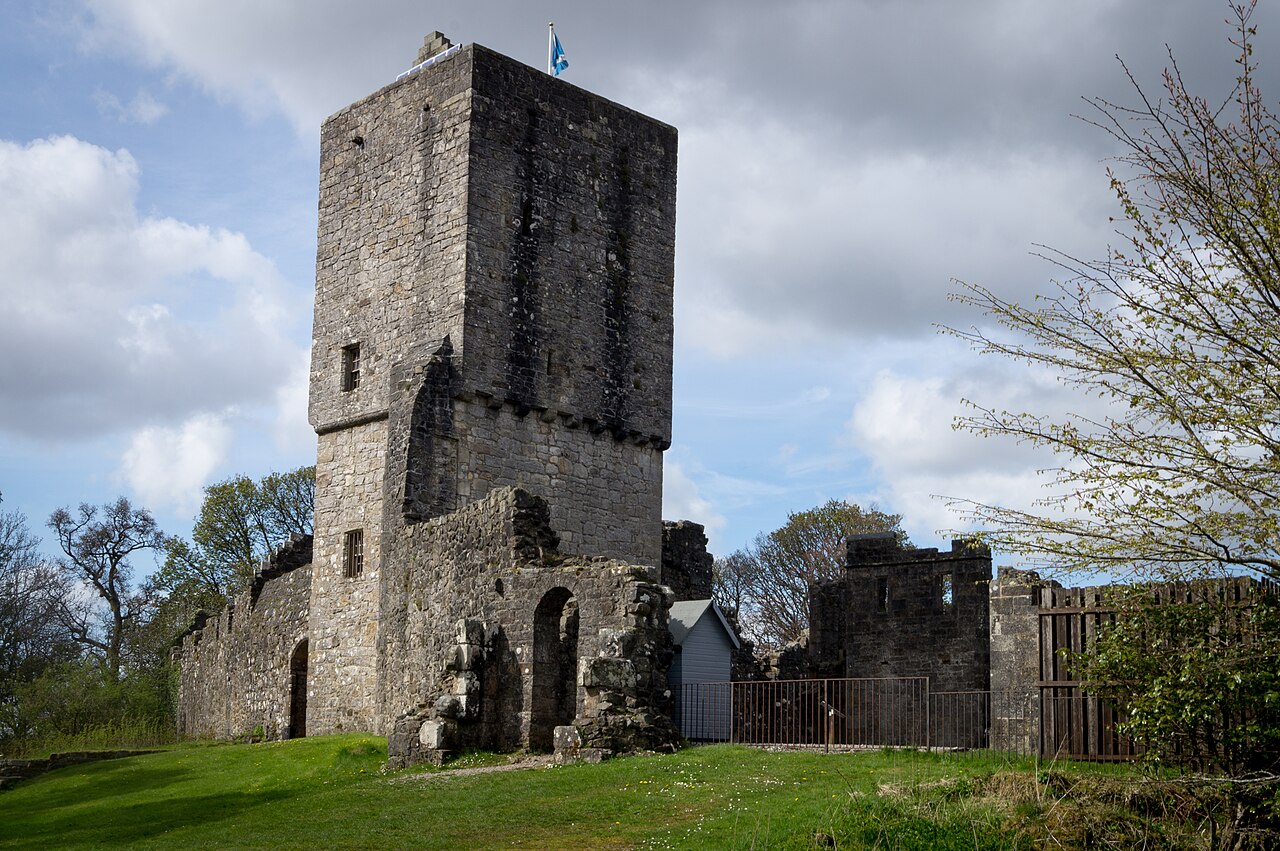
Buchanan Castle
Buchanan Castle stands as a striking example of a 19th-century Scottish baronial country house, located near Drymen in Scotland. Built between 1852 and 1858, it replaced the earlier Buchanan Auld House which was destroyed by fire in 1852. The castle was commissioned by James Graham, 4th Duke of Montrose, serving as the grand family seat of the Clan Graham until 1925. Although now a ruin, Buchanan Castle remains a significant cultural landmark and the historic seat of the clan.
Historical background and ownership
The estate originally belonged to the Clan Buchanan but passed to the Clan Graham in the late 17th century. The original Buchanan Auld House was situated about 0.8 km northwest of the current castle site. After the devastating fire in 1852, the decision was made to build a new, more modern residence on the same estate, culminating in the construction of Buchanan Castle.
James Graham, 4th Duke of Montrose, commissioned the new castle to serve as a symbol of his family's status and to replace the older house. The Montrose family occupied Buchanan Castle as their primary residence until 1925, after which the property was converted into a hotel, complete with a golf course, reflecting changing social and economic circumstances of the early 20th century.
Architectural style and features
Buchanan Castle was designed in the Scottish baronial style, a revivalist architectural movement popular in the 19th century that drew inspiration from medieval castles and tower houses. This style is characterized by pointed turrets, asymmetrical layouts, battlemented parapets, and ornate stonework. The castle’s design emphasized grandeur and romanticism, intended to convey the prestige of the Montrose family.
The castle's structure featured multiple towers of varying heights and shapes, giving it a picturesque silhouette against the surrounding landscape. The interiors were designed to accommodate the needs of aristocratic living, with spacious reception rooms, private chambers, and service areas arranged in a non-linear fashion to maximize comfort and opulence.
Role during the Second World War
With the outbreak of World War II, Buchanan Castle was requisitioned by the government and converted into a hospital for wounded soldiers. This adaptation marked a significant shift from its original residential use to a functional medical facility. The castle's large rooms and extensive grounds made it suitable for this purpose.
One of the most notable historical events during this period was the treatment of Rudolph Hess, a prominent Nazi official and deputy to Adolf Hitler, who was held and treated at the hospital after his mysterious flight to Scotland in 1941. This episode adds a unique historical dimension to Buchanan Castle's wartime legacy.
Post-war decline and current status
After the war, Buchanan Castle was briefly used as a school, but the upkeep of such a large property became unsustainable. In 1954, the roof was removed, a common practice intended to avoid property taxes on unoccupied buildings, which accelerated the deterioration of the structure.
Today, Buchanan Castle remains a ruin, partially preserved but largely overtaken by nature. Despite its dilapidated state, it continues to hold cultural significance as the historic seat of the Clan Graham and as an evocative example of Scottish baronial architecture.
Architectural and cultural significance
Buchanan Castle exemplifies the 19th-century fascination with medieval Scottish heritage, reflected in its baronial style that blends romanticism with practical residential needs. Its history encapsulates the transition of aristocratic estates through industrialization, war, and modern economic challenges.
The ruins serve as a poignant reminder of Scotland's architectural evolution and the social history of its noble families. Visitors and historians alike appreciate Buchanan Castle for its dramatic setting, historical associations, and architectural features that evoke a bygone era.
Visiting Buchanan Castle
Although the castle is in ruins and not formally open to the public as a maintained historic site, the surrounding estate near Drymen offers scenic views and opportunities for exploration. Visitors interested in Scottish history and architecture often visit the area to appreciate the castle’s exterior and its place within the landscape of Stirlingshire.
Preservation efforts remain limited, but the castle’s status as a clan seat and cultural landmark ensures ongoing interest in its legacy.
Frequently asked questions (FAQ)
- How do I get to Buchanan Castle?
- Buchanan Castle is located near Drymen, Scotland, and is easily accessible by car. The nearest major city is Glasgow, which is approximately 30 miles away, making it a convenient day trip. Public transportation options are limited, so driving or arranging a taxi is recommended for the best access.
- What is the historical significance of Buchanan Castle?
- Buchanan Castle has a rich history dating back to the 13th century, originally serving as a residence for the Clan Buchanan. It played a significant role in Scottish history, witnessing various historical events and changes in ownership. Today, it is a reminder of the feudal past and a testament to Scotland's architectural heritage.
- When was Buchanan Castle built?
- Buchanan Castle was built in the early 19th century, specifically in 1854, replacing earlier structures on the site. The castle showcases the architectural styles of the period and includes both Gothic and Scottish baronial elements. Although it is currently in ruins, its historical architecture continues to attract visitors.
- Can I visit Buchanan Castle?
- While Buchanan Castle is not fully open to the public due to its ruinous state, visitors can explore the surrounding grounds and take in the scenic views. Guided tours may be available during certain times of the year, providing insights into the castle's history and architecture. Be sure to check local listings for any special events or access opportunities.
- Why is Buchanan Castle a popular tourist destination?
- Buchanan Castle attracts visitors due to its stunning scenery and historical significance. Nestled near Loch Lomond, it offers picturesque views and a chance to experience Scotland's rich heritage. Additionally, its proximity to other attractions in the area makes it a great stop for tourists exploring the region.
- Is it possible to access the castle grounds for events?
- Yes, the grounds of Buchanan Castle can be accessed for special events and private functions, making it a unique venue for weddings and gatherings. However, it is advisable to contact the site management in advance to ensure availability and to understand any regulations in place. Check their official website for more details on event bookings.
- What are the opening hours for Buchanan Castle?
- Buchanan Castle does not have formal opening hours since it is primarily a ruin; however, the grounds are generally accessible year-round. It’s best to visit during daylight hours for safety and to fully appreciate the views. Always verify current conditions and access information before planning your visit.
- What are some nearby attractions to Buchanan Castle?
- Nearby attractions include Loch Lomond and The Trossachs National Park, which offer a variety of outdoor activities such as hiking, boating, and wildlife watching. The village of Drymen itself is charming and hosts several shops and eateries. Visitors may also enjoy exploring the historic sites of the surrounding area, making it an ideal location for a full day of exploration.
- What are the ticket prices for visiting Buchanan Castle?
- Currently, there are no admission fees to access Buchanan Castle's grounds as it is a historic ruin. However, any special events or guided tours may have associated costs. It’s advisable to check in advance for any updates regarding events or changes in access policies.
Information
Loading map...
Visitor reviews
No reviews yet. Been here? Write the first review and help other travelers!
Write the first reviewVisited this castle? Share your experience
Your review helps other travelers and adds first-hand knowledge to our encyclopedia.