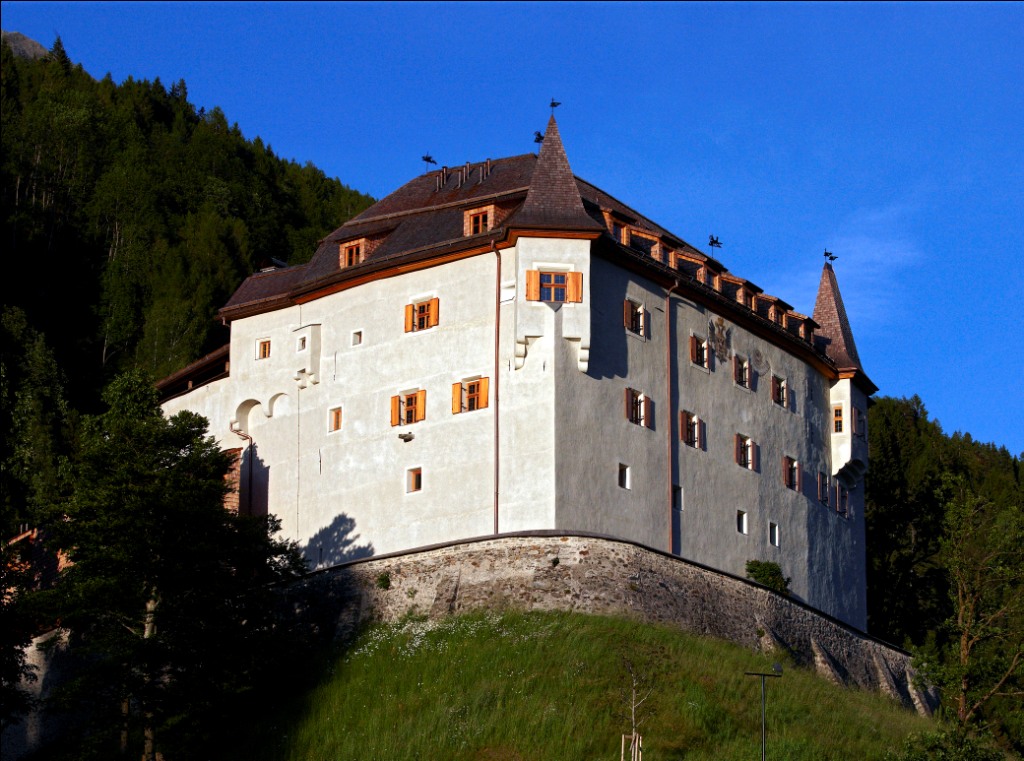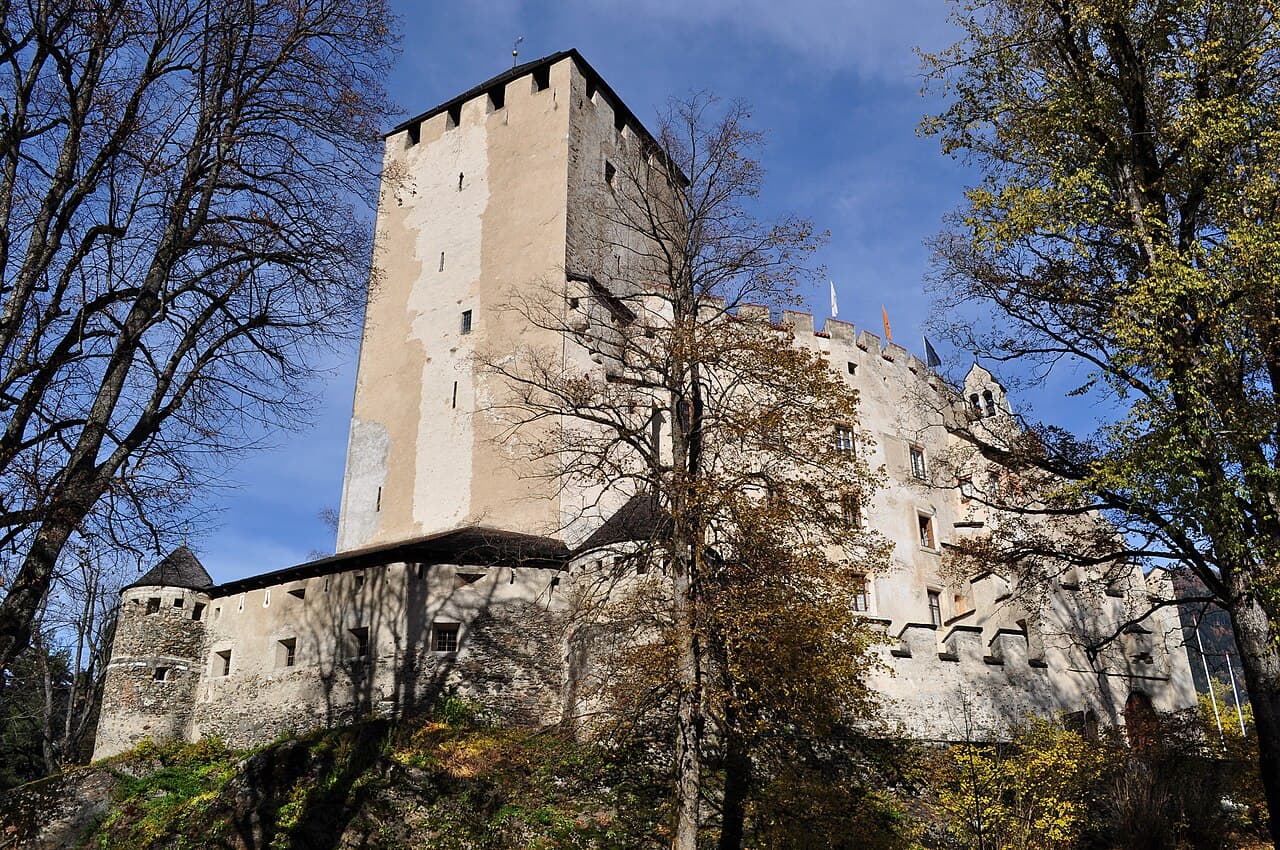
Bruck Castle, located in Lienz, Austria, is a remarkable example of a medieval hill castle with a rich history dating back to the 13th century. Constructed primarily between 1252 and 1278, it served as the residence of the Meinhardiner Counts of Görz, a noble family influential in the region during the High Medieval period. This castle is a significant architectural and cultural monument in the Tyrol region, reflecting both military and residential functions typical of its era.
Historical significance and ownership
The origins of Bruck Castle are closely tied to the Counts of Gorizia and Gradisca, who established it as their seat of power in the late 13th century. The castle's construction was completed in 1278, marking it as a pivotal stronghold in the region. It remained under the control of the Counts until 1500, when the last count, Leonhard of Görz, died without heirs. His death led to the castle and its possessions being inherited by Archduke Maximilian I of Austria, who later became the Holy Roman Emperor. Maximilian incorporated the castle into his Tyrolean holdings, consolidating his influence in the area.
In 1501, Maximilian sold the lordship of Lienz, including Bruck Castle, to Baron Michael von Wolkenstein-Rodenegg. The Wolkenstein family maintained the castle as their residence for over a century. However, due to the castle's cold climate, they eventually built the Liebburg residence in Lienz between 1606 and 1608, shifting their primary living quarters there.
During the French Revolutionary Wars in 1796, the castle was occupied by French troops under General Barthélemy Catherine Joubert, serving as a military barracks. Over the centuries, the castle underwent various uses, including functioning as an inn, brewery, and office space. Since 1943, it has operated as a museum dedicated to the local history of East Tyrol and prominently features works by the Tyrolean painter Albin Egger-Lienz.
Architectural features and layout
Bruck Castle is strategically positioned on a hill near the Hochstein mountain, overlooking the town of Lienz. The castle's approach is marked by a fortified main gate and a stone bridge that diagonally ascends to the elongated inner courtyard. This layout exemplifies medieval defensive design, emphasizing control of access and protection.
The castle's most prominent feature is its bergfried, a six-story main tower approximately 37 meters tall, located on the southwest side of the courtyard. The bergfried served as a central defensive structure and refuge during sieges. It contains a wooden staircase allowing access to various floors. Notably, the second floor features a Romanesque double-arched window with a small central column topped by a bud-shaped capital, dating back to the original construction period. At the summit, a viewing gallery offers expansive views of Lienz and the surrounding mountain ranges, highlighting the castle's commanding position.
The castle chapel, situated on the southeast side of the courtyard, is a two-story building with a square floor plan and a rounded apse. Its walls are adorned with late Gothic frescoes painted by several artists across the 15th and 16th centuries. Among these, the works of Simon von Taisten stand out, depicting religious scenes such as the Fourteen Holy Helpers and the Death of Mary. The apse vault features a fresco of the Mercy Seat by Nikolaus Kenntner from 1452, while Andrä Peuerweg contributed scenes illustrating the Passion of Christ and the Last Judgment in the mid-1500s. These artworks underscore the chapel's religious and artistic importance within the castle complex.
Additional architectural details include an oriel toilet (aborterker), a projecting latrine that illustrates medieval sanitation practices, and a sundial created in 1944 by Rudolf Szyszkowitz, which adds a modern historical layer to the site.
Archaeological context and surrounding landscape
Archaeological finds near Bruck Castle have revealed human activity dating back approximately 3,000 years, including the discovery of copper or bronze axes. This long history of occupation highlights the site's enduring strategic and cultural significance.
The castle grounds are complemented by a wooded area and a small pond near the entrance, providing a serene natural environment that historically would have supported the castle's inhabitants and enhanced its defensive perimeter.
Cultural role and museum function
Since 1943, Bruck Castle has served as a museum dedicated to the history and culture of East Tyrol. It houses an extensive collection of works by Albin Egger-Lienz, one of the region's most celebrated painters, whose art captures the spirit and struggles of Tyrolean life. The museum also hosts rotating exhibitions and thematic displays that explore various aspects of local history, art, and architecture, making it a vital cultural institution in Lienz.
Visitor experience and significance
Visitors to Bruck Castle can explore its well-preserved medieval architecture, including the imposing bergfried with its panoramic views, the beautifully frescoed chapel, and the atmospheric courtyard. The castle's museum offers insight into the region's artistic heritage and historical narrative, making it a compelling destination for those interested in medieval architecture, art history, and Tyrolean culture.
Overall, Bruck Castle stands as a testament to the region's medieval past, noble lineages, and evolving cultural identity, preserved through its architecture and ongoing museum role.
Photo gallery

Information
Website
Visit websiteSources & official resources
Verify the information above using these authoritative references.
Loading map...
Visitor reviews
No reviews yet. Been here? Write the first review and help other travelers!
Write the first reviewVisited this castle? Share your experience
Your review helps other travelers and adds first-hand knowledge to our encyclopedia.