Brecon Castle
Brecon Castle, located in the town of Brecon, Wales, is a significant high medieval hill castle originally constructed in 1093 by the Norman lord Bernard de Neufmarché. Positioned strategically at the confluence of the Usk and Honddu rivers, the castle was designed to secure Norman control over the Welsh kingdom of Brycheiniog. Its commanding location atop a hill approximately 143 meters above sea level provided natural defenses and extensive views of the surrounding landscape, critical for military oversight during the turbulent medieval period.
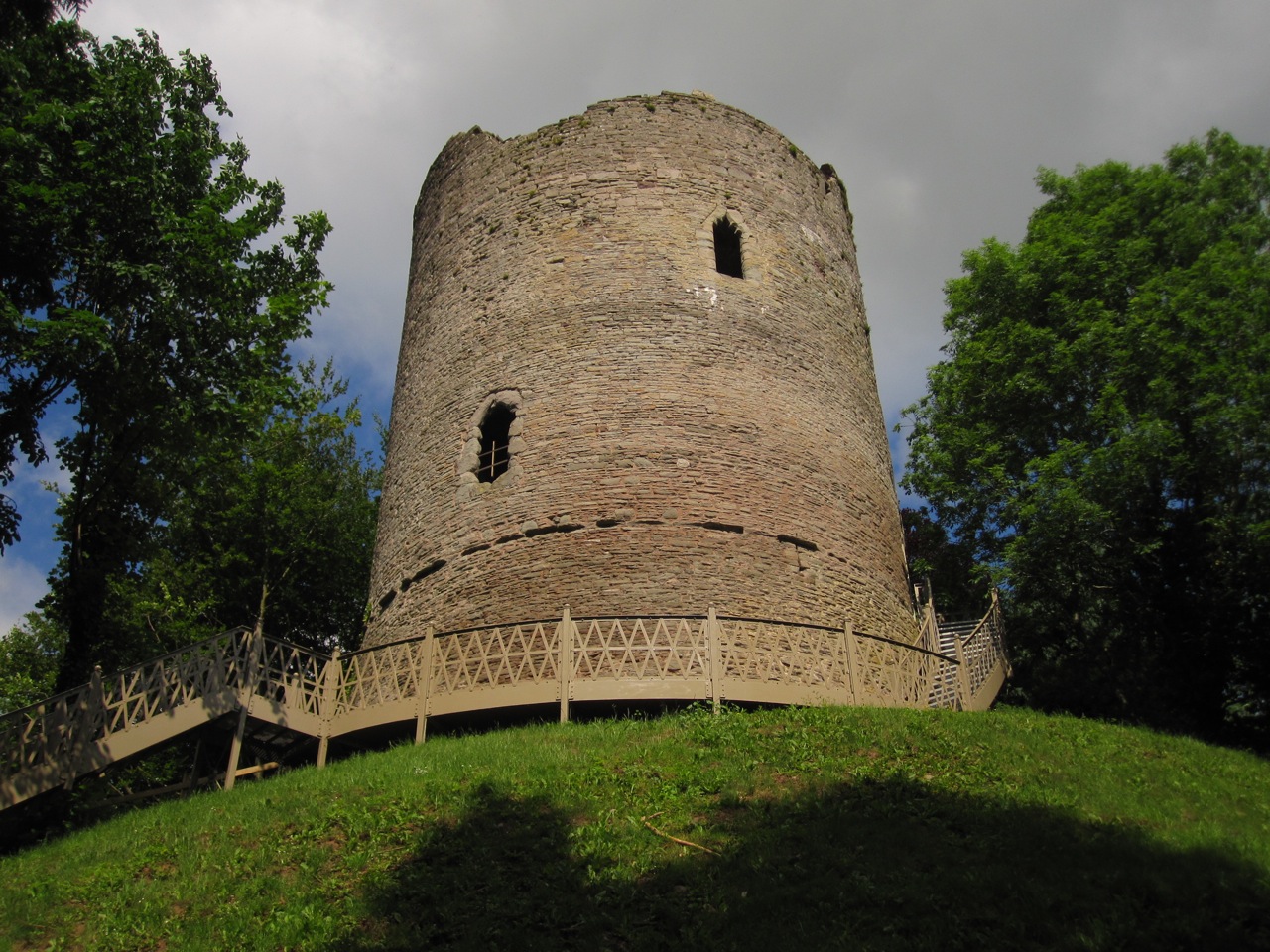
The castle's initial construction followed the typical motte-and-bailey design favored by the Normans, featuring a wooden keep atop a raised earthwork motte and an enclosed bailey courtyard. In the late 12th century, the wooden keep was replaced by a stone shell keep, a defensive wall encircling the motte summit rather than a solid tower, reflecting advancements in castle fortification techniques. This transition from timber to stone marked a significant architectural evolution, enhancing the castle's durability and defensive capabilities.
Norman foundation and early history
The establishment of Brecon Castle followed Bernard de Neufmarché's conquest of the Welsh kingdom of Brycheiniog. The castle served as a Norman foothold in South Wales, symbolizing the expansion of Norman influence into previously Welsh-controlled territories. Early ownership was held by the powerful de Braose family, who played a central role in consolidating Norman power in the region.
However, the castle's history was marked by frequent conflict and changing hands. The de Braose family's rebellion against King John led to the crown confiscating Brecon Castle in 1207. Subsequently, the Bohun family took control in 1241, maintaining possession until 1373. The Stafford family acquired the castle thereafter, with Edward Stafford, the 3rd Duke of Buckingham, being its last notable lord until his execution in 1521 under King Henry VIII. This event led to the castle reverting to royal ownership and its gradual decline.
Military significance and sieges
Throughout the 13th and 15th centuries, Brecon Castle was a focal point of military actions, enduring numerous assaults by Welsh forces seeking to reclaim territory. Notably, in 1231, the castle suffered destruction at the hands of Llywelyn ap Iorwerth, the Prince of Gwynedd. The fortress also played a role during the First Barons’ War (1215–1217), a civil conflict in England involving rebel barons opposing King John.
In addition to medieval conflicts, the castle saw action during the English Civil War in the 17th century, which further contributed to its deterioration. These repeated sieges and battles inflicted significant damage, leaving the castle increasingly vulnerable and leading to its eventual ruin by the late Tudor period.
Architectural developments and features
Stone fortifications and towers
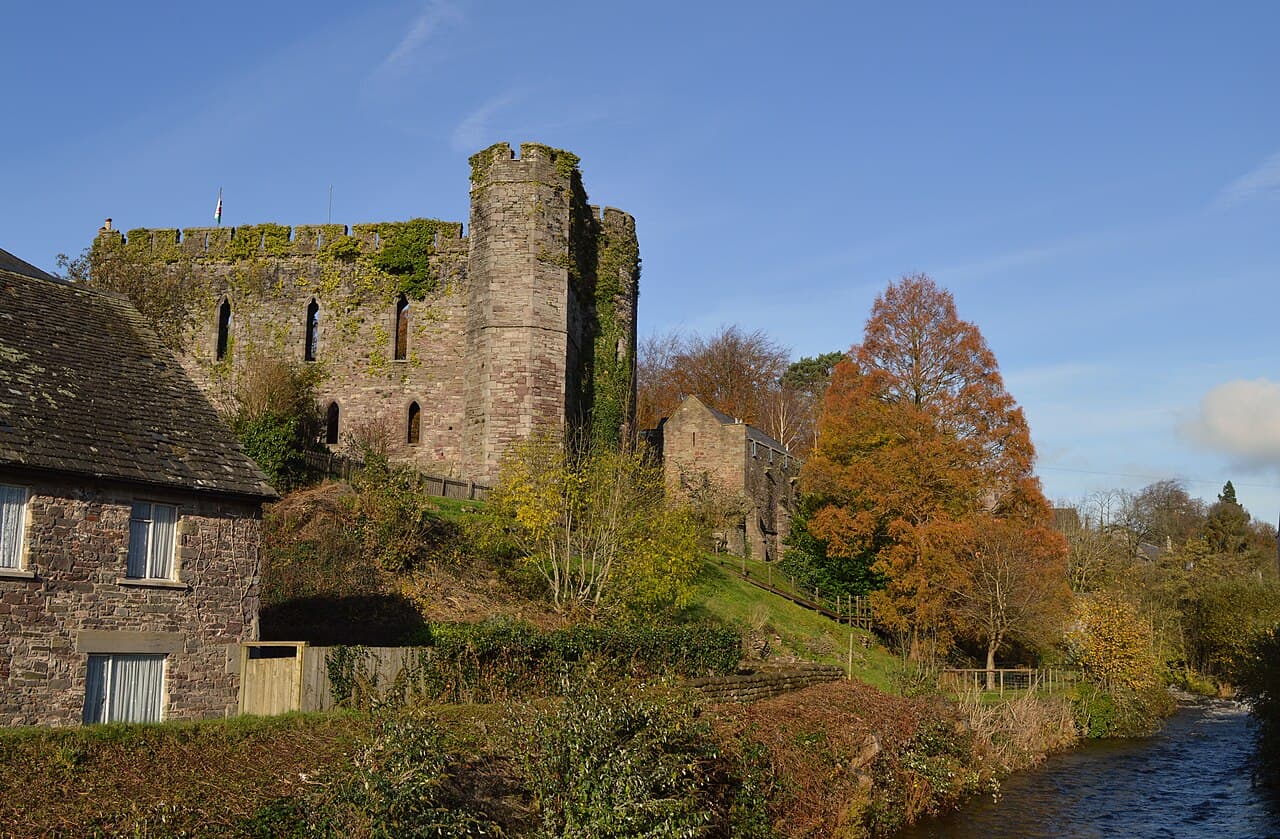
By 1233, the castle's defenses were enhanced with the construction of a stone bailey wall, replacing earlier wooden palisades. This stone enclosure provided stronger protection for the courtyard and internal buildings. Two distinctive towers were added during the 13th and early 14th centuries: one a round tower and the other a semi-octagonal tower. These towers not only served defensive purposes but also added to the castle’s imposing silhouette.
Hall block and domestic structures
A hall block was constructed around 1300, reflecting the castle's role as a noble residence as well as a military fortress. This hall provided space for administrative functions, social gatherings, and domestic life within the castle precincts. Portions of this hall survive today, integrated into later buildings.
Decline and transformation
Following the execution of Edward Stafford in 1521, Brecon Castle fell into disrepair and was largely abandoned as a military stronghold. By the Georgian era, it had become a ruin, with only fragments of its medieval structures remaining visible.
In the early 19th century, the castle underwent significant restoration under the direction of Sir Charles Morgan of Tredegar House. Starting in 1809, Morgan invested over £7,000 to repair and adapt the remaining structures. This restoration transformed the castle into a hotel, a function it continues to serve today, blending historic preservation with modern hospitality.
Surviving remains and current use
Today, the castle's remains include the earthwork foundations of the motte and the ruined stone shell keep. The Ely Tower, covered in ivy, is a notable surviving structure, traditionally linked to the imprisonment of the Bishop of Ely. The castle's outer bailey, now a triangular enclosure south of the motte, contains the Castle Hotel, which incorporates medieval elements such as a two-story wall with four pointed lancet windows characteristic of Gothic architecture and a 14th-century tower.
The castle is a Grade I listed building, recognized for its historical and architectural significance. Its integration into the town of Brecon and ongoing use as a hotel make it a unique example of adaptive reuse of medieval fortifications in Wales.
Brecon Castle’s place in Welsh heritage
As a Norman fortress established during the critical period of Norman expansion into Wales, Brecon Castle represents the intersection of military strategy, feudal power, and regional governance in medieval Britain. Its layered history of construction, conflict, decline, and restoration offers valuable insight into the evolving role of castles from defensive strongholds to symbols of heritage and hospitality.
The castle's location at the meeting point of two rivers and its commanding hilltop position underscore the importance of geography in medieval castle placement. Its survival through centuries of warfare and political change highlights the resilience of Norman architectural principles adapted to Welsh landscapes.
Visitors to Brecon Castle today can explore the blend of medieval ruins and 19th-century restoration, experiencing a tangible connection to the past while engaging with the site's contemporary function. The castle remains a prominent landmark in Brecon, contributing to the town's cultural identity and tourism appeal.
Frequently asked questions (FAQ)
- When was Brecon Castle originally built and by whom?
- Brecon Castle was originally built in 1093 by the Norman lord Bernard de Neufmarché to secure Norman control in South Wales.
- What architectural features remain visible at Brecon Castle today?
- Today, visitors can see the earthwork foundations, the stone shell keep ruins, the Ely Tower, and parts of the medieval hall incorporated into the Castle Hotel.
- Can I stay overnight at Brecon Castle?
- Yes, Brecon Castle has been converted into a hotel since the early 19th century, allowing guests to experience the historic site firsthand.
- Why is Brecon Castle historically significant?
- Brecon Castle is significant as a Norman stronghold in Wales, reflecting medieval military architecture and the region's turbulent history of conflict and governance.
- Is Brecon Castle accessible to the public and what are its visiting hours?
- As a functioning hotel, the castle is accessible to guests and visitors, though public visiting hours may vary; it is best to check with the hotel for current access information.
Photo gallery

Information
Sources & official resources
Verify the information above using these authoritative references.
Loading map...
Visitor reviews
No reviews yet. Been here? Write the first review and help other travelers!
Write the first reviewVisited this castle? Share your experience
Your review helps other travelers and adds first-hand knowledge to our encyclopedia.