Brok
The castle in Brok, located in the municipality of Brok in Poland, stands as a significant historical and architectural site rooted in the region's rich medieval and early modern heritage. Its origins trace back to the early 17th century when it was constructed as a summer residence for the bishops of Płock, a powerful ecclesiastical authority. Unlike traditional medieval fortresses designed primarily for defense, this palace was conceived as a place of leisure and seasonal retreat, reflecting the evolving architectural and social priorities of the period.
The site of Brok itself has a deep historical background dating to the early Middle Ages. During the 10th and 11th centuries, the nearby Bug and Prypeć rivers formed a crucial trade route connecting Poland with Kievan Rus. Brok was first documented in 1203 in a charter issued by Duke Konrad of Masovia, recognizing it as a fortified settlement with a church and eighteen villages under the ownership of the bishops of Płock. This early recognition highlights Brok's importance as a defensive and administrative center in medieval Mazovia. By 1501, under Bishop Wincenty Przerębski, Brok was granted town rights and market privileges, marking its development into a thriving urban center and a grain port on the Bug River during the 16th century.
Construction and architectural features
The construction of the palace began in 1607 under the direction of Bishop Henryk Firlej near the confluence of the Turek and Bug rivers. The design drew inspiration from notable Warsaw castles, including the Royal Castle and the Ujazdowski Castle, yet it emphasized residential comfort over military fortification. The palace was a two-story rectangular building measuring approximately 13 by 41.5 meters, situated on a natural elevation that provided scenic views of the surrounding rivers and landscape.
The ground floor featured a central hall with access to four heated chambers intended for the bishop's private use, underscoring the emphasis on comfort and hospitality. Additional rooms included a vaulted dining hall and two treasury chambers, reflecting the palace's dual function as a residence and administrative center. The upper floor housed a large hall, a representative room with eight windows for receiving guests, and four living chambers, further emphasizing the building's role as a prestigious summer residence.
An attached chapel on the eastern side of the palace had a simple rectangular plan ending in a semicircular apse. Its interior was decorated with a painted image of Saint Anthony and ornamental stucco work, consistent with early Baroque ecclesiastical art. A tower adjoining the chapel contained a staircase linking the floors and was topped by a belvedere — a small open viewing platform described historically as a "summer seat" — crowned with a metal dome. This feature provided panoramic views and served as a leisure space separate from the main residential quarters.
Historical significance and notable figures
Throughout its history, the palace in Brok served as a seasonal retreat for the bishops of Płock and hosted several prominent figures. The renowned poet Maciej Kazimierz Sarbiewski and writer Stanisław Łubieński were associated with the residence, contributing to its cultural significance. Moreover, the future King Michał Korybut Wiśniowiecki spent part of his childhood studying at the palace from 1652 under the tutelage of priest Jan Chryzostom Fabricius, linking the site to Polish royal history.
The mid-17th century Swedish Deluge brought hardship to the palace and the town, with the site being looted though not completely destroyed. Further damage occurred during the early 18th century amid the Great Northern War, when Swedish troops again caused destruction. Bishop Ludwik Bartłomiej Załuski led a significant restoration effort in 1716, commemorated by a marble plaque still preserved in a nearby church, highlighting ongoing ecclesiastical investment in the site.
Decline, destruction, and preservation efforts
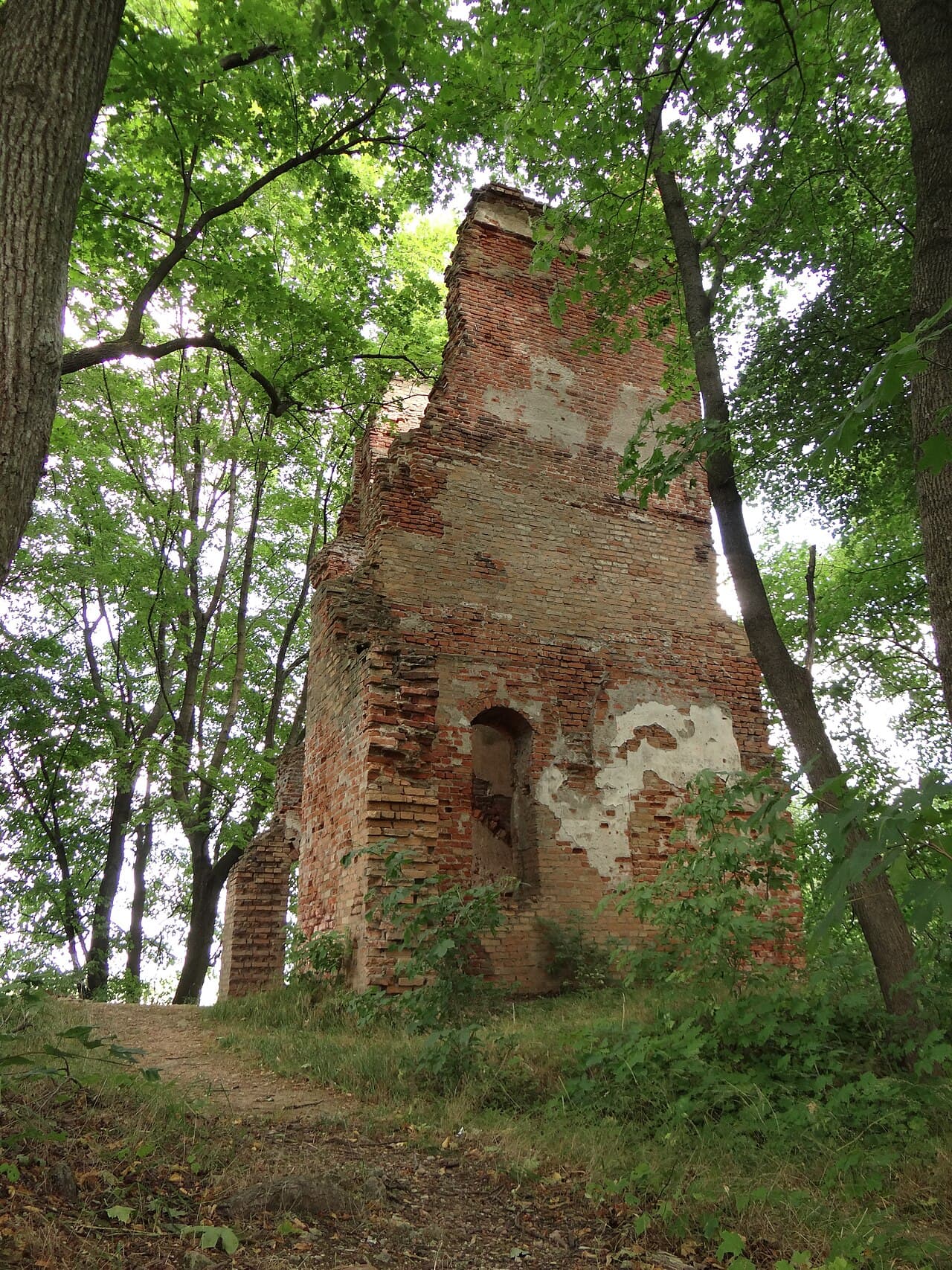
By the late 18th century, the palace had begun to fall into disrepair. Following the partitions of Poland, the property was nationalized in 1822 and leased to private tenants. A devastating fire in 1831 destroyed the roofs and severely damaged the structure. Over the subsequent decades, parts of the walls were dismantled, and by 1910 the main body of the palace was demolished by its owner. Today, only three walls of one tower and some foundations remain, offering a glimpse into the original layout and scale of the building.
In the 20th century, efforts to study and preserve the ruins included archaeological excavations conducted between 1983 and 1984, which helped to document the site's historical footprint. Earlier conservation work from 1955 to 1957 aimed to stabilize the remaining structures, preventing further decay. Currently, the ruins are hidden among trees near the road to Małkinia, with the surviving tower walls standing as the sole visible remnants of this once grand summer palace.
Future plans and cultural importance
Recent initiatives, such as the Brok Center project, seek to revitalize the ruins by creating a spatial 1:1 scale visualization of the palace and establishing an international artistic center. These ambitious plans aim to transform the site into a cultural landmark, fostering artistic exchange and heritage appreciation. Whether these projects will come to fruition remains to be seen, but they underscore the enduring significance of the castle in Brok as a symbol of regional history and architectural heritage.
The castle's story reflects the broader historical currents of Mazovia and Poland, from medieval trade routes and ecclesiastical power to the devastation wrought by wars and the challenges of preservation. Its ruins stand as a testament to early Baroque architecture and the lifestyle of the Polish clergy in the 17th century, offering valuable insights into the intersection of politics, religion, and culture in this part of Europe.
Frequently asked questions (FAQ)
- How do I get to Brok Castle?
- Brok Castle is located in Brok, Poland, and is accessible by car or public transport. If you're traveling by train, the nearest station is a short bus ride away, making it convenient to visit. Ensure to check local schedules for the best routes.
- What is the historical significance of Brok Castle?
- Brok Castle dates back to the medieval period and has played a crucial role in the region's history. It served as a defensive structure and residence for local nobility, reflecting the architectural styles of its time. Today, it stands as a testament to Poland's rich cultural heritage.
- When was Brok Castle built?
- Brok Castle was constructed in the 14th century, with various modifications made over the centuries. Its architecture showcases elements from different historical periods, making it an interesting site for history enthusiasts. The castle's enduring presence highlights its importance throughout the ages.
- Can I take guided tours of Brok Castle?
- Yes, guided tours are available at Brok Castle, providing visitors with in-depth knowledge of its history and architecture. These tours are led by knowledgeable guides who share fascinating stories and insights about the castle. Be sure to check the schedule for tour times during your visit.
- Why is Brok Castle a popular tourist destination?
- Brok Castle attracts visitors due to its stunning architecture and rich history, as well as its picturesque setting. Additionally, the castle often hosts cultural events and exhibitions, enhancing its appeal. For history buffs and casual visitors alike, it offers a unique glimpse into Poland's past.
- Is it possible to visit Brok Castle year-round?
- Yes, Brok Castle is open to visitors throughout the year, but opening hours may vary by season. It's advisable to check the official website or contact the castle administration for the most up-to-date information on hours and any seasonal events. This allows you to plan your visit accordingly.
- What are the ticket prices for Brok Castle?
- Ticket prices for Brok Castle are generally affordable, making it accessible for families and tourists alike. Discounts may be available for students, seniors, and groups, so be sure to inquire about any special rates. Prices may vary for guided tours, so check in advance for the best options.
- What is the best time to visit Brok Castle?
- The best time to visit Brok Castle is during the spring and early autumn months when the weather is mild, and the gardens are in full bloom. During these periods, the castle is less crowded, allowing for a more enjoyable experience. Summer can also be a good time, but expect larger crowds and warmer temperatures.
- Are there any nearby attractions to visit along with Brok Castle?
- Yes, there are several attractions near Brok Castle, including local museums and natural parks that showcase the beauty of the region. Visitors can explore the surrounding countryside or enjoy local dining options. Planning a day trip can make for a memorable experience filled with history and nature.
Photo gallery

Information
Loading map...
Visitor reviews
No reviews yet. Been here? Write the first review and help other travelers!
Write the first reviewVisited this castle? Share your experience
Your review helps other travelers and adds first-hand knowledge to our encyclopedia.