Brindisi Swabian Castle
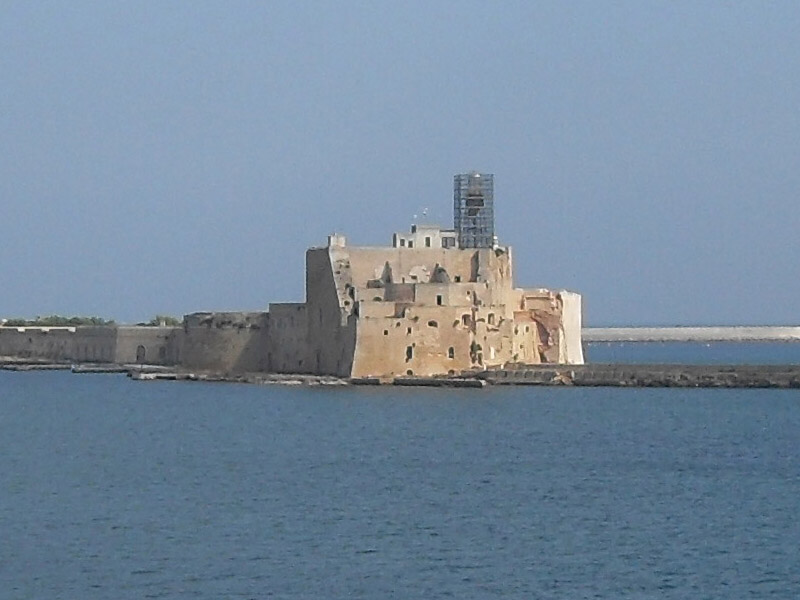
The Brindisi Swabian Castle, also known as Castello Svevo di Brindisi or Castello Svevo-Aragonese, is a significant medieval fortress located in the city of Brindisi, in the Italian region of Apulia. This castle stands prominently on the edge of the old town and the inner harbor, strategically positioned to defend both the city center and the vital maritime access point. Its origins date back to the high medieval period, specifically to the year 1227, during the reign of the Hohenstaufen dynasty. Historical records, including those by Richard von San Germano, attribute the castle's initial construction to this era, coinciding with the presence of Emperor Frederick II in Brindisi, marked notably by his marriage to Isabella II of Jerusalem in 1225 and his departure for the crusade in 1228.
Historical development and royal enhancements
The castle's evolution reflects the turbulent history of southern Italy. In the late 13th century, Charles I of Naples commissioned a significant restoration and expansion of the fortress. The architect Pierre d'Angicourt was tasked with heightening the towers and constructing a royal palace within the castle grounds between 1272 and 1283. This expansion not only enhanced the castle's defensive capabilities but also established it as a royal residence, symbolizing the Angevin authority in the region.
Adaptations for artillery and later fortifications
By the mid-15th century, military technology had evolved with the introduction of firearms, necessitating further modifications to the castle's defenses. Ferdinand I of Naples oversaw the first major expansion during this period, which included the construction of a new outer wall ring. This wall was lower and narrower than its predecessors but was equipped with low, sloping round towers designed to better withstand artillery attacks. The original moat was covered with vaults, creating additional rooms that served both as barracks for armed men and as shelters for the local population during emergencies.
In 1496, the castle and the city of Brindisi came under the protectorate of the Republic of Venice, a testament to the strategic importance of the fortress. The castle was well-equipped at this time, reflecting the Venetian influence on its military architecture.
16th-century enhancements and military conflicts
Further modifications were made in 1526 by Giovanni Battista Pignatelli, who reinforced the castle's defenses in response to ongoing military threats. Shortly after these enhancements, Brindisi and the castle endured a severe siege by the forces of the French-Venetian-Papal league opposing Charles V. In response to this conflict, the castle complex was fortified with the addition of two polygonal bastions known as "Puntoni," which faced the harbor and provided improved artillery positions.
Architectural features and layout
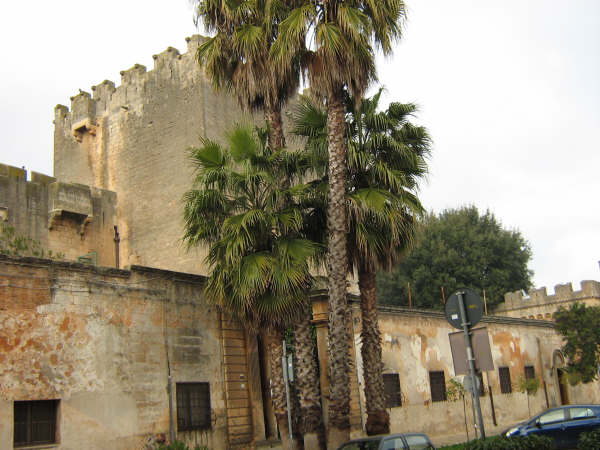
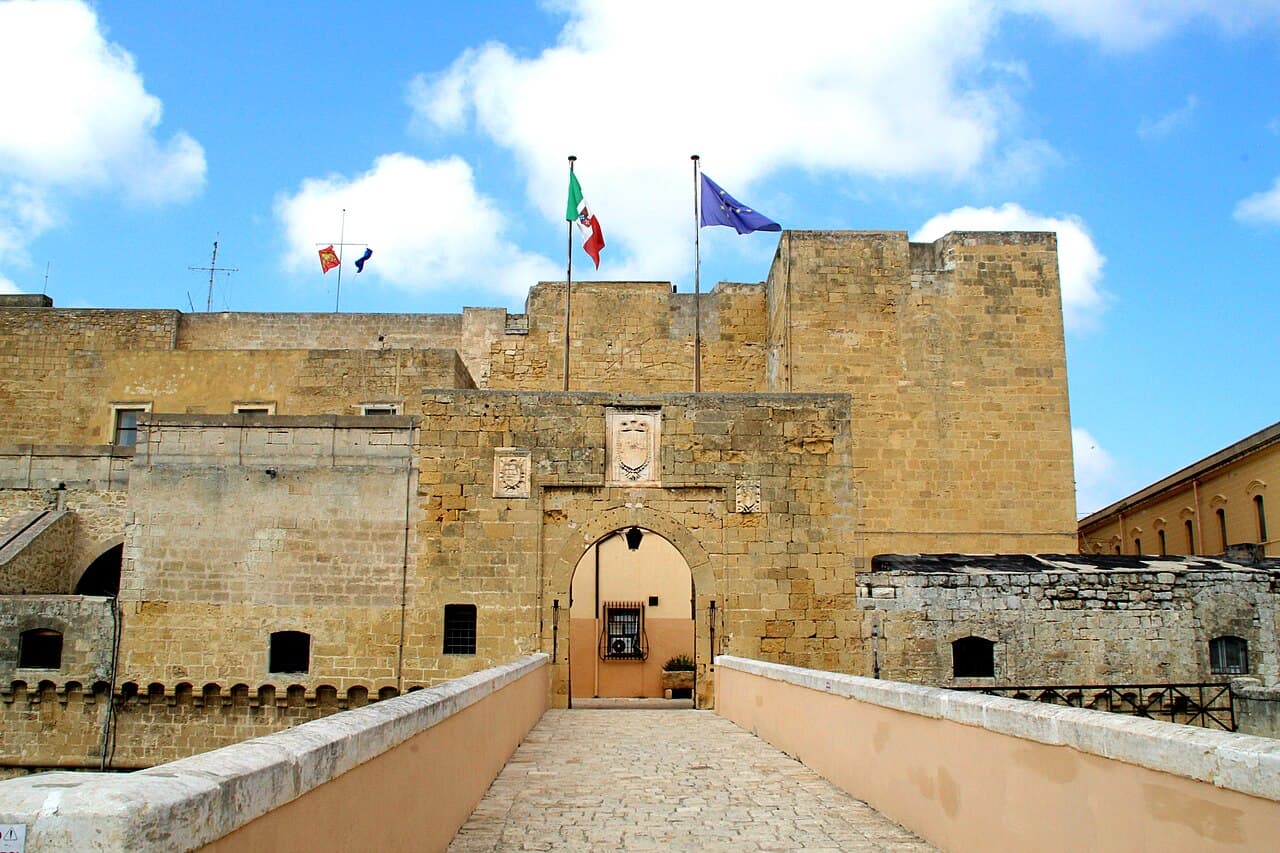
The castle is organized around a trapezoidal courtyard, enclosed by high defensive walls. The perimeter is reinforced by a formidable keep (donjon) featuring the main entrance and six towers of varying shapes: two round, three square, and one pentagonal. This diverse tower design reflects the castle's long construction history and adaptations to evolving military needs.
The outer courtyard, dating from the 15th to 16th centuries, demonstrates the castle's expansion during the late medieval and Renaissance periods. The presence of round artillery towers from the late Middle Ages and Renaissance periods highlights the castle's adaptation to gunpowder warfare, with these towers specifically designed to mount cannons and other artillery pieces.
Later uses and preservation
During the 18th and 19th centuries, the castle underwent a functional transformation from a military fortress to a prison. Later, it served as a command center for the Marina Militare (Italian Navy), with some modifications made to accommodate its new role. Despite these changes, the castle's fundamental structure and historic character have been largely preserved, making it a valuable cultural and architectural landmark in Brindisi.
Cultural significance and tourism
Today, the Brindisi Swabian Castle stands as a testament to the region's complex history, showcasing architectural elements from the Hohenstaufen, Angevin, Aragonese, and Venetian periods. Its strategic location overlooking the harbor continues to draw visitors interested in medieval military architecture and the historical narrative of southern Italy. The castle's well-preserved walls, towers, and courtyards offer insights into the defensive strategies and residential functions of a medieval fortress adapted over centuries to meet changing military and political demands.
Frequently asked questions (FAQ)
- What is the historical significance of Brindisi Swabian Castle?
- Brindisi Swabian Castle dates back to 1227 and reflects the military and political history of southern Italy, including its Hohenstaufen origins and later Angevin and Aragonese modifications.
- Can visitors explore the towers and courtyards of the castle?
- Yes, the castle's well-preserved towers and trapezoidal courtyard are accessible to visitors, offering views of medieval and Renaissance military architecture.
- How did the castle adapt to changes in military technology?
- The castle was expanded in the 15th century with lower, sloping walls and round towers to accommodate artillery, reflecting the evolution of warfare with firearms.
- What architectural styles are present in the castle?
- Brindisi Swabian Castle features a mixed architectural style, incorporating elements from the Hohenstaufen, Angevin, Aragonese, Venetian, and Renaissance periods.
- Is the castle located near the harbor?
- Yes, the castle is strategically located on the edge of Brindisi's old town and inner harbor, historically guarding both important parts of the city.
Photo gallery

Information
Loading map...
Visitor reviews
No reviews yet. Been here? Write the first review and help other travelers!
Write the first reviewVisited this castle? Share your experience
Your review helps other travelers and adds first-hand knowledge to our encyclopedia.