Alfonsino Castle
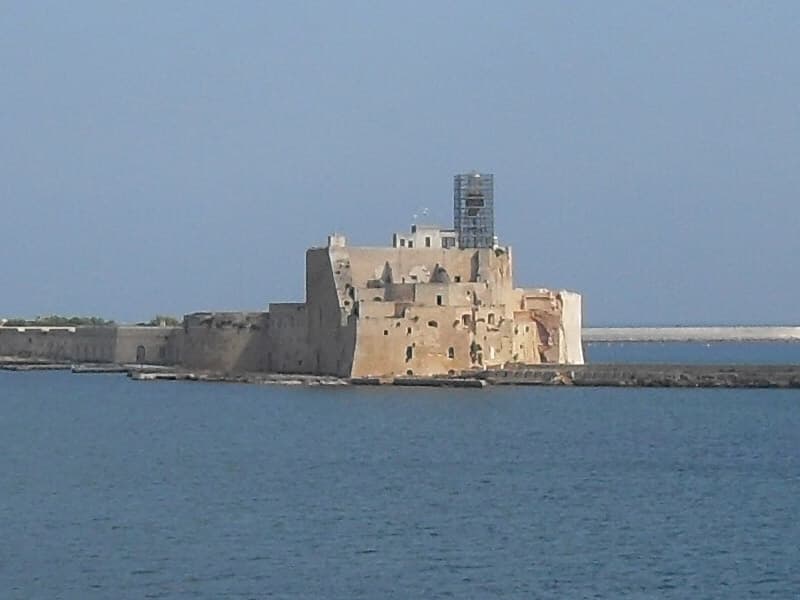
Alfonsino Castle, also known as Forte a Mare (Sea Fort), is a remarkable example of late-medieval military architecture located on the island of Sant’Andrea, just off the coast of Brindisi, Italy. Constructed initially in 1491 under the reign of King Ferdinand I of Naples, this fortress was strategically placed to guard the vital port of Brindisi, a key maritime gateway in the Adriatic Sea.
The castle is distinctive for its division into two main parts: the original "Red Castle", named for its characteristic reddish carparo stone bricks, and the later addition known as Forte a Mare, a larger fortified section built during the Spanish rule in the 16th century. This complex reflects the evolution of military defensive strategies from the Aragonese period through the Spanish Habsburg era, adapting to the changing threats posed by naval powers such as the Venetians and the Ottoman Empire.
Historical background and early uses
The site of Alfonsino Castle has a layered history beginning well before its military function. Originally, the island of Sant’Andrea was home to a Benedictine abbey established by at least 1059. This religious complex served the spiritual needs of the region for several centuries until it was abandoned in the 14th or 15th century amidst increasing regional instability and conflicts.
By 1481, King Ferdinand I of Naples, son of Alfonso I of Aragon, recognized the strategic importance of Sant’Andrea island and initiated the construction of a defensive tower to replace the former abbey. This tower formed the nucleus of what would become Alfonsino Castle, designed to protect the port of Brindisi from maritime threats.
Architectural development and expansions
During the early 16th century, the original Aragonese tower was expanded northeastward to strengthen its defensive capabilities. This expansion was part of a broader effort to fortify the region against increasing naval incursions, particularly from the Venetian Republic, which attacked the fortress in 1529.
The most significant enlargement occurred between 1558 and 1604 under the reign of Philip II of Habsburg, when the adjacent structure known as Forte a Mare was constructed. This addition enclosed much of Sant’Andrea island with defensive walls and bastions, designed in accordance with contemporary military engineering principles to withstand artillery bombardment and naval assaults.
The fortress's design includes two notable bastions from the early 16th century: a rounded bastion facing inland and a triangular bastion oriented towards the sea. These bastions exemplify the adaptation of Renaissance fortification techniques, providing overlapping fields of fire to protect against attackers approaching from both land and water.
A distinctive feature of the castle is its small internal harbor, constructed around 1577. This harbor, accessed through an archivolt—a curved stone archway—connected the original Aragonese tower with the later Spanish fortifications, facilitating the movement of supplies and personnel by sea.
Military significance and sieges
Alfonsino Castle played a crucial role in the defense of Brindisi and the broader southern Italian coast during the turbulent late medieval and early modern periods. The fortress was besieged by the Venetians in 1529 during their naval campaigns in the Adriatic. Later, in 1799, French forces laid siege to the castle amidst the upheavals of the Napoleonic Wars and counterrevolutionary conflicts in Italy.
Throughout its military use, the castle was equipped with barracks for soldiers, a powder magazine for storing ammunition, a governor’s residence, and a church to serve the spiritual needs of the garrison. The presence of a parade ground and a gallery for recreation underscores the fortress's function as a self-contained military community.
Later uses and preservation efforts
After its military importance declined, Alfonsino Castle was repurposed as a hospital under the Kingdom of the Two Sicilies, continuing in this role into the 20th century. The Italian Navy maintained control of the island until 1984, when severe storm damage forced the abandonment of the site.
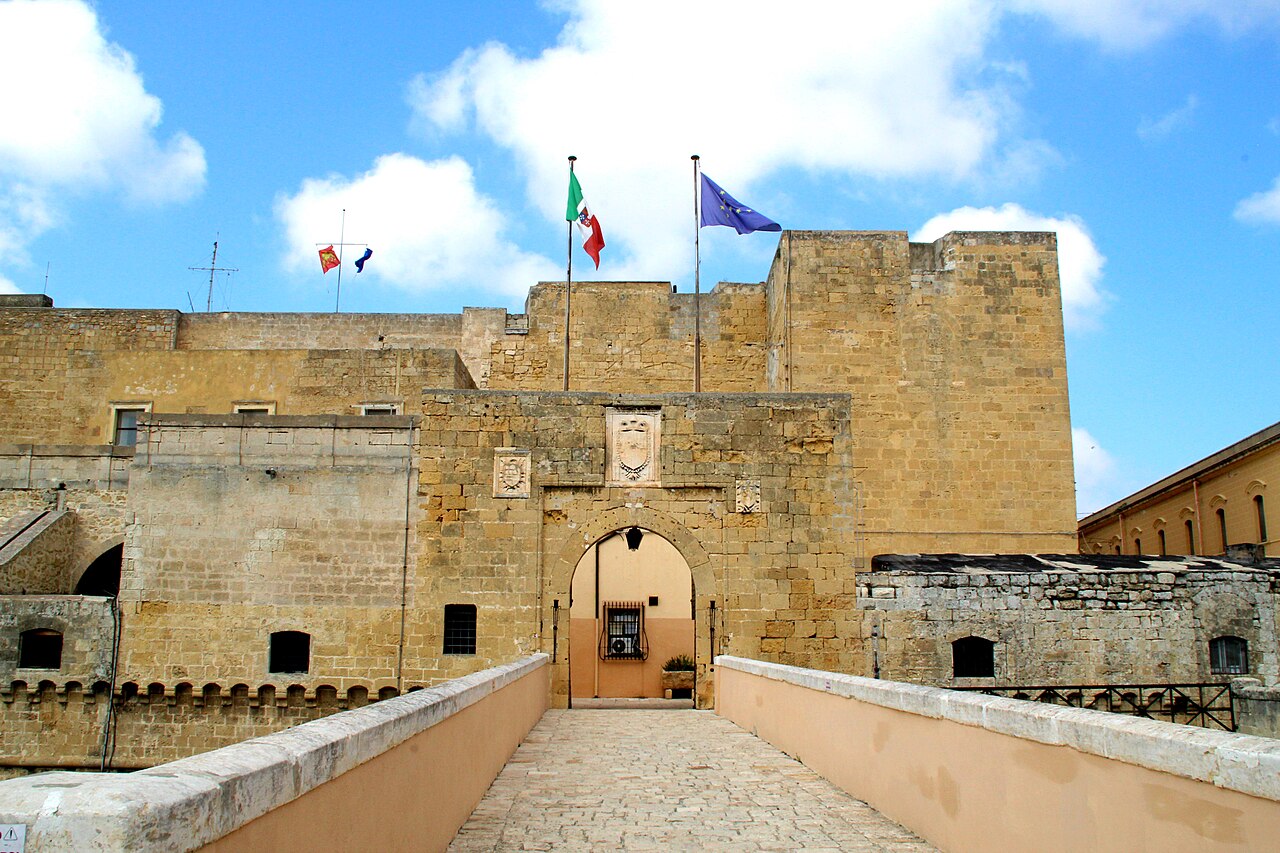
Since then, restoration efforts have been undertaken to preserve the remaining structures. The castle’s red carparo stone walls and surviving bastions remain iconic features, with stone coats of arms from Spanish monarchs such as Philip II and Philip III still visible on the main entrance portal, dated 1609.
Currently, parts of the fortress have been restored and are accessible for cultural activities and public visits. The site offers valuable insights into the military architecture and historical heritage of the region, illustrating the evolution of coastal defense systems from the late medieval period through the Renaissance and beyond.
Architectural features and strategic design
Materials and construction
The predominant building material is red carparo stone, a type of limestone that gives the castle its distinctive reddish hue and the nickname "Castel Rosso" (Red Castle). The fortress’s irregular shape conforms to the natural contours of Sant’Andrea island, demonstrating a harmonious integration of architecture with the landscape.
Bastions and walls
The fortress’s bastions are key defensive elements, designed to provide overlapping fields of fire and resist cannon attacks. The rounded bastion facing inland protects against land-based assaults, while the triangular bastion facing the sea guards against naval threats. The enclosing walls built during the Spanish expansion are robust and include embrasures for artillery.
Internal harbor and dams
The small internal harbor, constructed in the late 16th century, was a crucial logistical feature, enabling secure maritime access within the fortress complex. Additionally, dams linking Sant’Andrea island to the western shore and narrowing the harbor entrance enhanced the control over naval traffic through the Bocca di Puglia strait, a vital maritime passage.
Cultural significance and current status
Alfonsino Castle stands as a testament to the strategic maritime defense efforts of the Kingdom of Naples and later Spanish rule in southern Italy. Its layered history from a Benedictine abbey to a formidable sea fortress encapsulates the region's shifting political and military landscape over several centuries.
Today, the site is valued not only for its military and architectural heritage but also as a cultural venue. Restoration and preservation initiatives aim to maintain the castle’s structural integrity and promote public engagement with this historic landmark.
Frequently asked questions (FAQ)
- What is the historical significance of Alfonsino Castle?
- Alfonsino Castle, built in the 15th century, served as a strategic fortress for the Kingdom of Naples. It played a crucial role in protecting the port of Brindisi from invasions and has witnessed many historical events throughout its existence, reflecting the rich medieval history of Italy.
- When was Alfonsino Castle constructed?
- The construction of Alfonsino Castle began in 1446 and was completed in 1450. It was commissioned by King Alfonso I of Aragon, which is how the castle got its name, and it stands as a testament to Renaissance military architecture.
- Can I visit Alfonsino Castle year-round?
- Yes, Alfonsino Castle is open to visitors throughout the year. However, it's advisable to check for specific opening hours and any seasonal changes that may affect access, especially during holidays.
- What are the opening hours for Alfonsino Castle?
- The castle typically opens at 9 AM and closes at sunset, but hours may vary depending on the season. It's best to verify the current schedule on the official website or by contacting the castle administration before your visit.
- Is Alfonsino Castle accessible for visitors with disabilities?
- Alfonsino Castle strives to be accessible to all visitors, with facilities in place to assist those with mobility challenges. However, due to the historical nature of the site, some areas may have limitations, so it's recommended to inquire beforehand about accessibility options.
- What is the best time to visit Alfonsino Castle?
- The best time to visit Alfonsino Castle is during the spring and early fall when the weather is mild and pleasant. This allows visitors to enjoy exploring the castle and its surroundings without the extreme heat of summer.
- Can I find nearby attractions while visiting Alfonsino Castle?
- Yes, there are several nearby attractions, including the stunning beaches of Brindisi and the historic city center. You can also explore other landmarks such as the Roman Column and the Church of Santa Maria del Casale, all within a short distance.
- What are the ticket prices for Alfonsino Castle?
- Ticket prices for Alfonsino Castle are generally affordable, with discounts available for students and seniors. It's advisable to check the official website for the most current pricing and any potential special events that may have different admission fees.
Photo gallery

Information
Website
Visit websiteSources & official resources
Verify the information above using these authoritative references.
Loading map...
Visitor reviews
No reviews yet. Been here? Write the first review and help other travelers!
Write the first reviewVisited this castle? Share your experience
Your review helps other travelers and adds first-hand knowledge to our encyclopedia.